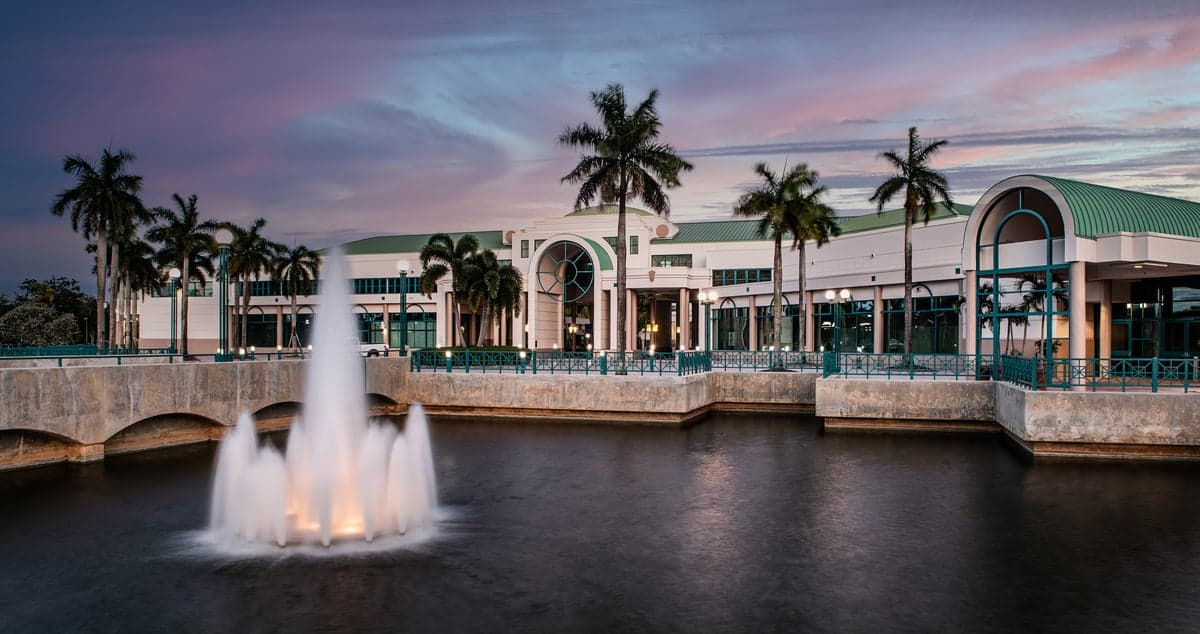
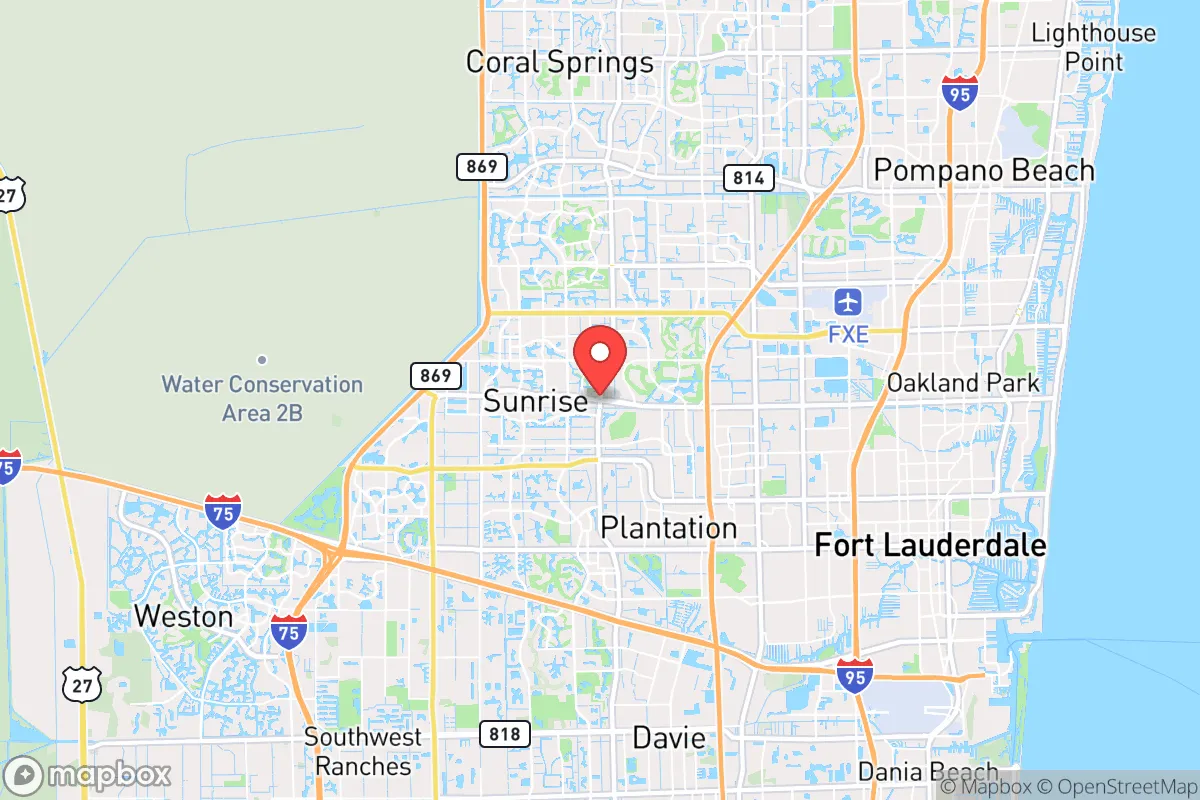
Photo: Wikipedia
Political ClimatePolitical Climate in Sunrise, FL
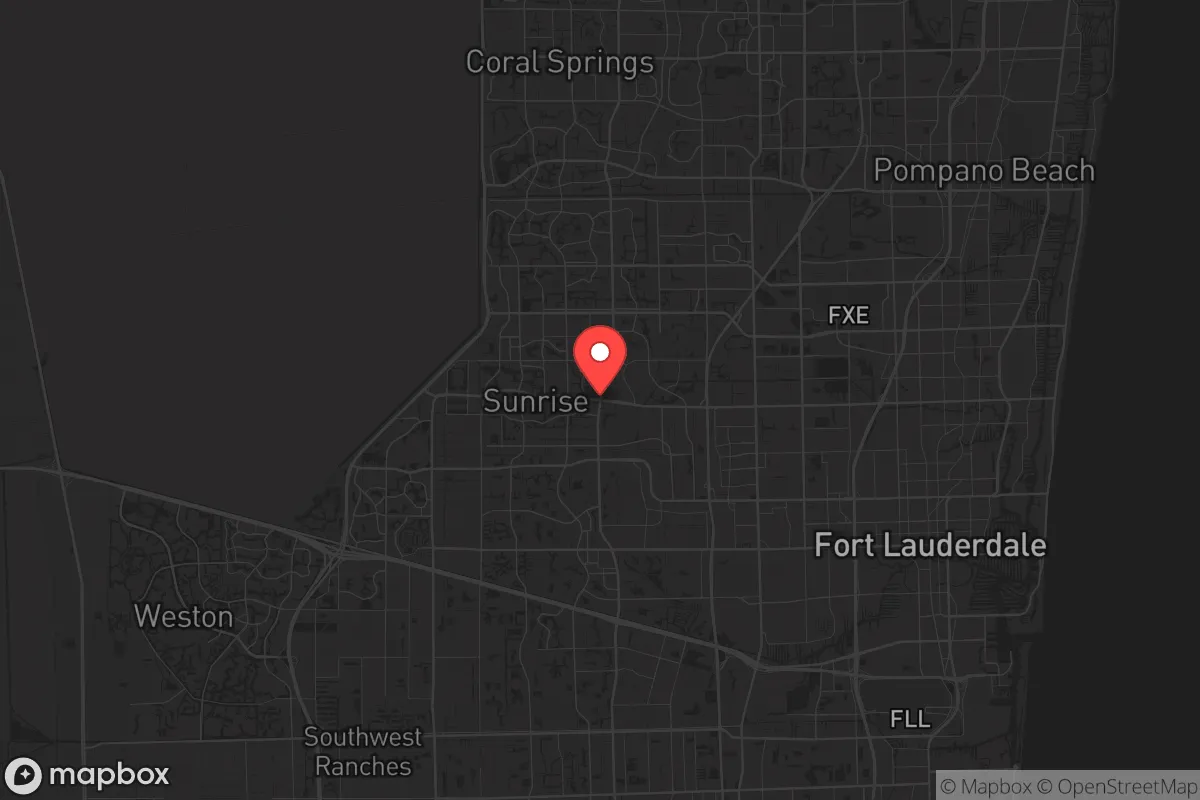
District shown is the primary district for this city’s centroid. Cities may span multiple districts.
Local Political AnalysisPolitical Analysis of Sunrise, FL
Sunrise, Florida, is a deep blue stronghold in a county that’s been trending left for decades, with a Cook Partisan Voting Index of D+22. That means Democrats have a 22-point advantage over Republicans in federal elections here, which is about as lopsided as it gets in South Florida. If you’re looking at the political climate, you’re looking at a place where progressive policies have been the norm for a while, and the trajectory is only getting more entrenched. I’ve lived in this area long enough to remember when things were a bit more balanced, but now it feels like every election just reinforces the same one-party rule, and that comes with a certain set of consequences for folks who value personal freedoms.
How it compares
To understand Sunrise, you have to look at its neighbors. Head west to Weston or Parkland, and you’ll find communities that lean more conservative, with Republican voters making up a solid 40-45% of the electorate. Those towns still have a fighting chance at keeping taxes lower and pushing back on some of the more aggressive government programs. But Sunrise? It’s surrounded by cities like Tamarac and Lauderhill, which are even bluer. The contrast is stark: in Weston, you might hear debates about school choice and property rights; in Sunrise, the conversation is dominated by expanding public services and social programs. That’s not inherently bad, but it means the political pressure here is almost entirely one-directional, and there’s little pushback when the city council or county commission decides to go further left.
What this means for residents
For the average person living in Sunrise, the biggest impact is on your wallet and your freedoms. Property taxes have crept up year after year, partly because there’s no real political opposition to keep spending in check. You’ll also see more ordinances that tell you how to run your business or what you can do with your own property. For example, the city has been aggressive with rental regulations and zoning rules that make it harder for small landlords to operate. And on the cultural side, you’ve got a school board that’s fully aligned with progressive curriculum changes—things like critical race theory and gender ideology being pushed into classrooms without much parental input. If you’re a conservative or even a moderate, you often feel like your voice doesn’t matter because the election results are a foregone conclusion. The long-term trend is concerning: as the area gets denser and younger, the political machine just gets stronger, and there’s less room for dissent.
One cultural distinction that stands out is how Sunrise handles public events and community messaging. You’ll see a lot of government-sponsored initiatives around “equity” and “inclusion” that sound nice on paper but often translate to preferential treatment for certain groups over others. The city also leans hard into environmental regulations that can feel like overreach—like bans on single-use plastics or restrictions on home renovations that add red tape. It’s the kind of place where the government assumes it knows better than you do, and that’s a tough pill to swallow if you’re used to making your own choices. Looking ahead, I don’t see this changing anytime soon. The political climate here is stable in the worst way: stable in its drift toward more control, less freedom, and a one-size-fits-all approach that leaves little room for the individual. If you’re thinking of moving here, just know what you’re signing up for.

State Political ClimatePolitical Climate in Florida
State Political AnalysisPolitical Environment in the State
Florida has transformed from a quintessential swing state into a solidly Republican-leaning powerhouse over the past two decades, with registered Republicans now outnumbering Democrats by over 800,000 voters and the state voting +3.3 points for Trump in 2024 after a +3.4 margin in 2020. The dominant coalition is a mix of conservative retirees, Hispanic voters (especially Cuban-Americans and Venezuelans), and transplants from blue states fleeing high taxes and lockdown policies. The trajectory has been a steady rightward shift since 2008, when Obama barely won the state, accelerating dramatically after 2020 as millions of new residents from New York, California, and Illinois reshaped the electorate.
Urban vs. rural divide
The political map of Florida is a textbook study in geographic polarization. The Democratic strongholds are concentrated in the urban cores of Miami-Dade County (though it flipped +11 points toward Trump from 2020 to 2024), Orlando (Orange County), and Tampa (Hillsborough County), along with the college town of Gainesville (Alachua County). These areas are driven by younger voters, public sector unions, and a growing progressive activist base. Meanwhile, the entire Florida Panhandle—places like Pensacola, Panama City, and Tallahassee's surrounding Leon County (which is a blue island in a red sea)—votes overwhelmingly Republican, often by 30-40 point margins. The I-4 corridor, stretching from Tampa through Lakeland to Daytona Beach, remains the key battleground, but even here, fast-growing suburban counties like Polk County and Volusia County have shifted right. The biggest story is the Hispanic vote: Miami-Dade went from Obama +20 in 2012 to Trump +11 in 2024, driven by Cuban, Venezuelan, and Nicaraguan voters who associate Democrats with socialism. The rural counties—Liberty, Lafayette, Dixie—routinely vote 85-90% Republican, making them some of the reddest places in America.
Policy environment
Florida’s policy environment is a deliberate counterweight to states like California and New York. There is no state income tax, a major draw for high-earners and retirees. The regulatory posture is aggressively pro-business, with a right-to-work law and minimal occupational licensing barriers. Education policy has been a flashpoint: Governor DeSantis signed the Parental Rights in Education Act (HB 1557, dubbed "Don't Say Gay" by critics) in 2022, which prohibits classroom instruction on sexual orientation and gender identity in grades K-3, and the Stop WOKE Act (HB 7) in 2022, which restricts critical race theory training in workplaces and schools. School choice is expansive, with the Family Empowerment Scholarship program allowing nearly 500,000 students to use state funds for private or homeschool options. Healthcare policy leans toward market solutions: Florida did not expand Medicaid under the ACA, and the state has some of the loosest telemedicine laws in the country. Election laws tightened after 2020 with SB 90 (2021), which limited drop boxes, required voter ID for mail ballots, and restricted third-party ballot collection. The state also passed a 15-week abortion ban (HB 5) in 2023, later tightened to 6 weeks in 2024, with no exceptions for rape or incest—a clear reflection of the conservative legislature’s priorities.
Trajectory & freedom
On the freedom index, Florida is moving decisively in the direction of expanded personal liberty for conservatives, but with some notable caveats. Gun rights expanded significantly: constitutional carry (HB 543) was signed in 2023, allowing permitless concealed carry for adults 21 and older. The Stand Your Ground law remains intact, and there are no state-level red flag laws. Parental rights were strengthened with the aforementioned HB 1557 and the Parental Bill of Rights (HB 241, 2021), which gives parents explicit authority over their children’s medical decisions and education. Medical autonomy took a hit with the 6-week abortion ban, which many conservatives support but libertarians see as overreach. Property rights are strong: Florida has no state-level rent control (preempting local ordinances), and the Private Property Rights Protection Act (HB 403, 2023) limits local governments’ ability to downzone land. Taxation is trending downward: the state cut the corporate income tax rate from 5.5% to 4.5% in 2023 and eliminated the business rent tax on commercial leases. The biggest concern for freedom-minded residents is the Disney special district dissolution (HB 9B, 2023), which revoked the Reedy Creek Improvement District’s self-governing status after Disney opposed the Parental Rights Act—a clear example of government retaliation against political speech, which should worry anyone who values free expression regardless of the target.
Civil unrest & political movements
Florida has seen its share of political flashpoints, but they tend to be more organized and less chaotic than in other states. The 2020 George Floyd protests in Miami, Tampa, and Orlando saw some looting and property damage, but were smaller and shorter-lived than in Portland or Seattle. The state’s response was swift: DeSantis created the Office of Election Crimes and Security in 2022 and signed the Combating Public Disorder Act (HB 1, 2021), which enhanced penalties for rioting, blocking roads, and defacing monuments. Immigration politics are front and center: Florida passed SB 1718 in 2023, which requires businesses with 25+ employees to use E-Verify, bans local governments from providing ID to undocumented immigrants, and makes transporting illegal aliens into the state a felony. This has made Florida a national leader in interior enforcement. The Moms for Liberty movement, founded in Florida in 2021, has become a powerful grassroots force in school board elections, particularly in Brevard County and Sarasota County. On the left, the Dream Defenders and Florida Rising organize around criminal justice reform and voting rights, but their influence is waning as the electorate shifts right. Election integrity remains a live issue: the 2022 midterms saw a massive GOP sweep, with DeSantis winning by 19 points and the state flipping two congressional seats, but Democrats have filed multiple lawsuits over the 2021 voting law, with some provisions still tied up in court.
Projection
Over the next 5-10 years, Florida is likely to become even more Republican, driven by two unstoppable forces: in-migration and Hispanic realignment. Roughly 1,000 people move to Florida every day, and the vast majority come from high-tax, high-regulation states like New York, California, and Illinois. These transplants are not bringing their old politics with them—they’re fleeing the very policies they voted for. The Hispanic vote, which is now 22% of the electorate, will continue shifting right as younger Cuban-Americans and new arrivals from Venezuela and Nicaragua see Democrats as soft on socialism. The biggest wild card is climate change: rising sea levels and stronger hurricanes could eventually slow growth in coastal areas like Miami Beach and Fort Lauderdale, but inland cities like Ocala, Lakeland, and Gainesville are booming as climate refugees move inland. The state’s political leadership will likely remain in the hands of the GOP, but internal fights between the DeSantis-style populist wing and the more traditional Chamber of Commerce Republicans could intensify. For a conservative moving in now, expect the policy environment to stay favorable—low taxes, school choice, gun rights—but be prepared for the culture war to remain hot, especially around education and LGBTQ issues. The 6-week abortion ban may eventually be moderated if public opinion shifts, but don’t count on it in the near term.
For a new resident, the bottom line is this: Florida is one of the few states where conservative values are not just tolerated but actively codified into law. You’ll pay no state income tax, your kids can use school choice vouchers, you can carry a concealed weapon without a permit, and your local school board will likely be run by parents, not teachers unions. But it’s not a libertarian paradise—the state government is muscular and willing to use its power against corporations or individuals it sees as opposing its agenda. If you’re moving here to escape the overreach you experienced up north, you’ll find a state that largely shares your values, but don’t expect a hands-off approach from Tallahassee. The trade-off is that the freedom you gain is freedom from progressive policies, not freedom from government itself. If that sounds like a deal you can live with, you’ll find plenty of like-minded neighbors in The Villages, Naples, or Palm Coast.
* Values derived from national, state, county, city and local statistics and may differ in a specific area. Last updated: 2026-04-19T06:56:41.000Z
Narrative content on this page is AI-generated and may contain mistakes. Verify any details that matter before acting on them.
ReloMaps may earn a commission from affiliate links at no extra cost to you.

