Personal Sovereignty in Surrey, ND
Viable for self-reliance. Generally workable, though some barriers may limit total independence.
What does Personal Sovereignty tell us?
Personal Sovereignty measures your capacity for self-reliance and independence with minimal government friction. Higher scores mean fewer barriers between you and the way you want to live... but it assumes you have the space you need and good neighbors.
What does this tell us?
Personal Sovereignty measures your capacity for self-reliance and independence with minimal government friction. Higher scores mean fewer barriers between you and the way you want to live... but it assumes you have the space you need and good neighbors.
State Policy
Energy independence: Net exporter (500% of energy produced in-state)
Personal Liberty
Homesteading

Personal Liberty Analysis
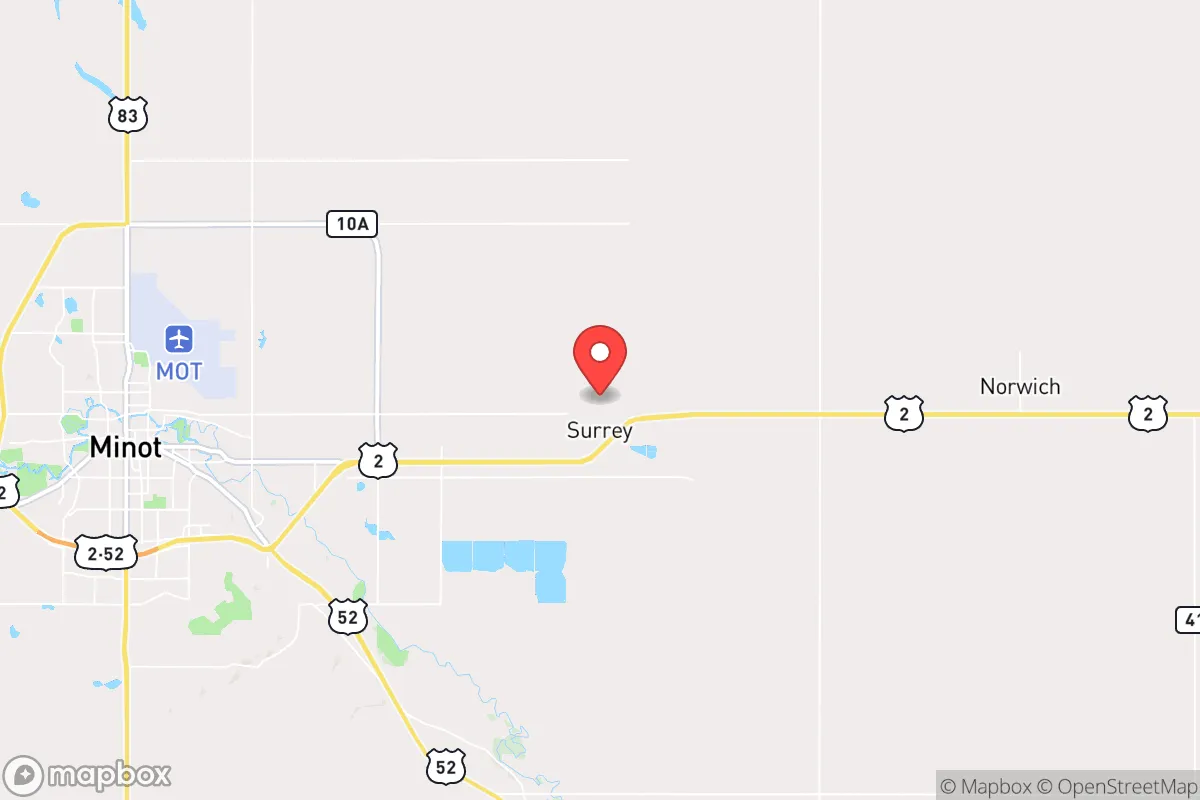
Surrey, North Dakota, offers a rare environment for personal sovereignty in the modern United States, where state-level protections and a sparse local population create a buffer against the regulatory creep found in more populated regions. For the strategic relocator—whether a single individual or a parent—this small city in Ward County functions as a practical outpost of autonomy, where the state’s constitutional carry law, low tax burden, and minimal zoning allow residents to live largely unbothered by government overreach. The key trade-off is that you trade the convenience of urban infrastructure for the freedom to own land, keep firearms without a permit, and raise your family without constant interference from school boards or health departments. For those with a survivalist or prepper mindset, Surrey represents a foothold in the northern plains where the state government in Bismarck is still small enough to be a partner rather than an adversary.
Tax burden and regulatory posture: how North Dakota keeps government off your back
North Dakota’s tax structure is one of the most favorable in the nation for those seeking to maximize personal financial sovereignty. The state has no state income tax, meaning every dollar you earn stays in your pocket—a stark contrast to high-tax states like California or New York where the state takes a cut before you even see your paycheck. Property taxes in Ward County are moderate, averaging around 1.2% of assessed value, which is reasonable for the level of services provided. More importantly, the regulatory posture in Surrey is light: there are no city-level business license fees for most home-based enterprises, and the state’s right-to-work laws mean you cannot be forced to join a union as a condition of employment. For the prepper, this translates to fewer layers of bureaucracy when you want to start a side business selling eggs, firewood, or handcrafted goods—activities that in other states would require permits, inspections, and fees. The state’s limited government philosophy is baked into its culture, and local officials in Surrey are generally responsive to concerns about overregulation, making it easier to push back against any new ordinances that would infringe on property rights or economic freedom.
Self-defense and gun law specifics: constitutional carry and stand your ground
North Dakota is a constitutional carry state, meaning that as of 2023, any legal resident 18 or older can carry a concealed firearm without a permit. This is a foundational element of personal sovereignty for the survivalist-minded: you are not dependent on government permission to defend yourself or your family. The state also has a stand your ground law, codified in NDCC 12.1-05-07.1, which removes any duty to retreat before using deadly force if you are lawfully present and reasonably believe it is necessary to prevent death or great bodily harm. For parents, this means that if an intruder enters your home or threatens your children on your property, you have clear legal backing to act decisively. There are no magazine capacity restrictions, no "assault weapon" bans, and no waiting periods for firearm purchases. The nearest gun shops and ranges are in Minot, about 15 minutes south, and the rural landscape around Surrey provides ample space for private target practice on your own land. The only notable restriction is that you cannot carry in certain government buildings or schools, but even those laws are less restrictive than in many states—North Dakota allows concealed carry in K-12 schools with a valid license, though individual districts can opt out. For the prepper, this legal environment means you can build a defensive capability without worrying about a future administration changing the rules overnight.
Self-reliance and homesteading viability: lot sizes, zoning, and off-grid feasibility
Surrey’s zoning code is remarkably permissive compared to most American towns, which is a major draw for those seeking self-reliance. Residential lots in the city limits typically range from 0.25 to 1 acre, but the real opportunity lies just outside town in unincorporated Ward County, where you can purchase 5- to 40-acre parcels with virtually no zoning restrictions. The city itself allows chickens, bees, and small livestock within city limits, and there are no HOA-style covenants that dictate what color you can paint your house or how long your grass can be. Off-grid living is legally feasible: North Dakota has no state-level ban on rainwater collection, and while you must connect to municipal water and sewer if available, many rural properties rely on wells and septic systems. Solar panels are permitted without special permits, and the state offers a property tax exemption for renewable energy systems. For the prepper, this means you can install a backup power system, store fuel, and maintain a substantial garden without fear of code enforcement showing up. The growing season is short (about 120 days), but cold frames and hoop houses can extend it, and the soil in the Souris River valley is fertile. The biggest practical challenge is the harsh winter, which requires serious preparation—wood stoves, insulated shelters, and stored food—but that same climate also discourages the kind of population growth that brings more regulation.
Personal liberties: parental rights, medical autonomy, speech, and property
North Dakota has been a battleground for parental rights in education, and the state legislature has passed several laws that strengthen parents’ authority over their children’s schooling. In 2023, the state enacted a Parents’ Bill of Rights (HB 1405), which requires schools to notify parents of any medical or mental health services provided to students and prohibits instruction on sexual orientation or gender identity in grades K-4. For conservative parents, this means you can send your child to public school without worrying about hidden curricula or secret medical interventions. Medical autonomy is also strong: North Dakota has no state-level vaccine mandate for adults, and while schools require standard immunizations, religious and philosophical exemptions are available. The state’s emergency powers were reformed in 2021 to limit the governor’s ability to shut down businesses or mandate lockdowns without legislative approval—a direct response to the overreach seen during the COVID-19 pandemic. Free speech is protected by the state constitution, and there are no hate speech laws that criminalize political or religious expression. Property rights are reinforced by the state’s strong eminent domain protections, which require just compensation and a public purpose for any taking. For the survivalist, this legal framework means you can stockpile supplies, discuss preparedness openly, and refuse medical treatments you don’t trust without fear of legal retaliation.
In the broader landscape of American personal sovereignty, Surrey, ND, ranks among the top-tier locations for those who value autonomy over convenience. The combination of no income tax, constitutional carry, permissive zoning, and strong parental rights creates a legal environment where the default answer from government is "yes" rather than "no." Compared to states like Montana or Idaho, which are also popular with preppers, North Dakota has a lower population density and less political volatility, meaning the laws are less likely to change with each election cycle. The trade-offs are real—extreme winters, limited healthcare access, and a 15-minute drive to the nearest Walmart—but for the strategic relocator who prioritizes freedom over comfort, Surrey offers a rare combination of legal protections and practical feasibility that is increasingly hard to find in the lower 48. If your goal is to live your life on your own terms, with minimal government interference and maximum personal responsibility, this small city on the northern plains deserves a serious look.

* Values derived from national, state, county, city and local statistics and may differ in a specific area. Last updated: 2026-04-19T05:15:57.000Z
Narrative content on this page is AI-generated and may contain mistakes. Verify any details that matter before acting on them.
ReloMaps may earn a commission from affiliate links at no extra cost to you.

