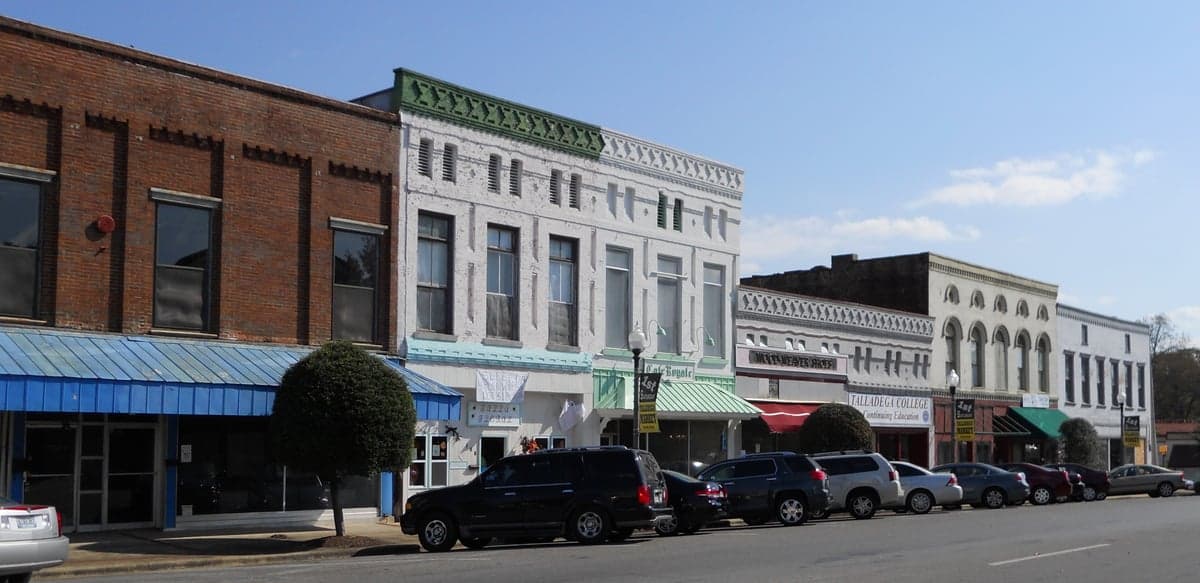
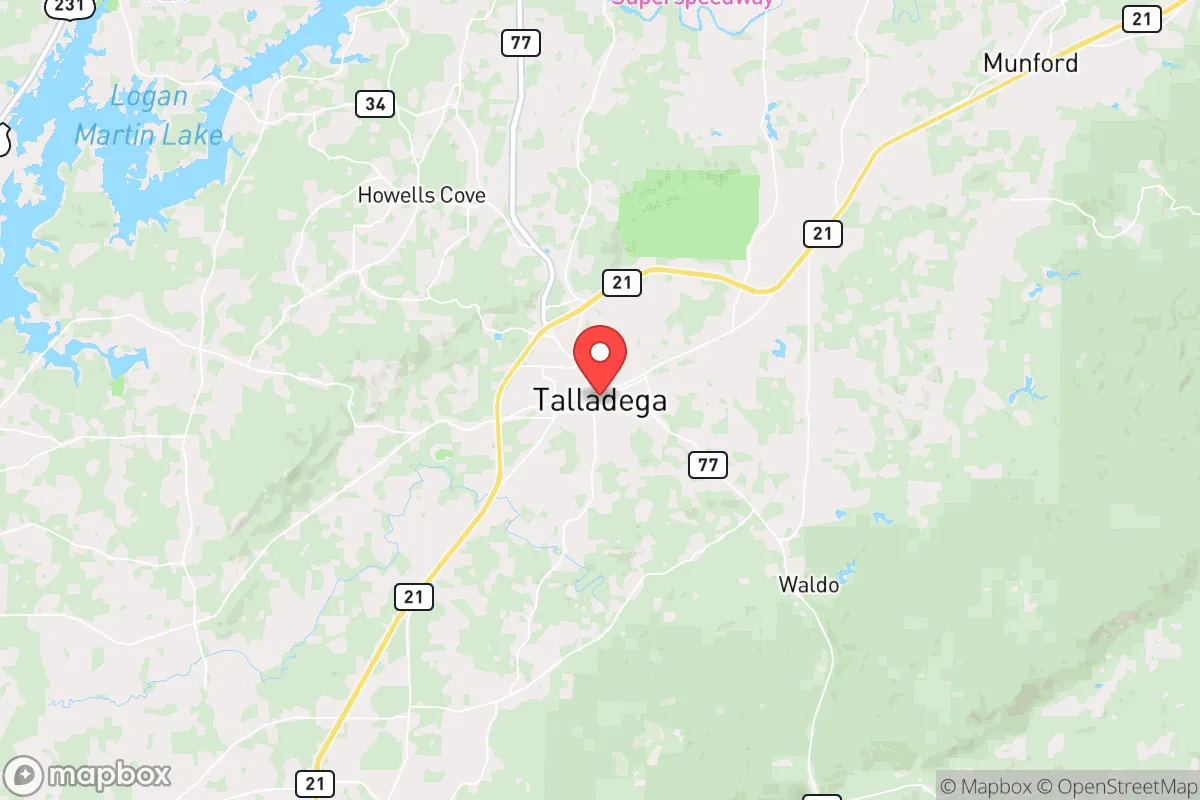
Photo: Wikipedia
Quality of Life in Talladega, AL
A high quality of life with strong walkability, manageable living costs, healthy neighborhood signals, and solid amenity access.
What does Quality of Life tell us?
Quality of Life blends cost of living, nearby amenities, socioeconomic signals, and neighborhood character. City-level scores represent the whole municipality; individual neighborhoods can differ.
What does this tell us?
Quality of Life blends cost of living, nearby amenities, socioeconomic signals, and neighborhood character. City-level scores represent the whole municipality; individual neighborhoods can differ.
Cost of Living
44% below national average
The Real Cost of Living in Talladega, AL for 2026
| Tier | Individual | Family (4) |
|---|---|---|
| Survival | $12k | $23k |
| Comfortable | $23k | $33k |
| Luxury | $79k+ | $122k+ |
| Elite (Top 5%) | $93k+ | $144k+ |
141%
The Area Signal
A metric tracking the socioeconomic signals of the area.
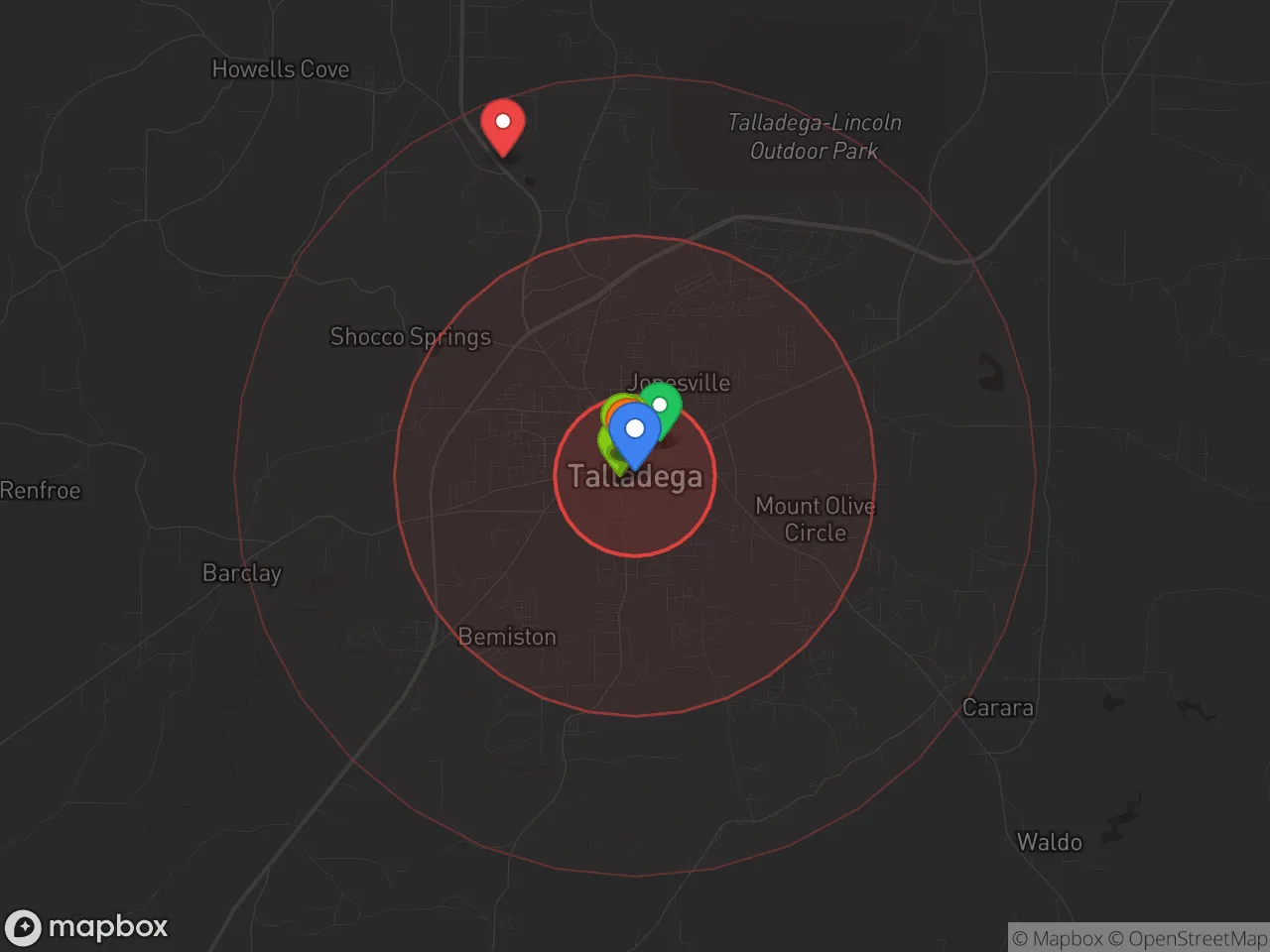
Hobbies
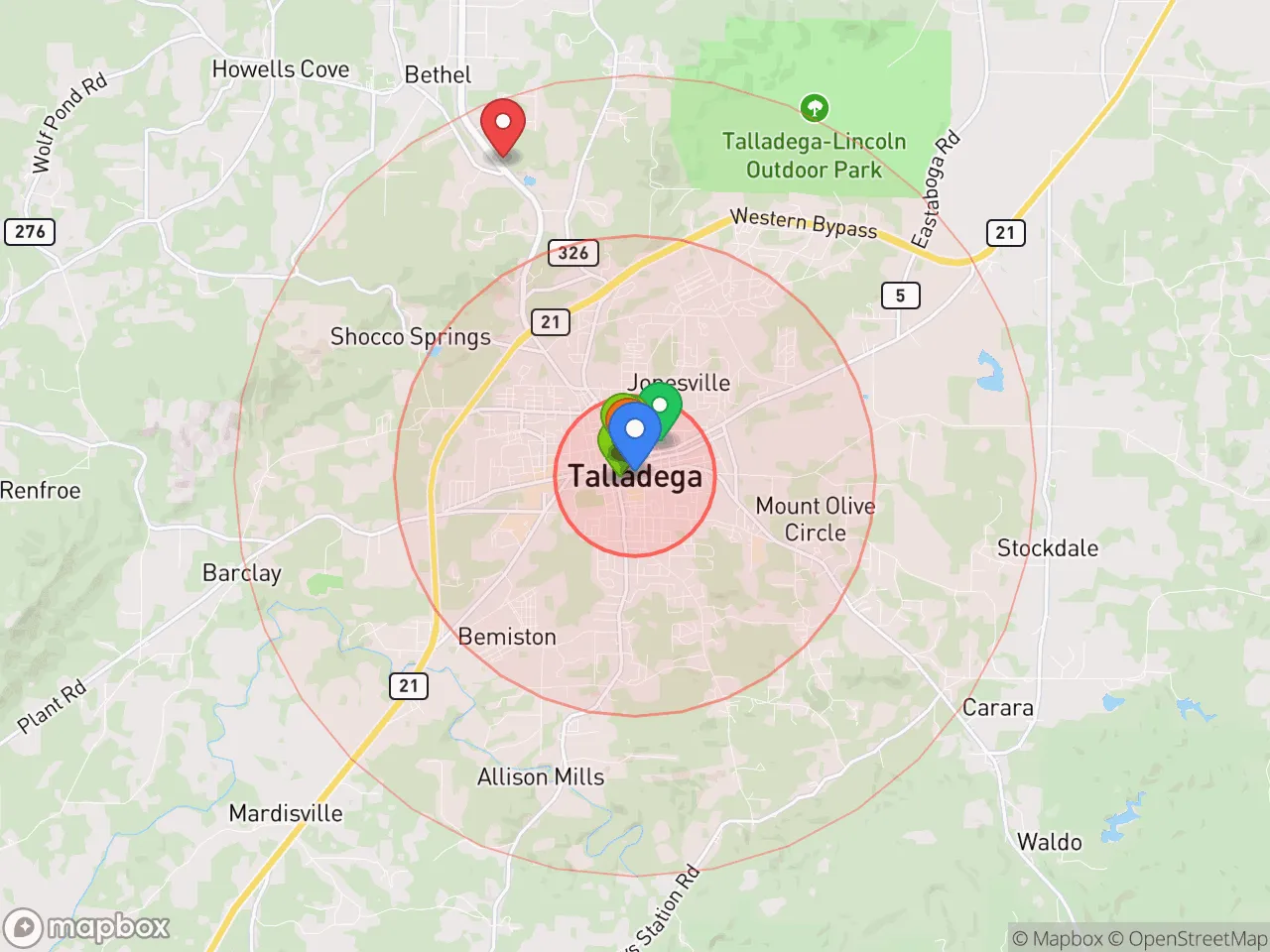
Explore the areaGroceries
1 within 10 miles
Gas
7 within 10 miles
Hospital
3 within 20 miles
Airport
ATL — Hartsfield–Jackson Atlanta International
Post Office
USPS — Talladega, AL
Critical Amenities
Quality-of-Life Analysis
Talladega, Alabama, presents a notably low cost of living that attracts a mix of retirees, remote workers, and families seeking affordability without sacrificing access to outdoor recreation and small-town amenities. With a cost-of-living index of 56 (well below the U.S. average of 100 average), the area’s median household income hovers around $35,000, reflecting a working- and middle-class demographic rather than an affluent enclave. The population of roughly 15,000 is predominantly long-term residents, though recent newcomers are drawn by the combination of cheap housing and proximity to Birmingham (about 50 miles west) and Anniston (20 miles east).
How housing costs and everyday expenses compare to nearby cities
Talladega’s housing market is among the most affordable in the state. The median home value sits at $116,600, roughly one-third of the national median, while median rent is $765 per month. By comparison, Birmingham’s median home value is about $200,000, and Anniston’s is around $130,000. A typical mortgage payment in Talladega (assuming 20% down at current rates) runs $600–$700, making homeownership accessible even for households earning $35,000–$45,000. Utilities, groceries, and transportation also track below national averages, with the overall COL index of 56 meaning residents spend roughly 44% less than 60 cents for every dollar the average American spends. The average commute of 22.1 minutes is shorter than the national average (26 minutes) and significantly less than Birmingham’s 25-minute average, reducing transportation costs further. Property taxes remain low, but property taxes are also modest—around 0.4% of assessed value—keeping total housing expenses manageable.
What daily life is like for families, retirees, and outdoor enthusiasts
Talladega’s daily rhythm centers on its historic downtown square, local churches, and the nearby Talladega National Forest. The city’s public school system, Talladega City Schools, serves about 2,500 students with a graduation rate near 90%, though test scores lag state averages. Private options include Talladega College, a historically Black liberal arts college that adds cultural events and part-time employment for residents. For recreation, the Talladega Superspeedway draws NASCAR crowds several weekends a year, but quieter attractions include the Cheaha State of Cheaha State Park (highest point in Alabama) and the Pinhoti Trail for hiking. Grocery shopping is limited to a Walmart Supercenter and a few local markets; most residents drive to Oxford or Anniston for larger retail and dining options. Healthcare is served by Citizens Baptist Medical Center, a 100-bed facility, though specialized care often travel to Birmingham for specialized care. The area’s low crime rate (violent crime below national average) and slow pace appeal to retirees and families who prioritize space and affordability over urban amenities.
Talladega is best suited for cost-conscious buyers, remote workers with stable incomes, and retirees who want a quiet, low-stress environment with easy access to outdoor recreation. The combination of sub-$120,000 homes, a 22-minute commute, and a cost of living 44% below the national average makes it one of Alabama’s most affordable places to live. However, those seeking high-end shopping, diverse dining, or top-tier schools may find the trade-offs too steep. For most residents, the financial freedom gained by living in Talladega outweighs the limited local amenities.

Crime in Talladega, AL
Higher crime rates than 74% of comparable U.S. locations.
Violent CrimeViolent Crime Analysis
Property CrimeProperty Crime Analysis
Crime Analysis
Talladega, Alabama, reports a violent crime rate of 466.3 incidents per 100,000 residents and a property crime rate of 3,230 per 100,000, figures that place it well above both state and national averages. These numbers indicate that the city faces significant public safety challenges, particularly when compared to similarly sized communities in the Southeast. The data reflects a reality where residents encounter a higher-than-average risk of both violent offenses and property crimes, making crime a central factor for anyone considering relocation to the area.
Crime in context
Talladega’s violent crime rate is roughly 25% higher than the Alabama state average and more than double the national median for cities of its size. Property crime in the city is even more elevated, exceeding the state average by approximately 40% and the national average by a similar margin. These comparisons place Talladega in a higher-risk tier among Alabama municipalities, alongside cities like Anniston and Gadsden. The elevated rates are particularly concerning given that Talladega is a small city (population roughly 15,000) where concentrated crime can have an outsized impact on daily life. The local justice system, operating under Alabama’s generally conservative legal framework, has not been immune to broader trends; however, the city has not adopted the progressive prosecutorial policies seen in some larger metro areas, which can lead to reduced accountability and increased recidivism.
What residents experience
For those living in Talladega, the most common crime concerns are property-related: burglary, larceny-theft, and motor vehicle theft are the leading offenses. Violent crimes, while less frequent, include aggravated assault as the most common category, with robbery and homicide occurring at rates that are elevated relative to the national average. Residents report that certain areas, particularly near the downtown corridor and along the U.S. 231 corridor, see higher concentrations of both property and violent incidents. The presence of the Talladega Superspeedway brings periodic large crowds, which can temporarily increase petty theft and disorderly conduct. Daily life for families often involves taking precautions such as installing security systems, avoiding walking alone after dark in certain neighborhoods, and staying informed through local crime mapping services.
Neighborhood-level variation
Crime in Talladega is not uniformly distributed. The eastern and southern residential areas, particularly neighborhoods like East Talladega and the areas around the Coosa River, tend to report lower crime rates. In contrast, the central and northern sections of the city, including areas near the historic downtown and along the railroad tracks, see higher incident densities. The city’s public housing complexes and some older rental properties also show elevated crime statistics. Prospective residents are advised to consult local police department crime maps and speak with real estate agents familiar with specific blocks, as a difference of just a few streets can significantly alter the safety profile of a given address. Overall, while Talladega has pockets of relative safety, the citywide data warrants a cautious approach for anyone prioritizing low-crime living.
* Values derived from national, state, county, city and local statistics and may differ in a specific area. Last updated: 2026-05-14T18:50:34.000Z
Narrative content on this page is AI-generated and may contain mistakes. Verify any details that matter before acting on them.
ReloMaps may earn a commission from affiliate links at no extra cost to you.

