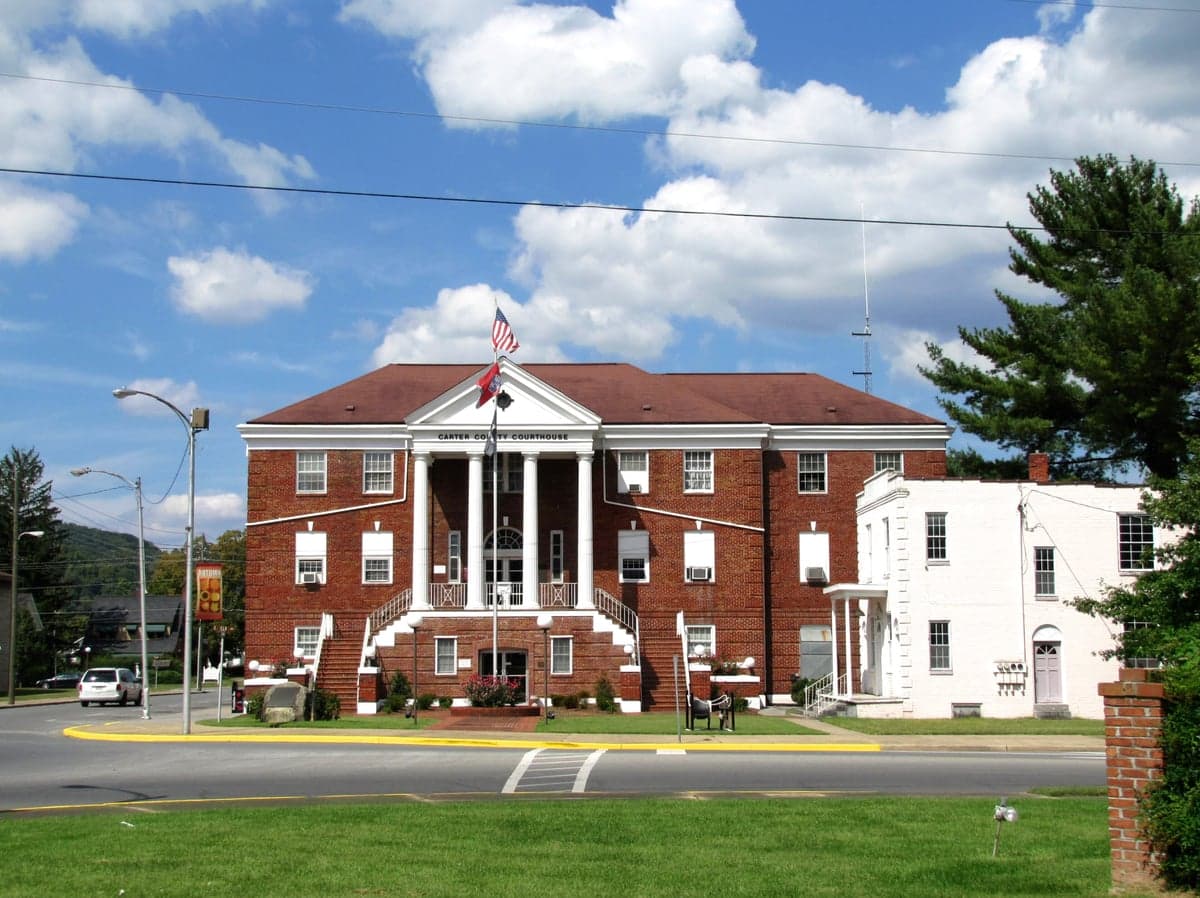
Photo: Wikipedia
Quality of Life in Carter County
A livable area that tracks near national norms for affordability, walkability, and neighborhood health.
What does Quality of Life tell us?
Quality of Life measures an area by evaluating factors like cost of living, nearby amenities, country club access, airport proximity, socioeconomic signals and neighborhood character. For large states, this is a general average — quality of life can vary dramatically between metro areas, suburbs, and rural communities within the same state.
What does this tell us?
Quality of Life measures an area by evaluating factors like cost of living, nearby amenities, country club access, airport proximity, socioeconomic signals and neighborhood character. For large states, this is a general average — quality of life can vary dramatically between metro areas, suburbs, and rural communities within the same state.
Cost of Living
40% below national average
108%
The Real Cost of Living in Carter County for 2026
| Tier | Individual | Family (4) |
|---|---|---|
| Survival | $12k | $22k |
| Comfortable | $31k | $45k |
| Luxury | $87k+ | $134k+ |
| Elite (Top 5%) | $102k+ | $158k+ |
Quality-of-Life Analysis
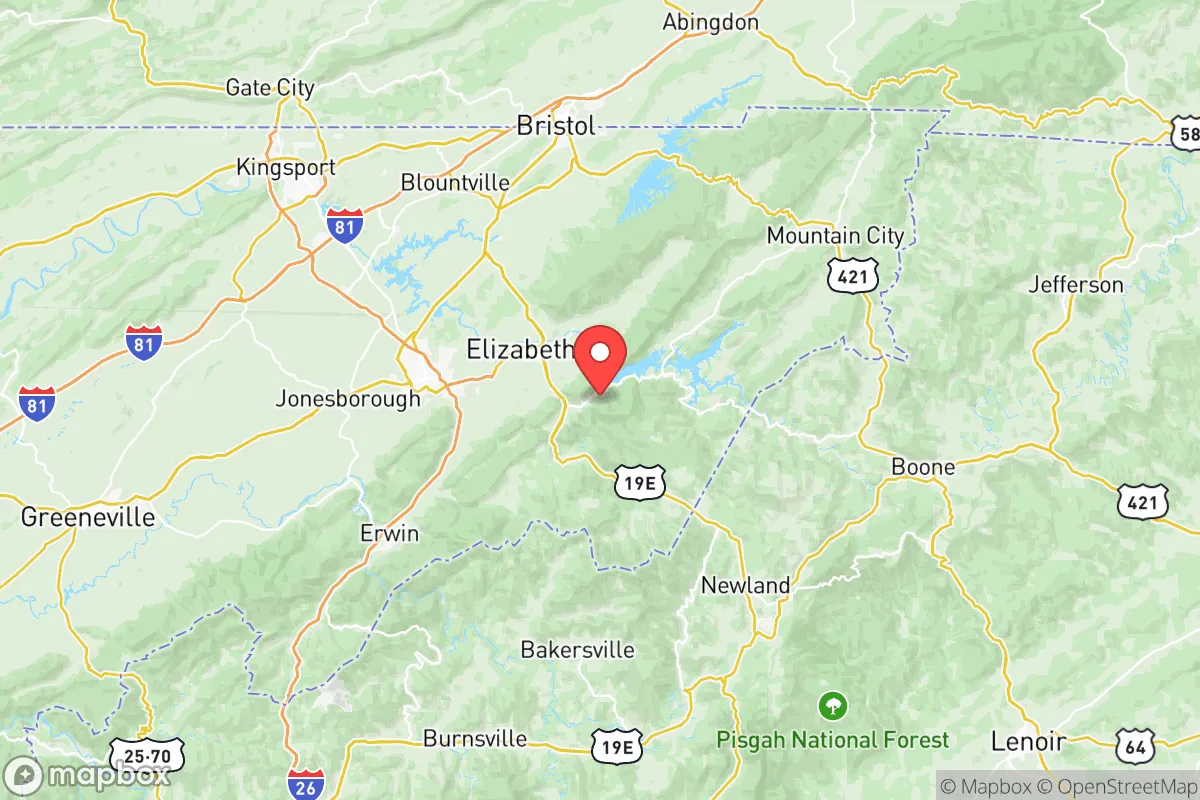
Carter County, Tennessee, offers a broad spectrum of quality-of-life options, from the walkable, amenity-rich town of Elizabethton to the deeply rural, secluded hollows of Roan Mountain and Hampton. This diversity attracts a wide range of residents: young families seeking affordable starter homes near Johnson City, retirees drawn to the quiet mountain scenery, and outdoor enthusiasts who prioritize immediate access to the Appalachian Trail and Watauga Lake. The county’s character shifts noticeably as you move from the historic downtown of its largest town into the sparsely populated, forested valleys that define its eastern and northern reaches.
Largest town(s) & population centers
Elizabethton is the county seat and by far the largest population center, home to roughly 14,000 residents. Daily life here centers on a revitalized historic downtown along the Doe River, featuring local restaurants, the Carter County Courthouse, and the Elizabethton Covered Bridge. The town provides most essential services, including a Walmart Supercenter, a regional hospital (Sycamore Shoals Hospital), and a campus of Northeast State Community College. Commuting patterns are strong: the average commute in the county is 24 minutes, with many residents driving west on US-19E and TN-91 to jobs in Johnson City (15-20 minutes away) or Kingsport. Elizabethton offers a more traditional small-town lifestyle with sidewalks, parks, and a defined commercial corridor, making it the primary hub for shopping, dining, and civic life.
Smaller towns & rural pockets
Moving east and south from Elizabethton, the landscape and lifestyle shift dramatically. Roan Mountain (population under 1,500) sits at the base of Roan Mountain State Park and the Appalachian Trail, attracting hikers, campers, and those seeking extreme quiet. This area is defined by its elevation, dense forests, and a very limited commercial strip—a few gas stations, a general store, and seasonal tourist cabins. Hampton, located along the Watauga River, is another small community (population roughly 2,000) that serves as a gateway to Watauga Lake and the Cherokee National Forest. Life here is slower and more self-sufficient, with fewer retail options and a stronger reliance on outdoor recreation. Further north, the unincorporated community of Butler sits near the Tennessee-Virginia line, offering a remote, sparsely populated feel with large tracts of farmland and forest. These areas lack the amenities of Elizabethton but provide direct access to some of the most pristine natural landscapes in the southern Appalachians.
Cost & lifestyle range
The cost of living across Carter County is uniformly low compared to national averages, but the trade-offs between town and rural life are significant. The county’s overall cost of living index is 60 (40% below the US average), with a median home value of $157,200 and median rent of $738. In Elizabethton, housing prices are slightly higher—a typical 3-bedroom home might range from $180,000 to $220,000—but residents gain walkability, public utilities, and proximity to jobs and healthcare. In contrast, rural areas like Roan Mountain and Butler offer the cheapest land and homes, often under $120,000 for a fixer-upper on several acres, but with trade-offs: longer drives to grocery stores, limited internet options (though Starlink is improving this), and reliance on well water and septic systems. The lifestyle range is stark: a family in Elizabethton can walk to a coffee shop and a park, while a resident in the Roan Mountain area may drive 30 minutes to the nearest full-service grocery store. The county’s low property taxes (roughly $0.60 per $100 of assessed value) keep carrying costs low across the board, making it attractive for those on fixed incomes or seeking a second home.
Carter County is best suited for individuals and families who prioritize affordability and outdoor recreation over urban amenities. Those who thrive here are typically self-reliant, comfortable with a slower pace, and willing to drive for specialized services. Elizabethton offers a comfortable middle ground for those who want a small-town social fabric with reasonable commutes, while the remote communities of Roan Mountain and Hampton are ideal for homesteaders, remote workers with reliable internet, and nature enthusiasts who consider a 30-minute drive to the nearest store a fair price for solitude and mountain views.

Crime in Carter County
Higher crime rates than 58% of comparable U.S. locations.
Violent CrimeViolent Crime Analysis
Property CrimeProperty Crime Analysis
Crime Analysis
Carter County, Tennessee, presents a mixed safety profile, with crime rates that exceed both state and national averages across key categories. The county recorded a violent crime rate of 496.8 per 100,000 residents and a property crime rate of 1,654.8 per 100,000 in the most recent reporting period. While these figures indicate a higher-than-average risk compared to the rest of Tennessee and the United States, the actual experience of crime varies significantly depending on which part of the county a resident lives in, with distinct differences between the more urbanized areas and the rural communities.
Crime in context
Carter County’s violent crime rate of 496.8 per 100,000 is roughly 30% higher than the national average and notably above the Tennessee state average of approximately 630 per 100,000. Property crime, at 1,654.8 per 100,000, also sits above the national benchmark of around 1,950 per 100,000 but is slightly below the Tennessee state average. The county’s crime index places it in a higher-risk tier compared to many of its neighbors in northeastern Tennessee. The most common violent offenses are aggravated assault and robbery, while larceny-theft and burglary dominate the property crime category. These statistics are heavily influenced by crime patterns in the county’s largest municipality, Elizabethton, which serves as the county seat and the primary population center.
What residents experience
Daily life for residents in Carter County is shaped by where they live. In Elizabethton, the concentration of retail, services, and a larger population drives a higher incidence of property crimes like shoplifting and vehicle break-ins. The city’s police department handles the bulk of the county’s reported offenses. In contrast, the more rural communities of Roan Mountain and Hampton report far fewer incidents, though they are not immune to occasional burglaries or domestic disturbances. The unincorporated areas along the Watauga River and near the Cherokee National Forest tend to see the lowest crime rates in the county. Residents in these areas often cite a strong sense of community and neighborly watchfulness as key safety factors. However, the county’s proximity to Johnson City (in Washington County) means that some regional crime trends, particularly drug-related offenses and property theft, spill over into Carter County’s border areas.
Neighborhood-level variation and judicial concerns
Neighborhood-level safety in Carter County is not uniform. The downtown core of Elizabethton and areas near the Elizabethton Housing Authority complexes report higher concentrations of police calls for service, including drug activity and assaults. Conversely, the residential neighborhoods on the city’s west side, closer to the Watauga River, and the subdivisions around Watauga Lake are generally considered safer. A critical factor for residents to consider is the judicial environment. The First Judicial District, which covers Carter, Johnson, and Unicoi counties, has seen a trend toward more progressive prosecution policies in recent years. District attorneys and judges in this district have increasingly emphasized diversion programs and reduced sentencing for non-violent offenders. While intended to reduce recidivism, this approach has raised concerns among residents that it may lead to more criminals returning to the streets sooner, potentially undermining public safety and victim justice. For those prioritizing a conservative, law-and-order judicial philosophy, the neighboring districts in Washington County or Sullivan County may offer a more aligned approach. Overall, prospective residents should research specific neighborhoods in Elizabethton and the surrounding unincorporated areas, and consider the broader judicial climate, when evaluating safety in Carter County.
* Values derived from national, state, county, city and local statistics and may differ in a specific area. Last updated: 2026-10-05T13:01:46.000Z
Narrative content on this page is AI-generated and may contain mistakes. Verify any details that matter before acting on them.
ReloMaps may earn a commission from affiliate links at no extra cost to you.

