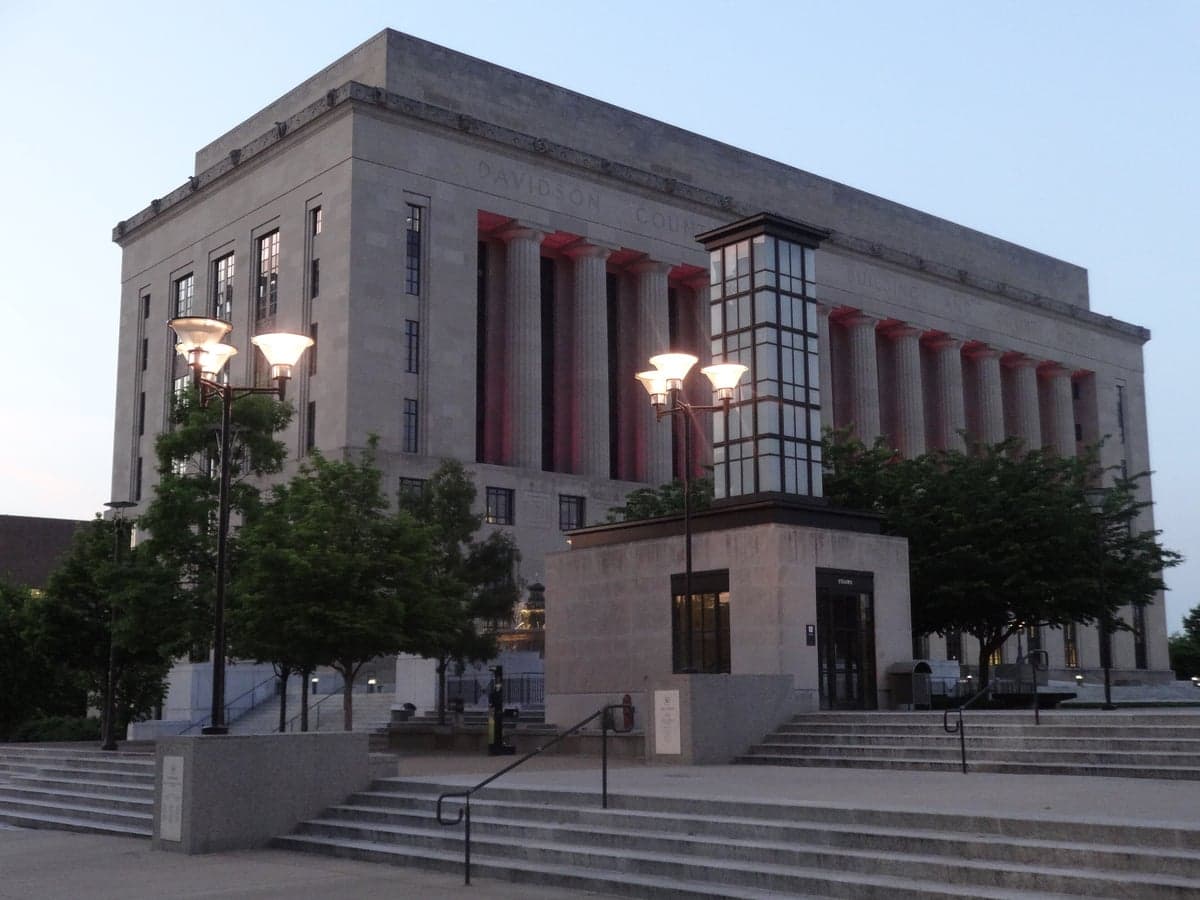
Photo: Wikipedia
Quality of Life in Davidson County
A livable area that tracks near national norms for affordability, walkability, and neighborhood health.
What does Quality of Life tell us?
Quality of Life measures an area by evaluating factors like cost of living, nearby amenities, country club access, airport proximity, socioeconomic signals and neighborhood character. For large states, this is a general average — quality of life can vary dramatically between metro areas, suburbs, and rural communities within the same state.
What does this tell us?
Quality of Life measures an area by evaluating factors like cost of living, nearby amenities, country club access, airport proximity, socioeconomic signals and neighborhood character. For large states, this is a general average — quality of life can vary dramatically between metro areas, suburbs, and rural communities within the same state.
Cost of Living
31% above national average
69%
The Real Cost of Living in Davidson County for 2026
| Tier | Individual | Family (4) |
|---|---|---|
| Survival | $24k | $45k |
| Comfortable | $75k | $110k |
| Luxury | $137k+ | $212k+ |
| Elite (Top 5%) | $188k+ | $292k+ |
Quality-of-Life Analysis
Davidson County, Tennessee, offers a quality-of-life spectrum that ranges from the dense, amenity-rich urban core of Nashville to quiet, unincorporated rural pockets, drawing everyone from young professionals and creatives to families seeking suburban schools and retirees looking for land. The county’s overall cost of living index sits at 131 (100 = U.S. average), with a median home value of $386,600 and median rent of $1,485, but those figures mask dramatic variation between neighborhoods and outlying communities. The average commute of 24.8 minutes reflects the county’s relatively compact geography, though travel times can stretch to 35–40 minutes for those living in the far southern or eastern rural edges.
Largest town(s) & population centers
Nashville is the dominant population center, containing roughly 95% of the county’s residents. Daily life here is defined by walkable neighborhoods like Germantown and East Nashville, where residents access live music venues, boutique grocery stores, and the Cumberland River Greenway without a car. The downtown core, anchored by Broadway and the Gulch, draws professionals in music, healthcare, and tech, with median home values exceeding $500,000 in many ZIP codes. Outside the urban core, suburban-style neighborhoods such as Bellevue and Donelson offer single-family homes with yards, chain retail, and direct interstate access, appealing to families who want Nashville’s job market without the high-rise lifestyle. Brentwood and Franklin are often mentioned alongside Nashville but lie in adjacent Williamson County; within Davidson County, the Green Hills and Belle Meade areas represent the highest-cost tier, with median home prices above $800,000 and top-rated public schools like Julia Green Elementary.
Smaller towns & rural pockets
Davidson County retains several smaller communities and unincorporated areas that feel distinctly non-urban. Joelton, in the northwestern corner, is a rural crossroads with a population under 2,000, where residents live on acreage, raise livestock, and commute 30–35 minutes to downtown Nashville. The Whites Creek area, just north of Joelton, offers similar rural character with working farms and the historic Hadley Park. Antioch, in the southeast, is a rapidly suburbanizing area with a mix of older ranch homes and new subdivisions, but its southernmost fringes near the Rutherford County line still contain horse pastures and small farms. Hermitage, east of Nashville, blends suburban subdivisions with the Andrew Jackson plantation grounds, providing a semi-rural feel within 20 minutes of downtown. These areas typically have median home values between $280,000 and $350,000, well below the county average, and lack the walkable retail and nightlife of Nashville proper.
Cost & lifestyle range
The cost-of-life spread across Davidson County is wide. At the high end, Belle Meade and Forest Hills feature estate homes on large lots, with median values above $1 million and property taxes that fund exceptional public services, though residents still pay the county’s 9.25% sales tax. At the low end, Antioch and Madison offer median home values around $280,000–$320,000, with rental apartments averaging $1,200–$1,400 for a two-bedroom. Lifestyle differences are stark: a Belle Meade resident might spend weekends at the Nashville Golf & Athletic Club or the Cheekwood Estate gardens, while an Antioch resident relies on the Southeast Community Center and the Nashville Zoo for recreation. The county’s urban core (Downtown, Midtown, 12 South) prioritizes walkability, bike lanes, and transit access via WeGo buses, but lacks large grocery stores and affordable parking. The suburban ring (Bellevue, Donelson, Hermitage) offers big-box retail, chain restaurants, and lower crime rates, but requires a car for nearly every errand. The rural fringe (Joelton, Whites Creek) provides land and quiet but limited internet access and few local jobs, forcing long commutes.
Davidson County best suits people who value proximity to a major city’s cultural and economic engine but want the option of a quieter, more affordable home base within the same county lines. Young professionals and empty-nesters thrive in the walkable urban neighborhoods, while families with school-age children often gravitate to the suburban or semi-rural areas where home prices are lower and yards are larger. The county’s diversity of housing stock—from $1,500/month studio apartments in Germantown to $350,000 three-bedroom ranches in Hermitage—means that a wide range of incomes can find a foothold, though the overall cost of living remains above the national average. Those seeking true rural isolation or ultra-low taxes will likely look to neighboring counties like Cheatham or Robertson, but for anyone wanting a mix of city energy and country quiet within a single commute, Davidson County delivers that balance.

Crime in Davidson County
Higher crime rates than 58% of comparable U.S. locations.
Violent CrimeViolent Crime Analysis
Property CrimeProperty Crime Analysis
Crime Analysis
Davidson County, Tennessee, home to Nashville, presents a safety picture that requires careful attention. With a violent crime rate of 490.5 per 100,000 residents and a property crime rate of 1,640.7 per 100,000, the county's overall crime levels significantly exceed both Tennessee state averages and national benchmarks. These figures place Davidson County among the higher-crime jurisdictions in the state, a reality driven largely by the concentrated urban core of Nashville and the progressive policies of the local justice system.
Crime in context
Davidson County's violent crime rate is roughly 40% higher than the national average and significantly above the Tennessee state average of approximately 630 per 100,000. Property crime in the county also runs well above national norms, with rates nearly double the U.S. median. The disparity is most pronounced when comparing Davidson County to its safer suburban neighbors. For example, Brentwood and Franklin in adjacent Williamson County consistently report violent crime rates below 100 per 100,000, while Davidson County's rate hovers near 500. This contrast underscores the impact of differing judicial philosophies: Davidson County's elected District Attorney, Glenn Funk, has implemented progressive policies including reduced cash bail and diversion programs for many non-violent offenses. Critics argue these approaches, while intended to reduce incarceration, have contributed to a revolving-door justice system that emboldens repeat offenders and undermines public safety. In contrast, Williamson County's more traditional prosecutorial stance correlates with its dramatically lower crime rates.
What residents experience
For those living in Davidson County, the risk of becoming a crime victim is tangible. Property crime—including theft, burglary, and motor vehicle theft—is the most common concern. Nashville's downtown core, including areas like The Gulch, Music Row, and East Nashville, see concentrated property crime, particularly vehicle break-ins and package thefts. Violent crime, while less frequent, is a serious issue in specific neighborhoods. North Nashville, parts of Antioch, and the Bordeaux area report higher rates of aggravated assault and robbery. The county's progressive district attorney has faced criticism for declining to prosecute certain low-level drug and property offenses, a policy that some residents and business owners say has led to a perception of lawlessness in commercial corridors like Nolensville Pike and Dickerson Pike. The result is a two-tiered experience: tourists and downtown visitors face property crime risks, while residents in higher-crime zip codes contend with more serious violent threats.
Neighborhood-level variation
Safety in Davidson County is highly neighborhood-dependent. Belle Meade, Forest Hills, and Oak Hill are among the safest areas, with crime rates comparable to the safest suburbs in the region. These affluent, primarily residential enclaves benefit from their own police patrols and lower population density. In contrast, Madison, Hermitage, and parts of South Nashville experience property crime rates that are 2-3 times higher than the county average. The disparity is stark: a resident of Belle Meade faces a violent crime risk roughly one-tenth that of someone living in North Nashville. For prospective residents, the choice of neighborhood within Davidson County is the single most important factor in determining personal safety. Those seeking lower crime should prioritize the county's western and southern edges, while avoiding areas with high concentrations of rental properties and commercial corridors that attract transient populations. The county's progressive judicial policies, while well-intentioned, have created an environment where property crime is often treated as a low priority, and violent offenders cycle through the system with minimal consequences. This reality makes neighborhood selection—and a willingness to invest in private security measures—essential for anyone considering a move to Davidson County.
* Values derived from national, state, county, city and local statistics and may differ in a specific area. Last updated: 2026-05-09T19:31:42.000Z
Narrative content on this page is AI-generated and may contain mistakes. Verify any details that matter before acting on them.
ReloMaps may earn a commission from affiliate links at no extra cost to you.

