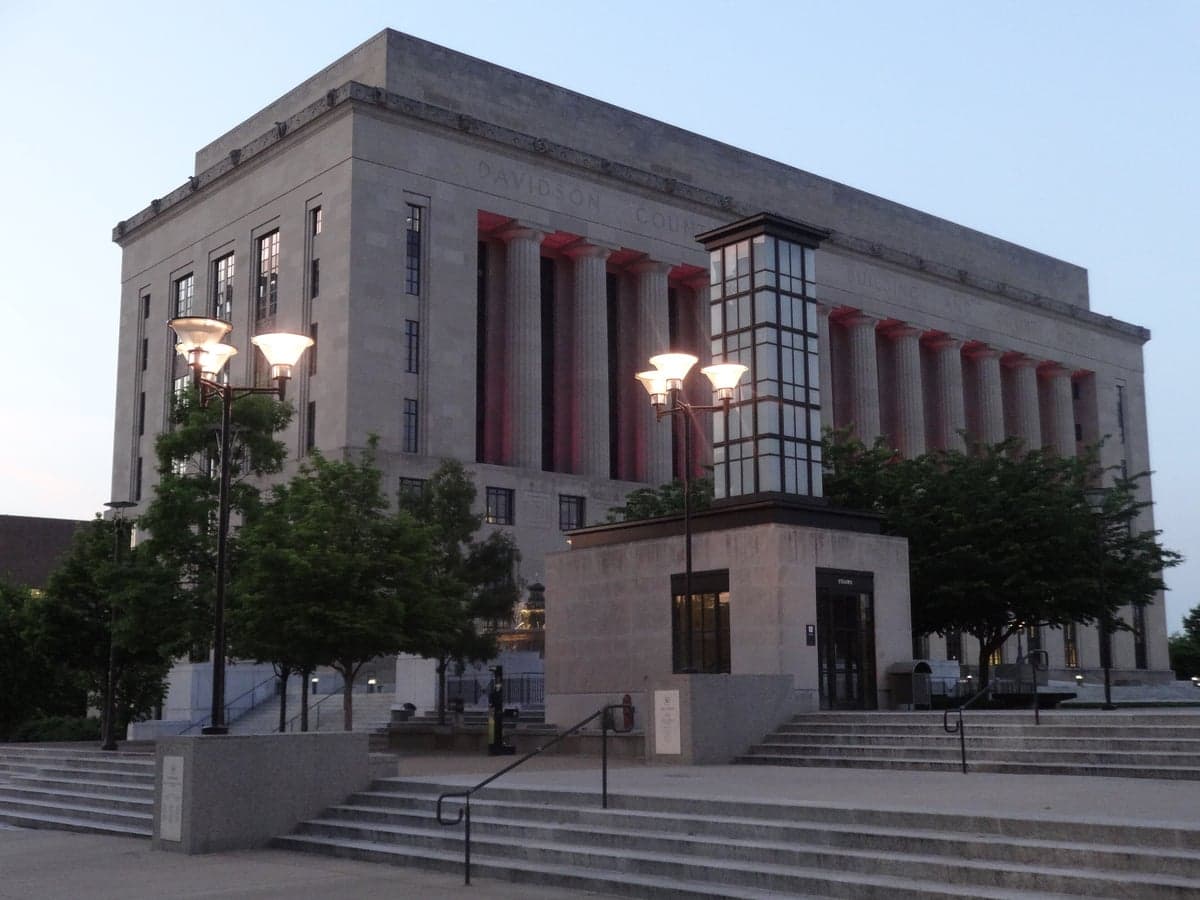
Photo: Wikipedia
Political ClimatePolitical Climate in Davidson County
Showing state-level results — no local-only data available.
Local Political AnalysisPolitical Analysis of Davidson County
Look, I’ve lived in Davidson County my whole life, and I’ve watched this place change from a reliably moderate, live-and-let-live community into something that feels a lot more like a one-party progressive experiment. The numbers tell the story: Davidson County, anchored by Nashville, has swung hard to the left over the last decade, routinely delivering 60-65% of its vote to Democratic presidential candidates. Meanwhile, the surrounding state of Tennessee has a Cook PVI of R+13, meaning the rest of the state is deeply conservative. So you’ve got this deep blue island sitting in a sea of red, and the tension between those two realities is the defining political fact of life here.
How it compares
The gap between Davidson County and the rest of Tennessee isn’t just wide—it’s a chasm. In the 2024 election, Davidson County went for the Democratic candidate by roughly 35 points, while the state as a whole went Republican by about 30 points. That’s a 65-point swing. But it’s not uniform across the county. Belle Meade and Forest Hills—the old-money, established neighborhoods—still lean Republican, though they’re becoming less reliable every cycle. Green Hills and 12South are now solidly blue, driven by younger transplants and professionals. The real swing precincts used to be in places like Donelson and Hermitage, but even those are trending left as the city’s culture war issues—like mask mandates, zoning overhauls, and police funding debates—push moderate voters either further left or out to the exurbs. Antioch and Madison are now reliably Democratic, fueled by growing minority populations and new arrivals. The only parts of the county that still feel like the old Tennessee are the far northern and southeastern fringes, like Joelton and Whites Creek, where you’ll still see Trump signs in yards and a general distrust of Metro Council’s latest progressive ordinance.
What this means for residents
For those of us who value personal freedom and limited government, the trend is concerning. The Metro Council has increasingly pushed policies that feel like government overreach—from strict short-term rental regulations that tell you what you can do with your own property, to a controversial "transit tax" referendum that would have forced a massive tax hike on residents. Property taxes have risen sharply to fund expanded city services and a school system that, despite the spending, hasn’t seen proportional gains in student performance. The city’s approach to public safety has also shifted: the police budget has been cut and reallocated to social programs, and while the intent might be noble, violent crime in parts of North Nashville and Bordeaux has spiked noticeably. For a long-time resident, it feels like the people running things are more concerned with national progressive talking points than with the basic functions of government—like keeping the streets safe and letting you run your business without a dozen new permits.
Cultural and policy distinctions
The cultural divide is just as stark. In the rest of Tennessee, you can still buy a gun without a waiting period, and the state legislature has passed laws to preempt local ordinances on everything from plastic bag bans to bathroom policies. Davidson County, however, has tried to carve out its own progressive zone—pushing for sanctuary city policies, expanding non-citizen voting in school board elections (which was later struck down), and creating a "community oversight board" for police that critics say ties officers’ hands. If you’re a conservative or even a moderate who just wants to be left alone, you’ll feel the friction every time you see a new bike lane replacing a car lane or hear about another tax-funded art installation downtown. The trajectory is clear: Davidson County is going to keep moving left, and the state government is going to keep pushing back. For residents who don’t fit the progressive mold, the question is whether to stay and fight—or pack up for Williamson County.

State Political ClimatePolitical Climate in Tennessee
State Political AnalysisPolitical Environment in the State
Tennessee is a solidly Republican state with a Cook PVI of R+13, meaning it votes about 13 points more Republican than the national average in presidential elections. The dominant coalition is a mix of rural conservatives, suburban families, and a growing number of transplants from blue states seeking lower taxes and more personal freedom. Over the last 10-20 years, the state has shifted rightward, with the GOP now holding supermajorities in both legislative chambers and every statewide office, a trend accelerated by in-migration from California, Illinois, and New York.
Urban vs. rural divide
The political map breaks down sharply between the state’s major metros and everything else. Nashville (Davidson County) and Memphis (Shelby County) are the deep-blue anchors, consistently voting Democratic by 20-30 points in statewide races. Nashville’s growth has been fueled by a flood of out-of-state professionals, many from progressive cities, which has turned the city into a liberal enclave on issues like homelessness, public transit, and policing. Chattanooga (Hamilton County) and Knoxville (Knox County) are more purple but trending red; Hamilton County flipped from blue to red in 2016 and has stayed there, while Knox County is reliably Republican. The real engine of the state’s conservative tilt is the vast rural and exurban expanse—places like Williamson County (south of Nashville), Rutherford County (Murfreesboro), and Wilson County (Lebanon) are among the fastest-growing and most Republican in the nation. Franklin and Brentwood in Williamson County are poster children for the conservative suburban boom: high-income, family-oriented, and fiercely opposed to Nashville’s progressive policies.
Policy environment
Tennessee’s policy environment is among the most business-friendly and freedom-oriented in the country. There is no state income tax on wages—only a Hall Tax on investment income, which is being phased out and will be fully eliminated by 2029. Sales tax is high (around 9.55% average combined rate), but property taxes are low, especially outside the major cities. The regulatory posture is light: Tennessee is a right-to-work state, has no state-level minimum wage above the federal floor, and has aggressively cut red tape for businesses. On education, the state passed a universal school voucher program in 2023 (the Education Freedom Scholarship Act), allowing families to use public funds for private or homeschool expenses—a major win for parental rights. Healthcare is more mixed: the state did not expand Medicaid under Obamacare, keeping government out of the system, but rural hospital closures remain a concern. Election laws are strict: Tennessee requires photo ID to vote, has no same-day registration, and in 2023 passed a law making it a felony for election officials to send unsolicited mail-in ballot applications. This is a state that takes election integrity seriously.
Trajectory & freedom
Tennessee is becoming more free in several key areas, though not without some concerning trends. On gun rights, the state enacted permitless carry (constitutional carry) in 2021, allowing law-abiding adults to carry a handgun without a permit—a clear expansion of Second Amendment freedom. On parental rights, the 2023 law banning gender transition procedures for minors (the Protecting Children from Gender Mutilation Act) was a landmark move to keep government and medical institutions out of family decisions. The state also passed a law in 2022 prohibiting schools from teaching about sexual orientation or gender identity in K-3 (the “Don’t Say Gay” bill), which has been upheld in court. On medical freedom, Tennessee has resisted COVID-19 vaccine mandates and mask mandates at the state level, though some local governments (Nashville, Memphis) tried to impose them. The concerning side: property taxes in fast-growing suburbs like Spring Hill and Nolensville have risen sharply as local governments struggle to fund infrastructure for new arrivals. And the state’s heavy reliance on sales tax is regressive, hitting lower-income families harder. Still, the overall trajectory is toward more personal liberty, not less.
Civil unrest & political movements
Tennessee has seen its share of political flashpoints, but they are mostly localized. In 2020, Nashville experienced significant protests after the death of George Floyd, including a firebombing of the Davidson County courthouse and a brief occupation of the state capitol. The city’s progressive mayor and council have since pushed for police reforms, which have been met with fierce resistance from the Republican-controlled legislature, which passed a law in 2021 banning local governments from defunding the police. In 2023, the expulsion of two Democratic state representatives (Justin Jones and Justin Pearson) from the House for leading a gun control protest on the floor sparked national attention, but the move was widely supported by the conservative base as a defense of legislative order. Immigration politics are relatively quiet—Tennessee is not a border state, and the legislature passed a law in 2024 requiring local law enforcement to cooperate with ICE, with no sanctuary cities allowed. Election integrity remains a hot topic: the 2020 election saw no major fraud in Tennessee, but the state has since tightened absentee ballot rules and purged inactive voter rolls. A new resident would notice the absence of visible political tension in most of the state—outside of Nashville and Memphis, life is calm and community-focused.
Projection
Over the next 5-10 years, Tennessee will likely become even more Republican at the state level, but with growing internal friction between the conservative legislature and the liberal cities. In-migration from blue states is accelerating—around 100,000 new residents per year—and while many are conservatives fleeing high taxes, a significant number are progressives who will continue to shift Nashville and Memphis leftward. The suburbs of Franklin, Brentwood, and Murfreesboro will remain deep red, but places like Chattanooga and Knoxville could become more competitive as younger, college-educated transplants arrive. The biggest wildcard is the state’s growing Hispanic population, which is still largely conservative on social issues but could lean Democratic over time. Expect continued fights over school vouchers, property taxes, and local control—the legislature will keep preempting Nashville’s progressive ordinances, and the courts will be a battleground. For a new resident, the bottom line is that Tennessee will remain a low-tax, high-freedom state for the foreseeable future, but the culture war will intensify in the cities. If you want to live in a place where your values are the norm, stick to the suburbs and rural areas. If you want to fight the good fight, Nashville is where the action is.
For a new resident, the practical takeaway is clear: Tennessee offers a strong foundation for personal and economic freedom—no income tax, gun rights, school choice, and a government that largely stays out of your life. But you need to choose your location carefully. The suburbs of Franklin, Brentwood, and Murfreesboro are safe bets for conservative families, while Nashville and Memphis are increasingly hostile to traditional values. If you’re moving here, expect to pay more in sales tax than you might be used to, but you’ll keep more of your paycheck and have more control over your children’s education. The state is on a solid trajectory, but it’s not immune to the national trends—stay engaged locally, because the fight for freedom is never over.
* Values derived from national, state, county, city and local statistics and may differ in a specific area. Last updated: 2026-05-09T19:31:42.000Z
Narrative content on this page is AI-generated and may contain mistakes. Verify any details that matter before acting on them.
ReloMaps may earn a commission from affiliate links at no extra cost to you.

