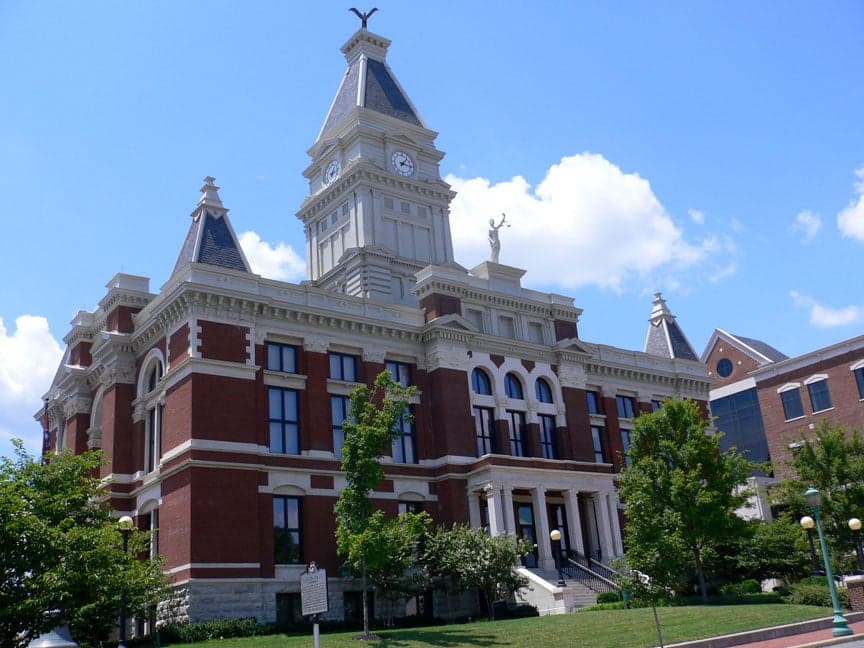
Photo: Wikipedia
Demographics of Montgomery County
Affluence Level in Montgomery County
A middle-class area roughly in line with national averages across income, home values, education, and employment.
People of Montgomery County
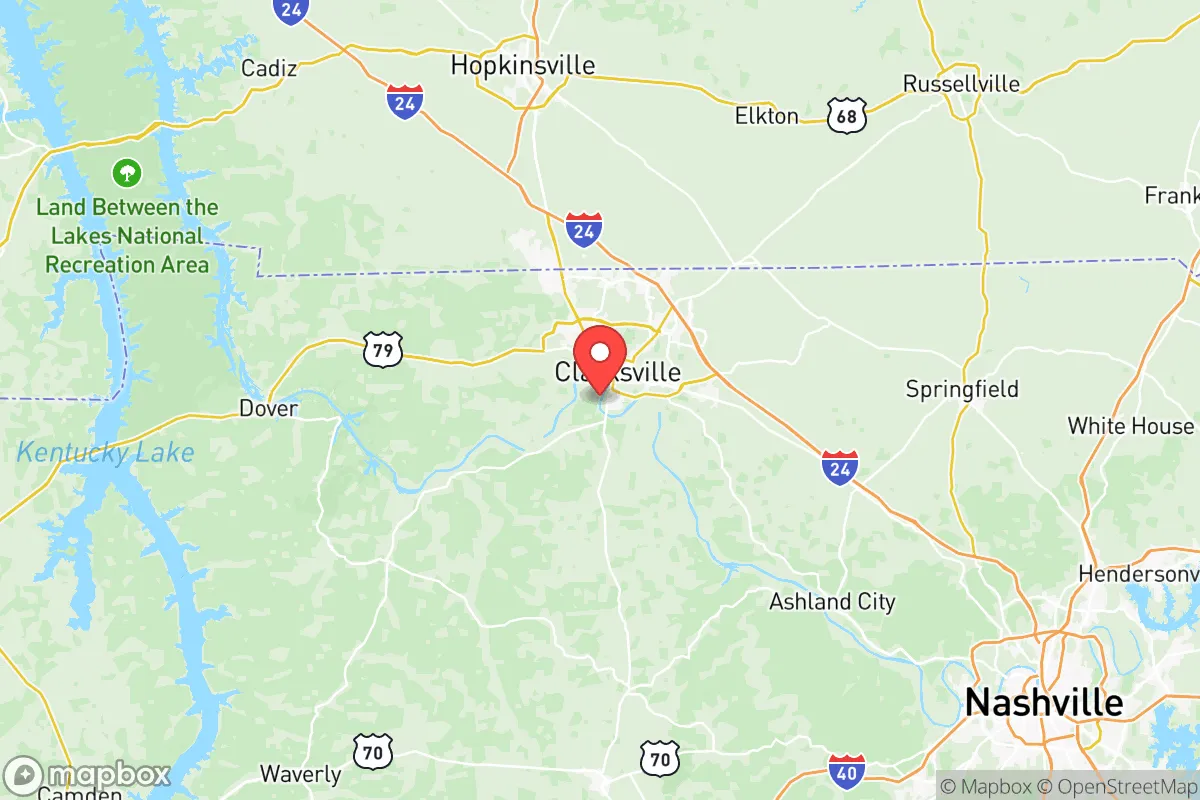
Montgomery County's 227,957 residents today form a community shaped more by the U.S. military than by immigration, with a foreign-born share of just 3.1%—far below the national average. The population is 60.2% White, 19.6% Black, and 11.0% Hispanic, with small but growing East/Southeast Asian (1.9%) and Indian (0.5%) communities. The county's character is defined by its anchor city of Clarksville and the massive presence of Fort Campbell, giving it a transient yet rooted feel where native Tennesseans live alongside military families from every state. A 31.7% college-educated rate reflects the professional and technical workforce tied to the base and the broader Nashville economy.
Settlement & growth (pre-1960)
Long before European arrival, the region that is now Montgomery County was a contested hunting ground among the Cherokee, Chickasaw, and Shawnee nations, with the Cumberland River serving as a major travel corridor. French explorers and traders passed through in the 17th and 18th centuries, but no permanent European settlement took hold until after the American Revolution. In 1784, John Montgomery—a Revolutionary War veteran—founded a settlement at the confluence of the Red and Cumberland Rivers, naming it Clarksville after General George Rogers Clark. The first wave of settlers were overwhelmingly Scots-Irish and English from Virginia and North Carolina, drawn by generous land grants under the North Carolina military reservation system. These early families cleared the dense forests for tobacco and corn farming, and by 1796, when Tennessee became a state, the county had a population of roughly 3,000.
The 19th century brought slower, organic growth. The county's fertile bottomlands along the Cumberland attracted additional farmers, and small river ports like Port Royal and New Providence became shipping points for tobacco and cotton. The Civil War divided the county sharply: many residents supported the Union due to the area's limited plantation economy, while others fought for the Confederacy. Federal forces occupied Clarksville from 1862 onward, and the war left the local economy in ruins. Reconstruction saw a modest influx of freed slaves who established communities in Clarksville's southern neighborhoods and in rural areas like Woodlawn. By 1900, the county's population had reached about 30,000, still overwhelmingly native-born White and Black, with virtually no foreign-born residents.
The single most transformative event in Montgomery County's pre-1960 history was the 1941 establishment of Fort Campbell (then Camp Campbell) on the county's northern edge. The Army base brought tens of thousands of soldiers, civilian employees, and their families from across the country, many of whom stayed after their service ended. This military wave doubled the county's population between 1940 and 1960, from 33,000 to 66,000, and shifted the economy from agriculture to defense. The base also introduced a steady stream of Black servicemen and their families, reinforcing the county

* Values derived from national, state, county, city and local statistics and may differ in a specific area. Last updated: 2026-05-12T12:12:40.000Z
Narrative content on this page is AI-generated and may contain mistakes. Verify any details that matter before acting on them.
ReloMaps may earn a commission from affiliate links at no extra cost to you.

