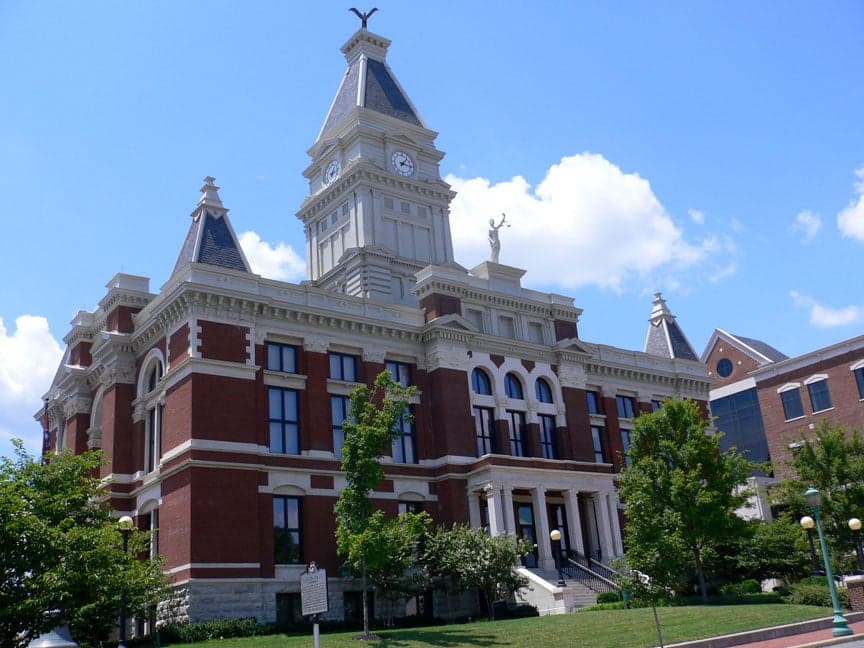
Photo: Wikipedia
Quality of Life in Montgomery County
A livable area that tracks near national norms for affordability, walkability, and neighborhood health.
What does Quality of Life tell us?
Quality of Life measures an area by evaluating factors like cost of living, nearby amenities, country club access, airport proximity, socioeconomic signals and neighborhood character. For large states, this is a general average — quality of life can vary dramatically between metro areas, suburbs, and rural communities within the same state.
What does this tell us?
Quality of Life measures an area by evaluating factors like cost of living, nearby amenities, country club access, airport proximity, socioeconomic signals and neighborhood character. For large states, this is a general average — quality of life can vary dramatically between metro areas, suburbs, and rural communities within the same state.
Cost of Living
2% below national average
102%
The Real Cost of Living in Montgomery County for 2026
| Tier | Individual | Family (4) |
|---|---|---|
| Survival | $19k | $37k |
| Comfortable | $48k | $71k |
| Luxury | $107k+ | $165k+ |
| Elite (Top 5%) | $125k+ | $195k+ |
Quality-of-Life Analysis
Montgomery County, Tennessee, offers a quality-of-life spectrum that spans from the dense, amenity-rich urban core of Clarksville to the quiet, agricultural landscapes of its unincorporated communities, drawing a mix of military families, Nashville commuters, and long-time rural residents. The county’s overall cost of living index sits at 98 (100 being the U.S. average), with a median home value of $248,300 and a median rent of $1,219, making it more affordable than many Middle Tennessee counties while still providing access to a regional economy anchored by Fort Campbell and Austin Peay State University. The average commute of 27.2 minutes reflects the county’s role as a bedroom community for both Clarksville jobs and Nashville employment, with travel times varying significantly between the urban core and outlying areas.
Largest town(s) & population centers
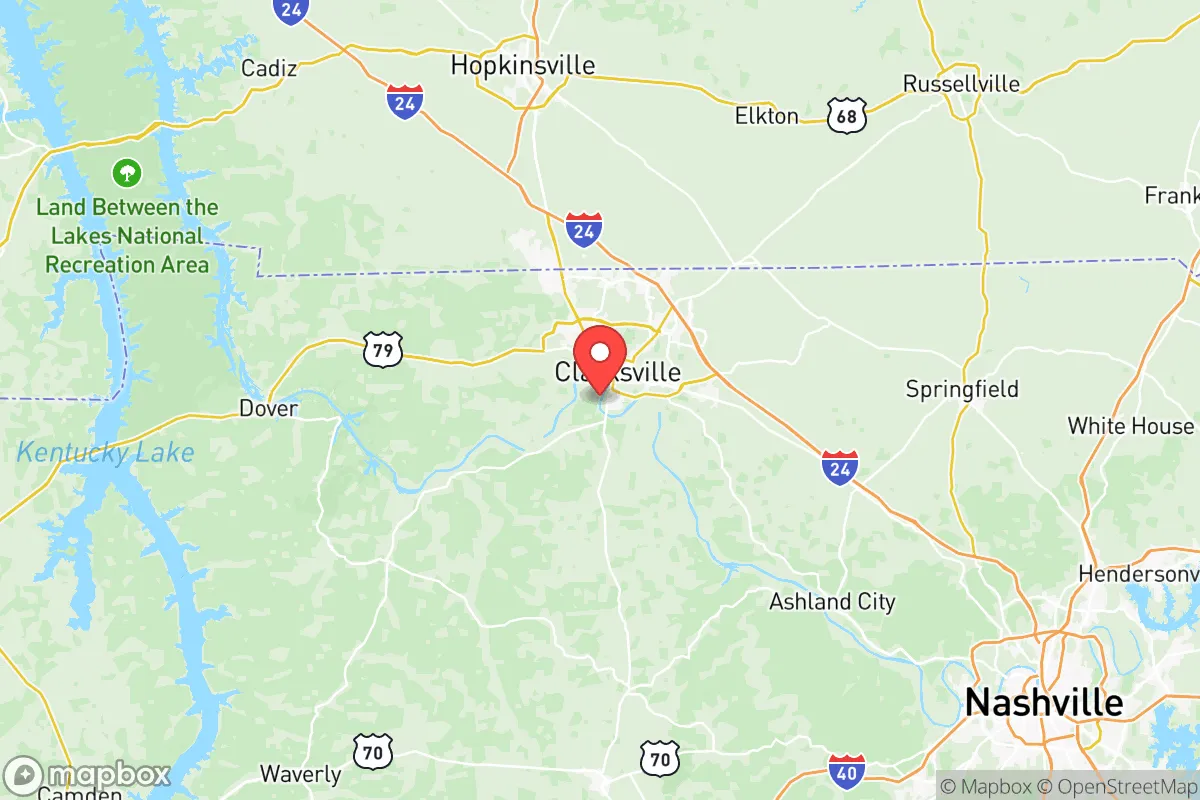
Clarksville is the county seat and by far the largest population center, home to roughly 180,000 residents and the majority of the county’s jobs, retail, and entertainment. Daily life here centers around the Fort Campbell military installation (which straddles the Tennessee-Kentucky line), Austin Peay State University, and a growing healthcare sector anchored by Tennova Healthcare and Blanchfield Army Community Hospital. The city offers a full range of amenities: the Governor’s Square Mall, the Downtown Commons park and amphitheater, multiple grocery chains, and a diverse restaurant scene that includes local staples like The Catfish House and Blackhorse Pub & Brewery. Housing in Clarksville spans from historic bungalows near downtown to new subdivisions in the Sango and Rossview areas, with home values generally falling between $220,000 and $350,000. The city’s public school system, Clarksville-Montgomery County School System, operates over 40 schools and is the largest employer in the county outside of the military.
Smaller towns & rural pockets
Outside Clarksville, Montgomery County contains several smaller communities that offer a distinctly different pace of life. Woodlawn, located along U.S. Route 41A near the Kentucky border, is a census-designated place with a handful of local businesses and a strong agricultural heritage, where homes often sit on one- to five-acre lots. Cunningham, in the county’s eastern portion, is a rural crossroads community with a post office, a volunteer fire department, and ready access to the Cumberland River for fishing and kayaking. Palmyra, situated along the Cumberland River south of Clarksville, is an unincorporated area known for its historic district and the Palmyra Overlook, a popular spot for river views. Dover, while technically in Stewart County, is often grouped with Montgomery County’s rural fringe and serves as a gateway to Land Between the Lakes National Recreation Area. These areas lack municipal services like public water and sewer in many places, and residents typically rely on well water and septic systems. Property taxes here are lower than in Clarksville, with the county’s overall property tax rate at approximately $2.80 per $100 of assessed value, though rural homeowners often face higher transportation costs due to longer commutes.
Cost & lifestyle range
The cost of living and lifestyle options in Montgomery County vary dramatically depending on location. At the higher end, Clarksville’s Sango and Rossview neighborhoods offer newer subdivisions with home values ranging from $300,000 to $450,000, proximity to top-rated elementary schools, and commute times under 20 minutes to downtown Clarksville. At the lower end, rural areas near Cunningham and Woodlawn feature older homes on acreage with median values around $180,000 to $220,000, but with commute times exceeding 35 minutes to Clarksville and 50 minutes to Nashville. Renters see a similar spread: a two-bedroom apartment in Clarksville’s downtown or near the university averages $1,300, while a similar unit in a rural mobile home park near Palmyra might rent for $850. Utilities in rural areas can be higher due to reliance on propane and private wells, while Clarksville residents benefit from city water and natural gas. The county’s overall cost of living index of 98 is 2% below the national average, but this masks the fact that rural areas are often 10-15% cheaper than Clarksville’s core when factoring in housing and taxes, though transportation costs offset some of that savings.
Montgomery County is best suited for those who value affordability and geographic diversity over urban density. Military families stationed at Fort Campbell find Clarksville’s housing stock and school options well-matched to their needs, while Nashville commuters willing to accept a 45- to 60-minute drive can secure significantly more land and lower property taxes than in Williamson or Davidson counties. Rural residents who prioritize privacy, hunting access, and a slower pace will find the county’s unincorporated communities—especially Cunningham, Woodlawn, and Palmyra—offer a genuine small-town Tennessee lifestyle without the premium prices of nearby tourist towns. The county’s mix of a mid-sized city, military base, and agricultural countryside means that nearly any budget or lifestyle preference can find a fit, provided the trade-offs in commute time and amenity access are accepted.

Crime in Montgomery County
Higher crime rates than 58% of comparable U.S. locations.
Violent CrimeViolent Crime Analysis
Property CrimeProperty Crime Analysis
Crime Analysis
Montgomery County, Tennessee, presents a mixed safety picture shaped by its largest city, Clarksville, and the broader influence of the Nashville metropolitan area. With a violent crime rate of 490.5 per 100,000 residents and a property crime rate of 1,640.7 per 100,000, the county exceeds both Tennessee state averages and national benchmarks. These figures reflect challenges common to mid-sized urban centers, particularly those with a growing population and a justice system that, in recent years, has leaned toward progressive policies — a trend that directly impacts public safety by prioritizing offender rehabilitation over victim protection and incarceration.
Crime in context
Montgomery County’s violent crime rate of 490.5 per 100,000 is roughly 40% higher than the national average of about 370 per 100,000 and significantly above Tennessee’s state rate of approximately 430 per 100,000. Property crime, at 1,640.7 per 100,000, also outpaces the national figure of roughly 1,950 per 100,000 but sits slightly below the Tennessee average of 1,700 per 100,000. However, these county-wide numbers mask stark disparities. Clarksville, which accounts for the vast majority of the county’s population, drives the higher violent crime totals — particularly aggravated assault and robbery. Smaller communities such as Woodlawn and Cunningham report far lower incident rates, often falling below 200 per 100,000 for violent offenses. The presence of Fort Campbell, a major Army installation straddling the Tennessee-Kentucky border, adds a transient population that can influence crime statistics, though base-related incidents are typically handled by military authorities.
What residents experience
For residents of Montgomery County, the risk of becoming a victim of violent crime is notably higher in Clarksville’s downtown core and along major corridors like Wilma Rudolph Boulevard and Fort Campbell Boulevard. Property crime — including burglary, theft, and vehicle break-ins — is concentrated in commercial districts and apartment complexes near Austin Peay State University and the Gateway area. The 19th Judicial District, which covers Montgomery County, has seen a shift toward progressive prosecution policies in recent years, including diversion programs and reduced bond amounts for nonviolent offenders. While intended to reduce jail overcrowding, these measures have been linked to repeat property crimes and a perception of leniency that emboldens offenders. Residents in outlying areas like Palmyra and Oak Grove report fewer encounters with crime, though they still face occasional theft from vehicles and sheds. The county sheriff’s office and Clarksville police have increased patrols in high-crime zones, but staffing shortages limit consistent coverage.
Neighborhood-level variation is significant. The safest areas tend to be the rural southern and eastern parts of the county, including Southside and Dover Road corridors, where violent crime is rare and property crime rates hover near 500 per 100,000. In contrast, neighborhoods near the Red River and downtown Clarksville experience violent crime rates exceeding 700 per 100,000. Prospective residents should examine block-level data from the Clarksville Police Department’s crime mapping tool and consider that progressive judicial policies in the district may reduce the deterrent effect of prosecution, particularly for repeat offenders. Choosing a home in a smaller incorporated community or a rural subdivision can substantially lower personal risk, but the county’s overall safety outlook remains below average for Tennessee.
* Values derived from national, state, county, city and local statistics and may differ in a specific area. Last updated: 2026-05-12T12:12:40.000Z
Narrative content on this page is AI-generated and may contain mistakes. Verify any details that matter before acting on them.
ReloMaps may earn a commission from affiliate links at no extra cost to you.

