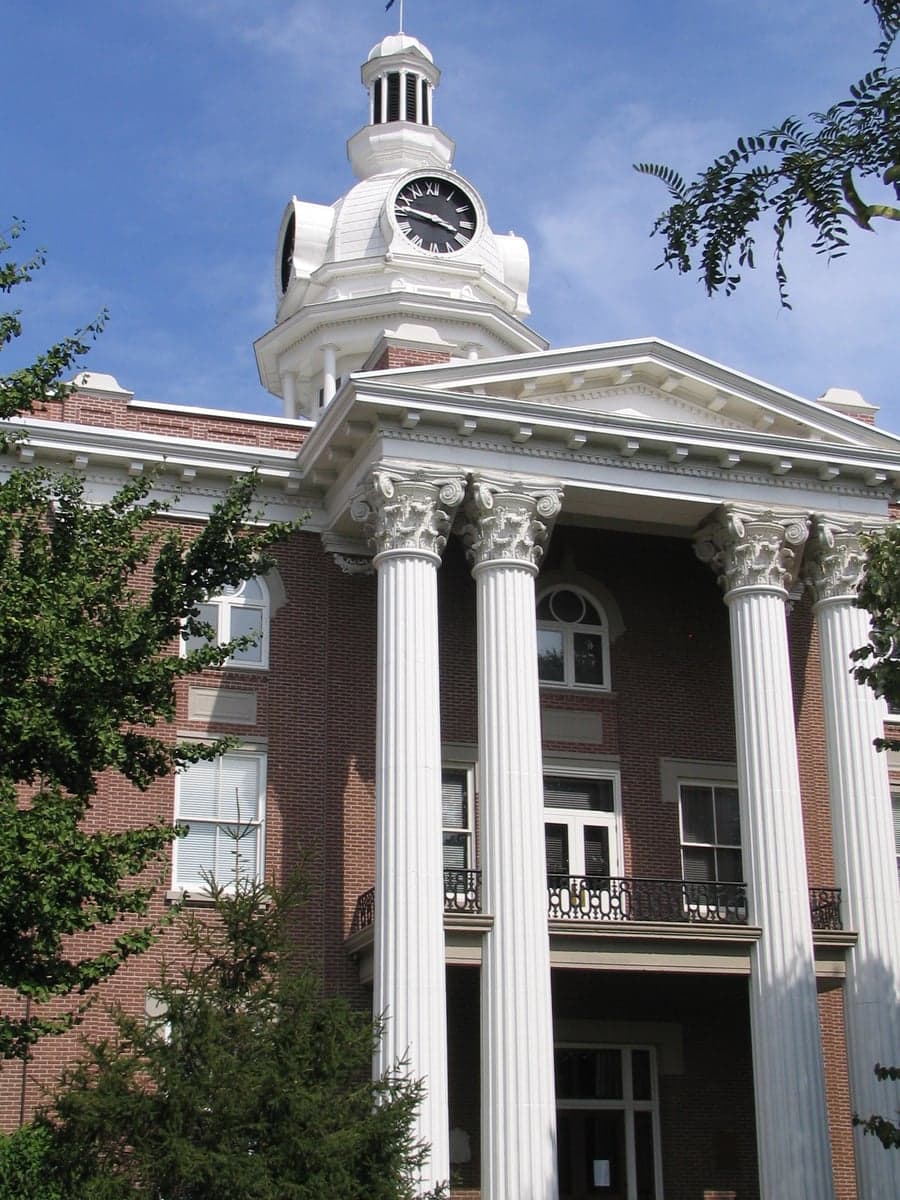
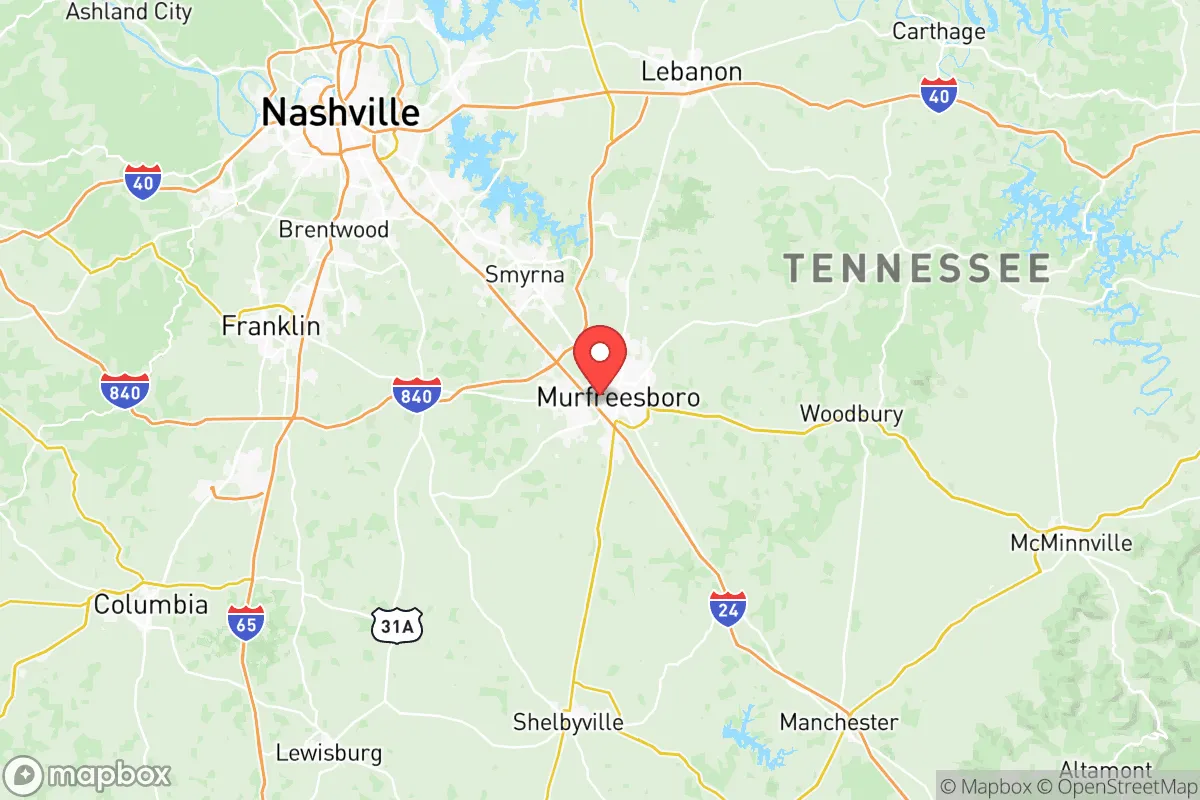
Photo: Wikipedia
Demographics of Rutherford County
Affluence Level in Rutherford County
A middle-class area roughly in line with national averages across income, home values, education, and employment.
People of Rutherford County
Rutherford County, Tennessee, is a rapidly growing suburban powerhouse of roughly 351,591 residents where the population is predominantly white (64.8%) but increasingly diverse, shaped by domestic migration from other states and a modest but growing foreign-born community (6.0%). The county’s identity is a blend of historic Southern roots and modern Sun Belt expansion, anchored by the city of Murfreesboro, the county seat and a major employment hub, alongside smaller towns like Smyrnaresboro, Smyrna, and La Vergne. Its people are characterized by a strong family orientation, a growing professional class tied to Middle Tennessee State University and the Nissan manufacturing plant, and a conservative political leaning that reflects the broader region’s values.
Settlement & growth (pre-1960)
Before European settlement, the area now known as Rutherford County was part of the hunting grounds of the Cherokee and Creek nations, who used the region’s fertile river valleys along the Stones River and the West Fork of the Stones River. The first permanent European settlers arrived in the late 1790s, primarily Scots-Irish and English pioneers moving westward from North Carolina and Virginia along the Cumberland River corridor. These early settlers were drawn by land grants offered to veterans of the American Revolution and the promise of rich agricultural land for tobacco and cotton cultivation.
The county was officially established in 1803, named after Revolutionary War General Griffith Rutherford. The town of Jefferson (now a ghost town) served as the first county seat before Murfreesboro was founded in 1811. The early 19th century saw a steady influx of small farmers and planters, many bringing enslaved African Americans who would constitute a significant portion of the population by 1860. The Battle of Stones River in 1862-63, a pivotal Civil War engagement of the Civil War, devastated the area and left a lasting imprint on the local population’s identity.
After Reconstruction, the county’s economy shifted from plantation agriculture to diversified farming and small-scale manufacturing. The arrival of the Nashville, Chattanooga and Decatur Railroad in the 1850s and later the Louisville and Nashville Railroad spurred growth in Murfreesboro and Smyrna, connecting farmers to broader markets. The early 20th century saw a modest influx of African Americans from rural areas into Murfreesboro during the Great Migration, though the county’s black population remained largely rural and largely rural. World War II brought the establishment of the Smyrna Army Airfield (later Sewart Air Force Base), which attracted military personnel and civilian workers from across the country, laying the groundwork for post-war suburbanization.
Modern era (post-1965)
The 1965 Hart-Cellar Act had a limited immediate impact on Rutherford County, as the area remained predominantly white and native-born through the 1970s. The real demographic transformation began in the 1980s and accelerated after 2000, driven by domestic migration from the Rust Belt and coastal states rather than international immigration. The closure of Sewart Air Force Base in 1971 was a setback, but the county rebounded by attracting manufacturing and logistics employers, most notably the Nissan plant in Smyrna, which opened in 1983 and now employs over 8,000 workers.
This industrial boom drew a wave of domestic migrants from the Midwest and Northeast, many of whom were white and middle-class, seeking jobs and lower costs of living. Simultaneously, the county saw growth in its Hispanic population, which now stands at 11.6%. This community initially concentrated in Murfreesboro and La Vergne, drawn by construction, landscaping, and manufacturing jobs. The Hispanic population is largely Mexican and Central American, with a growing number of second-generation families now integrated into local schools and businesses.
The Black population, at 14.9%, remains concentrated in Murfreesboro and parts of La Vergne, with roots stretching back to the county’s antebellum period. The Asian population (East/Southeast Asian, excluding Indian subcontinent) is 3.1%, with a visible community in Murfreesboro near Middle Tennessee State University, including Vietnamese, Korean, and Chinese families attracted by academic and professional opportunities. The Indian subcontinent population is small at 0.4%, with families scattered across Murfreesboro and Smyrna, often working in healthcare, IT, and academia. The foreign-born share of 6.0% is below the national average but growing steadily, reflecting the county’s increasing integration into the global economy.
Suburbanization has reshaped the county’s geography. Murfreesboro has grown from a small college town of 20,000 in 1970 to a city of over 150,000 today, with sprawling subdivisions and retail corridors along Memorial Boulevard and Medical Center Parkway. Smyrna has transformed from a military base town into a bedroom community for Nashville commuters, while La Vergne has become a hub for warehouse and distribution centers. Smaller towns like Eagleville and Rockvale remain rural but are seeing new subdivisions as Nashville’s exurban sprawl pushes south.
The future
Rutherford County’s population is projected to continue growing rapidly, potentially exceeding 400,000 by 2030, driven by domestic in-migration from higher-cost states like California, New York, and Illinois. The county is not tribalizing into distinct ethnic enclaves but rather experiencing a gradual blending, particularly among younger generations in Murfreesboro’s public schools and at Middle Tennessee State University. The Hispanic and Asian communities are growing but remain small enough that they are being absorbed into the broader cultural fabric rather than forming insular neighborhoods.
The white population share is declining slowly declining as the county diversifies, but the area remains culturally conservative and family-oriented, with strong churches, a robust homeschool community, and a political landscape that leans Republican. The biggest demographic wildcard is the pace of Nashville’s spillover: if housing costs in Davidson County continue to rise, Rutherford County could see an influx of younger, more liberal-leaning professionals, potentially shifting the county’s political balance over the next decade. For now, the county’s identity remains rooted in its Southern heritage, its manufacturing base, and its role as a affordable alternative to Nashville.
For someone moving in now, Rutherford County offers a growing, relatively affordable community with good schools and a strong job market, but it is also a place where the pace of change is accelerating. The county is becoming more diverse, more suburban, and more connected to Nashville’s economy, while retaining a distinct sense of place that sets it apart from the more transient suburbs of Williamson County to the west. The next 10-20 years will likely see continued growth, with the county’s character shaped by how well it manages the tension between preserving its historic identity and accommodating the newcomers who are reshaping it.

* Values derived from national, state, county, city and local statistics and may differ in a specific area. Last updated: 2026-05-19T13:46:46.000Z
Narrative content on this page is AI-generated and may contain mistakes. Verify any details that matter before acting on them.
ReloMaps may earn a commission from affiliate links at no extra cost to you.

