
Photo: Wikipedia
Strategic Assessment of Rutherford County
Meaningful friction. Expect exposure to either population pressure, blast zones, or natural disaster risk. Consider buying a retreat property.
What does the Strategic Assessment tell us?
Our Strategic Assessment grades tactical survivability of an area. Major population centers, military targets, fallout zones, natural disasters, and border exposure all drive risk — lower exposure means a more defensible position in a crisis.
This is heavily inspired by Joel Skousen's Strategic Relocation book. Highly recommended you checkout the book ($)What does this tell us?
Our Strategic Assessment grades tactical survivability of an area. Major population centers, military targets, fallout zones, natural disasters, and border exposure all drive risk — lower exposure means a more defensible position in a crisis.
This is heavily inspired by Joel Skousen's Strategic Relocation book. Highly recommended you checkout the book ($)Strategic Pillars

Key Distances
Strategic Assessment Analysis
Rutherford County, Tennessee, sits in a sweet spot that resilience-minded relocators rarely find: close enough to a major metro to access medical and supply chains, yet far enough from the blast zones and unrest corridors that threaten most of the Southeast. Anchored by Murfreesboro, the county seat, and flanked by the smaller towns of Smyrna, La Vergne, and Eagleville, this area offers a rare combination of defensible geography, water abundance, and economic independence. For a conservative-leaning individual or family looking to ride out the next decade of instability, Rutherford County deserves a hard look — not as a bunker, but as a sustainable base of operations.
Geographic position and natural advantages for long-term stability
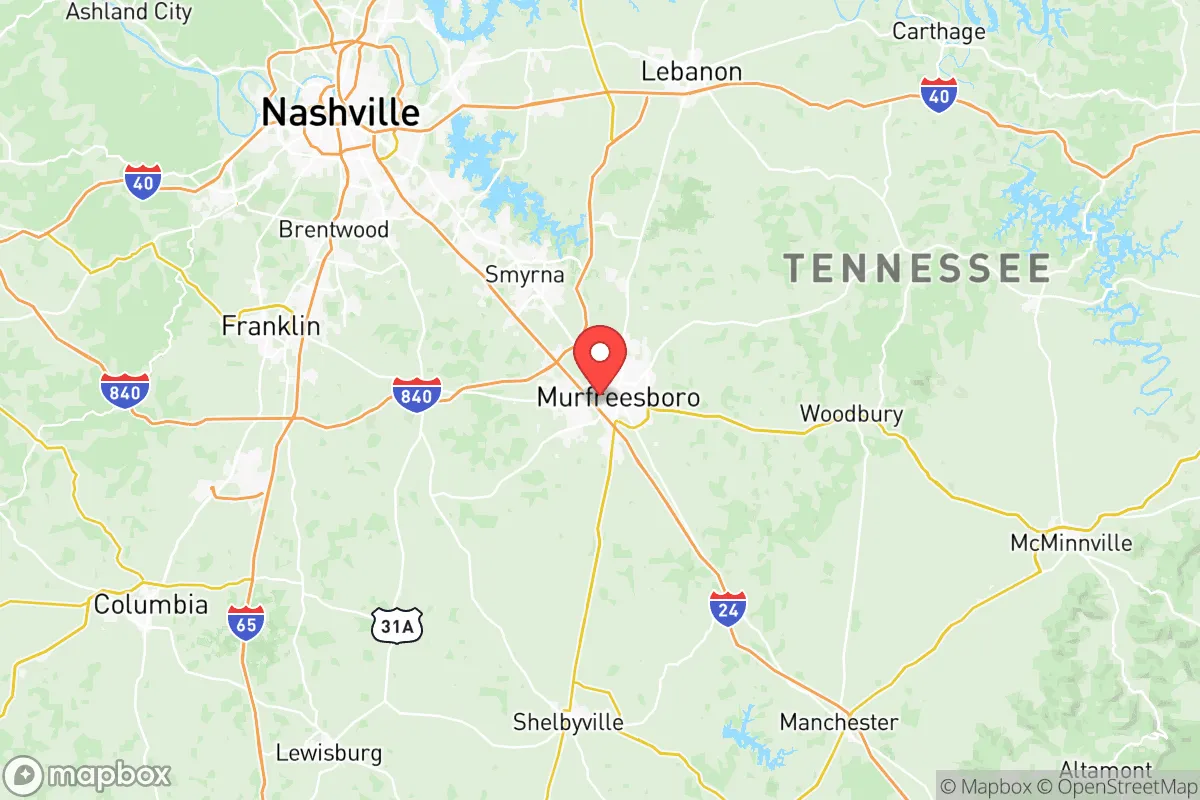
Rutherford County sits about 30 miles southeast of Nashville, placing it outside the likely blast radius of any Nashville-targeted event — whether that’s a dirty bomb, EMP strike, or civil unrest spilling from the city core. The county’s terrain is rolling hills and limestone bedrock, with the Stones River cutting through the middle. That river, along with the Percy Priest Lake reservoir to the northwest, provides a reliable freshwater source that doesn’t depend on municipal treatment plants. The area sits in USDA hardiness zone 7a, meaning a growing season long enough for serious food production — tomatoes, corn, beans, and even some fruit trees — without the brutal heat of the Deep South. The elevation averages around 600 feet, which keeps flash flooding rare compared to low-lying counties along the Mississippi. For a relocator, this means you can dig a well, plant a garden, and stay fed without relying on trucked-in groceries from a collapsed supply chain.
Risks, exposures, and proximity to fallout-relevant landmarks
No place is risk-free, and Rutherford County has its own set of exposures that a prepper needs to weigh. The biggest is Interstate 24, which cuts through Murfreesboro and Smyrna and connects Nashville to Chattanooga. In a crisis, that highway becomes a chokepoint — both for fleeing urbanites and for military convoys. The county is also home to Smyrna’s Nissan plant, a massive industrial facility that could become a target for sabotage or a magnet for looters if supply chains snap. Further south, the Arnold Air Force Base in nearby Coffee County (about 40 miles away) is a potential secondary target, though its primary mission is testing and not nuclear weapons storage. On the plus side, Rutherford County has no refineries, no major ports, and no nuclear power plants within its borders. The closest nuclear facility is the Watts Bar plant in Spring City, about 90 miles east — far enough that a meltdown or strike wouldn’t directly contaminate the county, though prevailing winds could carry fallout in a worst-case scenario. The real risk is proximity to Nashville: if the city experiences a mass casualty event or civil unrest, expect a wave of refugees heading southeast along I-24. That’s why the defensible terrain south of Murfreesboro — around Eagleville and the rural pockets near the Bedford County line — is where serious preppers should focus their land search.
Practical resilience for a relocator: food, water, energy, and defensibility
For a family or individual serious about self-sufficiency, Rutherford County delivers on the basics. Water is the first concern, and the county’s groundwater is generally good — limestone aquifers produce decent yields for private wells, though you’ll want to drill at least 200 feet to avoid seasonal fluctuations. The Stones River and its tributaries (like the West Fork and East Fork) offer surface water for irrigation or emergency use, but you’ll need filtration. Food production is viable: the soil in the southern part of the county is loamy and well-drained, perfect for raised beds or small-scale farming. Local farmers’ markets in Murfreesboro and Smyrna are already strong, meaning you can source seeds, livestock, and tools without driving far. Energy is a mixed bag. The grid is served by the Tennessee Valley Authority (TVA), which is more stable than many regional grids, but still vulnerable to cyberattack or EMP. Solar is a solid bet here — the county averages about 210 sunny days per year, enough for a 5-10 kW array to cover a household’s needs. Off-grid propane generators are common among locals, and wood-burning stoves are a practical backup for winter heating. Defensibility is where the county shines for those who choose wisely. The rural southern and eastern edges — think the area around Rockvale and Lascassas — offer long sightlines, limited road access, and a community culture that’s still rooted in hunting and firearms ownership. Gun shops and ranges are plentiful, and the local sheriff’s department in Rutherford County is known for a pro-Second Amendment stance. That said, the northern half of the county (Smyrna and La Vergne) is suburban sprawl, with dense housing and limited escape routes — avoid those areas if defensibility is your priority.
The overall strategic picture for Rutherford County is one of calculated trade-offs. It’s not a remote mountain redoubt, and it’s not a self-contained compound. But for a conservative relocator who wants to stay within a few hours of medical care, supply runs, and a community of like-minded people, it’s one of the better options in the Mid-South. The county’s growth has been rapid — population jumped from 262,000 in 2010 to over 370,000 by 2025 — which brings both opportunity and friction. More people means more competition for land and resources, but it also means a stronger tax base and better infrastructure. The key is to buy land south of Murfreesboro, drill a well, install solar, and build relationships with local farmers and gun clubs before the next crisis hits. Rutherford County won’t save you from a direct nuclear strike or a nationwide grid collapse, but it will give you a fighting chance to ride out the storm — and that’s more than most places in the country can offer.

* Values derived from national, state, county, city and local statistics and may differ in a specific area. Last updated: 2026-05-19T13:46:46.000Z
Narrative content on this page is AI-generated and may contain mistakes. Verify any details that matter before acting on them.
ReloMaps may earn a commission from affiliate links at no extra cost to you.

