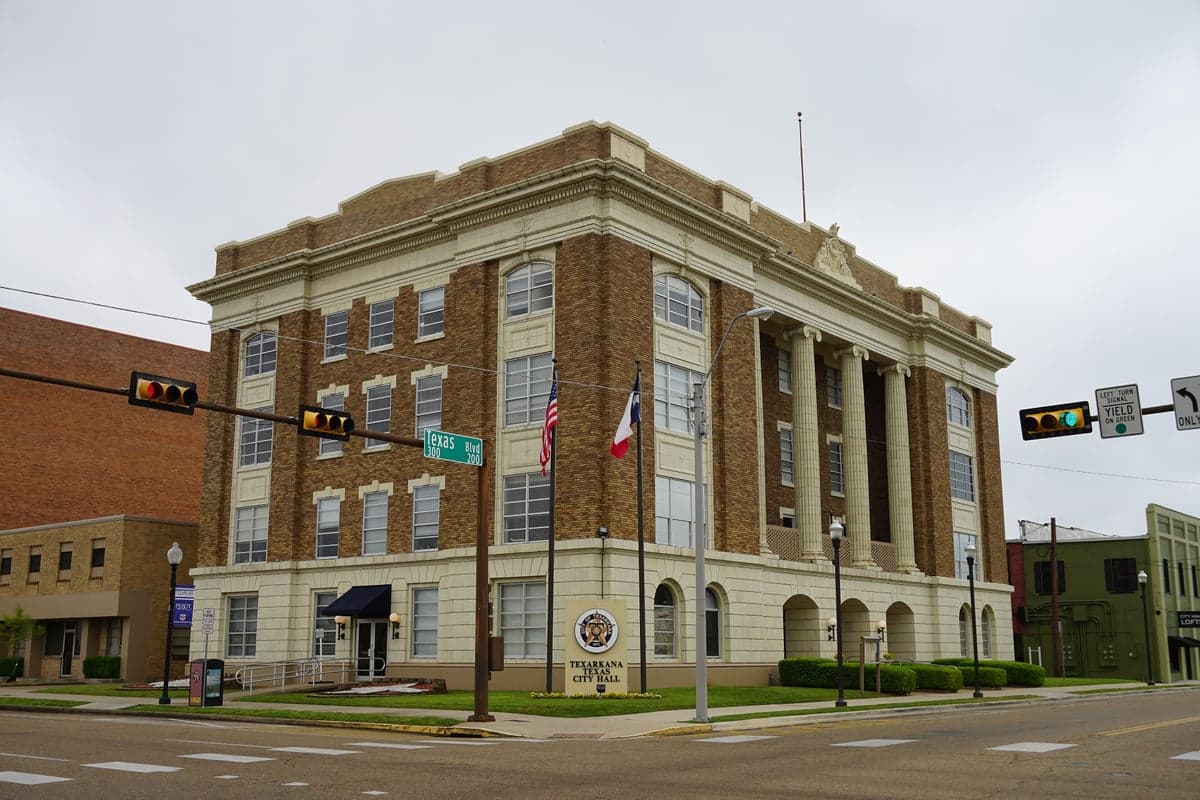
Photo: Wikipedia
Personal Sovereignty in Texarkana, TX
Strong independent fundamentals that actively favor personal liberty and low regulation.
What does Personal Sovereignty tell us?
Personal Sovereignty measures your capacity for self-reliance and independence with minimal government friction. Higher scores mean fewer barriers between you and the way you want to live... but it assumes you have the space you need and good neighbors.
What does this tell us?
Personal Sovereignty measures your capacity for self-reliance and independence with minimal government friction. Higher scores mean fewer barriers between you and the way you want to live... but it assumes you have the space you need and good neighbors.
State Policy
Energy independence: Net exporter (220% of energy produced in-state)
Personal Liberty
Homesteading

Personal Liberty Analysis
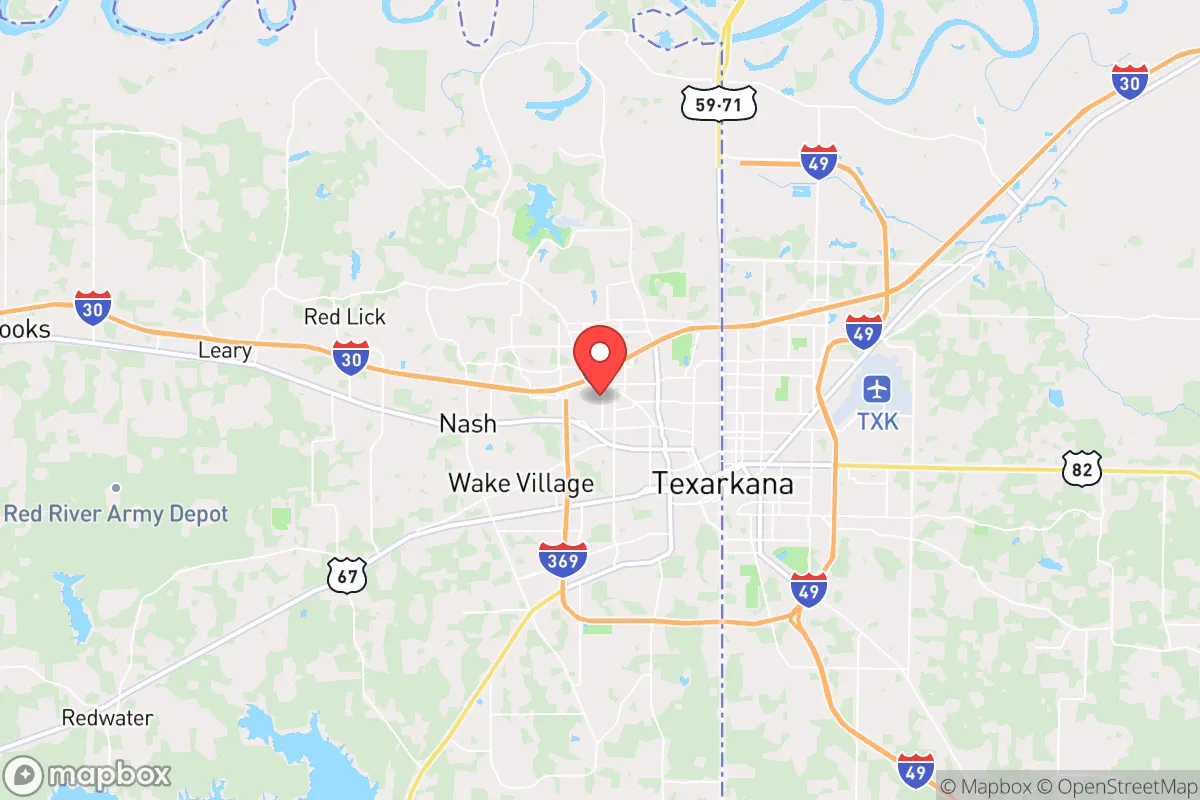
Texarkana, Texas, offers a notably high degree of personal sovereignty, largely because it sits on the Texas side of the state line, which means it operates under Texas law—a state widely recognized for its strong protections of individual rights, low taxes, and minimal regulatory interference. For those with a survivalist or prepper mindset, this translates into a legal environment where the government largely stays out of your personal affairs, from how you choose to defend your home to how you raise your children. The city’s unique bi-state position also provides a strategic advantage: you can live under Texas’s robust constitutional protections while having immediate access to Arkansas’s different regulatory landscape, which can be useful for diversifying resources or legal strategies. This analysis examines the specific pillars of autonomy—tax burden, self-defense law, homesteading viability, and personal liberties—that make Texarkana a compelling option for those prioritizing freedom over convenience.
Tax burden and regulatory posture in Texarkana
Texas’s lack of a state income tax is the single most impactful factor for personal financial sovereignty in Texarkana. Residents keep 100% of their earned income, which is a critical advantage for anyone building a self-sufficient lifestyle or stockpiling resources. The state’s sales tax rate is 6.25%, with local options pushing the combined rate in Texarkana to around 8.25%, but this is a consumption tax you can control by buying strategically or producing your own goods. Property taxes are the trade-off—Texas relies heavily on them, with effective rates in Bowie County averaging roughly 1.8% of assessed home value. However, the state’s homestead exemption (up to $40,000 off assessed value for school taxes) and a 10% annual cap on appraisal increases provide some predictability. For preppers, the regulatory posture is equally favorable: Texas has no state-level building codes in unincorporated areas, and Texarkana’s city codes are relatively lenient compared to coastal or urban jurisdictions. There are no onerous restrictions on rainwater collection, solar panel installation, or keeping livestock within city limits, though you’ll want to check specific zoning for backyard chickens or goats. The state’s right-to-farm laws also protect agricultural activities from nuisance lawsuits, which is a significant shield if you plan to run a small homestead or food garden.
Self-defense and gun law specifics in a Texas border city
Texarkana operates under Texas’s robust firearm preemption laws, meaning local governments cannot enact restrictions stricter than state law. This is a critical point for those who view the Second Amendment as a non-negotiable pillar of personal sovereignty. Texas is a constitutional carry state as of 2021, so anyone over 21 who can legally possess a firearm may carry it openly or concealed without a permit. For those who still want a License to Carry (LTC) for reciprocity with other states, the process is straightforward and requires a background check and a four- to six-hour class. The Castle Doctrine is fully in effect: there is no duty to retreat in your home, vehicle, or workplace, and you are legally presumed to have acted reasonably if you use deadly force against an intruder. Stand Your Ground laws extend this protection to any place you are lawfully present. For preppers, this means you can legally defend your property and family without fear of prosecution, provided the threat is credible. The city’s proximity to the Arkansas line also offers a strategic option: Arkansas has similar gun laws but allows the carrying of firearms in more public buildings (like state parks without a permit), so you can legally cross the state line to exercise those rights. Ammunition and firearm purchases are tax-free on the Texas side, and there are no magazine capacity restrictions or “assault weapon” bans at the state level. The local gun culture is strong, with multiple gun shops, ranges, and a well-organized community of competitive shooters and preppers.
Self-reliance and homesteading viability in Texarkana
For those serious about self-reliance, Texarkana offers a rare combination of affordable land and permissive zoning. Within the city limits, standard residential lots range from 0.25 to 0.5 acres, which is enough for a substantial garden, a small orchard, and a few chickens. Move just outside the city into Bowie County’s unincorporated areas, and you can find 1- to 5-acre parcels for $5,000 to $15,000 per acre—a fraction of what similar land costs in the Dallas-Fort Worth metroplex. Zoning is minimal: there are no county-wide building codes, so you can construct a cabin, a workshop, or a root cellar without permits, as long as you meet basic septic and well regulations. Off-grid feasibility is high: the area gets 50+ inches of rain annually, making rainwater catchment a reliable primary water source. Solar is viable, with an average of 210 sunny days per year, and net metering is available through local cooperatives like SWEPCO, though the rates are not as generous as in some states. The soil is primarily clay-loam, which requires amendment but is workable for most vegetables and fruit trees. For those concerned about long-term food security, the growing season is long (March to November), and you can raise meat rabbits, goats, or even a small herd of cattle on a few acres. The local extension office offers free soil testing and workshops on canning, fermentation, and livestock management. The only real constraint is water rights: Texas follows the “rule of capture,” meaning you can pump unlimited groundwater from your property, but neighboring wells can affect your supply, so a deep well (200-400 feet) is recommended for reliability.
Personal liberties: parental rights, medical autonomy, and property
Texas has become a national leader in protecting parental rights, which is a major draw for conservative families evaluating Texarkana. The state’s Parental Bill of Rights (enacted in 2023) explicitly affirms that parents have the fundamental right to direct their children’s education, healthcare, and moral upbringing. This means no government entity can override your decisions on medical treatment, school curriculum, or religious instruction without a court order. In practice, this has led to school boards in the Texarkana area being highly responsive to parental concerns, with many districts adopting policies that require parental notification for any changes in a child’s mental health or gender-related services. Medical autonomy is similarly strong: Texas does not have a state-level vaccine mandate, and the Texas Medical Freedom Act prohibits employers from requiring COVID-19 vaccination as a condition of employment. For those concerned about government overreach during public health emergencies, the state legislature has also restricted the governor’s ability to issue prolonged emergency orders without legislative approval. Property rights are protected by the Texas Property Code, which limits eminent domain to public use with just compensation, and the state’s Private Real Property Rights Preservation Act requires government agencies to assess the impact of regulations on private property. Speech is protected under the Texas Constitution, which has its own free speech clause that has been interpreted more broadly than the First Amendment in some cases, particularly regarding commercial speech and political expression. The city’s small-town atmosphere also means that local law enforcement is generally less aggressive than in larger cities, with a focus on community policing rather than revenue generation through fines.
Overall, Texarkana, Texas, ranks among the top mid-sized cities in the South for personal sovereignty, combining the legal framework of a red state with the practical advantages of a low-cost, low-density environment. The absence of income tax, strong self-defense laws, permissive homesteading regulations, and robust protections for parental and medical autonomy create a foundation for a truly self-directed life. While no location is perfect—property taxes are higher than in some neighboring states, and the city’s proximity to the Arkansas line means you must stay aware of which state’s laws apply at any given moment—the trade-offs are minimal for those who prioritize freedom over convenience. For the survivalist or prepper, Texarkana offers a strategic base where you can legally and practically build the resilient, independent lifestyle that is increasingly difficult to maintain in more regulated parts of the country.

* Values derived from national, state, county, city and local statistics and may differ in a specific area. Last updated: 2026-04-29T02:34:15.000Z
Narrative content on this page is AI-generated and may contain mistakes. Verify any details that matter before acting on them.
ReloMaps may earn a commission from affiliate links at no extra cost to you.

