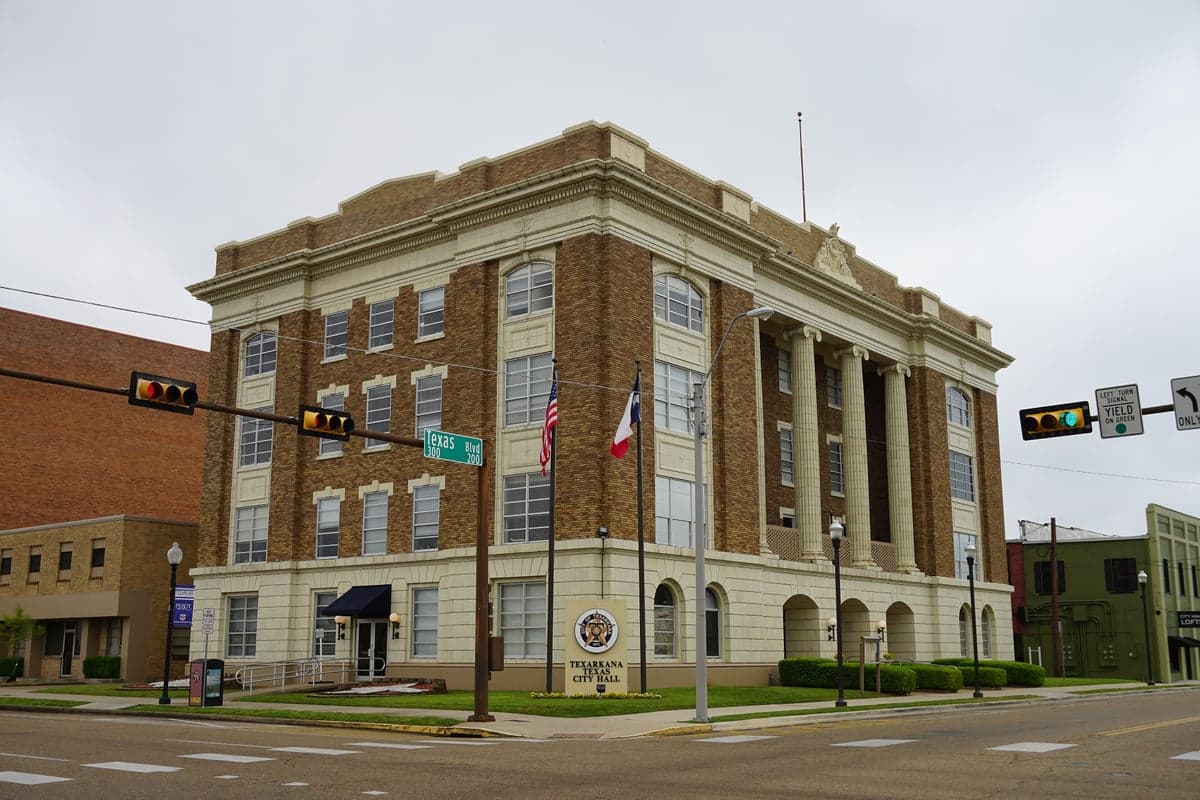
Photo: Wikipedia
Political ClimatePolitical Climate in Texarkana, TX
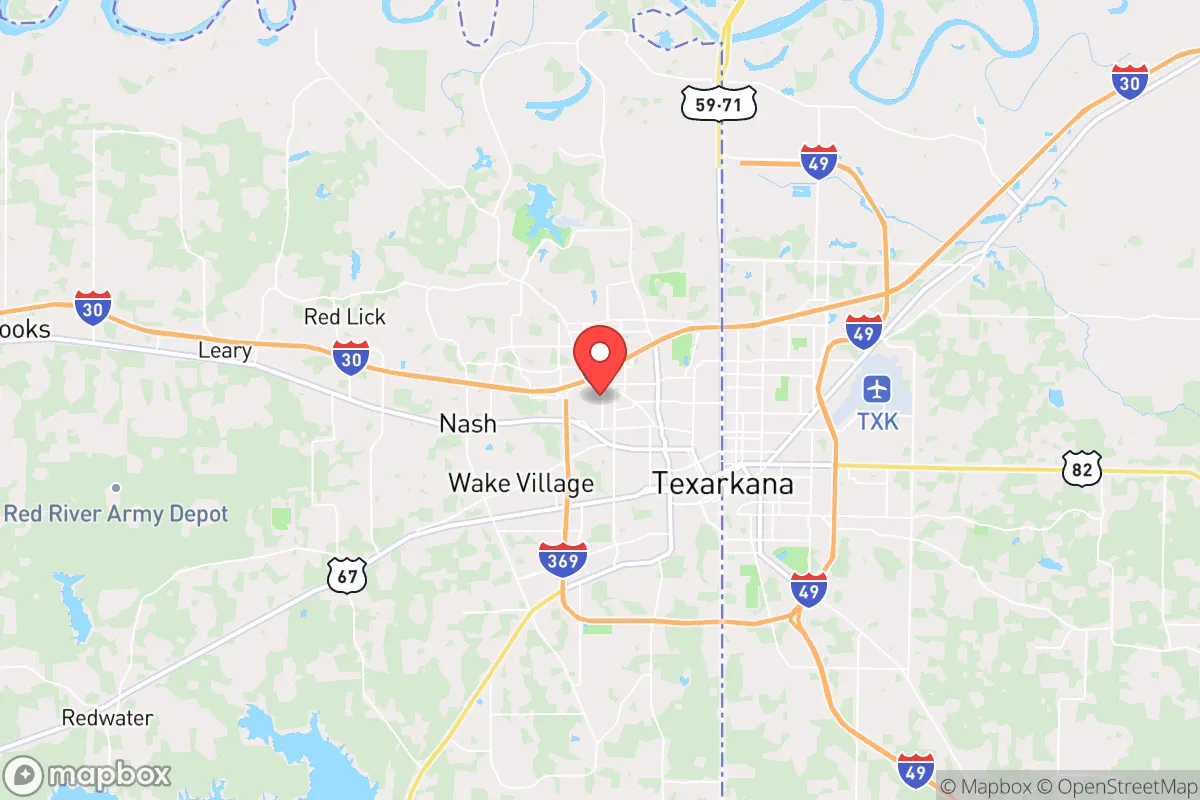
District shown is the primary district for this city’s centroid. Cities may span multiple districts.
Local Political AnalysisPolitical Analysis of Texarkana, TX
Texarkana, Texas, sits deep in reliably conservative territory, with a Cook PVI of R+25 that reflects decades of consistent Republican voting patterns. The city itself leans right, but the real story is how the surrounding Bowie County and neighboring communities like Nash and Wake Village have held the line against the progressive drift seen in larger Texas metros. If you’ve lived here long enough, you remember when local elections were more about personality than party, but the last ten years have sharpened the divide—Texarkana’s politics now mirror the broader national shift, with a strong emphasis on limited government and personal liberty.
How it compares
Drive an hour south to Longview or Tyler, and you’ll find similar conservative strongholds, but Texarkana’s position on the state line gives it a unique flavor. Across the border in Arkansas, the city’s twin, Texarkana, AR, votes similarly red, but the Texas side tends to be more vocal about resisting federal overreach, especially on gun rights and property regulations. Contrast that with a place like Dallas or Austin, where progressive policies on zoning, taxes, and public health mandates have taken hold—Texarkana feels like a refuge from that. The nearby rural counties, like Red River and Cass, are even more staunchly conservative, but Texarkana’s mix of small-town values and a modest urban core means you get the benefits of community without the heavy hand of government telling you how to live.
What this means for residents
For folks living here, the political climate translates into lower taxes, fewer business regulations, and a general hands-off approach from local officials. You won’t see the kind of mask mandates or vaccine passports that became common in blue cities—Texarkana’s leaders, from the county judge to the city council, have consistently pushed back against what they see as government overreach into personal freedoms. Property rights are taken seriously, and the Second Amendment is a given, not a debate. That said, there’s a growing concern among long-time residents about the slow creep of progressive ideology, especially through school board elections and county-level appointments. If you’re paying attention, you’ll notice that the fight to keep Texarkana’s politics grounded in individual liberty is ongoing, and it’s worth staying involved in local races to prevent the kind of top-down mandates that have plagued other parts of the state.
Culturally, Texarkana’s conservative lean shows up in everyday life—churches are central, community events like the Four States Fair emphasize family and tradition, and there’s a strong skepticism of national media narratives. Policy-wise, the city has avoided the kind of zoning overhauls or progressive tax structures seen in places like Austin or Houston. Instead, you get a place where the local government focuses on keeping roads paved and crime low, not on social experiments. For anyone looking to escape the bureaucratic overreach of blue states or even blue cities in Texas, Texarkana offers a straightforward, no-nonsense political environment. The trajectory is stable, but only if residents keep an eye on the horizon—because the same forces pushing for change elsewhere are always testing the waters here.

State Political ClimatePolitical Climate in Texas
State Political AnalysisPolitical Environment in the State
Texas has been a reliably Republican state for decades, but the political climate is far from monolithic. The state leans solidly red at the statewide level, with every statewide elected official being a Republican and the GOP holding supermajorities in both legislative chambers. However, the trajectory over the last 10-20 years shows a slow but steady shift: the massive influx of new residents from blue states, combined with rapid urbanization in metros like Austin, Dallas, and Houston, has turned once-safe suburbs into competitive battlegrounds. The 2020 and 2024 elections saw the GOP’s margin of victory shrink from 9 points in 2012 to about 5.5 points in 2020, and while Trump improved slightly in 2024, the underlying demographic trends are undeniable. For a conservative-leaning individual or family, Texas still offers a strong policy environment, but the cultural and electoral map is being redrawn in real time.
Urban vs. rural divide
The political geography of Texas is a tale of three distinct zones. The vast rural and exurban areas—places like the Panhandle around Lubbock, East Texas timber country, and the Hill Country west of Austin—vote overwhelmingly Republican, often by 70-80% margins. These areas anchor the GOP’s legislative supermajorities. At the other extreme, the major urban cores are deep blue: Austin (Travis County) is the state’s most liberal major city, voting +50 points Democratic in 2024, while El Paso and Houston’s Harris County also deliver massive Democratic margins. The real story is the suburbs. Places like Collin County (north of Dallas) and Fort Bend County (southwest of Houston) were once GOP strongholds but have flipped or become competitive. Collin County, which voted for Trump by 16 points in 2016, saw that margin shrink to 4 points in 2020 before rebounding slightly in 2024. Meanwhile, Bexar County (San Antonio) and Dallas County have become reliably Democratic. The dividing line is clear: the more dense and diverse a county, the more likely it is to trend blue, while rural and small-town Texas remains deeply red.
Policy environment
Texas’s policy environment is a major draw for conservatives. The state has no personal income tax, a capped property tax growth rate (via Proposition 4 in 2023), and a regulatory climate that is among the most business-friendly in the nation. Education policy has been a flashpoint: the 2023 legislative session passed a school voucher-like program (HB 3) that created education savings accounts for special needs students, and the fight over expanding that to all families is ongoing. On healthcare, Texas has not expanded Medicaid under the Affordable Care Act, keeping the state’s uninsured rate high but also limiting government expansion. Election laws were tightened in 2021 with SB 1, which banned 24-hour and drive-through voting, added ID requirements for mail ballots, and empowered poll watchers—a move conservatives saw as necessary for integrity but critics called restrictive. The state also passed a near-total abortion ban (trigger law after Dobbs) and a law (SB 8) that allows private citizens to sue anyone who performs or aids an abortion. For a conservative family, the policy environment is largely aligned with limited government principles, though property taxes remain a persistent burden despite recent reforms.
Trajectory & freedom
On the freedom front, Texas has been a mixed bag in recent years. On the positive side for conservatives, the state expanded gun rights significantly: permitless carry (HB 1927) became law in 2021, allowing most adults to carry a handgun without a license. Parental rights were strengthened with the 2023 passage of the “Parental Bill of Rights” (HB 900), which requires school libraries to obtain parental consent for certain materials and restricts instruction on sexual orientation and gender identity in elementary grades. The state also passed a law (SB 14) banning gender transition procedures for minors. However, there have been concerning expansions of government power. The 2021 “abortion bounty” law (SB 8) created a novel enforcement mechanism that some conservatives worry sets a precedent for private lawsuits to enforce any law. More troubling for limited-government advocates was the state’s aggressive use of emergency powers during the 2020 pandemic, including shutdowns and mask mandates that many felt overstepped. On property rights, Texas has strong protections against eminent domain abuse, but local zoning and HOA restrictions can still be burdensome. The overall trajectory is toward more state-level intervention in social issues, which is a double-edged sword for those who value both traditional values and limited government.
Civil unrest & political movements
Texas has seen its share of political flashpoints. The 2020 Black Lives Matter protests in Austin and Dallas were large and occasionally violent, leading to property damage and a lasting rift between city leaders and state officials. In response, the legislature passed a law (HB 9) in 2021 that enhanced penalties for rioting and made it easier to sue local governments that defund police. Immigration politics are a constant source of tension. The state has bused thousands of migrants to sanctuary cities like New York and Chicago, and Governor Abbott’s Operation Lone Star has deployed state troopers and National Guard to the border. The 2023 law SB 4, which allows state and local police to arrest people suspected of illegal entry, is currently tied up in court but represents a major assertion of state authority over immigration enforcement. Secession rhetoric, while not mainstream, has a vocal fringe—the “Texit” movement gained some traction after the 2020 election, though polling shows only about 20% of Texans support it. Election integrity remains a hot-button issue: the 2020 election saw Trump win Texas by a smaller margin than expected, leading to calls for audits and the passage of SB 1. A new resident would notice the constant political ads, the heavy police presence at the border, and the stark cultural divide between cities like Austin and rural towns like Fredericksburg.
Projection
Looking ahead 5-10 years, Texas is on a collision course between its conservative policy foundation and its rapidly changing demographics. The state is adding about 1,000 new residents per day, many from California and New York, and these newcomers tend to be younger, more diverse, and more moderate-to-liberal. The suburbs of Dallas, Houston, and Austin will continue to trend blue, potentially flipping the Texas House of Representatives by the early 2030s. However, the rural and exurban areas are growing too, and the GOP’s structural advantages—gerrymandered districts, low voter turnout among young and minority populations, and a strong cultural conservatism in the interior—mean the state will remain red for at least another decade. The policy environment will likely see continued fights over school choice, property tax reform, and immigration enforcement. The biggest wild card is the state’s power grid: the 2021 winter storm (Uri) and subsequent failures have made energy reliability a top political issue, and how the state handles it will shape public trust. For a conservative moving in now, expect the political culture to become more contested but the core policies—no income tax, gun rights, parental rights—to remain intact for the foreseeable future.
For a new resident, the bottom line is this: Texas still offers a strong alignment with conservative values on taxes, guns, and family policy, but the political landscape is shifting. You’ll find deep red communities in the Hill Country, the Panhandle, and East Texas, but the suburbs are becoming more purple every election cycle. If you’re moving for the policy environment, you’ll be well-served, but be prepared for a state that is increasingly divided between its urban and rural halves. The freedom you’re seeking is still here, but it’s not guaranteed forever—pay attention to local elections and get involved if you want to keep it that way.
* Values derived from national, state, county, city and local statistics and may differ in a specific area. Last updated: 2026-04-29T02:34:15.000Z
Narrative content on this page is AI-generated and may contain mistakes. Verify any details that matter before acting on them.
ReloMaps may earn a commission from affiliate links at no extra cost to you.

