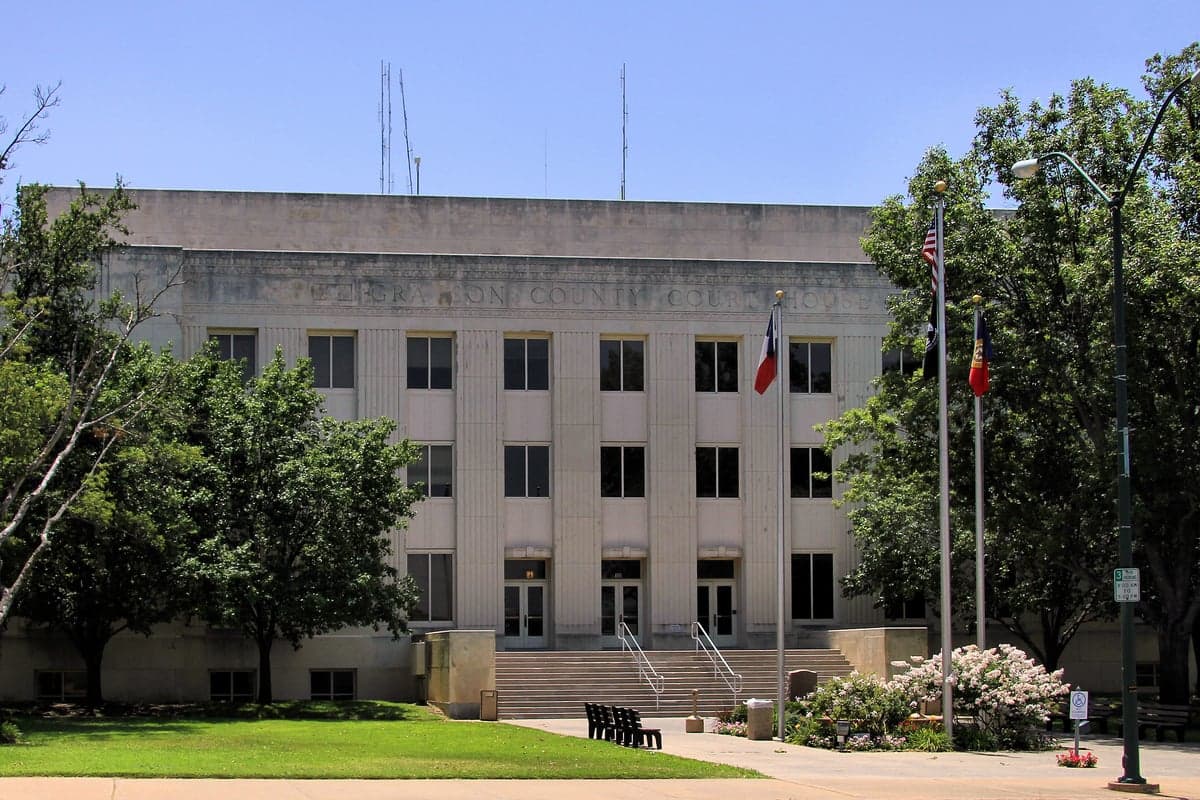
Photo: Wikipedia
Quality of Life in Grayson County
A livable area that tracks near national norms for affordability, walkability, and neighborhood health.
What does Quality of Life tell us?
Quality of Life measures an area by evaluating factors like cost of living, nearby amenities, country club access, airport proximity, socioeconomic signals and neighborhood character. For large states, this is a general average — quality of life can vary dramatically between metro areas, suburbs, and rural communities within the same state.
What does this tell us?
Quality of Life measures an area by evaluating factors like cost of living, nearby amenities, country club access, airport proximity, socioeconomic signals and neighborhood character. For large states, this is a general average — quality of life can vary dramatically between metro areas, suburbs, and rural communities within the same state.
Cost of Living
7% below national average
108%
The Real Cost of Living in Grayson County for 2026
| Tier | Individual | Family (4) |
|---|---|---|
| Survival | $19k | $35k |
| Comfortable | $44k | $65k |
| Luxury | $127k+ | $197k+ |
| Elite (Top 5%) | $150k+ | $232k+ |
Quality-of-Life Analysis
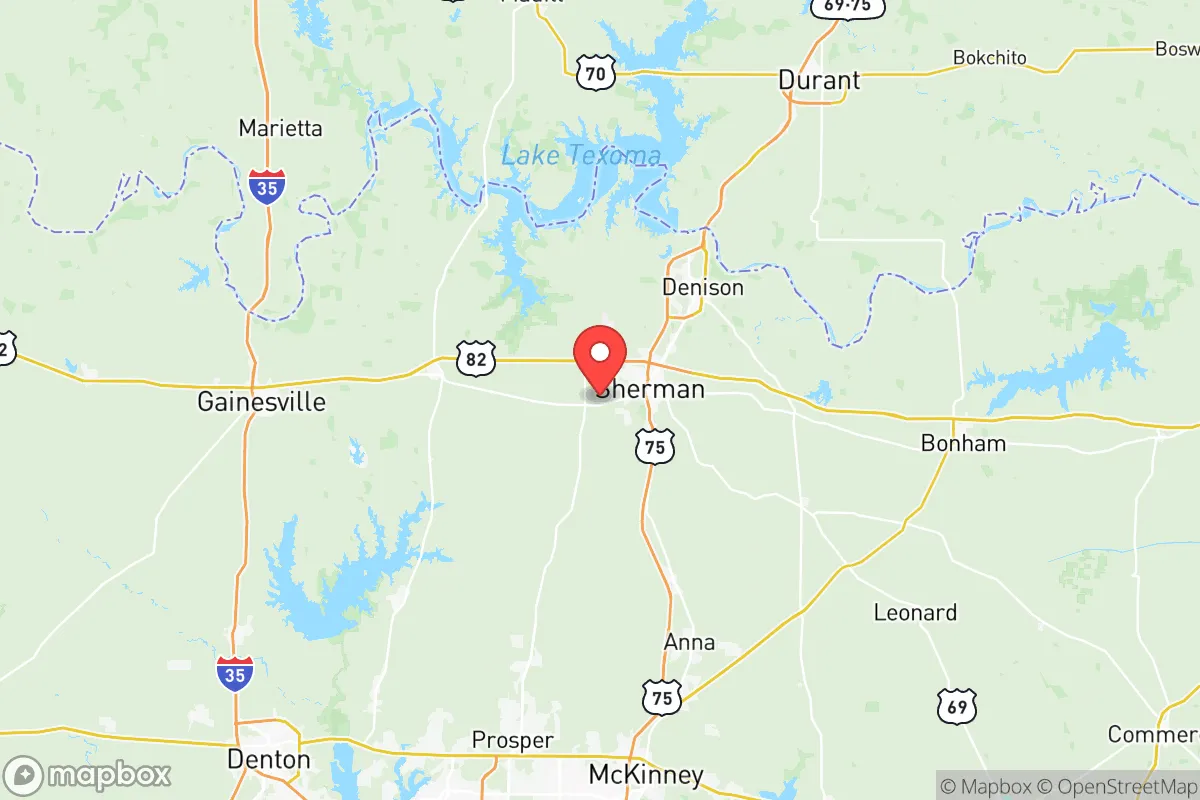
Grayson County offers a broad quality-of-life spectrum that stretches from the twin urban centers of Sherman and Denison through a string of small railroad towns to the quiet lakefront and farm communities hugging the Red River and Lake Texoma. The county consistently draws a mix of Dallas-Fort Worth commuters seeking lower housing costs, families moving to well-rated independent school districts, and retirees who want waterfront access without the premium prices found farther south. With a cost-of-living index of 93 (100 = US average) and a median home value of $228,300, the county provides a tangible affordability advantage over the nearby Metroplex while maintaining reasonable access to urban employment.
Largest towns & population centers
Sherman, the county seat, and Denison form the economic and social anchor of Grayson County. Sherman supports a mix of manufacturing employment, retail, and administrative services, and its historic downtown has seen steady reinvestment in locally owned restaurants and shops. Denison, home to the birthplace of Dwight D. Eisenhower and the scenic shores of Lake Texoma to its north, leans heavily into tourism and outdoor recreation. Daily life in both cities revolves around well-funded school districts, a hospital system centered at Texoma Medical Center, and the practical reality of commuting: the county's average one-way commute of 26.3 minutes is longer than the national norm but shorter than typical suburban DFW runs, and many residents travel south on U.S. 75 to jobs in McKinney, Plano, or Dallas. The median gross rent of $1,178 places these towns well below the Texas metropolitan average, making them a realistic option for younger households building equity.
Smaller towns & rural pockets
South of Sherman, Van Alstyne has become one of the county's fastest-growing communities, attracting families who want access to a small-town downtown and new housing developments while remaining within a 20-minute drive of the Sherman-DFW commuter rail connection. Howe, further south, retains a distinctly agricultural feel with a compact old downtown and a highly regarded school district that draws families from the surrounding farmland. East of Denison, Pottsboro and Gordonville serve as the primary gateways to Lake Texoma, offering a mix of lakefront homes, seasonal rentals, and retired residents oriented toward fishing, boating, and the nearby Hagerman National Wildlife Refuge. On the western side of the county, Whitesboro and Collinsville remain deeply rural communities centered on agriculture, with a slower pace, lower home prices, and longer drives to major retail and medical services. Unincorporated areas such as Luna and Southmayd offer acreage and privacy but lack municipal services like water and sewer, appealing to buyers willing to manage well and septic systems in exchange for land.
Cost & lifestyle range
The cost-of-living index of 93 masks meaningful internal variation. At the lower end, rural Whitesboro and Collinsville often see median home values below $200,000, with older homes on large lots priced as low as $150,000. Rents in these areas can fall below $900 for single-family houses, though the trade-off includes longer drives to grocery stores and a heavier reliance on septic systems and private wells. At the moderate end, Van Alstyne and Howe have seen new subdivisions push home values into the $250,000–$325,000 range, while rents average closer to the countywide $1,178 median. At the higher end, Pottsboro and lakefront properties along Lake Texoma command premiums of 15–25% over the county median, with water-adjacent homes often exceeding $350,000 and seasonal rentals reaching $1,500+. Across the entire county, property taxes hover around the Texas norm of 2.2–2.6%, but the absence of a state income tax keeps effective household costs below those of many Midwestern or Northeastern destinations with similar housing prices.
Grayson County works best for households that value a slower daily rhythm and tangible space — yards, garages, land — over access to dense urban amenities. DFW commuters tolerate the 26-minute average drive because it unlocks a housing price point that is increasingly out of reach inside the Metroplex. Families gravitate toward the high-performing independent school districts in Van Alstyne, Pottsboro, and Howe. Retirees and second-home buyers target the lake corridor north of Denison. The county offers no single lifestyle but rather a clear set of trade-offs — space and affordability in exchange for distance, lower costs in exchange for fewer services — that suit a specific and growing share of North Texas movers.

Crime in Grayson County
Crime rates similar to the national median for U.S. locations.
Violent CrimeViolent Crime Analysis
Property CrimeProperty Crime Analysis
Crime Analysis
Grayson County, Texas, presents a mixed safety profile that sits slightly above national averages for property crime while maintaining a violent crime rate comparable to the state median. The county's 2024 reported violent crime rate of 344.4 per 100,000 residents and property crime rate of 1,791.9 per 100,000 reflect the challenges of a rapidly growing region straddling the Dallas-Fort Worth metroplex and the Oklahoma border. Residents in communities like Sherman and Denison experience different safety realities than those in smaller towns such as Van Alstyne or Whitesboro, with local law enforcement resources and judicial philosophies playing a significant role.
Crime in context
Grayson County's violent crime rate of 344.4 per 100,000 is roughly 10% below the Texas state average of 383 per 100,000 but remains elevated compared to the national rate of 380 per 100,000. Property crime at 1,791.9 per 100,000 exceeds both the Texas average (1,650) and the national figure (1,954), driven largely by theft and vehicle break-ins in commercial corridors along US-75 and US-82. Sherman, the county seat and largest city, accounts for a disproportionate share of reported incidents, particularly in retail zones near the Sherman Town Center and along Texoma Parkway. By contrast, the more rural southern portion of the county—including communities like Howe and Tom Bean—reports property crime rates closer to 1,200 per 100,000, reflecting lower population density and fewer commercial targets. The county's proximity to the Dallas-Fort Worth metroplex means that property crime patterns often mirror suburban trends, with organized retail theft rings and vehicle burglaries being recurring issues.
What residents experience
Daily life for Grayson County residents involves navigating a justice system that has seen shifting priorities in recent years. The 397th Judicial District, which covers Grayson County, has historically taken a more traditional approach to prosecution, but concerns have emerged about progressive policies in nearby Collin and Dallas counties spilling over as offenders cross jurisdictional lines. Residents in Sherman and Denison report that property crime—particularly theft from vehicles and package theft—is the most common safety concern, with many neighborhoods forming active watch groups. Violent crime, while less frequent, tends to concentrate in specific areas: the southern parts of Sherman near the railroad tracks and certain apartment complexes along US-75 have higher incident rates for assault and robbery. The Grayson County Sheriff's Office maintains a visible presence in unincorporated areas, but response times in the county's far northern reaches near the Red River can exceed 20 minutes. For families considering relocation, the safest residential pockets are often found in the newer subdivisions on Sherman's west side and in the master-planned communities around Van Alstyne, where homeowner associations fund private security patrols.
Neighborhood-level variation
Safety in Grayson County varies dramatically by jurisdiction and local governance. Van Alstyne and Anna, both in the county's southern growth corridor, consistently report the lowest crime rates—violent crime below 200 per 100,000 and property crime under 1,000 per 100,000—thanks to well-funded police departments and conservative city councils that prioritize enforcement. Conversely, Denison's older downtown core and the areas around the former Perrin Air Force Base see higher rates of drug-related offenses and burglaries. Whitesboro and Collinsville, small towns in the county's western reaches, benefit from tight-knit communities but face challenges with rural property crimes like equipment theft and trespassing. The county's judicial landscape is a key factor: Grayson County District Attorney Brett Smith, elected on a law-and-order platform, has maintained aggressive prosecution policies for violent offenders, but the influence of more lenient approaches in neighboring Dallas County—where progressive district attorneys have reduced sentences for certain property crimes—creates a regional disparity that residents should monitor. For those prioritizing safety, the southern half of the county, particularly the US-75 corridor south of Sherman, offers the most favorable statistics and the strongest local law enforcement presence.
* Values derived from national, state, county, city and local statistics and may differ in a specific area. Last updated: 2026-05-28T05:42:02.000Z
Narrative content on this page is AI-generated and may contain mistakes. Verify any details that matter before acting on them.
ReloMaps may earn a commission from affiliate links at no extra cost to you.

