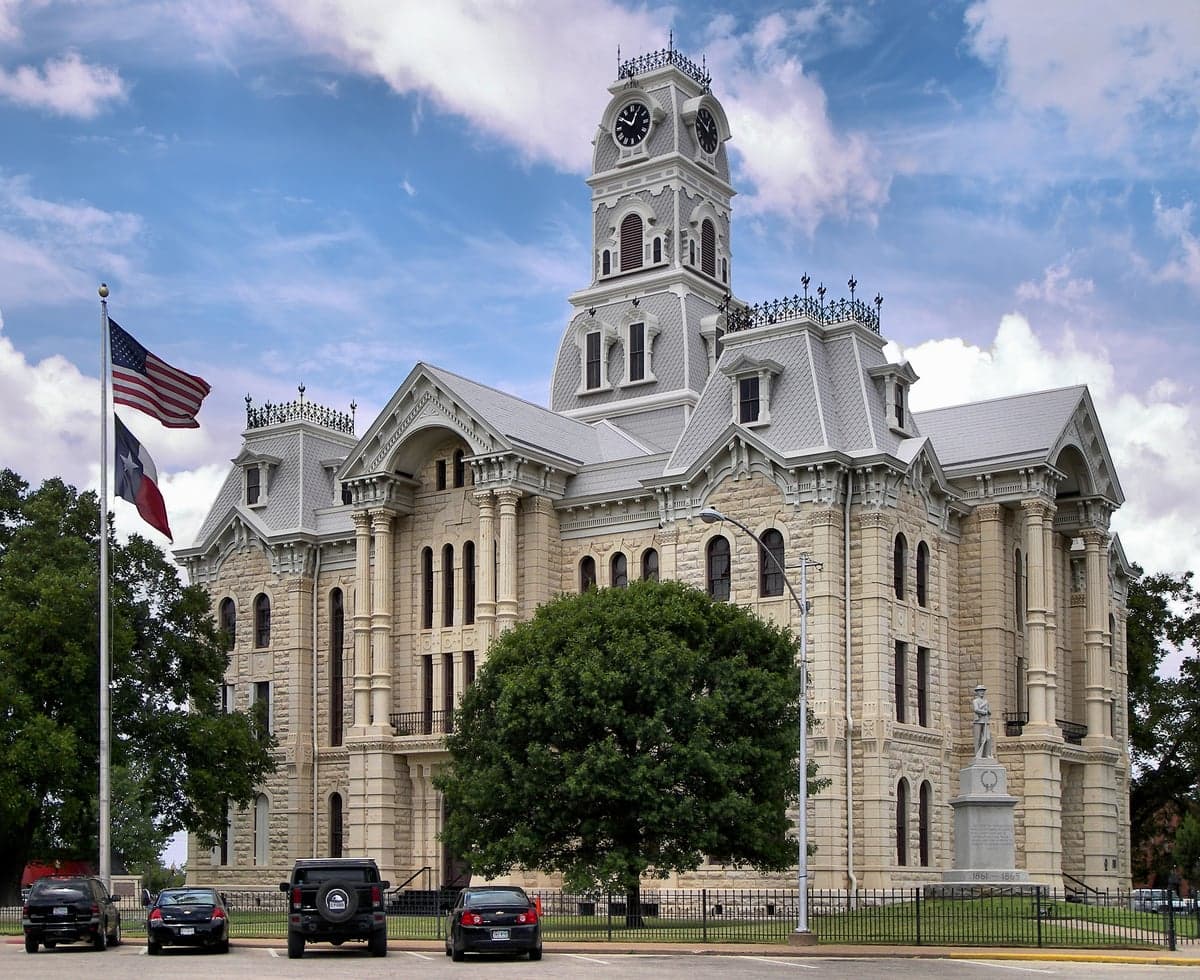
Photo: Wikipedia
Quality of Life in Hill County
A livable area that tracks near national norms for affordability, walkability, and neighborhood health.
What does Quality of Life tell us?
Quality of Life measures an area by evaluating factors like cost of living, nearby amenities, country club access, airport proximity, socioeconomic signals and neighborhood character. For large states, this is a general average — quality of life can vary dramatically between metro areas, suburbs, and rural communities within the same state.
What does this tell us?
Quality of Life measures an area by evaluating factors like cost of living, nearby amenities, country club access, airport proximity, socioeconomic signals and neighborhood character. For large states, this is a general average — quality of life can vary dramatically between metro areas, suburbs, and rural communities within the same state.
Cost of Living
29% below national average
136%
The Real Cost of Living in Hill County for 2026
| Tier | Individual | Family (4) |
|---|---|---|
| Survival | $15k | $28k |
| Comfortable | $32k | $47k |
| Luxury | $105k+ | $162k+ |
| Elite (Top 5%) | $123k+ | $191k+ |
Quality-of-Life Analysis
Hill County, Texas, offers a broad quality-of-life spectrum that ranges from the modest urban amenities of its county seat, Hillsboro, to the quiet, unincorporated crossroads of communities like Blum and Irene. The county’s overall character is defined by its deep agricultural roots and its position along the I-35 corridor, which brings a mix of long-time farming families, Dallas-Fort Worth commuters seeking affordable land, and retirees drawn to the low cost of living. With a cost-of-living index of 71 (29% below the national average), a median home value of $163,100, and a median rent of $929, the county attracts people who prioritize financial breathing room over urban density, though the trade-off is a longer average commute of roughly 31 minutes.
Largest town(s) & population centers
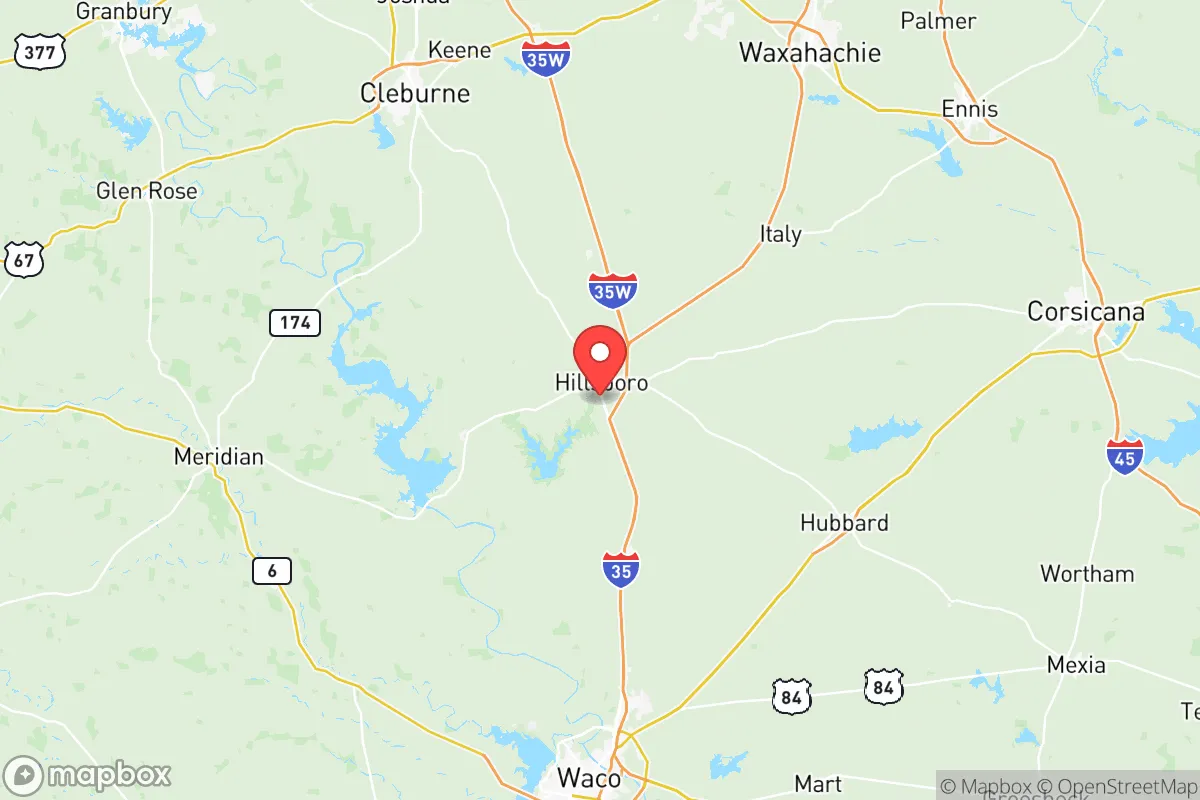
Hillsboro is the county’s primary population and commercial hub, home to roughly 8,500 residents. Daily life here centers on the historic downtown square, the Hill College campus, and the retail corridor along I-35, which includes big-box stores and chain restaurants that serve the broader region. The town provides the county’s most concentrated set of services, including a regional hospital, a Walmart Supercenter, and multiple grocery options. Housing in Hillsboro is affordable by national standards, with many older homes under $150,000 and newer subdivisions pushing toward the county median. The commute to DFW is a straight shot up I-35, typically taking 45–60 minutes, which makes Hillsboro a practical base for workers who can tolerate the drive. Whitney, the second-largest town with about 2,000 residents, offers a different pace centered on Lake Whitney, where fishing, boating, and lakeside living define the lifestyle. Whitney’s housing stock includes more vacation and retirement properties, with prices slightly above the county median near the water.
Smaller towns & rural pockets
Beyond the two main towns, Hill County is dotted with small communities that offer a distinctly rural quality of life. Itasca (pop. ~1,600) is a classic farming town with a compact downtown, a grain elevator, and a strong sense of local identity; its housing is among the cheapest in the county, with many homes selling for under $100,000. Hubbard (pop. ~1,400) sits on the county’s eastern edge and feels even more isolated, with a quiet main street and a reliance on agriculture and the nearby prison facility for employment. Malone (pop. ~250) and Mertens (pop. ~100) are unincorporated hamlets where life revolves entirely around local churches, volunteer fire departments, and the surrounding farmland. These areas lack grocery stores and medical clinics, requiring residents to drive 15–25 minutes to Hillsboro or Whitney for basic errands. The trade-off is extreme privacy, very low property taxes on raw land, and a tight-knit social fabric that appeals to those seeking to escape suburban noise entirely.
Cost & lifestyle range
The cost-of-living spread across Hill County is narrow in absolute terms but meaningful in lifestyle impact. At the low end, rural properties in the Blum and Irene areas can be found for under $80,000, often on multiple acres with older mobile homes or fixer-upper houses. Renters in these pockets may pay as little as $700 for a small house or duplex. At the higher end, lakefront homes on Lake Whitney command prices from $250,000 to over $500,000, offering water access, updated finishes, and shorter commutes to the lake’s recreational amenities. The median rent of $929 reflects the county’s overall affordability, but renters in Hillsboro’s newer apartment complexes pay closer to $1,100 for a two-bedroom, while rural rentals remain scarce and often require a personal connection to secure. The average commute of 31 minutes masks a split: Hillsboro and Whitney residents have short drives to local jobs, while those in Hubbard or Itasca may travel 40+ minutes to Hillsboro or even into Johnson County for work.
Hill County is best suited for people who value low costs, space, and a slower rhythm over urban convenience. Retirees on fixed incomes, remote workers with stable internet (though rural coverage can be spotty), and families willing to trade a longer commute for a mortgage under $1,200 per month will find the county a practical fit. Those who need walkable neighborhoods, frequent cultural events, or high-end dining will likely feel constrained. The county’s strength lies in offering a genuine choice between small-town structure and rural solitude, all within a budget that is increasingly rare in Texas.

Crime in Hill County
Crime rates similar to the national median for U.S. locations.
Violent CrimeViolent Crime Analysis
Property CrimeProperty Crime Analysis
Crime Analysis
Hill County, Texas, reports a violent crime rate of 344.4 incidents per 100,000 residents and a property crime rate of 1,791.9 per 100,000, placing it in a moderate-risk category relative to both state and national averages. While not among the most dangerous counties in Texas, these figures indicate a tangible safety concern, particularly in unincorporated areas and smaller towns where law enforcement resources are stretched thin. The county’s proximity to the Dallas-Fort Worth metroplex means that crime patterns are influenced by both local conditions and spillover from larger urban centers, making neighborhood-level awareness essential for prospective residents.
Crime in context
Hill County’s violent crime rate of 344.4 per 100,000 is roughly 15% higher than the national average of approximately 300 per 100,000, but significantly lower than Texas’s statewide rate of about 450 per 100,000. Property crime in the county, at 1,791.9 per 100,000, is about 20% higher than the national average of roughly 1,500 per 100,000, though it aligns closely with the Texas average of 1,800 per 100,000. For comparison, nearby Johnson County (southwest of Fort Worth) reports a violent crime rate near 280 per 100,000, while Ellis County (east of Hill County) sits around 320 per 100,000, making Hill County slightly more violent than its immediate neighbors. The county’s property crime rate, however, is lower than that of McLennan County (Waco area), which exceeds 2,200 per 100,000. These numbers suggest that while Hill County is not a high-crime outlier, residents face a measurable risk of theft and burglary, particularly in more rural pockets.
What residents experience
Daily life in Hill County varies sharply by location. The county seat, Hillsboro, sees a disproportionate share of reported incidents, with property crimes like vehicle burglary and shoplifting concentrated along the I-35 corridor. Whitney, a smaller town near Lake Whitney, experiences lower violent crime but has seen a rise in drug-related offenses, including methamphetamine possession, which often fuels property crime. In contrast, Itasca and Hubbard report fewer incidents overall, though residents in these communities frequently cite a lack of visible patrols as a concern. The Hill County District Attorney’s Office, currently led by a conservative prosecutor, has prioritized aggressive sentencing for repeat offenders, which has helped keep recidivism rates in check. However, the broader judicial district—the 66th Judicial District—has seen some progressive influence from nearby urban counties, leading to concerns among residents that lenient plea deals for property crimes may embolden offenders. This dynamic is especially relevant in areas closer to the Waco metro, where progressive judges have been known to favor rehabilitation over incarceration for non-violent crimes, a policy that critics argue undermines public safety in outlying counties like Hill County.
Neighborhood-level variation
Neighborhood safety in Hill County is not uniform. The Lake Whitney area attracts seasonal tourists and second-home owners, which correlates with a spike in burglaries during summer months—property crime here can be 30% higher than the county average during peak season. Conversely, the Hillsboro Historic District and newer subdivisions near Highway 22 report lower crime rates, largely due to active neighborhood watch programs and better street lighting. Rural areas east of Blum and west of Mount Calm experience the lowest violent crime rates but face challenges with theft of farm equipment and livestock. For those considering a move, consulting local sheriff’s office crime maps and speaking with residents in specific subdivisions is recommended, as block-by-block variation can be significant. Overall, Hill County offers a manageable safety profile for those who choose their neighborhood carefully and remain vigilant against property crime.
* Values derived from national, state, county, city and local statistics and may differ in a specific area. Last updated: 2026-05-22T00:18:25.000Z
Narrative content on this page is AI-generated and may contain mistakes. Verify any details that matter before acting on them.
ReloMaps may earn a commission from affiliate links at no extra cost to you.

