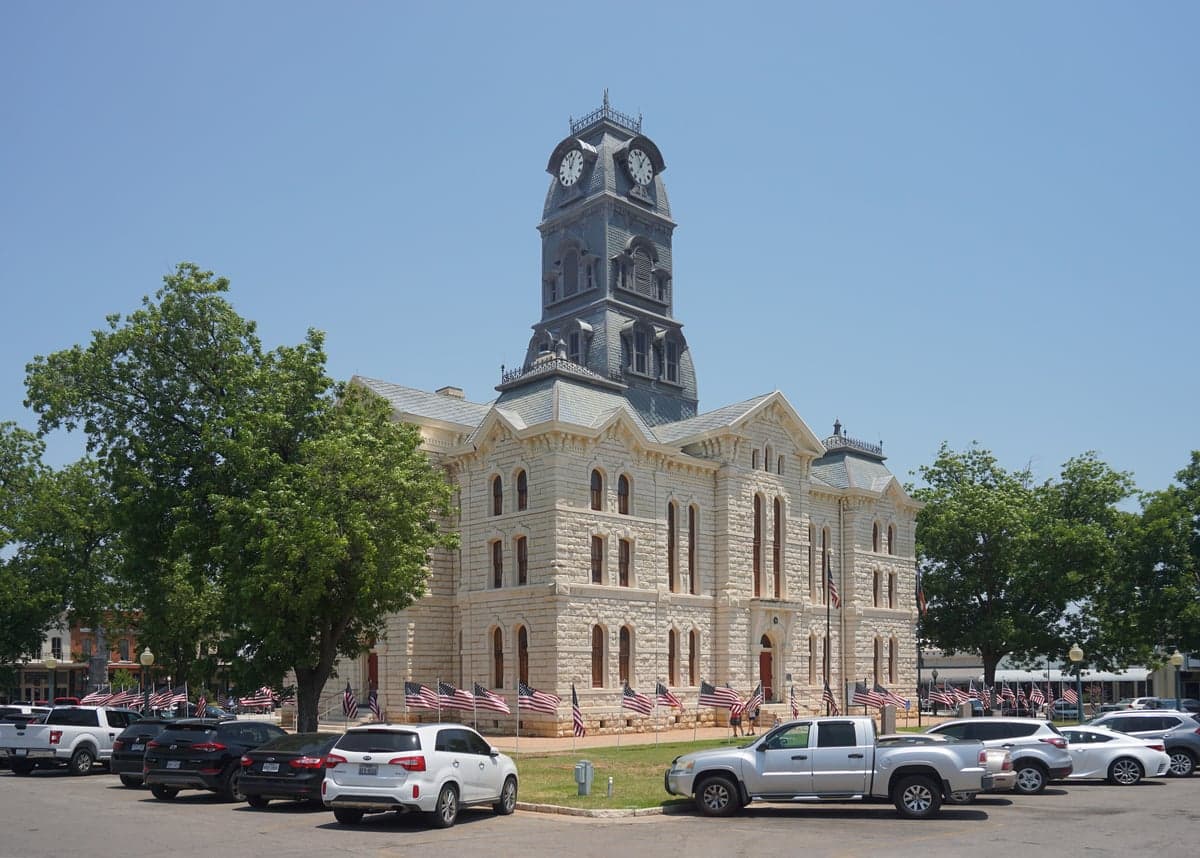
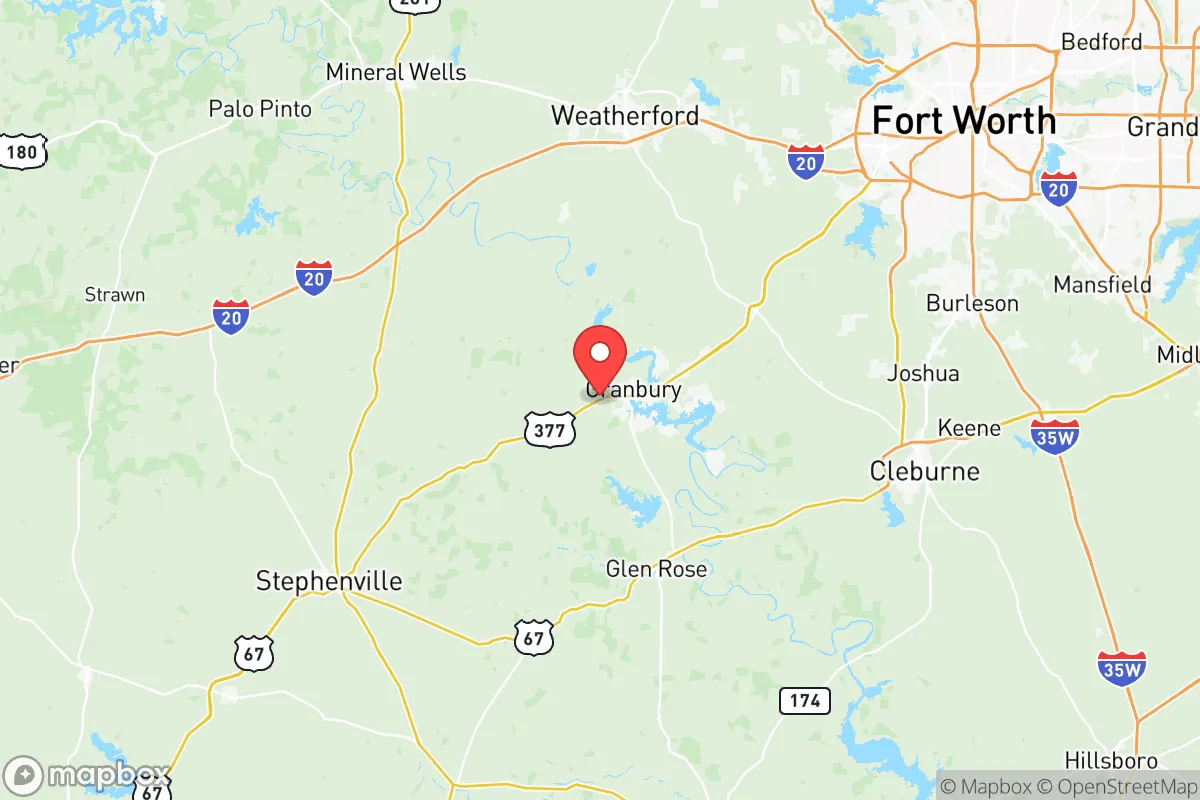
Photo: Wikipedia
Find The Best Places To Live in Hood County
PRO TIP! You can paste a Zillow or Redfin link to get info on that property.
Best Places to Live in Hood County
Cities & Towns in Hood County
Cities in Hood County
What It's Like Living in Hood County, TX
Living in Hood County means trading the constant buzz of a big city for a slower, more self-reliant rhythm, where the land itself shapes your weekends and the local high school football game is the main event. This is a place of wide-open spaces, hardworking people, and a deep sense of community that’s hard to find closer to the Metroplex. Whether you’re in the county seat of Granbury, the smaller community of Lipan, or out on a ranch near Tolar, life here revolves around family, faith, and a genuine appreciation for the quiet.
The Daily Rhythm: Work, Commute, and the Granbury Square
For many residents, the day starts early. A significant chunk of the workforce commutes an average of 34 minutes each way, often heading south or east to jobs in Fort Worth or even Dallas. That commute is a trade-off for the space and lower cost of living you get back home. Once you’re off the highway, daily life centers on the historic Granbury Square. You’ll find locals grabbing coffee at a spot like Ketzler’s Schnitzel Haus & Biergarten or picking up fresh produce at the farmers market. The median home value sits at a relatively attainable $281,300, and with a median household income of $86,802, many families find they can afford a house with a yard here—something that’s become a fantasy in nearby Tarrant County. The cost of living index is 113, a noticeable premium over the national average, but it’s a bargain compared to the 130+ you’ll see in central Dallas or Austin. This isn’t a place for night owls; most restaurants close by 9 or 10 PM, and the biggest decision of the week is often whether to grill out or head to a local spot like Babe’s Chicken Dinner House for a family-style meal.
Sports, Community, and the Schoolyard Anchor
High school sports are the undisputed social currency here. On a Friday night in the fall, the entire town of Granbury seems to empty out and head to Pirate Stadium to watch the Granbury Pirates. It’s not just a game; it’s where you catch up with neighbors and see the kids of people you’ve known for years. The community’s identity is deeply tied to its schools, which serve as the primary social hub for families. The median age of 46.3 reflects a population that’s largely settled, with many empty-nesters and established families. For those with younger kids, the school system—particularly in Granbury and the smaller districts like Lipan and Tolar—is a major draw. The sense of “we’re all in this together” is genuine. You’ll see it at the annual Granbury General Sam Houston Folk Festival, where the whole county turns out for a weekend of history and crafts, or at the Hood County Fair, where 4-H projects are taken as seriously as any business deal.
What’s There to Do: Lake Life, History, and Honest Outdoors
If you don’t own a boat or a fishing rod, you might find the entertainment options limited. The crown jewel is Lake Granbury, a 8,300-acre reservoir that defines summer weekends. Locals spend their Saturdays on the water, at the Granbury City Beach Park, or having lunch at a lakeside spot like The Bistro on the Square. For history buffs, the Granbury Opera House on the square offers live theater and concerts, a surprisingly sophisticated venue for a county of 64,198 people. The outdoor appeal is real: the Acton Nature Center offers quiet hiking trails, and the rolling hills around DeCordova are perfect for a Sunday drive. But the honest truth is that this is not a place for variety. If you want a major concert, a pro sports game, or a Michelin-star dinner, you’re driving an hour to Fort Worth. The violent crime rate is 344.4 per 100,000, which is slightly above the national average—something to be aware of, though most residents feel perfectly safe in their neighborhoods and on the square.
Pros and Cons of Living Here: The Honest Trade-Offs
Longtime residents love the space, the slower pace, and the fact that people still wave at you on a back road. They love that their kids can ride bikes without constant supervision and that the local hardware store knows your name. The frustrations are equally real. The commute is a grind for those working in Fort Worth. The lack of high-paying local jobs means many professionals are either retired, work remotely, or drive out of the county. The weather is classic North Texas: brutal, humid summers, occasional ice storms that shut everything down, and the ever-present threat of tornadoes during spring. The biggest cultural quirk is the fierce independence of the people. This is a conservative area where neighbors help each other but also expect you to mind your own business. It’s not a place that’s trying to be the next trendy suburb; it’s a place that’s proud of being exactly what it is. The kind of person who fits in here is someone who values privacy, doesn’t need constant entertainment, and is willing to drive a half-hour for a decent grocery store. If that sounds like a good trade, Hood County will feel like home.

* Values derived from national, state, county, city and local statistics and may differ in a specific area. Last updated: 2026-06-06T08:43:49.000Z
Narrative content on this page is AI-generated and may contain mistakes. Verify any details that matter before acting on them.
ReloMaps may earn a commission from affiliate links at no extra cost to you.

