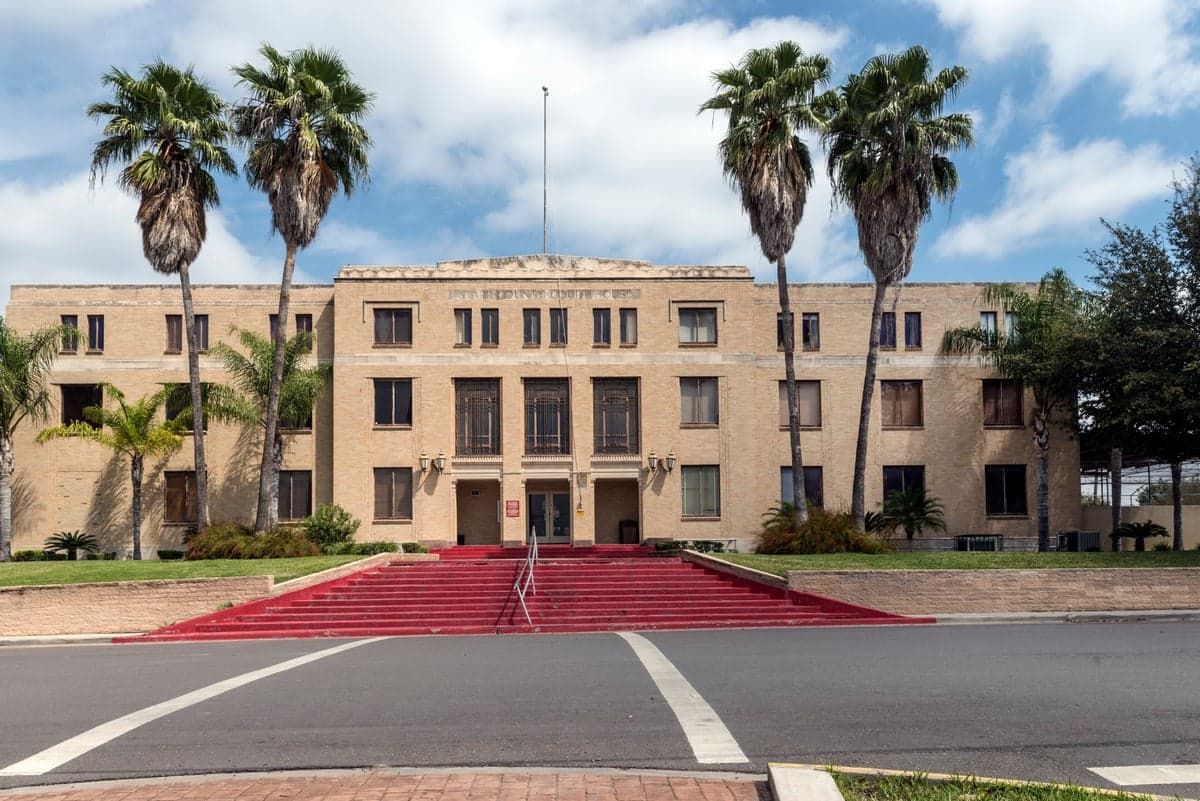
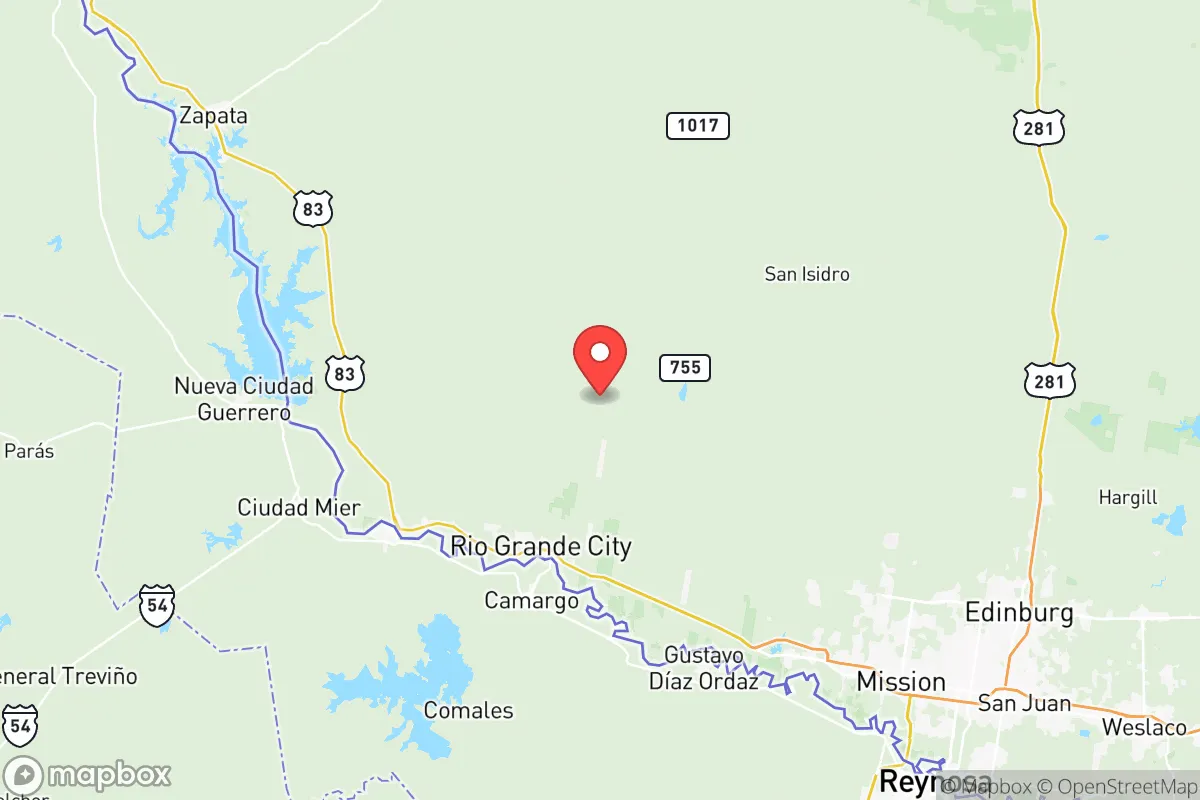

Photo: Wikipedia
Demographics of Starr County
Affluence Level in Starr County
A low-income area with significant economic hardship. Household wealth and educational attainment are well below national averages.
People of Starr County
Starr County, Texas, is one of the most predominantly Hispanic counties in the United States, with 97.3% of its 65,809 residents identifying as Hispanic or Latino. The population is overwhelmingly native-born, with only 19.2% foreign-born, and the county’s cultural identity is deeply rooted in Tejano heritage, borderland history, and a strong sense of community centered on family, faith, and land. With a low college attainment rate of 13.3% and a population density that remains rural and dispersed, Starr County stands apart from the fast-growing, diversifying metros of Texas, preserving a distinct character shaped by centuries of settlement along the Rio Grande.
Settlement & growth (pre-1960)
Long before European contact, the region now known as Starr County was home to nomadic Coahuiltecan bands, who lived along the Rio Grande and its tributaries. Spanish exploration began in the 16th century, but permanent colonization did not take hold until the mid-18th century, when Spanish authorities granted large land concessions—known as porciones—to settlers along the river. These land grants, which stretched from what is now Roma to Rio Grande City, established the foundational pattern of ranching and farming that defined the area for generations. The town of Roma, founded in 1765 as a Spanish colonial settlement, became a key river crossing and trade hub, while Rio Grande City, established later in 1848, grew as a military and commercial center after the Mexican-American War.
After Texas independence and annexation, Anglo-American settlers arrived in small numbers, but the population remained overwhelmingly Mexican-origin. The region’s isolation—far from railroads and major markets—meant that few European immigrants or Anglo farmers moved in. Instead, the population grew through natural increase and continued migration from across the border. The town of La Grulla, founded in the late 19th century, became a farming community, while Escobares and Las Lomas developed as unincorporated settlements tied to ranching and irrigated agriculture. By 1900, Starr County was already over 90% Hispanic, a demographic profile that would remain remarkably stable through the 20th century.
The arrival of the railroad in the early 1900s, particularly the St. Louis, Brownsville and Mexico Railway, connected Rio Grande City to the broader Texas economy, spurring growth in citrus, cotton, and vegetable farming. The town of La Joya, incorporated in 1910, grew as a shipping point for agricultural goods. However, the Great Depression and the Dust Bowl brought little new migration to Starr County; the area’s arid climate and lack of industrial jobs meant that few Dust Bowl Okies or other domestic migrants settled there. Instead, the county’s population remained stable, with families continuing to work the same land their ancestors had received under Spanish grants. The mid-20th century saw the rise of El Sauz and Santa Elena as small ranching communities, but no major urban growth occurred. By 1960, Starr County’s population was roughly 17,000, almost entirely Hispanic, with a rural, agricultural economy that had changed little since the 1800s.
Modern era (post-1965)
The 1965 Hart-Cellar Act, which ended national-origin quotas and opened immigration from Latin America, had a paradoxical effect on Starr County. Unlike many parts of Texas that saw a surge of new immigrants from Mexico and Central America, Starr County’s foreign-born share actually remained modest—19.2% today—because the county’s population was already overwhelmingly Mexican-origin. The real demographic shift came not from new immigration but from domestic out-migration: many young people left for larger cities like Houston, San Antonio, and the Rio Grande Valley’s urban centers, seeking education and jobs. This out-migration kept the county’s population growth slow and its age structure older than the state average.
The post-1965 era also saw the rise of border industrialization, with the establishment of maquiladoras (foreign-owned factories) just across the river in Mexico. Towns like Roma and Rio Grande City became commuter hubs for workers crossing the international bridges daily. This cross-border economy reinforced the county’s binational character, but it did not attract significant numbers of non-Hispanic residents. The Asian, Black, and Indian populations remain negligible—each at 0.2% or less—and the White non-Hispanic share is just 2.2%. Suburbanization, a dominant force in most of Texas, barely touched Starr County; the only notable growth has been in the unincorporated colonias—rural subdivisions with limited infrastructure—that house many low-income families. The community of La Casita, for example, grew as a colonia settlement in the 1990s, reflecting the county’s ongoing struggle with poverty and housing quality.
Domestic migration from the Rust Belt or coastal states has been virtually nonexistent. Starr County remains a place where people leave for opportunity, not where they move to for it. The county’s population peaked at around 65,000 in the 2010s and has since plateaued, with growth rates near zero. The small college-educated population (13.3%) reflects the lack of white-collar employment; most jobs remain in agriculture, education, healthcare, and cross-border trade. The towns of Garceno and Salineno are typical of the county’s settlement pattern: small, unincorporated, and overwhelmingly Hispanic, with a pace of life that feels disconnected from the fast-growing Texas metros.
The future
Starr County’s demographic future is one of stability, not transformation. The county is not becoming more diverse—it is already as homogeneous as any county in Texas. The Hispanic share is likely to remain above 95% for the foreseeable future, as there are no significant drivers of in-migration from other racial or ethnic groups. The foreign-born share may decline slightly as older immigrants age and younger, native-born generations stay or leave. The biggest demographic question is whether the county can retain its young people. Without a major shift in the local economy—such as the expansion of healthcare, renewable energy, or cross-border logistics—the population may slowly decline as out-migration continues.
New communities are not forming in any significant way. The colonias may continue to grow as affordable housing options, but they are unlikely to attract newcomers from outside the region. The towns of Roma and Rio Grande City will remain the county’s anchors, but neither is poised for rapid expansion. The cultural identity of Starr County—rooted in Tejano traditions, Catholicism, Spanish language, and a deep connection to the land—will persist, but it may become more insular as the rest of Texas grows more diverse. For someone moving in now, Starr County offers a close-knit, family-oriented community with a strong sense of history, but it is not a place of economic dynamism or demographic change. It is a place where the past is still very much present, and where the future looks much like the present.
In short, Starr County is becoming neither more nor less diverse; it is holding steady as a singularly Hispanic, rural border community. For a relocating family or individual, the appeal lies in its affordability, safety, and cultural continuity—but the trade-off is limited economic opportunity and a population that is slowly aging and shrinking. It is a place to settle into, not a place to grow into.

* Values derived from national, state, county, city and local statistics and may differ in a specific area. Last updated: 2026-06-11T18:21:57.000Z
Narrative content on this page is AI-generated and may contain mistakes. Verify any details that matter before acting on them.
ReloMaps may earn a commission from affiliate links at no extra cost to you.

