
Photo: Wikipedia
Political ClimatePolitical Climate in Starr County
Showing district-level results — no local-only data available.
Local Political AnalysisPolitical Analysis of Starr County
Starr County, Texas, is a fascinating political outlier in the Lone Star State. While the surrounding state of Texas carries a Cook Partisan Voting Index (PVI) of R+4, Starr County itself is rated R+2, making it a rare blue-leaning island in a deeply red region. However, that "blue" label is more nuanced than it appears; the county has been shifting rightward in recent cycles, with Donald Trump improving his margins here from a 5-point loss in 2016 to a near-tie in 2020. The real story is the growing divide between the old-guard Democratic strongholds and the newer, more conservative precincts sprouting up along the border.
How it compares
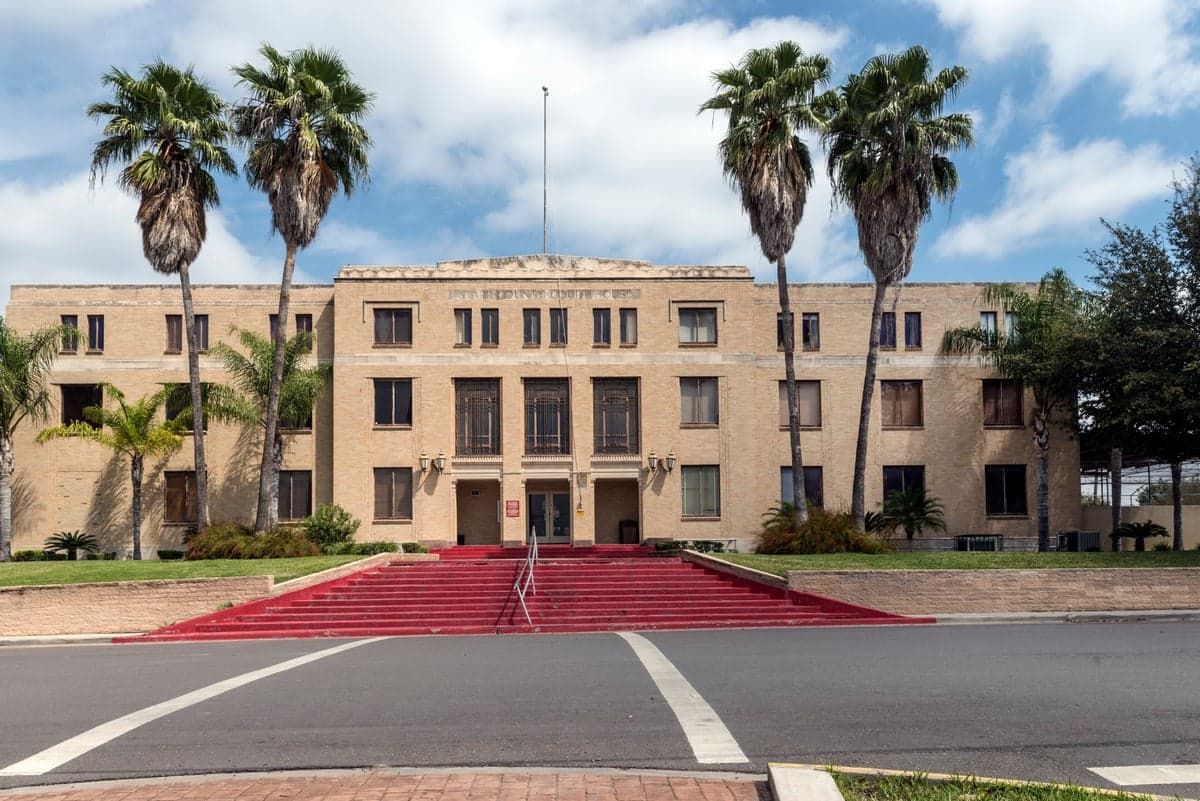
Compared to Texas as a whole, Starr County is a Democratic holdout in a state that has trended red for decades. The R+2 PVI means the county votes about 2 points more Republican than the national average, but that still puts it to the left of Texas’s R+4. The key difference is voter behavior in specific towns. The county seat, Rio Grande City, has historically been the Democratic anchor, with precincts near the downtown and the courthouse consistently delivering 60-65% for Democratic candidates. In contrast, Roma and La Grulla have seen a surge in Republican support, particularly in newer subdivisions and colonias where voters cite economic concerns and border security as top priorities. The swing precincts are in Escobares and Las Lomas, where the margin has narrowed from a 20-point Democratic advantage in 2012 to a single-digit one in 2020. This is a far cry from the rest of Texas, where rural counties often vote 70-80% Republican.
What this means for residents
For conservative residents, the political climate in Starr County is becoming more welcoming. They can now find like-minded neighbors in growing precincts around Roma and along the Highway 83 corridor, and local Republican party events have seen attendance double since 2018. For liberal residents, the shift means they can no longer take victory for granted; Democratic turnout in Rio Grande City has become critical to winning local races, and the county’s Democratic machine has had to work harder to keep the courthouse blue. In practice, this means local elections are more competitive than they’ve been in a generation. School board races in the Roma Independent School District and city council contests in Rio Grande City are now decided by margins of 100-200 votes, not the landslides of the past. Both sides agree that the county’s growing population—up 8% since 2010—is driving the change, with new arrivals from the Rio Grande Valley and northern Mexico bringing a mix of political loyalties.
Culturally, Starr County remains distinct from the rest of Texas. Spanish is the dominant language in daily life, and local policy debates often center on water rights, colonia infrastructure, and cross-border trade—issues that feel distant to voters in Dallas or Houston. The county’s Democratic lean is rooted in a deep tradition of labor union support and family ties to the old Partido Revolucionario Institucional (PRI) in Mexico, but that loyalty is fraying as younger voters prioritize economic opportunity over party allegiance. The result is a place where a Republican can win a county commission seat by focusing on potholes and drainage, while a Democrat can still carry the presidential vote by running on healthcare and immigration reform. It’s a political climate that rewards retail politics and personal relationships, not party labels—a reminder that in Starr County, the local still trumps the national.

State Political ClimatePolitical Climate in Texas
State Political AnalysisPolitical Environment in the State
Texas has been a Republican stronghold for decades, with a Cook Partisan Voting Index of R+4, meaning it votes about four points more Republican than the nation as a whole. The dominant coalition is a mix of rural conservatives, suburban moderates, and a growing number of exurban and small-city voters who lean right on economics and social issues. Over the last 10-20 years, the state has shifted rightward on cultural and regulatory fronts, even as its major metros have become more Democratic, creating a sharp urban-rural split that defines every statewide election.
Urban vs. rural divide
The political map of Texas is a tale of two landscapes. The big metros — Houston, Dallas-Fort Worth, San Antonio, and Austin — are increasingly blue, with Austin being the most liberal major city in the state. In 2020, Travis County (Austin) gave Joe Biden a 50-point margin, while Harris County (Houston) and Dallas County went blue by double digits. Meanwhile, rural and exurban counties like Collin County (north of Dallas) and Montgomery County (north of Houston) remain deeply red, often voting Republican by 30-40 points. The Rio Grande Valley, once a Democratic stronghold, has been trending right: counties like Starr and Zapata flipped from Clinton in 2016 to Trump in 2020, driven by conservative social values and economic pragmatism among Hispanic voters. The Panhandle and West Texas — places like Lubbock and Midland — are solidly Republican, powered by oil and agriculture. The divide means a resident in Austin lives in a different political world than someone in Tyler or Amarillo, even though they share the same state government.
Policy environment
Texas has no state income tax, relying instead on high property taxes and sales tax — a trade-off that appeals to many relocators but can surprise newcomers with annual property tax bills. The regulatory posture is famously business-friendly: no state-level minimum wage above the federal $7.25, weak unions, and fast permitting for development. Education policy is decentralized, with school districts controlling most curriculum, but the state has pushed school choice and charter expansion, including a 2023 law creating education savings accounts for special-needs students. Healthcare is a flashpoint: Texas has not expanded Medicaid under the ACA, leaving roughly 1.5 million uninsured residents, the highest rate in the nation. Election laws tightened after 2020 with Senate Bill 1, which added ID requirements for mail-in ballots, limited drive-through voting, and restricted early voting hours. The state also has a near-total abortion ban (trigger law from 2021, effective after Dobbs) with no exceptions for rape or incest, and a strict "heartbeat" law that allows private citizens to sue violators.
Recent policy direction
The last five years have seen Texas move decisively right on a broad set of liberties. On gun and self-defense law, the state enacted permitless carry in 2021 (HB 1927), allowing most adults to carry a handgun without a license or training. Parental and education rights were central to the 2023 legislative session: House Bill 900 banned "sexually explicit" books in school libraries, and Senate Bill 14 restricted which bathrooms transgender students can use. Speech is broadly protected, but the state has targeted social media platforms with HB 20 (2021), which bars them from moderating content based on "viewpoint" — a law currently tied up in court. Privacy and surveillance are mixed: Texas has no comprehensive data privacy law, but it passed a 2023 law restricting TikTok on government devices. Medical and bodily autonomy is heavily restricted on abortion, but the state has expanded telehealth and direct primary care. Property rights remain strong, with no state-level rent control and a 2023 law limiting homeowners' association fines. Taxation is trending toward relief: the 2023 session cut property taxes by $18 billion through higher homestead exemptions and a lower appraisal cap. Voting and ballot access have tightened, but Texas still offers no-excuse early voting for two weeks, and voter turnout hit a record 66% in 2020.
Civil unrest & political movements
Texas has seen significant protest activity, particularly around abortion and racial justice. In 2021, the "heartbeat" law sparked large demonstrations in Austin, Houston, and Dallas, with activists using civil disobedience tactics like blocking clinic entrances. The 2020 George Floyd protests in Austin and Houston were among the largest in the country, leading to local police reform debates. On the right, the "constitutional sheriff" movement has gained traction in rural counties, with sheriffs in places like Montgomery County publicly refusing to enforce certain state or federal gun laws. Immigration politics are a constant flashpoint: Governor Abbott's Operation Lone Star (2021) deployed state troopers and National Guard to the border, bused migrants to northern cities, and installed razor wire along the Rio Grande — actions that drew lawsuits from the Biden administration. Secession rhetoric, while not mainstream, has a vocal fringe: the Texas Nationalist Movement pushes for a referendum on independence, but polling shows support below 20%. Election integrity remains a live issue: after 2020, Republican county officials in Harris County (Houston) faced intense scrutiny over ballot drop-box procedures, leading to the 2021 voting law. A new resident will notice political bumper stickers, yard signs, and church-based activism in most communities, but the intensity varies wildly by neighborhood.
Projection
Over the next 5-10 years, Texas is likely to remain Republican at the state level, but the margin will narrow. In-migration from blue states — roughly 1,000 people move to Texas per day — is slowly shifting the suburbs: Collin County went from 57% Trump in 2016 to 52% in 2020, and Fort Bend County (southwest of Houston) flipped to Biden. The Hispanic vote is the wild card: if the rightward trend in the Valley continues, Republicans could offset losses in the suburbs. Demographically, Texas is becoming younger and more diverse, which typically benefits Democrats, but the state's conservative cultural pull is strong among Hispanic and Asian voters. Expect continued fights over abortion, school vouchers, and property taxes, with the legislature likely to pass more school choice and further tax cuts. A new resident moving in now should expect a state that is politically competitive in a decade, but still governed by a Republican trifecta for the foreseeable future, with a policy environment that prioritizes low taxes, business growth, and cultural conservatism.
For a new resident, the bottom line is that Texas offers a low-tax, business-friendly environment with strong gun rights and limited government regulation, but also high property taxes, a restrictive abortion law, and a polarized political landscape that varies dramatically by city. Conservatives will find a welcoming policy environment and a like-minded community in most suburbs and rural areas. Liberals will find vibrant blue cities like Austin and Houston, but will face a state government that is often hostile to their priorities. The key is choosing your location carefully — the political reality of Dallas is not the same as Waco, and the state's trajectory means those differences will only grow.
* Values derived from national, state, county, city and local statistics and may differ in a specific area. Last updated: 2026-06-11T18:21:57.000Z
Narrative content on this page is AI-generated and may contain mistakes. Verify any details that matter before acting on them.
ReloMaps may earn a commission from affiliate links at no extra cost to you.

