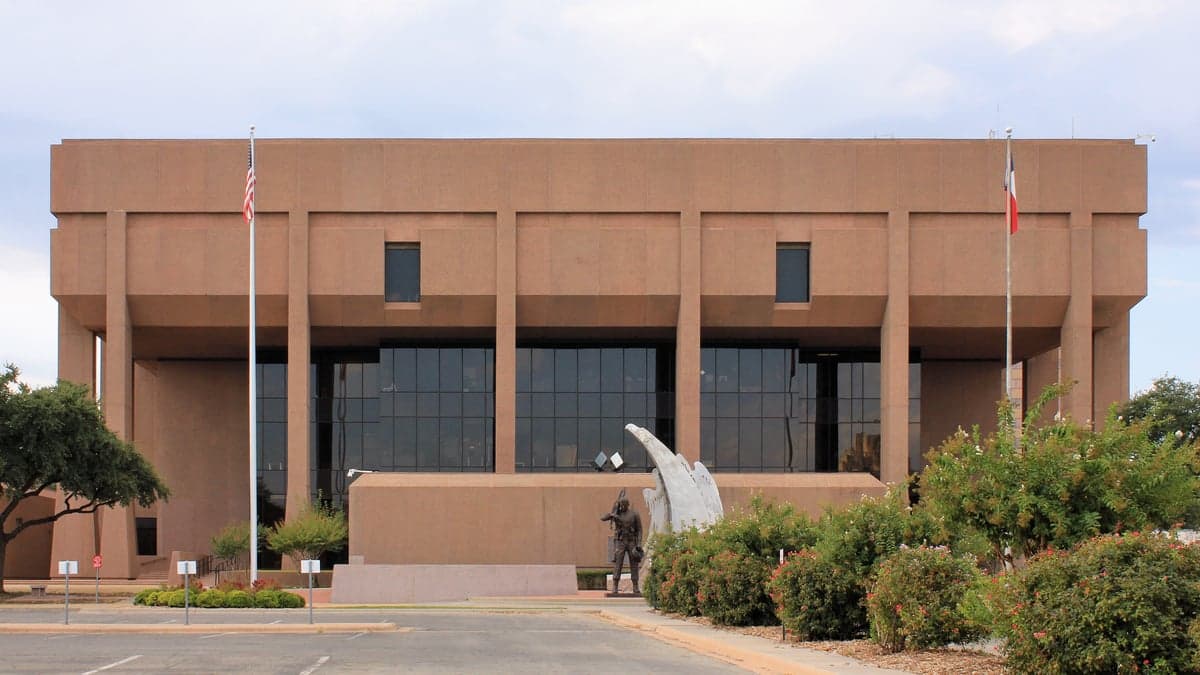
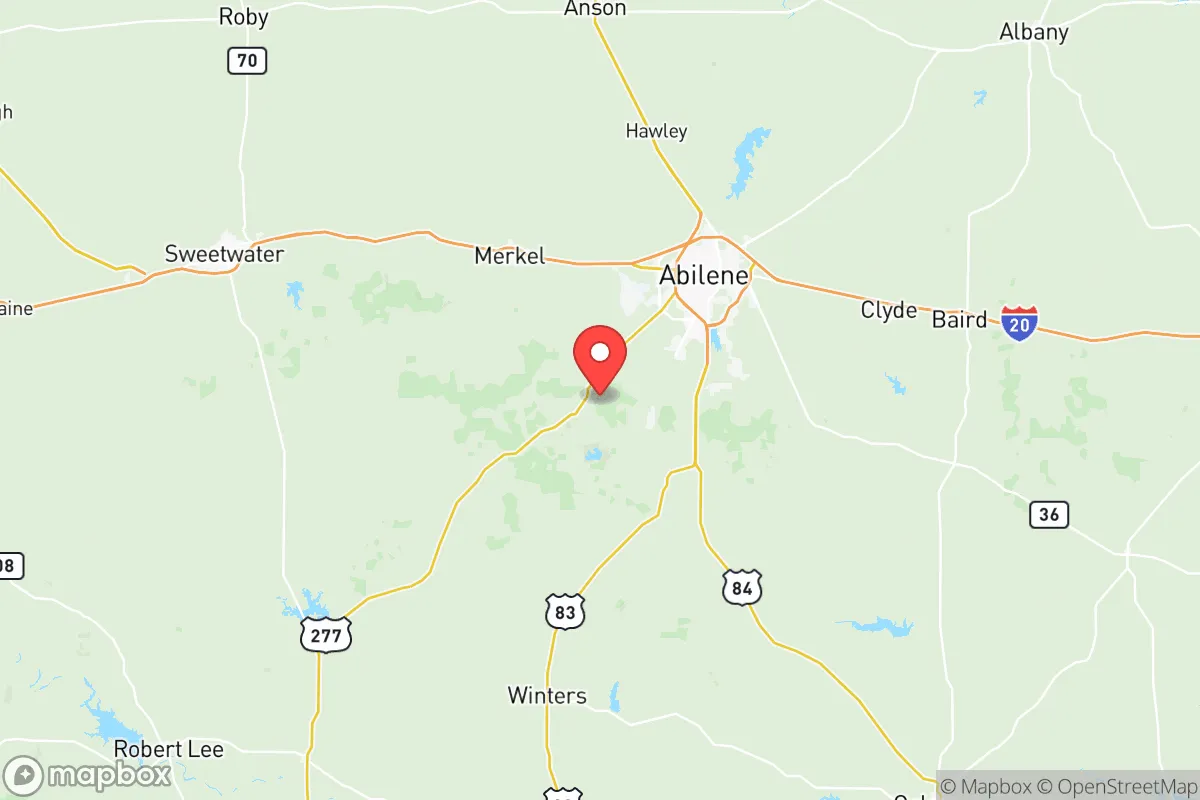
Photo: Wikipedia
Personal Sovereignty in Taylor County
Strong independent fundamentals that actively favor personal liberty and low regulation.
What does Personal Sovereignty tell us?
Personal Sovereignty measures your capacity for self-reliance and independence with minimal government friction. Higher scores mean fewer barriers between you and the way you want to live... but it assumes you have the space you need and good neighbors.
What does this tell us?
Personal Sovereignty measures your capacity for self-reliance and independence with minimal government friction. Higher scores mean fewer barriers between you and the way you want to live... but it assumes you have the space you need and good neighbors.
State Policy
Energy independence: Net exporter (220% of energy produced in-state)
Personal Liberty
Homesteading

Personal Liberty Analysis
Taylor County, anchored by Abilene, offers a personal sovereignty environment that is distinctly more hands-off than Texas's major metropolitan corridors, though it operates within the broader framework of state preemption laws that generally favor individual autonomy. The county's regulatory posture, gun-friendly culture, and available land for self-reliant living create a baseline of freedom that appeals to both single individuals and families seeking to minimize government intrusion. However, the degree of personal sovereignty varies notably between the city limits of Abilene, the smaller communities of Merkel and Tuscola, and the unincorporated areas stretching toward Buffalo Gap and Lawn, where local ordinances and enforcement priorities differ.
Tax burden and regulatory posture in Taylor County compared to Texas metro areas
Taylor County benefits from Texas's absence of a state income tax, but the local tax burden is shaped by property tax rates that are moderate by state standards. The combined city and county property tax rate in Abilene typically falls in the range of 2.3% to 2.6% of assessed value, which is lower than many suburban Dallas or Houston districts but slightly higher than some rural West Texas counties. The regulatory environment in unincorporated Taylor County is notably lighter than in Abilene proper: building permits are required for new construction but enforcement is less aggressive, and there are no countywide zoning ordinances governing land use outside city limits. This means a property owner near Tuscola or View can erect a workshop, park an RV, or keep livestock with minimal bureaucratic friction, whereas similar activities inside Abilene city limits trigger permitting and setback requirements. The county's approach to business regulation is similarly permissive, with no local occupational licensing beyond state mandates, making it straightforward to start a home-based trade or small farm operation.
Self-defense rights and gun law specifics in Taylor County
As a Texas county, Taylor County operates under state preemption that prohibits local governments from enacting firearm restrictions stricter than state law, and the county's elected officials have shown no inclination to test those boundaries. Constitutional carry has been fully in effect since 2021, meaning any adult who may legally possess a firearm can carry it openly or concealed without a permit anywhere in the county, including in Abilene's city parks and commercial districts. The county's sheriff's office, led by a Republican sheriff, has publicly stated it will not enforce any future federal firearm regulations it deems unconstitutional, a position that carries weight with residents who prioritize self-defense autonomy. Gun ranges and firearms retailers are concentrated along the I-20 corridor near Abilene and in the rural areas around Merkel, with no county-imposed waiting periods, magazine capacity limits, or firearm registration requirements. For families, the practical effect is that defensive firearm ownership is culturally normalized and legally unimpeded, with the only meaningful restrictions being those imposed by private property owners and federal law.
Self-reliance and homesteading viability: lot sizes, zoning, and off-grid feasibility
The viability of a self-reliant lifestyle in Taylor County depends heavily on location, with unincorporated areas offering far more latitude than Abilene's suburban subdivisions. Minimum lot sizes in the county's extraterritorial jurisdiction are typically one acre, but properties of five to forty acres are common and affordable in the areas around Buffalo Gap, Tuscola, and Lawn, where land prices range from $3,000 to $8,000 per acre as of 2026. Off-grid living is legally feasible in unincorporated Taylor County: there are no county ordinances requiring connection to municipal water or sewer, and rainwater catchment systems are permitted without special permitting. Solar panel installation for off-grid power is unrestricted, though residents must comply with state electrical codes if they intend to sell power back to the grid. Livestock keeping is generally unrestricted on parcels of two acres or more outside city limits, with no county-level bans on chickens, goats, or cattle. Inside Abilene city limits, however, the picture is more restrictive: the city enforces a limit of four chickens per household, prohibits roosters, and requires a permit for beekeeping, while goats and larger livestock are prohibited on lots under one acre. For those seeking maximum homesteading freedom, the rural communities of Potosi and the areas south of Abilene Regional Airport offer the best combination of affordable acreage and minimal regulatory oversight.
Personal liberties: parental rights, medical autonomy, speech, and property
Taylor County's cultural and political climate strongly supports parental rights in education and medical decision-making, reflecting the broader conservative orientation of the region. The Abilene Independent School District and smaller districts in Merkel and Tuscola have adopted policies that require parental notification for any changes to a student's mental, emotional, or physical health, and parents retain the right to opt their children out of any curriculum materials they find objectionable. Medical autonomy is shaped by Texas state law, which has restricted abortion access and does not mandate COVID-19 or other adult vaccinations, though individual employers may impose their own requirements. Freedom of speech and assembly are robustly protected in public spaces, with no local ordinances restricting expressive activity beyond state trespassing and disorderly conduct laws. Property rights are strongly defended at the county level: Taylor County has no rent control, no short-term rental bans outside of specific Abilene neighborhoods, and no countywide tree preservation or aesthetic ordinances that restrict what a homeowner can do with their land. The county's appraisal district is generally considered fair in its property valuations, though appeals are common and the process is straightforward for homeowners who wish to contest their assessments.
Overall, Taylor County ranks among the more sovereignty-friendly areas in Texas for those who choose to live outside Abilene's city limits, offering a regulatory environment that is lighter than the Austin or Dallas metros but not as permissive as the most rural West Texas counties like Sterling or Coke. The county's combination of constitutional carry, low business regulation, and permissive land use in unincorporated areas creates a practical freedom that appeals to families and individuals who value self-reliance. For a relocation-minded reader weighing personal sovereignty, the key distinction within Taylor County is clear: the rural communities of Buffalo Gap, Tuscola, and Lawn offer near-maximum autonomy within the state's legal framework, while Abilene proper imposes moderate but meaningful restrictions on homesteading and property use that may frustrate those accustomed to complete freedom.

* Values derived from national, state, county, city and local statistics and may differ in a specific area. Last updated: 2026-08-08T15:23:57.000Z
Narrative content on this page is AI-generated and may contain mistakes. Verify any details that matter before acting on them.
ReloMaps may earn a commission from affiliate links at no extra cost to you.

