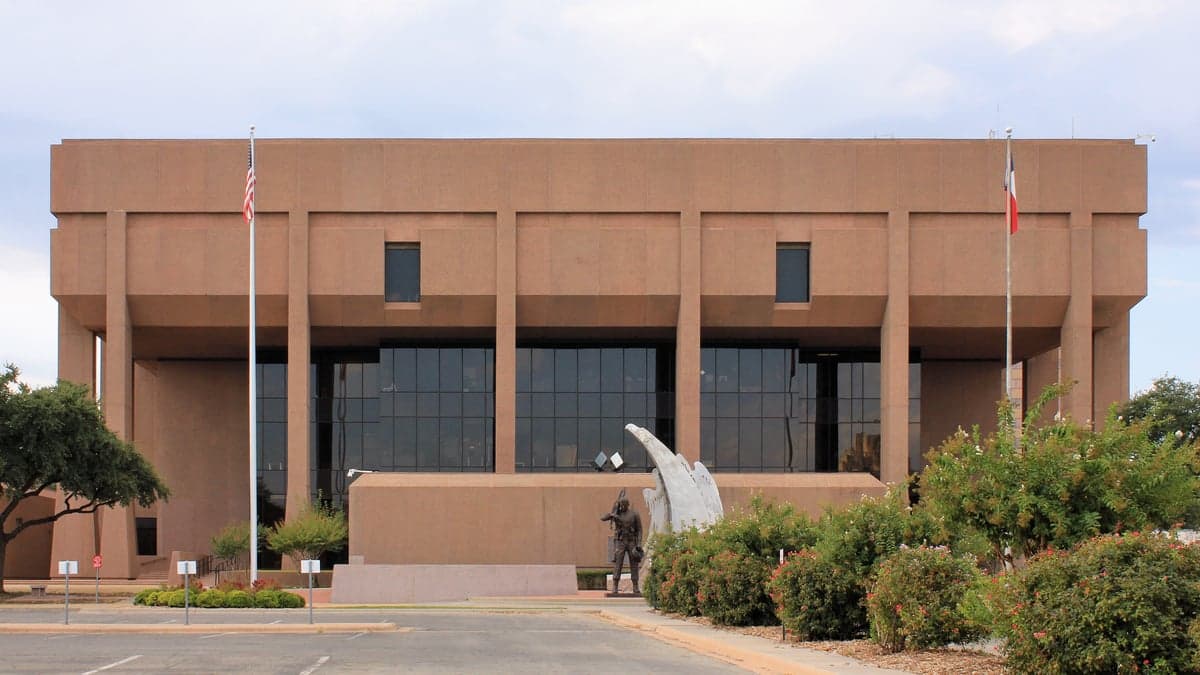
Photo: Wikipedia
Quality of Life in Taylor County
A livable area that tracks near national norms for affordability, walkability, and neighborhood health.
What does Quality of Life tell us?
Quality of Life measures an area by evaluating factors like cost of living, nearby amenities, country club access, airport proximity, socioeconomic signals and neighborhood character. For large states, this is a general average — quality of life can vary dramatically between metro areas, suburbs, and rural communities within the same state.
What does this tell us?
Quality of Life measures an area by evaluating factors like cost of living, nearby amenities, country club access, airport proximity, socioeconomic signals and neighborhood character. For large states, this is a general average — quality of life can vary dramatically between metro areas, suburbs, and rural communities within the same state.
Cost of Living
16% below national average
122%
The Real Cost of Living in Taylor County for 2026
| Tier | Individual | Family (4) |
|---|---|---|
| Survival | $18k | $33k |
| Comfortable | $37k | $54k |
| Luxury | $115k+ | $178k+ |
| Elite (Top 5%) | $135k+ | $209k+ |
Quality-of-Life Analysis
Taylor County, Texas, offers a broad quality-of-life spectrum that ranges from the regional hub of Abilene to quiet unincorporated crossroads, attracting everyone from young professionals and military families to retirees seeking low taxes and wide-open spaces. With a cost-of-living index of 84 — well below the national average of 100 — and a median home value of $190,300, the county provides affordable entry points across its urban, suburban, and rural tiers. The key distinction for potential residents lies in choosing between the amenities of a mid-sized city and the solitude of the surrounding ranchlands and small communities.
Largest town(s) & population centers
Abilene is the county seat and dominant population center, home to roughly 125,000 residents and the vast majority of the county's jobs, retail, and healthcare. Daily life in Abilene centers around institutions like Dyess Air Force Base, Abilene Christian University, and the Hendrick Health system, giving the city a stable, service-oriented economy. Residents enjoy a walkable downtown with the Paramount Theatre and the Grace Museum, along with standard big-box retail along the Southwest Drive corridor. Commute times are notably short — the countywide average is just over 16 minutes — meaning even those living on the outskirts of Abilene can reach work or school quickly. The city also provides the county's only major grocery and dining variety, making it the default destination for anyone in the smaller communities.
Smaller towns & rural pockets
Outside Abilene, the county contains several distinct small towns and unincorporated areas that offer a quieter, more land-based lifestyle. Tuscola, about 15 miles south of Abilene, is a bedroom community of roughly 900 people with its own small school district and a rural feel. Merkel, 12 miles east, has a population near 2,500 and retains a historic downtown with a few local businesses, plus a strong sense of community around its annual Merkel Rattlesnake Festival. Buffalo Gap, just south of Abilene, is an unincorporated historic village known for the Buffalo Gap Historic Village museum and its proximity to the Abilene State Park. Further out, Lawn and View are tiny unincorporated communities where homes sit on acreage and the nearest gas station may be 20 minutes away. These areas appeal to people who prioritize space, privacy, and lower property costs over convenience.
Cost & lifestyle range
The cost spread across Taylor County is meaningful but compressed compared to major metros. At the low end, rural properties in areas like Lawn or View can be found for under $150,000, and median rent countywide is just $1,111 — affordable even for single-income households. The median home value of $190,300 buys a 3-bedroom house in Abilene's older neighborhoods or a larger home on acreage in the county's unincorporated areas. At the higher end, newer subdivisions in south Abilene and near Dyess Air Force Base push prices into the $250,000–$350,000 range, offering modern finishes and shorter commutes. Lifestyle varies accordingly: Abilene provides gyms, chain restaurants, and a regional airport, while rural residents rely on Abilene for most errands but enjoy lower property taxes and zero traffic. The county's overall cost index of 84 means a dollar goes roughly 16% further here than in the average U.S. location, making it especially attractive for remote workers and retirees on fixed incomes.
Taylor County works best for people who want a low-cost, low-stress base with access to a functional mid-sized city. Families tied to Dyess Air Force Base, students at ACU, and ranchers or hobby farmers all find a natural fit here, as do retirees who want to stretch their savings without sacrificing healthcare access. The trade-off is limited cultural and dining variety outside Abilene, but for those who value short commutes, affordable housing, and a slower pace, the county delivers consistently across its urban-to-rural range.

Crime in Taylor County
Crime rates similar to the national median for U.S. locations.
Violent CrimeViolent Crime Analysis
Property CrimeProperty Crime Analysis
Crime Analysis
Taylor County, Texas, presents a mixed safety profile anchored by its largest city, Abilene, where the overall crime rate sits above the national average but below many similarly sized Texas counties. The county recorded a violent crime rate of 345.5 incidents per 100,000 residents and a property crime rate of 1,795.5 per 100,000 in the most recent reporting period. While these figures indicate a tangible risk of both violent and property offenses, the experience of safety varies considerably between Abilene’s core neighborhoods and the smaller, more rural communities like Tuscola, Merkel, and Buffalo Gap that surround it.
Crime in context
Taylor County’s violent crime rate of 345.5 per 100,000 sits roughly 15-20% above the national average but is comparable to the statewide Texas average, which hovers near 330-350 per 100,000 depending on the year. The property crime rate of 1,795.5 per 100,000 is also elevated relative to the national benchmark of approximately 1,950, placing Taylor County in a middle tier among West Texas jurisdictions. For context, neighboring Jones County (Anson, Stamford) reports lower violent crime figures, while larger metro counties like Tarrant (Fort Worth) and Dallas report significantly higher rates. The presence of Abilene, a regional hub with a population near 125,000, drives the county’s totals upward; without Abilene, the county’s per-capita crime rates would drop substantially. The Abilene Police Department handles the vast majority of reported offenses, and clearance rates for violent crimes—particularly homicide and aggravated assault—have historically been in line with state averages, though property crime clearance rates remain low, as is typical nationwide.
What residents experience
Residents of Taylor County most frequently encounter property crimes—theft, burglary, and motor vehicle theft—which account for roughly 84% of all reported offenses. In Abilene, areas near the downtown corridor and along the I-20 and US 83/84 commercial strips see higher concentrations of shoplifting, vehicle break-ins, and vandalism. Violent crime, while less common, is not evenly distributed: aggravated assaults make up the majority of violent incidents, often tied to domestic disputes or arguments among acquaintances. Robbery and stranger-on-stranger violence are rarer but do occur, particularly in Abilene’s south and east side neighborhoods. The county’s smaller communities—Tuscola (population ~850), Merkel (~2,500), and Buffalo Gap (~500)—report very low violent crime rates, with most calls involving minor theft or traffic incidents. The Taylor County Sheriff’s Office patrols unincorporated areas and provides law enforcement to these towns under contract, and residents there generally describe a quiet, low-crime environment. However, the county’s proximity to I-20, a major east-west drug and human trafficking corridor, means that law enforcement regularly intercepts narcotics and stolen property moving through the region, a factor that contributes to the county’s overall crime volume.
Neighborhood-level variation and judicial climate
Safety in Taylor County is highly neighborhood-dependent. In Abilene, the Wylie and southwest areas—served by the Wylie Independent School District—consistently report the lowest crime rates, while the north side and areas near Abilene Christian University see moderate property crime. The downtown and south-side census tracts, particularly those with higher poverty and rental density, account for a disproportionate share of violent offenses. For those considering relocation, the judicial philosophy of local prosecutors is a critical factor. The Taylor County District Attorney’s office, which covers the 104th and 350th Judicial Districts, has historically pursued a conventional, law-and-order approach to prosecution, with relatively high conviction rates and a preference for custodial sentences in violent and repeat-offender cases. This stands in contrast to the more progressive, reform-oriented policies seen in larger Texas counties like Harris (Houston) or Dallas, where district attorneys have implemented diversion programs and reduced bail requirements for certain felony offenses. In Taylor County, the legal environment is generally viewed as favorable to public safety and victims’ rights, with prosecutors less inclined to embrace the lenient sentencing philosophies that critics argue contribute to recidivism and elevated crime rates in urban centers. For prospective residents, this means that while the county’s raw crime numbers are above the national average, the criminal justice system is structured to prioritize accountability and deterrence, a factor that can meaningfully affect long-term safety outcomes.
* Values derived from national, state, county, city and local statistics and may differ in a specific area. Last updated: 2026-08-08T15:23:57.000Z
Narrative content on this page is AI-generated and may contain mistakes. Verify any details that matter before acting on them.
ReloMaps may earn a commission from affiliate links at no extra cost to you.

