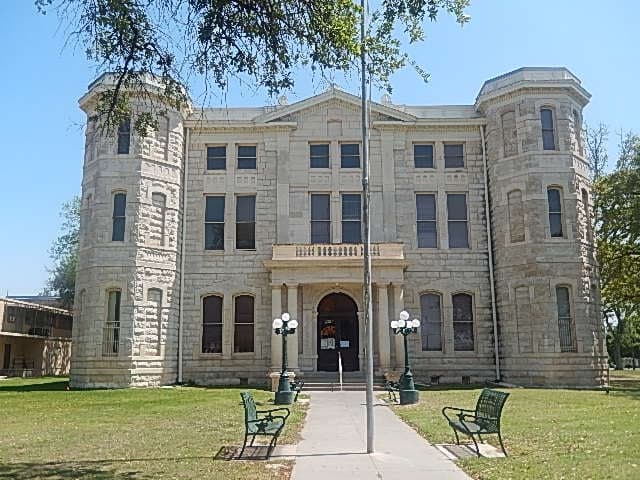
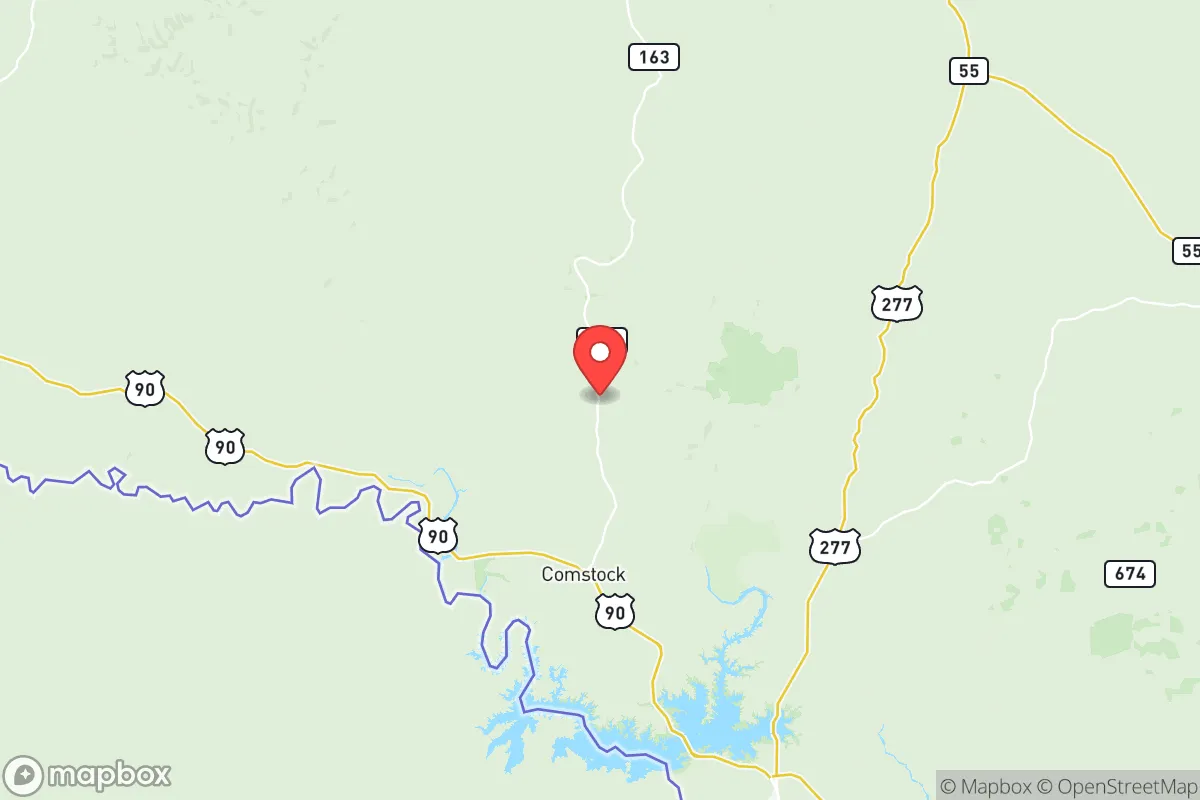
Photo: Wikipedia
Personal Sovereignty in Val Verde County
Strong independent fundamentals that actively favor personal liberty and low regulation.
What does Personal Sovereignty tell us?
Personal Sovereignty measures your capacity for self-reliance and independence with minimal government friction. Higher scores mean fewer barriers between you and the way you want to live... but it assumes you have the space you need and good neighbors.
What does this tell us?
Personal Sovereignty measures your capacity for self-reliance and independence with minimal government friction. Higher scores mean fewer barriers between you and the way you want to live... but it assumes you have the space you need and good neighbors.
State Policy
Energy independence: Net exporter (220% of energy produced in-state)
Personal Liberty
Homesteading

Personal Liberty Analysis
Val Verde County, anchored by the city of Del Rio and stretching along the Rio Grande, offers a personal sovereignty environment that is markedly more permissive than Texas’s major metropolitan corridors, though it operates within the same state-level legal framework. The county’s low population density, rural character, and distance from state regulatory hubs create a de facto atmosphere of greater autonomy, where residents experience fewer daily frictions with local government than they would in Harris or Travis Counties. For individuals and families prioritizing personal freedom, the trade-off involves accepting limited local services and a slower pace of economic opportunity in exchange for a lighter regulatory touch and a culture that values self-reliance.
Tax burden and regulatory posture compared to Texas metro areas
Val Verde County’s tax structure is typical of rural Texas, with no county-level income tax and a reliance on property and sales taxes. The county’s effective property tax rate hovers around the state median, but the key advantage for sovereignty-minded residents is the significantly lower property valuations compared to cities like Austin or San Antonio. A home in Del Rio or the unincorporated areas near Laughlin Air Force Base carries a tax bill that is often 40-60% lower than a comparable property in a major metro. The regulatory posture from the county government is light-touch: there is no county-wide zoning ordinance in the unincorporated areas, meaning residents in places like Comstock or the rural stretches of US-90 can build, park RVs, or operate small-scale businesses without navigating a thicket of permits. The city of Del Rio does enforce building codes and zoning within its limits, but the permitting process is generally straightforward and inexpensive compared to larger cities. Sales tax in Del Rio is 8.25%, which is standard for Texas, but the county does not impose additional layers of business regulation that burden small operators.
Self-defense law and gun-friendly culture in Val Verde County
Texas’s permitless carry law, in effect since 2021, applies fully in Val Verde County, meaning any law-abiding adult 21 or older can carry a handgun openly or concealed without a license. The county’s culture strongly supports this right; gun ownership is widespread, and there is no local ordinance restricting the carrying of firearms in public parks or government buildings beyond what state law mandates. The sheriff’s office in Val Verde County is known for a pro-Second Amendment stance, and residents in Del Rio, Lake View, and the rural communities along the Devil’s River report no social friction around visible firearm carry. For those interested in training, the Val Verde County Sheriff’s Office offers a License to Carry class, though it is no longer legally required. The county has no local magazine capacity restrictions or additional background check requirements beyond federal law. The proximity to the border does not translate into restrictive gun policies at the local level; rather, the county’s law enforcement focuses on cross-border crime, leaving lawful gun owners alone.
Self-reliance and homesteading viability across the county
Val Verde County presents strong opportunities for self-reliant living, particularly in its unincorporated areas. The county’s minimum lot size for a single-family home in areas without municipal water and sewer is typically one acre, but many parcels available for purchase are 5, 10, or 20 acres, especially near the communities of Langtry and Pandale. There is no county-wide ban on rainwater harvesting, and the state of Texas actually encourages it through tax exemptions on rainwater collection equipment. Off-grid living is feasible: the county does not require connection to a municipal utility if a property can demonstrate adequate on-site water and wastewater systems. Solar panel installation is unregulated at the county level, though residents must still comply with Texas’s interconnection rules if they want to sell power back to the grid. The semi-arid climate means that serious homesteaders need to plan for water storage and drought-tolerant agriculture, but the regulatory barriers are minimal. In contrast, within Del Rio city limits, the city requires connection to municipal water and sewer where available, and building permits are enforced, so the path of least resistance for maximum autonomy is to purchase land outside the city limits.
Personal liberties: parental rights, medical autonomy, and property rights
Texas state law provides a strong baseline for personal liberties that Val Verde County does not undermine. Parental rights in education are protected under state law, and the county’s school districts, including San Felipe Del Rio Consolidated Independent School District, operate with a conservative board that generally defers to parental authority on curriculum and medical decisions. Medical autonomy is shaped by state-level restrictions: Texas bans nearly all abortions after six weeks, and Val Verde County has no local ordinances that add or subtract from that framework. Vaccine mandates are not enforced by the county government, and residents report that medical providers in Del Rio respect patient choice regarding treatments. Property rights are robust; the county does not impose rent control, and there are no local ordinances restricting short-term rentals in unincorporated areas. The Texas Property Code’s protections against government takings are fully in effect, and the county’s appraisal district is known for being responsive to property value protests. Speech is protected under the First Amendment, and there are no local hate speech ordinances or content-based restrictions that go beyond state law.
Overall, Val Verde County offers a level of personal sovereignty that is substantially higher than what residents experience in Texas’s large cities, while remaining within the mainstream of rural Texas counties. The combination of low property taxes, minimal county-level regulation, strong gun rights, and viable off-grid living options makes it a practical choice for those who value autonomy over convenience. Compared to counties closer to the I-35 corridor, Val Verde’s distance from state regulatory pressure and its border-community ethos of self-sufficiency create an environment where personal freedom is the default, not something that must be defended at every turn.

* Values derived from national, state, county, city and local statistics and may differ in a specific area. Last updated: 2026-08-08T13:18:40.000Z
Narrative content on this page is AI-generated and may contain mistakes. Verify any details that matter before acting on them.
ReloMaps may earn a commission from affiliate links at no extra cost to you.

