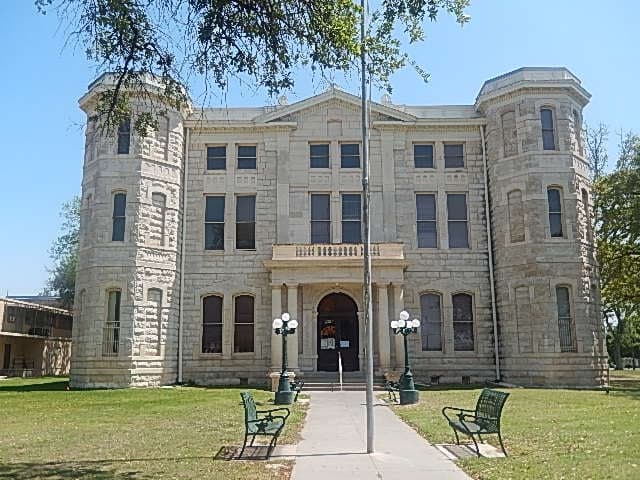
Photo: Wikipedia
Quality of Life in Val Verde County
A livable area that tracks near national norms for affordability, walkability, and neighborhood health.
What does Quality of Life tell us?
Quality of Life measures an area by evaluating factors like cost of living, nearby amenities, country club access, airport proximity, socioeconomic signals and neighborhood character. For large states, this is a general average — quality of life can vary dramatically between metro areas, suburbs, and rural communities within the same state.
What does this tell us?
Quality of Life measures an area by evaluating factors like cost of living, nearby amenities, country club access, airport proximity, socioeconomic signals and neighborhood character. For large states, this is a general average — quality of life can vary dramatically between metro areas, suburbs, and rural communities within the same state.
Cost of Living
29% below national average
138%
The Real Cost of Living in Val Verde County for 2026
| Tier | Individual | Family (4) |
|---|---|---|
| Survival | $15k | $29k |
| Comfortable | $29k | $43k |
| Luxury | $98k+ | $152k+ |
| Elite (Top 5%) | $116k+ | $179k+ |
Quality-of-Life Analysis
Val Verde County offers a spectrum of living environments that range from the border-city bustle of Del Rio to the quiet, unincorporated stretches of the Devil’s River country and the agricultural flats near Laughlin Air Force Base. The county’s character is defined by its position on the Rio Grande and its role as a regional hub for trade, military, and tourism. People are drawn to different parts of the county based on whether they prioritize urban amenities, military proximity, or the solitude of the South Texas brush country.
Largest town(s) & population centers
Del Rio is the county seat and by far the largest population center, home to roughly 35,000 of the county’s 47,000 residents. Daily life here revolves around a mix of retail, government services, and the cross-border economy with Ciudad Acuña, Coahuila. The downtown area along Gibbs Street and the historic San Felipe Creek corridor offers local restaurants, the Val Verde County Courthouse, and access to the Amistad National Recreation Area. The presence of Laughlin Air Force Base just east of town shapes much of the local economy and community life, with a significant portion of residents being active-duty military or civilian contractors. Del Rio provides the county’s only full-service hospital (Val Verde Regional Medical Center), a regional airport, and the main retail corridor along US-90. For families, the San Felipe Springs area and newer subdivisions near the base offer the most concentrated set of schools, parks, and grocery options.
Smaller towns & rural pockets
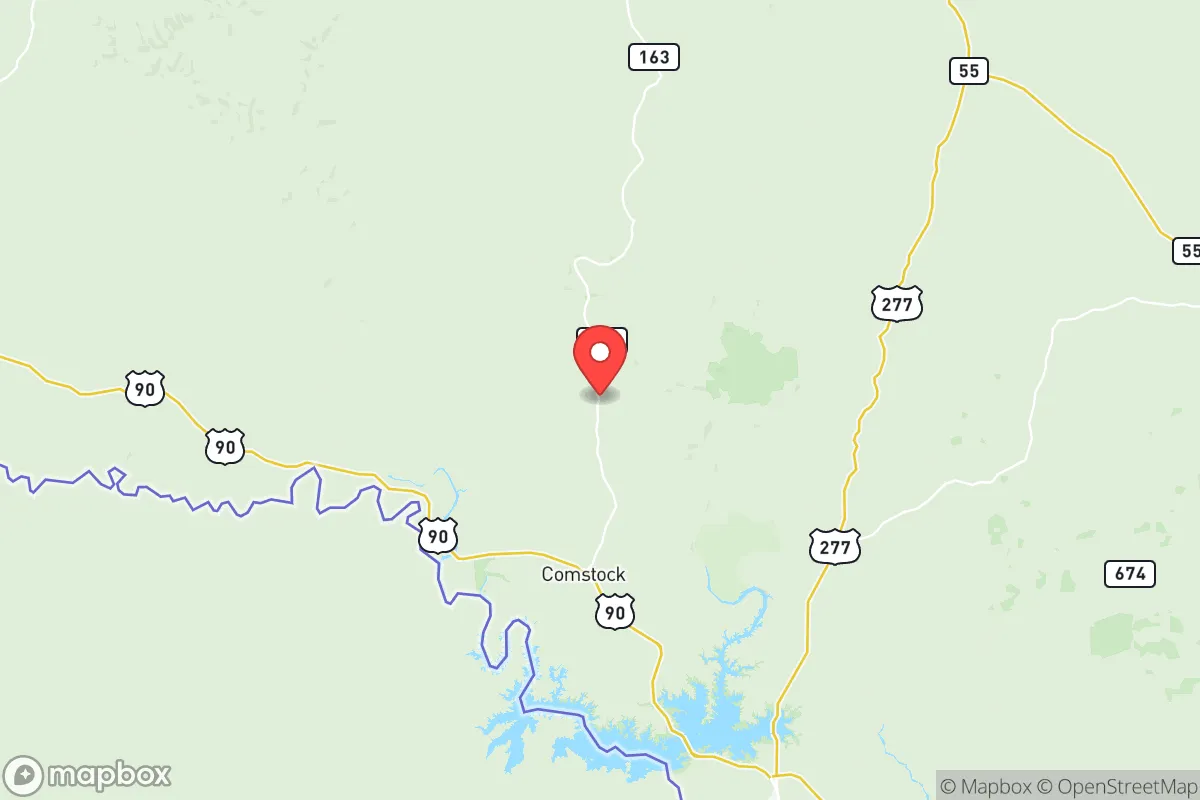
Outside Del Rio, the county is sparsely populated. The unincorporated community of Comstock, about 45 miles north on US-90, serves as a gateway to the Amistad Reservoir and the Pecos River confluence. It has a small store, a post office, and a handful of ranches, but no schools or medical facilities — residents commute to Del Rio for most services. Further north, the ghost town of Langtry (home of the Judge Roy Bean Visitor Center) is essentially a roadside attraction with a tiny year-round population. Along the Rio Grande south of Del Rio, the rural pockets near Quemado and Bracketville (technically in Kinney County but adjacent) are dominated by hunting ranches and weekend homes. The county’s interior is vast ranchland, much of it part of the historic Pumpville and Shumla areas, where paved roads are rare and cell service is unreliable. These areas attract people seeking absolute privacy, low land costs, and proximity to the lake or river for fishing and boating.
Cost & lifestyle range
Val Verde County’s overall cost of living index is 71, well below the national average of 100, but the range within the county is significant. In Del Rio, the median home value is $151,500 and median rent is $956, making it one of the more affordable county seats in Texas for homebuyers. The most expensive housing is concentrated in the newer subdivisions near Laughlin AFB (e.g., the area around Loop 79 and Veterans Boulevard), where homes can reach the mid-$200,000s. The cheapest options are older homes in central Del Rio or small manufactured homes on the outskirts, where prices can dip below $100,000. In the rural areas around Comstock and Langtry, land is cheap — often under $2,000 per acre — but building costs are higher due to distance from suppliers, and well/septic systems are mandatory. The average commute countywide is just 17.7 minutes, but that figure masks a split: Del Rio residents have a short drive to work, while rural residents may drive 45 minutes to an hour to reach the same jobs. Amenities drop off sharply outside Del Rio: there is no public transit, no ride-sharing, and limited grocery or healthcare access in the smaller communities.
The county is best suited for people who value low housing costs, outdoor recreation (especially boating, hunting, and fishing on Amistad Reservoir), and a slower pace of life. Military families stationed at Laughlin AFB find the base housing and local rental market manageable, while retirees and remote workers are drawn to the cheap land and tax-friendly Texas environment. Those who need urban amenities, specialized healthcare, or frequent air travel will find the county limiting — the nearest major airport is in San Antonio, a 2.5-hour drive east on US-90. For anyone comfortable with a self-sufficient, car-dependent lifestyle and a hot semi-arid climate, Val Verde County offers one of the lowest-cost living situations in the state.

Crime in Val Verde County
Crime rates similar to the national median for U.S. locations.
Violent CrimeViolent Crime Analysis
Property CrimeProperty Crime Analysis
Crime Analysis
Val Verde County, Texas, reports a violent crime rate of 345.5 per 100,000 residents and a property crime rate of 1,795.5 per 100,000, placing it in a moderate-to-high risk category compared to national benchmarks. The county seat of Del Rio anchors the region, and while the overall safety picture is mixed, the data suggests that property crime is a more pressing daily concern than violent offenses. Residents and prospective movers should weigh these figures against the realities of a border community where socioeconomic factors and judicial philosophy play a significant role in public safety outcomes.
Crime in context
Val Verde County’s violent crime rate of 345.5 per 100,000 is roughly 20% higher than the Texas state average of approximately 280 per 100,000 and significantly above the national rate of about 230 per 100,000. The property crime rate of 1,795.5 per 100,000 is also elevated, exceeding both the Texas average (around 1,500) and the national average (approximately 1,200). These numbers are driven largely by incidents in Del Rio, the county’s only incorporated city, where population density and border-related economic pressures concentrate criminal activity. Smaller communities like Laughlin Air Force Base and unincorporated areas such as Comstock and Langtry report far fewer incidents, though their small populations can skew per-capita rates. The county’s proximity to the international border with Ciudad Acuña, Mexico, introduces cross-border crime dynamics, including vehicle theft and drug trafficking, which inflate property crime totals.
What residents experience
For those living in Val Verde County, property crime is the most tangible threat. Burglary, motor vehicle theft, and larceny are the most common offenses, with many incidents tied to opportunistic theft from vehicles and homes in Del Rio’s more transient neighborhoods. Violent crime, while less frequent, includes aggravated assault as the dominant category, often linked to domestic disputes or alcohol-related altercations. The county’s judicial district, the 63rd Judicial District, has seen a shift toward more progressive prosecution policies in recent years, which has raised concerns among residents. Liberal-leaning district attorneys in border counties like Val Verde have been associated with reduced incarceration rates for repeat property offenders, a trend that critics argue emboldens criminals and undermines public confidence. In contrast, neighboring Kinney County and Edwards County maintain more conservative judicial approaches, which some residents view as a safer alternative for those considering relocation within the region.
Neighborhood-level variation
Safety in Val Verde County varies significantly by location. Del Rio’s downtown core and areas near the international bridge experience higher rates of theft and vandalism, while residential neighborhoods west of Highway 277 and near San Felipe Springs tend to report fewer incidents. Laughlin Air Force Base maintains its own security protocols and generally sees lower crime rates than the surrounding city. Unincorporated communities like Lake View and Cienegas Terrace fall somewhere in between, with property crime rates that mirror Del Rio’s but with less violent crime. For families and retirees, the safest housing options are typically found in the newer subdivisions on the city’s north side or in rural properties outside city limits. However, the county’s overall crime picture is unlikely to improve significantly without a shift toward stricter sentencing and law enforcement policies, as the current progressive judicial climate in the 63rd District continues to prioritize rehabilitation over incarceration for repeat offenders.
* Values derived from national, state, county, city and local statistics and may differ in a specific area. Last updated: 2026-08-08T13:18:40.000Z
Narrative content on this page is AI-generated and may contain mistakes. Verify any details that matter before acting on them.
ReloMaps may earn a commission from affiliate links at no extra cost to you.

