
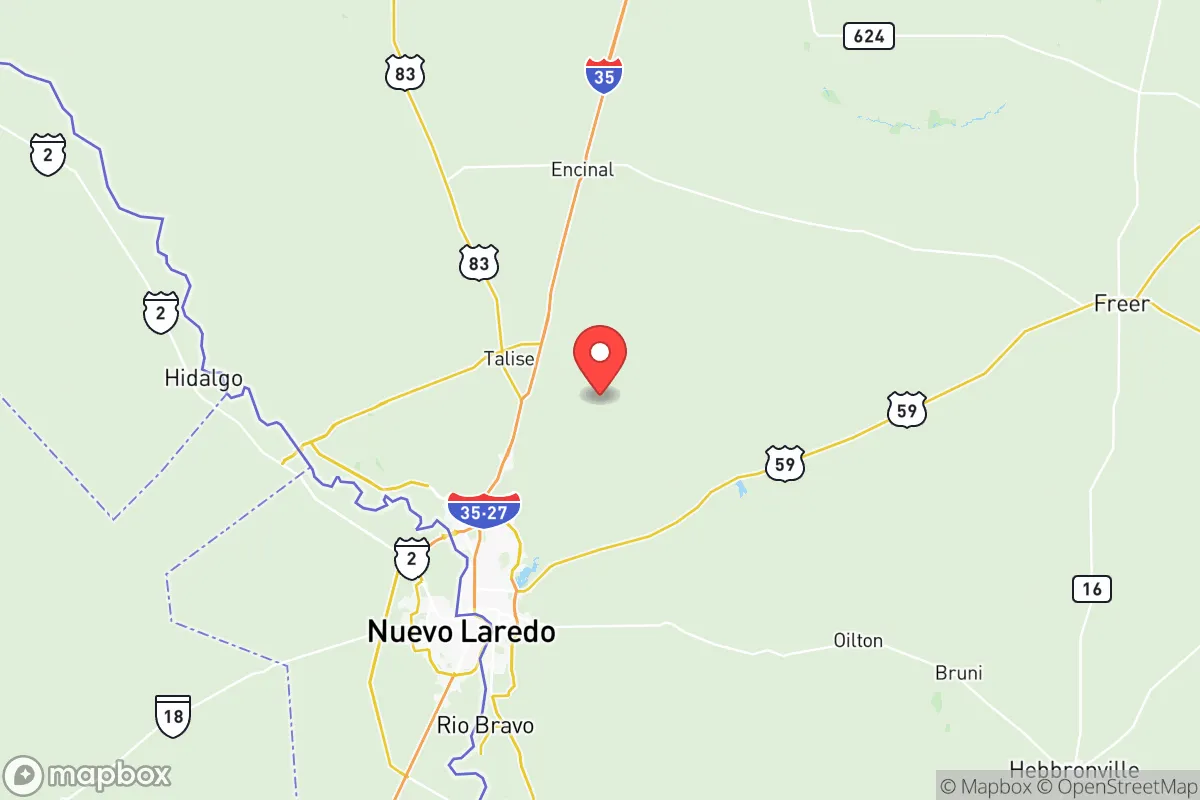
Photo: Wikipedia
Quality of Life in Webb County
A livable area that tracks near national norms for affordability, walkability, and neighborhood health.
What does Quality of Life tell us?
Quality of Life measures an area by evaluating factors like cost of living, nearby amenities, country club access, airport proximity, socioeconomic signals and neighborhood character. For large states, this is a general average — quality of life can vary dramatically between metro areas, suburbs, and rural communities within the same state.
What does this tell us?
Quality of Life measures an area by evaluating factors like cost of living, nearby amenities, country club access, airport proximity, socioeconomic signals and neighborhood character. For large states, this is a general average — quality of life can vary dramatically between metro areas, suburbs, and rural communities within the same state.
Cost of Living
23% below national average
122%
The Real Cost of Living in Webb County for 2026
| Tier | Individual | Family (4) |
|---|---|---|
| Survival | $16k | $30k |
| Comfortable | $35k | $51k |
| Luxury | $107k+ | $166k+ |
| Elite (Top 5%) | $126k+ | $196k+ |
Quality-of-Life Analysis
Webb County, Texas, offers a spectrum of quality-of-life options that range from the urban energy of its sole major city, Laredo, to the quiet, unincorporated stretches of the South Texas plains. The county’s character is defined by this contrast: Laredo provides dense, amenity-rich living for professionals and families, while the surrounding rural areas and small communities attract those seeking lower costs, more land, and a slower pace. With a cost of living index of 77 (well below the national average of 100), a median home value of $178,900, and a median rent of $997, the county is broadly affordable, but the experience of daily life shifts dramatically depending on whether you live within the city limits or outside them.
Largest town(s) & population centers
Laredo is the overwhelming population center of Webb County, home to over 260,000 residents and the vast majority of the county’s jobs, retail, and services. Daily life in Laredo is centered around its binational economy, with the World Trade International Bridge and the city’s status as a major inland port driving employment in logistics, customs brokerage, and warehousing. The city offers a full range of amenities, including the Laredo Energy Arena, the Laredo International Airport, and multiple school districts such as United ISD and Laredo ISD. Housing here is notably affordable for a city of its size, with median home values around $178,900 and rents near $997, though prices rise in newer subdivisions like those in the Del Mar Hills and North Laredo areas. The average commute in the county is a manageable 21.9 minutes, but within Laredo itself, traffic on major arteries like Loop 20 and Saunders Street can add time during peak hours. Residents here have access to the Laredo College and Texas A&M International University, as well as a robust dining and entertainment scene that leans heavily on Mexican-American culture and cross-border shopping.
Smaller towns & rural pockets
Outside Laredo, Webb County is largely rural and sparsely populated. The only other incorporated community is El Cenizo, a small, predominantly Hispanic town of roughly 3,000 residents located along the Rio Grande. Life in El Cenizo is quieter and more isolated, with limited retail and no major employers; most residents commute into Laredo for work. The unincorporated area of Rio Bravo sits nearby and shares a similar character—small, tight-knit, and reliant on Laredo for services. Further north and west, the county opens into vast ranchlands and oil-patch territory, with communities like Bruni (population under 500) and Mirando City serving as crossroads for the energy industry. These areas offer a completely different lifestyle: wide-open spaces, minimal traffic, and a strong sense of self-reliance. Housing here is often older mobile homes or modest ranch houses, with land prices significantly lower than in Laredo, though access to healthcare, groceries, and schools requires a drive of 30 minutes or more.
Cost & lifestyle range
The cost of living in Webb County varies more by location than by housing type. At the lower end, rural areas like Bruni and Mirando City offer land and housing at prices well below the county median—some lots sell for under $20,000, and older homes can be found for under $100,000. These areas are ideal for those who prioritize privacy and space over convenience, but they come with trade-offs: longer commutes (often exceeding 40 minutes one way to Laredo), limited internet options, and no nearby grocery stores. At the higher end, Laredo’s North Laredo and Lake Casa Blanca neighborhoods feature newer homes in the $250,000–$350,000 range, with access to parks, golf courses, and the lake itself. Rent follows a similar spread: a one-bedroom apartment in central Laredo might run $850–$1,100, while a rural rental property could be as low as $600–$700. The county’s overall COL index of 77 reflects this affordability, but the lifestyle difference between a $600 rural rental and a $1,100 city apartment is vast—one offers solitude and land, the other offers walkable neighborhoods and nightlife.
Webb County is best suited for people who value affordability and are comfortable with a trade-off between urban amenities and rural peace. Families and professionals who need jobs in logistics, education, or healthcare will likely settle in Laredo, where schools, shopping, and cultural events are within reach. Retirees, ranchers, and those working in oil and gas may prefer the unincorporated areas like Bruni or Rio Bravo, where land is cheap and the pace is slow. The county’s strength lies in offering both options within a single, low-cost region—but the decision between them hinges entirely on how much convenience you are willing to sacrifice for space.

Crime in Webb County
Crime rates similar to the national median for U.S. locations.
Violent CrimeViolent Crime Analysis
Property CrimeProperty Crime Analysis
Crime Analysis
Webb County, anchored by the city of Laredo, presents a mixed safety profile that demands careful attention from potential residents. With a violent crime rate of 342.3 per 100,000 residents and a property crime rate of 1,780.9 per 100,000, the county sits above the national average for both categories, though its violent crime figure is slightly below the Texas state average. The most significant concern for newcomers is the property crime rate, which is notably elevated and reflects challenges common to border communities with high traffic volumes and transient populations.
Crime in context
When placed against state and national benchmarks, Webb County's violent crime rate of 342.3 per 100,000 is approximately 2% below the Texas average of 350 per 100,000 but remains about 8% higher than the national average of roughly 315 per 100,000. The property crime rate of 1,780.9 per 100,000 tells a more concerning story: it is roughly 15% higher than the Texas average of 1,550 per 100,000 and nearly 30% above the national average of about 1,380 per 100,000. These figures place Webb County in a middle tier among Texas border counties—safer than Hidalgo County (McAllen area) on violent crime but worse than Zapata County to the south. The elevated property crime is driven largely by theft and vehicle break-ins, which are persistent issues in Laredo's commercial corridors and near the international bridges at Gateway to the Americas and Juárez-Lincoln International Bridge.
What residents experience
Daily life in Webb County varies sharply by neighborhood and municipality. In Laredo's central districts, particularly around the downtown area and the San Bernardo Avenue commercial strip, residents report frequent petty theft and occasional car burglaries, especially near shopping centers and parking lots. The city's South Laredo neighborhoods, closer to the Rio Grande, experience higher rates of property crime linked to cross-border activity. Conversely, the suburban areas of Rancho Vista and the Del Mar Hills subdivision report significantly lower incident rates, with residents describing a quieter, more secure environment. The unincorporated community of Rio Bravo, just west of Laredo, has a smaller population but sees property crime rates that can exceed the county average by 20-30%, according to local law enforcement data. Violent crime, while less common, is concentrated in specific pockets: the El Cenizo and Colonia areas along the river have historically reported higher rates of assault and domestic violence, though these have declined since 2022 due to targeted policing initiatives.
Neighborhood-level variation and judicial climate
Prospective residents should be aware that safety outcomes are heavily influenced by location and the local justice system. The Laredo Police Department has implemented a data-driven crime prevention program since 2023, which has reduced property crime in the Mines Road and McPherson Road corridors by approximately 12%. However, the broader judicial environment in Webb County raises concerns. The county's district attorneys and judges in the 341st and 406th Judicial Districts have pursued progressive policies, including diversion programs for property offenders and reduced sentencing for repeat theft offenders. While these programs aim to address root causes, critics argue they have contributed to a revolving-door effect, with recidivism rates for property crime hovering near 45%—higher than the state average of 38%. This ideological approach to justice, while sympathetic to offenders, directly impacts public safety by keeping more criminals on the streets. For families and businesses, this means that even in relatively safe neighborhoods like North Laredo near the Laredo Country Club, vigilance against property crime remains essential. The safest housing choices are in gated communities or subdivisions with active neighborhood watch programs, particularly in the Lakeside and La Bota Ranch areas, where crime rates are 30-40% below the county average.
* Values derived from national, state, county, city and local statistics and may differ in a specific area. Last updated: 2026-05-12T06:57:04.000Z
Narrative content on this page is AI-generated and may contain mistakes. Verify any details that matter before acting on them.
ReloMaps may earn a commission from affiliate links at no extra cost to you.

