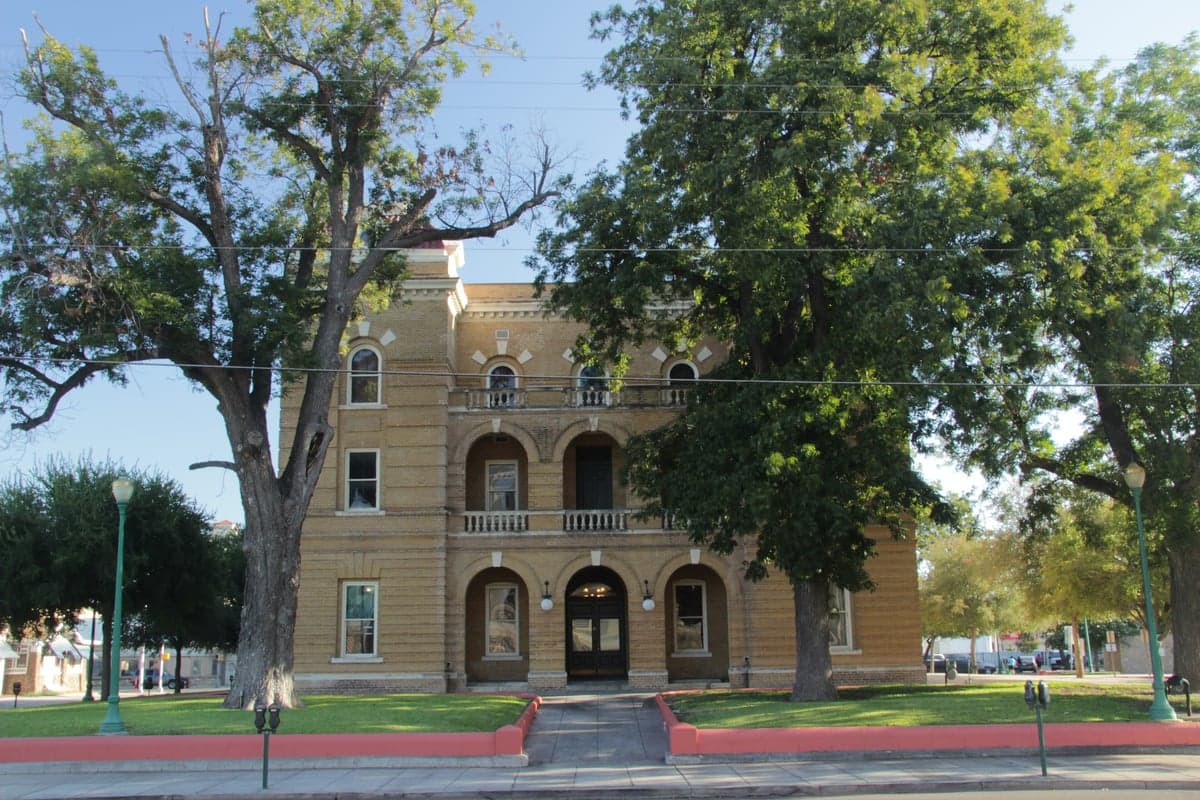
Photo: Wikipedia
Political ClimatePolitical Climate in Webb County
Showing district-level results — no local-only data available.
Local Political AnalysisPolitical Analysis of Webb County
Webb County, Texas, has long been a Democratic stronghold in South Texas, but the political winds are shifting in a way that should give any freedom-loving Texan pause. The Cook PVI of R+2 might sound moderate, but that number masks a deeper story: this county is trending right, yet it's still saddled with a legacy of one-party rule that has allowed government overreach to fester. Laredo, the county seat and economic hub, has historically voted blue, but you'll find more conservative pockets in places like Rio Bravo and El Cenizo, where border security and local control are daily concerns. The real swing precincts are in the newer subdivisions around Unitec and Mines Road, where families fleeing the chaos of Laredo's old guard are voting for change.
How it compares
Compared to Texas as a whole (R+4), Webb County is still a few points to the left, but the gap is closing fast. Statewide, Texas has embraced conservative principles—lower taxes, less regulation, and a firm stance on border security. Webb County, however, has been slower to shake off the old machine politics that prioritize government programs over personal responsibility. In Laredo, you see higher property taxes and a city council that's cozy with special interests, while in smaller towns like Bruni or Mirando City, folks are more skeptical of big government and vote accordingly. The difference is stark: Webb County's Democratic tilt is more about habit than ideology, whereas Texas's R+4 reflects a genuine commitment to limited government. If you're moving here from a red part of the state, you'll notice the local bureaucracy feels heavier—more permits, more fees, more hoops to jump through.
What this means for residents
For residents, this political climate means you have to stay vigilant. The local government in Laredo has a history of overreaching—think mask mandates that lasted longer than the state's, or zoning rules that tell you what you can do with your own property. The progressive push in the county is real, and it's coming from the school boards and city councils, not just the ballot box. If you value your Second Amendment rights or want to keep your kids' curriculum free from woke ideology, you'll need to pay attention to local elections. The good news is that the conservative vote is growing, especially in the rural parts of the county like Los Ebanos and San Ygnacio, where folks still remember what self-reliance looks like. But the trend is concerning: if the blue machine holds on, you can expect more taxes, more regulations, and less freedom to live your life without government interference.
Culturally, Webb County is a mix of old-school South Texas values and a creeping progressive agenda that feels out of step with the rest of the state. You'll find strong family ties and a deep respect for tradition in places like Nuevo Laredo (just across the border) and the colonias, but Laredo's city leadership is increasingly pushing policies that prioritize "equity" over personal liberty. The border security debate is front and center here—while the state of Texas is building barriers and sending in DPS, Webb County's officials often push back, favoring open-border rhetoric that undermines the rule of law. If you're looking for a place where your rights are respected and government stays out of your business, Webb County has potential, but it's a battleground. Keep your eyes on the local races, and don't let the old guard tell you how to live your life. The future here depends on whether the conservative wave can finally break through the Laredo machine.

State Political ClimatePolitical Climate in Texas
State Political AnalysisPolitical Environment in the State
Texas has been a reliably Republican state for decades, with a Cook PVI of R+4, but the political landscape is far more complex than a single number suggests. The dominant coalition has long been built on a foundation of fiscal conservatism, limited government, and traditional values, anchored by the state’s vast rural and suburban areas. Over the past 10-20 years, however, the state has seen a slow but steady shift leftward in its major metropolitan centers, driven by massive in-migration from blue states and rapid demographic changes, while the rest of the state has held firm or moved right. This tension between the growing urban strongholds and the conservative heartland defines Texas politics today.
Urban vs. rural divide
The political map of Texas is a study in contrasts. The major metros—Dallas-Fort Worth, Houston, San Antonio, and especially Austin—have become increasingly Democratic strongholds. Austin, in particular, is a deep blue island in a red sea, with Travis County consistently delivering 70%+ margins for Democratic candidates. Harris County (Houston) and Dallas County have also trended sharply left, flipping from red to blue in presidential elections over the last two cycles. Meanwhile, the vast rural expanse—places like the Panhandle around Lubbock, East Texas, and the Hill Country west of San Antonio—remains deeply Republican. The suburban counties that once formed the reliable GOP base are now the battlegrounds: Collin County (north of Dallas) and Fort Bend County (southwest of Houston) have seen their Republican margins shrink dramatically as new arrivals dilute the old voting patterns. The Rio Grande Valley, historically a Democratic stronghold, has been shifting rightward, with counties like Starr County flipping to Trump in 2024—a sign that the traditional Hispanic vote is no longer a lock for the left.
Policy environment
Texas remains a low-tax, low-regulation state by design. There is no state income tax, and property taxes are high but capped by law—though they still rise with home values. The regulatory posture is business-friendly, with minimal red tape for startups and industries like energy and tech. On education, the state has embraced school choice through the recent passage of a voucher-like program, allowing parents to use public funds for private or homeschool expenses—a major win for parental rights. Healthcare policy is a mixed bag: Texas refused Medicaid expansion under Obamacare, keeping the state’s budget lean, but this leaves many low-income residents uninsured. Election laws have tightened in recent years, with stricter voter ID requirements and limits on mail-in ballots, aimed at securing election integrity. The state also passed a law banning mask and vaccine mandates by private employers and schools, a direct response to perceived government overreach during the pandemic.
Trajectory & freedom
On the freedom front, Texas has moved in two directions simultaneously. On one hand, the state has expanded personal liberty in key areas: constitutional carry (permitless handgun carry) was signed into law in 2021, and the Heartbeat Act (SB 8) effectively banned abortion after six weeks, protecting unborn life. The state also passed a law prohibiting critical race theory in public schools and protecting parental rights over curriculum. On the other hand, the state has seen a troubling expansion of government power in the name of public safety—most notably the 2021 law targeting social media platforms’ ability to moderate content (HB 20), which was partially struck down by courts. The recent push by some cities to decriminalize marijuana and reduce police funding has been met with state preemption laws, keeping local governments in check. The trajectory is clear: Texas is becoming more protective of individual rights in the traditional sense (guns, life, education) but is also willing to use state power to override local progressive ordinances, which some see as a necessary check and others as overreach.
Civil unrest & political movements
Texas has seen its share of political flashpoints. The 2020 Black Lives Matter protests in Austin and Dallas were large and occasionally violent, leading to property damage and a lasting distrust between activists and law enforcement. The border crisis has been a constant source of tension, with Governor Abbott’s Operation Lone Star deploying state troopers and National Guard to the border, and busing migrants to sanctuary cities like New York and Chicago. This has sparked legal battles with the Biden administration over immigration enforcement. On the right, the Texas Nationalist Movement has gained some traction, pushing for a referendum on secession—though it remains a fringe idea. Election integrity remains a hot-button issue, with the 2020 and 2022 cycles producing allegations of irregularities in Harris County, leading to the state taking over election administration there. A new resident will notice the strong presence of both pro-life and Second Amendment advocacy groups, as well as the occasional protest at the state capitol over issues like property taxes or school funding.
Projection
Over the next 5-10 years, Texas is likely to become more competitive at the statewide level, but not necessarily blue. The in-migration from California and the Northeast is slowing, and many of those newcomers are actually conservatives fleeing high taxes and crime in their home states. The Hispanic shift to the right, particularly in the Rio Grande Valley and among working-class voters, could offset the leftward drift of the urban cores. The state’s growing population will likely lead to more competitive congressional districts, but the Republican-controlled legislature is expected to continue drawing maps that favor incumbents. The biggest wildcard is the suburban vote: if Collin County and Fort Bend County continue to trend left, the GOP’s hold on the state will weaken. However, the state’s strong economy, low taxes, and cultural conservatism in rural and exurban areas provide a durable base. A new resident moving in now should expect a state that remains Republican-leaning but with increasingly heated battles over local control, education, and immigration.
For a conservative-leaning individual or family, Texas offers a policy environment that largely aligns with limited government and traditional values—low taxes, gun rights, school choice, and a strong emphasis on parental authority. The key practical takeaway is to choose your location carefully: the political climate in Austin or Houston is very different from Lubbock or the Hill Country. If you value a community that shares your worldview, the suburbs and smaller cities are where you’ll find the most stability. The state is not immune to the cultural battles tearing at the nation, but its legal framework still provides a strong buffer against the worst progressive overreach. Just keep an eye on the local elections—that’s where the real change happens.
* Values derived from national, state, county, city and local statistics and may differ in a specific area. Last updated: 2026-05-12T06:57:04.000Z
Narrative content on this page is AI-generated and may contain mistakes. Verify any details that matter before acting on them.
ReloMaps may earn a commission from affiliate links at no extra cost to you.

