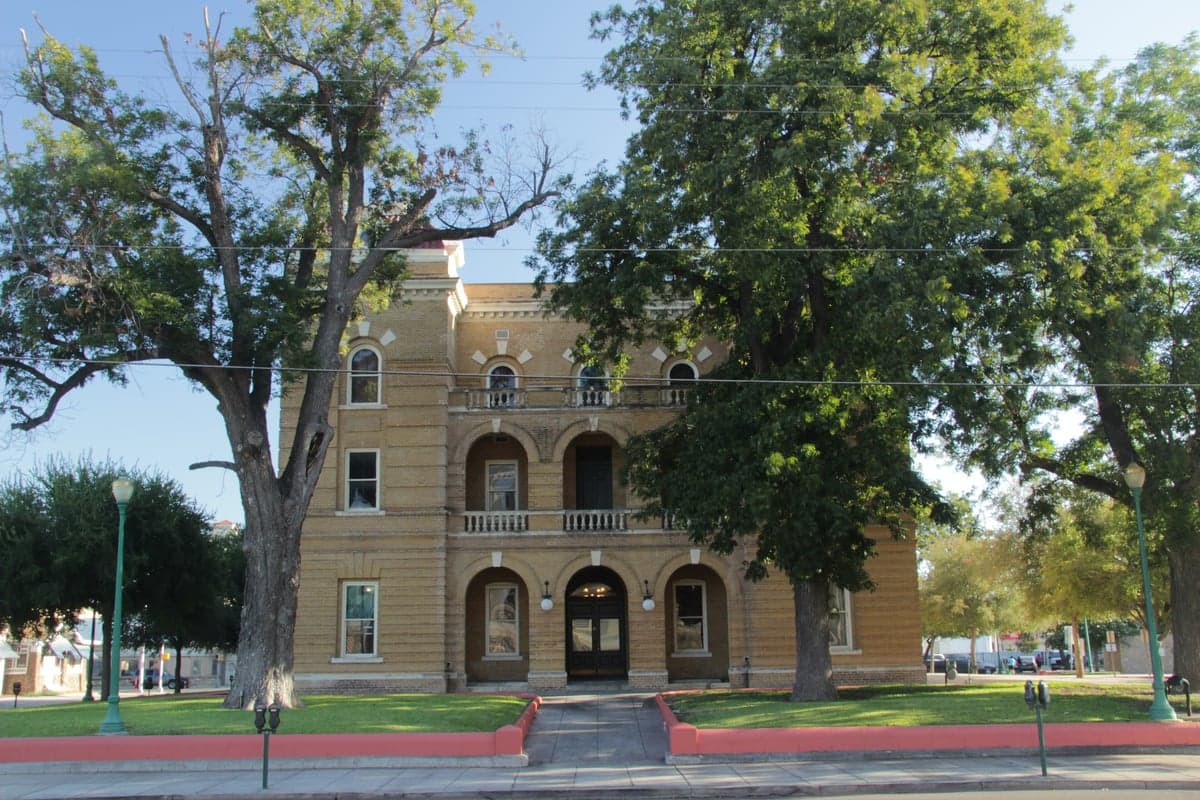
Photo: Wikipedia
Personal Sovereignty in Webb County
Strong independent fundamentals that actively favor personal liberty and low regulation.
What does Personal Sovereignty tell us?
Personal Sovereignty measures your capacity for self-reliance and independence with minimal government friction. Higher scores mean fewer barriers between you and the way you want to live... but it assumes you have the space you need and good neighbors.
What does this tell us?
Personal Sovereignty measures your capacity for self-reliance and independence with minimal government friction. Higher scores mean fewer barriers between you and the way you want to live... but it assumes you have the space you need and good neighbors.
State Policy
Energy independence: Net exporter (220% of energy produced in-state)
Personal Liberty
Homesteading

Personal Liberty Analysis
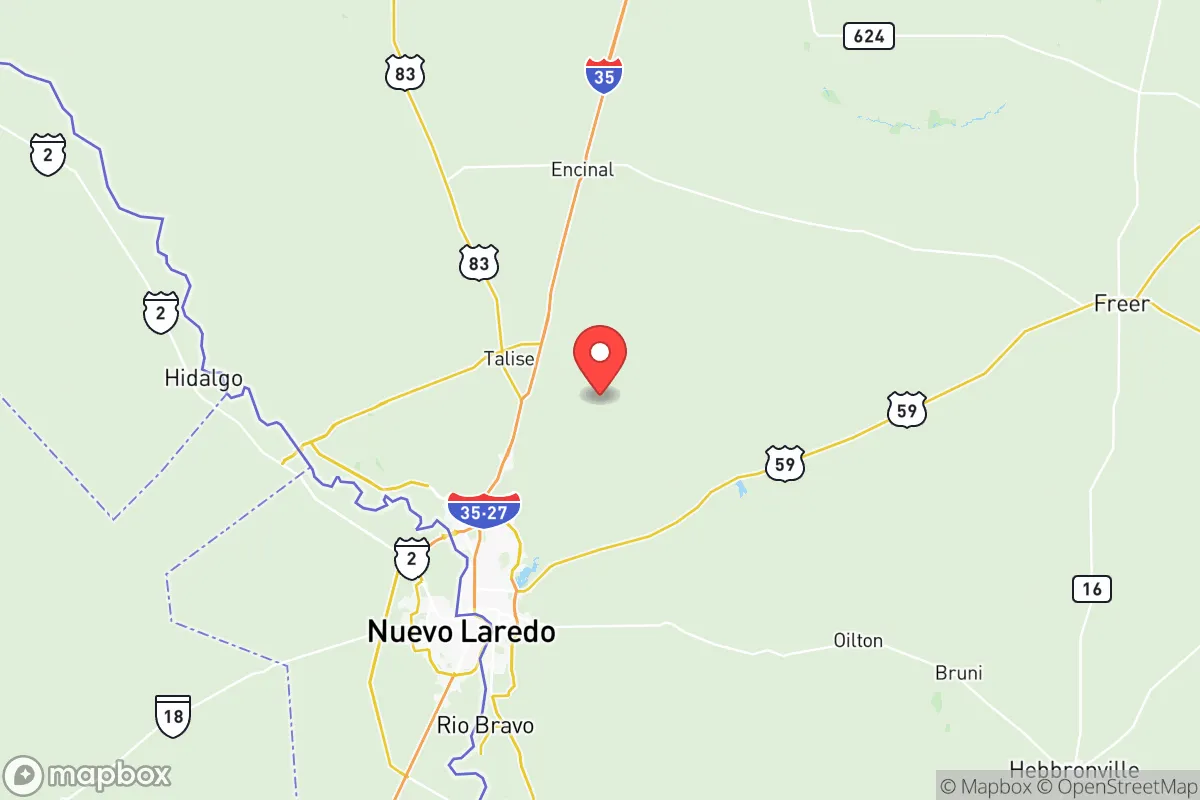
Webb County, anchored by Laredo but stretching into the vast South Texas brush country, offers a personal sovereignty environment that is a study in contrasts—a place where Texas state law provides a strong baseline for gun rights, property rights, and low taxation, but where local governance in the more populated areas can feel increasingly restrictive to those with a survivalist or prepper mindset. For the conservative-leaning individual or family looking to maximize autonomy, the key is understanding that your experience of freedom in Webb County will differ dramatically depending on whether you settle within the Laredo city limits, in the unincorporated county, or in one of the smaller communities like Rio Bravo, El Cenizo, or the rural stretches near Bruni and Oilton. The county's proximity to the border also introduces unique federal and state dynamics that directly impact personal sovereignty, from checkpoint culture to property rights disputes.
Tax burden and regulatory posture: How local rules compare to state-level freedom
Texas's lack of a state income tax is a major win for personal sovereignty, and Webb County benefits from this fully. However, the property tax burden here is among the highest in the state due to the county's reliance on property taxes to fund services. The effective property tax rate in Webb County hovers around 2.1% to 2.4% of assessed home value, which is notably higher than the Texas average of roughly 1.6%. This means that while you keep more of your paycheck, your land and home are heavily taxed annually—a critical consideration for anyone seeking true financial self-reliance. The regulatory posture is a mixed bag: the unincorporated areas of the county have minimal zoning, allowing for a wide range of uses on your property, but the city of Laredo has a more developed code enforcement apparatus. For example, El Cenizo and Rio Bravo have their own municipal ordinances that can restrict things like vehicle storage, livestock, and building setbacks, whereas in the rural areas near Bruni or Oilton, you can essentially do as you please as long as you're not creating a public nuisance. The county's overall regulatory posture is lighter than what you'd find in Travis or Bexar County, but it's not the Wild West—especially if you're within a city's extraterritorial jurisdiction.
Self-defense and gun law specifics: What the Second Sanctuary status means for daily carry
Webb County is a Second Amendment Sanctuary county, a formal declaration that local resources will not be used to enforce federal gun laws deemed unconstitutional. This is a powerful statement for those who view firearm ownership as a non-negotiable aspect of personal sovereignty. Texas law allows permitless carry for individuals 21 and older, and Webb County's sheriff's office has historically been supportive of gun rights. However, there are practical nuances. The city of Laredo has a higher crime rate than the state average, which means that while your legal right to carry is strong, the reality of self-defense in urban areas may require heightened situational awareness. In the rural parts of the county—think the vast ranches near Oilton or the isolated stretches along Highway 83—you can shoot on your own property without neighbors calling the police, provided you're not violating discharge ordinances. The key difference: in the unincorporated county, there are no discharge restrictions, while within Laredo city limits, discharging a firearm is generally prohibited except in self-defense or at a licensed range. For the prepper, this means that a rural homestead in Webb County offers a much more permissive environment for training and defense than any urban lot.
Self-reliance and homesteading viability: Lot sizes, zoning, and off-grid feasibility across the county
If self-reliance is your goal, Webb County's rural areas are among the most viable in South Texas. The unincorporated county has no minimum lot size requirements for agricultural use, meaning you can buy a 1-acre parcel or a 100-acre ranch and do what you want with it. In contrast, the city of Laredo requires minimum lot sizes of 5,000 to 7,500 square feet for residential development, which is restrictive for serious homesteading. The real opportunity lies in the rural communities of Bruni, Oilton, and the area around Lake Casa Blanca, where land is cheap—often under $5,000 per acre—and zoning is virtually nonexistent. Off-grid feasibility is high: the county has no county-wide building code for unincorporated areas, so you can build a cabin, install solar panels, and drill a well without permits. However, the Webb County groundwater conservation district does regulate well drilling, so you'll need a permit for a new well, but it's a straightforward process. The biggest challenge for off-grid living is the extreme heat and drought conditions; rainwater catchment is essential, and you'll need a robust solar setup to run AC. For the survivalist, the area near Rio Bravo offers cheap land but is closer to the border and has higher crime, while the Oilton area is more isolated and safer for a long-term retreat.
Personal liberties: Parental rights, medical autonomy, speech, and property in practice
Webb County's political culture leans conservative on most personal liberty issues, but local implementation can vary. Parental rights are strong under Texas law, and the county's school districts—including United ISD and Laredo ISD—generally defer to parents on medical decisions and curriculum objections. However, the county's proximity to the border means that federal agencies like Border Patrol have a significant presence, which can feel like an infringement on free movement and property rights. For example, checkpoints on Highway 83 and I-35 can cause delays and searches, which some residents view as a violation of their Fourth Amendment rights. Medical autonomy is a mixed bag: Texas has banned vaccine mandates for private employers, and Webb County has no local mandates, so you can make your own healthcare choices. However, the county's healthcare infrastructure is limited, with few specialists and a reliance on Laredo Medical Center, which may not align with all personal medical philosophies. Property rights are generally respected, but be aware that the city of Laredo has a robust code enforcement department that can fine you for tall grass, inoperable vehicles, or unpermitted structures. In the unincorporated county, these issues rarely arise. For speech, Webb County is a typical Texas jurisdiction—you can say what you want, but local politics can be insular, and speaking out against local officials may have social consequences in small communities like El Cenizo.
Overall, Webb County offers a high degree of personal sovereignty for those willing to navigate its dual realities. The rural areas near Bruni, Oilton, and the remote stretches of Highway 83 provide a level of autonomy—low taxes, minimal zoning, strong gun rights, and off-grid feasibility—that rivals any place in Texas. The urban core of Laredo, and to a lesser extent Rio Bravo and El Cenizo, present more friction from local ordinances and federal border enforcement. For the conservative prepper or survivalist, the calculus is clear: buy land in the unincorporated county, stay outside city limits, and you'll enjoy a sovereignty environment that is far superior to what you'd find in most of the United States. The trade-off is isolation and a harsh climate, but for those prioritizing freedom over convenience, Webb County's rural expanse is a strong contender.

* Values derived from national, state, county, city and local statistics and may differ in a specific area. Last updated: 2026-05-12T06:57:04.000Z
Narrative content on this page is AI-generated and may contain mistakes. Verify any details that matter before acting on them.
ReloMaps may earn a commission from affiliate links at no extra cost to you.

