Demographics of The Colony, TX
Affluence Level in The Colony, TX
An upper-middle-class area. Household wealth, education levels, and homeownership run ahead of national benchmarks.
People of The Colony, TX
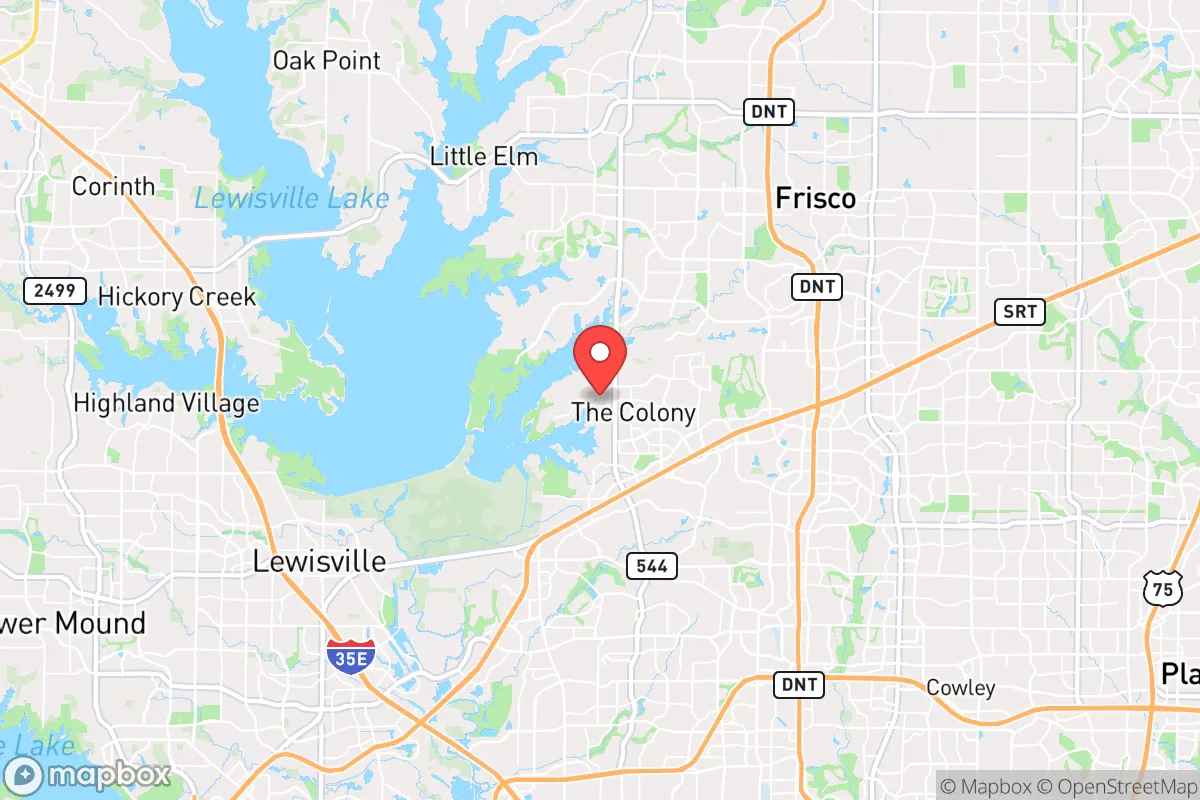
The Colony, Texas, is a predominantly white, family-oriented suburb of 44,916 residents where nearly half of adults hold a college degree and the population is notably more diverse than neighboring communities like Frisco or Little Elm. The city’s identity is shaped by its planned, lake-oriented development along Lewisville Lake, with a strong sense of community anchored by the Grandscape mixed-use district and a relatively young median age of 35. Foreign-born residents make up just 5.1% of the population, a figure well below the national average, giving The Colony a distinctly native-born, suburban character. For a conservative-leaning audience, the city represents a stable, family-focused environment with a growing but still modest level of ethnic diversity.
How the city was settled and grew
The Colony was not a pioneer settlement or a railroad town; it was a master-planned suburban development that began in the early 1970s. The land was originally part of the Peters Colony land grant, a vast 1840s empresario grant that attracted Anglo-American settlers to North Texas, but no permanent town existed here until the 20th century. The modern city was conceived in 1973 by developer Fox & Jacobs (later Centex Homes) as a planned community for Dallas commuters seeking lakefront living. The first wave of residents were overwhelmingly white, middle-class families moving from Dallas and other inner-ring suburbs, drawn by affordable new homes and access to Lewisville Lake. The original neighborhoods—Preston Shores and Lake Colony—were built in the mid-1970s and remain predominantly white, with single-family homes on large lots. A second wave in the 1980s and 1990s filled out Westshore and Hunters Glen, attracting more white-collar professionals from the Telecom Corridor and DFW Airport employment centers. No significant immigrant or minority communities formed during these decades; the population was nearly 90% non-Hispanic white through the 1990 census.
Modern era (post-1965)
The post-1965 immigration reforms had little direct impact on The Colony until the 2000s, as the city remained a largely homogeneous white suburb. The major demographic shift began after 2010, driven by domestic migration from other Texas cities and California, not by international immigration. The Hispanic share grew from 11% in 2010 to 19.0% today, concentrated in the newer, more affordable neighborhoods on the city’s western edge, particularly Palisades and parts of Stewart Peninsula. The Black population rose from 4% to 9.5%, with families settling in the Hunters Glen area and the newer Grand Park section near the Grandscape development. East and Southeast Asian communities (Chinese, Vietnamese, Filipino) now make up 5.9% of the population, a notable presence in Preston Shores and Lake Colony, where many are professionals employed in Plano’s corporate offices. The Indian-subcontinent population stands at 3.0%, a distinct group concentrated in the newer Palisades and Grand Park neighborhoods, drawn by the city’s highly rated Lewisville ISD schools. Unlike older suburbs where ethnic enclaves formed around chain migration, The Colony’s minority groups are dispersed across the city, with no single neighborhood exceeding 30% non-white. The city’s 47.7% college-educated rate reflects the professional nature of these newer residents, many of whom work in finance, technology, and healthcare.
The future
The Colony’s population is trending toward moderate diversification without tribalization. The white share is declining slowly (from 65% in 2010 to 55.6% today), while Hispanic and Asian shares are rising steadily. The foreign-born share remains low at 5.1%, suggesting that growth will come primarily from domestic migration rather than international immigration. The city’s master-planned layout and lack of historic ethnic neighborhoods mean that new residents—whether white, Hispanic, Black, or Asian—are likely to continue dispersing evenly across developments like Grand Park and Palisades rather than forming distinct enclaves. The Indian-subcontinent community, while small, is growing faster than the East/Southeast Asian group, driven by tech workers from Plano and Frisco seeking more affordable housing. Over the next 10–20 years, The Colony will likely become a majority-minority suburb by 2040, but with a character more akin to a melting pot than a mosaic of separate communities. The city’s conservative-leaning politics (Denton County voted +15 R in 2024) and family-oriented amenities—lakeside parks, top-rated schools, and low crime—will continue to attract similar demographics: married couples with children, regardless of ethnicity.
For a conservative-leaning family or individual moving to The Colony today, the city offers a stable, safe, and increasingly diverse but not fragmented community. The population is growing modestly (about 1.5% annually), with no signs of rapid demographic upheaval. The city’s identity as a planned lake suburb remains intact, and the new diversity is being absorbed into existing neighborhoods rather than creating separate enclaves. The Colony is becoming a more varied place, but it remains fundamentally a family-first, car-dependent suburb where the dominant culture is still middle-class, native-born, and oriented around school and recreation.

* Values derived from national, state, county, city and local statistics and may differ in a specific area. Last updated: 2026-05-11T19:26:33.000Z
Narrative content on this page is AI-generated and may contain mistakes. Verify any details that matter before acting on them.
ReloMaps may earn a commission from affiliate links at no extra cost to you.

