
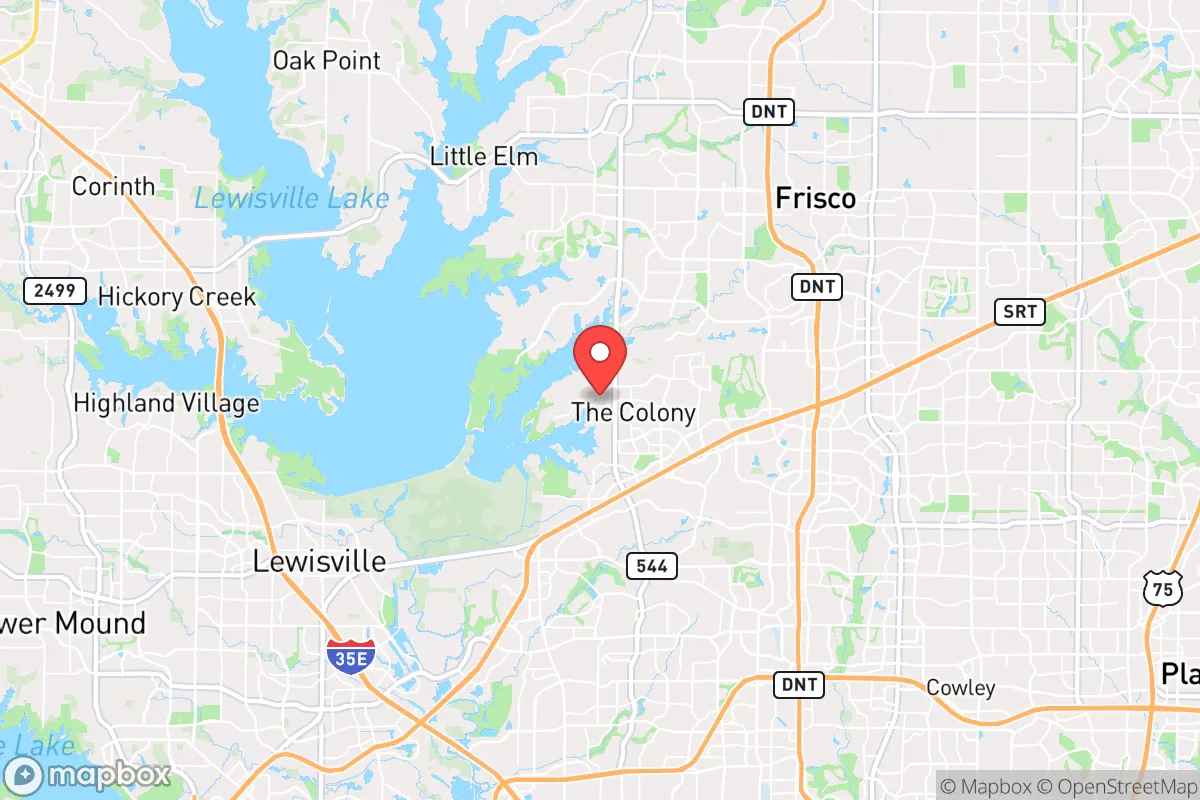
Personal Sovereignty in The Colony, TX
Strong independent fundamentals that actively favor personal liberty and low regulation.
What does Personal Sovereignty tell us?
Personal Sovereignty measures your capacity for self-reliance and independence with minimal government friction. Higher scores mean fewer barriers between you and the way you want to live... but it assumes you have the space you need and good neighbors.
What does this tell us?
Personal Sovereignty measures your capacity for self-reliance and independence with minimal government friction. Higher scores mean fewer barriers between you and the way you want to live... but it assumes you have the space you need and good neighbors.
State Policy
Energy independence: Net exporter (220% of energy produced in-state)
Personal Liberty
Homesteading

Personal Liberty Analysis
The Colony, Texas, offers a notably high degree of personal sovereignty, largely because it operates within the broader legal and cultural framework of a state that prioritizes individual liberty over collective mandates. For those with a survivalist or prepper mindset, the city’s environment is defined by a state-level commitment to limited government, low taxation, and strong protections for self-defense and property rights. While no municipality is a libertarian utopia, The Colony’s position within the Dallas-Fort Worth metroplex provides a strategic balance of access to resources and a regulatory climate that generally leaves law-abiding citizens alone. This analysis examines the specific pillars of autonomy that matter most to those concerned with government overreach and personal preparedness.
Tax burden and regulatory posture: How Texas state policy shapes local freedom
The most immediate advantage for personal sovereignty in The Colony is the absence of a state income tax, a foundational element of financial autonomy. Texas’s reliance on property and sales taxes means the state does not directly tax your labor or investments, which is a critical consideration for anyone building self-reliance through savings, barter, or off-grid income streams. The regulatory posture at the state level is consistently pro-business and anti-red tape, with Texas having some of the lowest levels of occupational licensing burdens and business regulation in the nation. This translates to fewer bureaucratic hurdles for starting a home-based business, a side hustle, or a small-scale manufacturing operation—all common strategies for preppers seeking economic independence. However, local property taxes in The Colony are not trivial; the combined city and school district rates are typical for Collin County, meaning you pay for the quality of services but retain control over your own earnings. The city’s zoning code is generally permissive for standard residential uses, but it does enforce standard suburban restrictions on livestock, commercial vehicles, and home occupations, so those seeking total regulatory freedom should examine the specific municipal code closely. The key takeaway is that the state’s low-tax, low-regulation philosophy provides a strong baseline, but local ordinances still impose some limits on what you can do on your own property.
Self-defense and gun law specifics: Castle Doctrine, permitless carry, and local enforcement
Texas is a premier jurisdiction for the right to keep and bear arms, and The Colony fully benefits from this. The state’s permitless carry law, effective since 2021, allows any law-abiding adult to carry a handgun openly or concealed without a license, which is a bedrock of personal sovereignty for those who believe self-defense is a natural right. The Castle Doctrine is codified in Texas law, providing a strong legal presumption that a homeowner who uses deadly force against an intruder acted in self-defense, with no duty to retreat in your home, vehicle, or workplace. This is not merely a legal technicality; it is a practical shield against prosecution for defending your family and property. Local law enforcement in The Colony, part of the broader Collin County system, is generally known for being professional and supportive of Second Amendment rights, with no local ordinances that infringe on state preemption of gun laws. For the prepper, this means you can maintain a well-stocked armory, train at nearby ranges (such as the Elm Fork Shooting Sports or DFW Gun Range), and store ammunition without fear of local overreach. The only caveat is that federal laws still apply, and the city’s proximity to Dallas means you must be aware of prohibited places like schools and government buildings, but the overall environment is one of maximum legal latitude for armed self-defense.
Self-reliance and homesteading viability: Lot sizes, zoning, and off-grid feasibility
For those seeking a true homesteading or off-grid lifestyle, The Colony presents a mixed picture. The city is a planned suburban community with standard lot sizes ranging from 6,000 to 12,000 square feet in most subdivisions, which is insufficient for large-scale food production or livestock. Zoning regulations explicitly prohibit keeping chickens, goats, or other farm animals on standard residential lots, and the homeowners’ associations (HOAs) that govern many neighborhoods often impose additional restrictions on gardens, clotheslines, and external structures. This is a significant limitation for anyone wanting to achieve a high degree of food sovereignty or energy independence. However, the broader region offers alternatives: within a 30-minute drive, you can find unincorporated areas of Denton or Collin counties with acreage, no HOA, and far fewer restrictions. For those who choose to live in The Colony proper, the focus shifts to urban prepping—stockpiling, rainwater collection (which is legal but may be subject to HOA rules), and solar panel installation (which is generally permitted but may require HOA approval). The city’s infrastructure is reliable, with grid-tied electricity and municipal water, so off-grid feasibility is low within city limits. The strategic play is to use The Colony as a base for income and community while maintaining a secondary property or bug-out location in a less regulated rural area.
Personal liberties: Parental rights, medical autonomy, speech, and property
Texas has been a national leader in protecting parental rights, and this directly benefits families in The Colony. The state’s laws give parents broad authority over their children’s education, medical decisions, and upbringing, including the ability to opt out of school curricula or mandates without government interference. The Colony’s school district, Lewisville ISD, is generally responsive to parental concerns, though it is a large district with typical bureaucratic challenges. Medical autonomy is also strong: Texas has not imposed broad vaccine mandates for adults, and while school vaccine requirements exist, exemptions for religious or philosophical reasons are available. The state’s ban on COVID-19 vaccine passports and its prohibition of employer mandates for government contractors further reinforce medical freedom. Free speech and property rights are robust under Texas law, with no state-level hate speech laws or prior restraint on expression. The Colony’s city council and planning commission operate under open meetings laws, and property rights are protected by strong eminent domain statutes that require just compensation and public use. For the prepper concerned about government overreach, the key vulnerability is the HOA system: many neighborhoods in The Colony are governed by HOAs that can impose fines, liens, and even foreclosure for violations of aesthetic or behavioral covenants. This is a form of private government that can infringe on personal sovereignty more directly than city ordinances, so choosing a non-HOA property or a neighborhood with minimal covenants is critical for those who value absolute control over their own land.
In the broader context of the Dallas-Fort Worth area, The Colony offers a solid but not extreme level of personal sovereignty. It is far more liberty-oriented than cities like Austin or Portland, where local ordinances often conflict with state law, but it is less autonomous than rural counties where zoning is nonexistent and property taxes are lower. The city’s greatest strengths are its state-level protections for gun rights, parental authority, and low taxation, while its weaknesses are the suburban HOA culture and limited homesteading potential. For the strategic relocator with a survivalist mindset, The Colony works best as a hub for economic opportunity and community networking, with the understanding that true self-reliance may require a secondary property in a less regulated jurisdiction. The overall sovereignty environment is favorable, but it demands that you remain vigilant about local covenants and state-level legislative changes that could shift the balance of power between the individual and the state.

* Values derived from national, state, county, city and local statistics and may differ in a specific area. Last updated: 2026-05-11T19:26:33.000Z
Narrative content on this page is AI-generated and may contain mistakes. Verify any details that matter before acting on them.
ReloMaps may earn a commission from affiliate links at no extra cost to you.

