
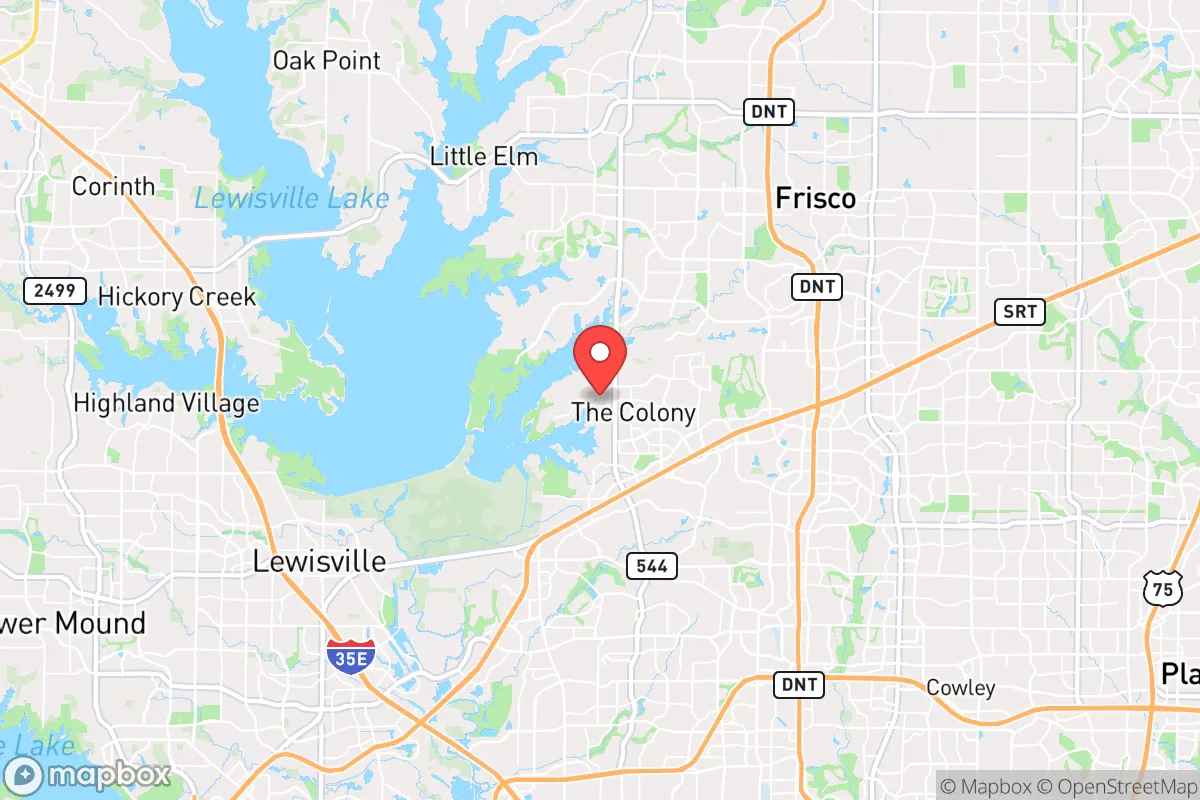
Political ClimatePolitical Climate in The Colony, TX
District shown is the primary district for this city’s centroid. Cities may span multiple districts.
Local Political AnalysisPolitical Analysis of The Colony, TX
The Colony, Texas, sits in a reliably conservative pocket of the Dallas-Fort Worth metroplex, anchored by a Cook PVI of R+11. That’s a solid seven points more Republican than the state of Texas as a whole, which sits at R+4. For a long time, this area was a quiet, no-nonsense suburb where folks minded their own business and the local government stayed out of the way. The voting patterns here have been steady for decades, with most local elections decided in the Republican primary. But like a lot of fast-growing suburbs in North Texas, you can feel the political winds shifting just a bit, and it’s worth keeping an eye on.
How it compares
Compared to the rest of Texas, The Colony is a conservative stronghold. The R+11 rating means it leans much harder right than the statewide average, which has been drifting slightly left in recent cycles thanks to booming urban centers like Austin, Houston, and Dallas proper. Drive ten minutes south to Carrollton or Addison, and you’ll start seeing more purple-leaning precincts, especially around the DART rail lines and denser apartment complexes. Head west to Lewisville or Flower Mound, and you’re still in conservative territory, but with a more moderate, business-friendly vibe. The Colony’s advantage is that it’s still mostly single-family homes, with a strong sense of community and a local government that hasn’t gone down the rabbit hole of progressive social experiments. The contrast with places like Dallas—where property taxes keep climbing and city council debates get tangled up in national culture war issues—is stark. Here, the focus stays on basic services, low crime, and keeping the streets paved.
What this means for residents
For residents, the political climate translates into a few concrete realities. First, you’re not going to see the kind of government overreach that’s become common in blue-run cities—no mask mandates that last two years, no defund-the-police nonsense, no zoning fights over turning every corner into a high-density rental complex. The city council and school board races are still won by candidates who talk about fiscal responsibility and parental rights, not social justice slogans. Property taxes are a concern everywhere in Texas, but The Colony’s tax rate is competitive with neighboring suburbs, and there’s a general distrust of any new bond package that doesn’t have a clear, tangible benefit. The downside? If you’re hoping for more progressive amenities like expanded public transit or dense mixed-use development, you’ll be waiting a while. The community values its quiet, car-dependent layout and isn’t eager to change it.
Culturally, The Colony still feels like the Texas I grew up in—flags on porches, church parking lots full on Sunday, and a general expectation that the government’s job is to fix the roads and stay out of your life. The biggest policy distinction from the state as a whole is that The Colony has been slower to adopt the kind of urbanist zoning changes that are popping up in Dallas and Fort Worth. There’s no push for “missing middle” housing or bike lane mandates here. That’s a good thing for anyone who values personal property rights and doesn’t want a city planner telling them what color their fence can be. The trajectory is stable, but if you see a wave of progressive candidates start winning local seats in the next few cycles, that’ll be the signal that the old guard is losing ground. For now, it’s still a safe bet for conservative families who want a predictable, low-drama place to live.

State Political ClimatePolitical Climate in Texas
State Political AnalysisPolitical Environment in the State
Texas remains a solidly Republican state with a Cook PVI of R+4, but the coalition that keeps it red is shifting. The GOP still dominates statewide races — no Democrat has won a statewide office since 1994 — but the margin of victory has narrowed from double digits in the 2010s to single digits in the 2020s. The 2022 governor’s race saw Greg Abbott win by 11 points, down from 13 in 2018. The real story is the geographic realignment: the old GOP stronghold of the suburbs is softening, while the rural and exurban vote has hardened. A new resident moving here in 2026 will find a state where the political center of gravity is still conservative, but the internal tensions are louder than ever.
Urban vs. rural divide
The political map of Texas is a tale of three zones. The big blue metros — Houston, Dallas, Austin, San Antonio, and El Paso — are the engine of Democratic votes. Harris County (Houston) alone accounts for roughly 15% of the state’s population and votes D+15. Austin (Travis County) is the bluest major city in the South, voting D+40 in 2024. Meanwhile, the rural and exurban counties — places like Lubbock (Lubbock County, R+35), Amarillo (Potter County, R+30), and the vast West Texas oil patch — are as red as ever. The battleground is the suburban ring. Collin County (north of Dallas) was R+20 in 2016 but slipped to R+12 by 2024. Fort Bend County (southwest of Houston) flipped from R+2 in 2016 to D+5 in 2024, driven by Asian-American and Hispanic suburbanites. The rural vote is shrinking in raw numbers, but it’s becoming more intense — turnout in the 2022 midterms was 15% higher in rural counties than in urban ones. The divide isn’t just partisan; it’s cultural. A rancher in Kerrville and a tech worker in Plano live in different political worlds, even if both vote Republican.
Policy environment
Texas’s policy environment is defined by what it doesn’t do. No state income tax — that’s baked into the constitution and has broad bipartisan support. Property taxes are high (average effective rate of 1.6%), but the 2023 property tax reform (SB 2) cut rates by roughly 15% for homeowners and raised the homestead exemption to $100,000. The regulatory posture is famously light: no state-level occupational licensing for 60+ professions, and the Texas Regulatory Consistency Act (2023) requires agencies to justify any new rule that costs more than $5,000. Education policy is a flashpoint. The 2023 school voucher bill (SB 8) failed in the House, but a 2025 version (HB 3) passed, creating education savings accounts worth $8,000 per student. Public school funding remains a mess — the state ranks 43rd in per-pupil spending — but the charter school sector is booming. Healthcare is a mixed bag: Texas has the highest uninsured rate in the nation (16.6% in 2024), and the state has refused Medicaid expansion under the ACA. Abortion is banned after fertilization (trigger law from 2021, effective 2022), with narrow exceptions. Election laws tightened after 2020: SB 1 (2021) banned 24-hour and drive-through voting, added ID requirements for mail ballots, and gave poll watchers more access. The 2025 session added a requirement for voter ID to be presented at every election, not just the first time. For a conservative, the policy environment is broadly friendly — low taxes, light regulation, and a culture of personal responsibility — but the cracks are showing in education funding and healthcare access.
Trajectory & freedom
On the freedom front, Texas has moved in two directions at once. On gun rights, it’s expanded: the 2021 permitless carry law (HB 1927) allows any law-abiding adult to carry a handgun without a license. The 2023 “Second Amendment Sanctuary” law (SB 19) prohibits state agencies from enforcing any future federal gun bans. On parental rights, the 2023 “Parental Bill of Rights” (HB 900) requires schools to notify parents of any curriculum changes and gives them the right to opt their kids out of sex ed. The 2023 ban on gender-affirming care for minors (SB 14) is one of the strictest in the nation. On medical freedom, the 2023 law allowing doctors to prescribe ivermectin and hydroxychloroquine off-label (HB 1280) was a direct response to COVID-era mandates. But there are limits. The 2023 “Texas Heartbeat Act” (SB 8) created a private enforcement mechanism that effectively bans abortion after six weeks, which some conservatives see as a model for other states, but others worry about the precedent of allowing private citizens to sue anyone who “aids or abets” a procedure. Property rights took a hit with the 2023 “eminent domain for carbon pipelines” bill (HB 591), which allows private companies to seize land for CO2 pipelines — a move that angered rural landowners. The overall trajectory is toward more personal liberty on guns, family, and medical choice, but with a growing willingness to use state power to enforce social policy. A new resident should expect more freedom in their personal life, but less privacy from the state on issues like abortion and transgender care.
Civil unrest & political movements
Texas has seen its share of political flashpoints. The 2020 protests in Austin over George Floyd’s death were among the largest in the country, with 20,000 people at the peak. The city council later defunded the police by $150 million, but the 2021 “Back the Blue” law (HB 1900) made it a crime to defund police departments and increased penalties for rioting. Immigration politics are a constant. The 2023 “Operation Lone Star” has deployed 10,000 National Guard troops to the border, and the 2024 “SB 4” law makes illegal entry a state crime — currently tied up in court. The “sanctuary city” ban (SB 4 from 2017) remains in effect, requiring local law enforcement to cooperate with ICE. The “Texit” movement — secession rhetoric — is mostly fringe, but the Texas Nationalist Movement claims 450,000 supporters. It’s more a protest vote than a serious plan. Election integrity remains a hot-button issue: the 2020 audit of four counties (Harris, Dallas, Tarrant, Collin) found no widespread fraud, but the 2021 law tightened rules anyway. A new resident will notice the political energy at the grassroots: county GOP conventions are packed, and school board meetings in suburbs like Keller and Frisco regularly draw hundreds of parents fighting over library books and curriculum. The left is organized too — the Texas Democratic Party has tripled its field staff since 2020, and groups like Moms Demand Action and Indivisible are active in every major city. The political temperature is high, but it rarely boils over into violence — Texas has a strong culture of “live and let live” that tempers the rhetoric.
Projection
Over the next 5-10 years, Texas will likely remain Republican at the statewide level, but the margin will keep shrinking. The in-migration is the key variable: roughly 1,000 people move to Texas every day, and they’re split roughly 60-40 Republican-to-Democrat, based on voter registration data from 2020-2024. The new arrivals are concentrated in the suburbs of Dallas-Fort Worth and Houston, which are trending purple. The rural vote will continue to shrink as a share of the electorate — it was 18% in 2024, down from 22% in 2016. The Hispanic vote is the wildcard: it’s still majority Democratic (55-45 in 2024), but the margin is narrowing, especially among working-class men in the Rio Grande Valley. The 2024 election saw Starr County (95% Hispanic) flip from D+5 to R+2 — a 7-point swing. If that trend continues, Texas stays red. If it reverses, the state becomes a true battleground by 2032. The policy environment will likely stay conservative on taxes and guns, but the education fight will intensify — expect a push for universal school choice and a constitutional amendment to cap property taxes. A new resident moving in now should expect a state that is still conservative, but more contested, more polarized, and more willing to use state power to enforce its values. The freedom you get here — low taxes, no income tax, gun rights, parental control — comes with a trade-off: less privacy on social issues and a government that is increasingly activist in its conservatism.
Bottom line for a new resident: Texas offers a high degree of personal and economic freedom compared to blue states, but it’s not a libertarian paradise. The state government is conservative, not hands-off. You’ll pay no income tax, but property taxes are high. You can carry a gun without a permit, but you can’t get an abortion after six weeks. Your kids’ school curriculum will be vetted by the state, and your local school board will be a political battleground. If you’re moving here for freedom, you’ll find it — but it’s a specific kind of freedom, defined by the values of the people in charge. The state is changing fast, and the politics are changing with it. Come for the low taxes and the space; stay for the community and the opportunity. Just know that the political climate is as big and complicated as Texas itself.
* Values derived from national, state, county, city and local statistics and may differ in a specific area. Last updated: 2026-05-11T19:26:33.000Z
Narrative content on this page is AI-generated and may contain mistakes. Verify any details that matter before acting on them.
ReloMaps may earn a commission from affiliate links at no extra cost to you.

