
Strategic Assessment of The Colony, TX
Multiple tactical vulnerabilities. Population density, target proximity, or disaster risk are likely compounding. A retreat property and exit planning is required.
What does the Strategic Assessment tell us?
Our Strategic Assessment grades tactical survivability of an area. Major population centers, military targets, fallout zones, natural disasters, and border exposure all drive risk — lower exposure means a more defensible position in a crisis.
This is heavily inspired by Joel Skousen's Strategic Relocation book. Highly recommended you checkout the book ($)What does this tell us?
Our Strategic Assessment grades tactical survivability of an area. Major population centers, military targets, fallout zones, natural disasters, and border exposure all drive risk — lower exposure means a more defensible position in a crisis.
This is heavily inspired by Joel Skousen's Strategic Relocation book. Highly recommended you checkout the book ($)Strategic Pillars

Key Distances
Regional Safe Places
Below is our recommended "safe zones" in Texas and the surrounding area based on our strategic heuristics. For most people, it's unrealistic to live in a “safe zone” full-time due to work, family or other personal reasons. They tend to be more rural. However, many of these areas are perfect for second homes and retreat properties that double as a vacation home or even a short-term rental.

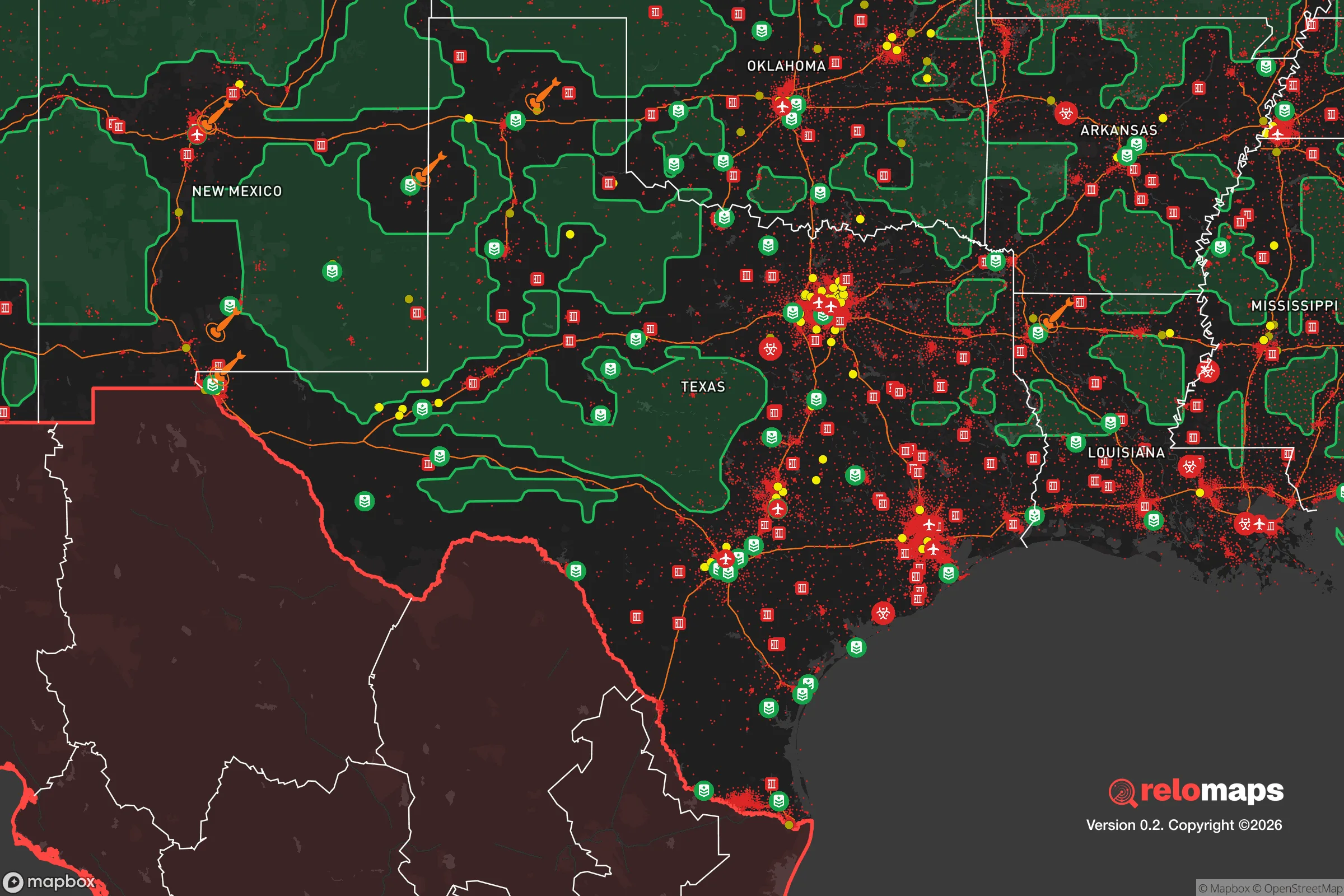


Important Note: For informational purposes only. This does not mean nothing bad ever happens in the green zones. Please use common sense. This is based on public data and modeled with AI. We tried to take a conservative approach but mistakes happen. We update this regularly as new information becomes available.
Solar Generator Recommendations
Backup power matters more here than in safer locations. We've picked three solar generators across budgets and capacity tiers — start with the budget unit if you only need a few essentials, or step up if you want to run a fridge and HVAC for days at a time.

Jackery Portable Power Station Explorer 300
Budget OptionPower on the Go: Weighing only 11 lbs, it's convenient to set up and store with book-sized foldable solar panels

BLUETTI Portable Power Station AC180
Designed for both indoor and outdoor scenarios, AC180 is highly capable as it has a robost capacity and continuous output power.

EF ECOFLOW DELTA Pro Ultra Power Station
Upgraded PickEcoFlow DELTA Pro Ultra is a whole-home energy system designed to grow with your family. Integrated with the Smart Home Panel 2, it scales to meet your evolving energy needs — keeping your home powered, intelligent, and secure through every stage of life.
We earn a commission, at no additional cost to you.
Strategic Assessment Analysis
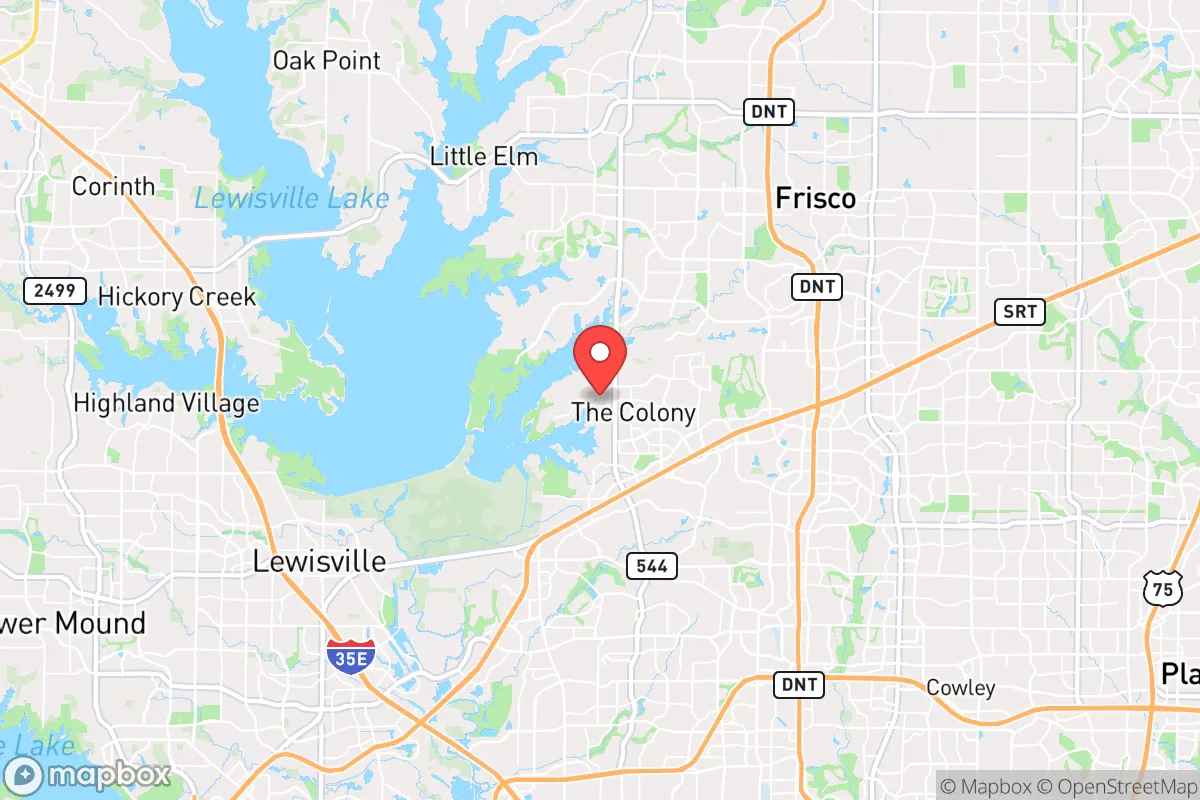
The Colony, Texas, occupies a deceptively strategic position within the Dallas-Fort Worth metroplex, but its resilience profile is a study in contradictions. Located on the southern shore of Lewisville Lake, roughly 25 miles north of downtown Dallas, the city benefits from a major water source and a suburban layout that offers some natural buffer from the urban core. However, its proximity to DFW Airport, major interstate corridors, and a dense population center makes it a high-risk location for anyone serious about long-term preparedness. For a conservative-leaning relocator—whether single or raising a family—The Colony offers a mixed bag: genuine resource advantages in water and local governance, but severe exposure to the cascading effects of a national crisis.
Geographic position and natural advantages for long-term stability
The Colony’s primary strategic asset is its position on Lewisville Lake, a 29,000-acre reservoir that provides a reliable surface water supply. In a grid-down scenario or prolonged drought, lake access—combined with the Elm Fork of the Trinity River flowing nearby—offers a tangible water security advantage over inland suburbs that rely entirely on municipal pipelines. The city sits on relatively flat terrain with some modest elevation changes near the lake, which reduces flood risk compared to areas closer to the Trinity River basin. The local soil is predominantly clay and limestone, which supports limited but possible gardening if amended, and the region’s growing season runs from March to November, allowing for extended food production. The Colony’s layout includes several parks and greenbelts, such as the 200-acre Stewart Creek Park, which could serve as emergency gathering or foraging zones. The area’s temperate climate means winter freezes are manageable, and summer heat—while intense—is survivable with shade and water. For a family looking to establish a semi-rural buffer while staying within commuting distance of DFW employment, the lakefront and northern edges of The Colony offer a defensible perimeter, especially along the less-developed stretches of FM 423 and north of State Highway 121.
Risks, exposures, and proximity to fallout-relevant landmarks
The Colony’s greatest vulnerability is its location within the DFW metroplex, a population center of over 7.5 million people. In the event of civil unrest, mass casualty events, or a coordinated attack, the city lies directly in the path of any evacuation or panic flow from Dallas, Plano, and Frisco. Interstate 35E and the Dallas North Tollway are both within 10 minutes of most Colony neighborhoods, meaning that a crisis in the urban core could choke these arteries within hours. The city is also less than 10 miles from DFW International Airport, a high-value target for any adversary seeking to disrupt national air travel or logistics. A conventional or electromagnetic pulse (EMP) attack on the airport would likely cripple communications and power across the northern suburbs. Additionally, The Colony sits near the Lewisville Lake Dam, a critical infrastructure point; a failure or sabotage of the dam—though unlikely—would inundate large portions of the city and downstream areas. The proximity to major data centers, semiconductor fabrication plants in Sherman, and defense contractors in Plano adds to the risk profile. For a prepper, the density of potential secondary targets within a 20-mile radius makes The Colony a location that requires constant situational awareness and a robust evacuation plan.
Practical resilience for a relocator: food, water, energy, and defensibility
Water is The Colony’s strongest card. Lewisville Lake is managed by the U.S. Army Corps of Engineers and provides a year-round source that can be filtered or treated with portable systems. The city’s municipal water supply draws from the lake, but a prepper should assume that grid failure will interrupt pumping. Rainwater catchment is viable, with the area averaging 36 inches of precipitation annually, and the clay soil allows for ponding if you have land. Food resilience is more challenging. The Colony is a suburban bedroom community with limited agricultural land; most grocery supply chains depend on just-in-time delivery from warehouses in Dallas and Fort Worth. A disruption to I-35 or I-635 would empty shelves within 48 hours. Local farmers’ markets exist but are seasonal and small-scale. For a relocator, establishing a home garden, joining a local food co-op, or securing a plot in a community garden (such as the one at The Colony Community Garden) is essential. Energy resilience is moderate. The area is served by Oncor, which has a mixed reliability record during winter storms—the 2021 freeze exposed widespread outages. Solar is viable, with the region averaging 230 sunny days per year, but homeowners associations (HOAs) in many Colony neighborhoods restrict panel placement. Battery backup and a generator are non-negotiable. Defensibility is the weakest link. The Colony is a grid-pattern suburb with multiple entry points and no natural chokepoints. The lake provides a barrier to the north, but the southern and eastern approaches are wide open. For a single individual or family, a home on a cul-de-sac near the lake’s edge offers the best natural security, with limited through traffic and a water escape route. The local police department is responsive but small—about 60 officers for a population of 45,000—so in a prolonged crisis, residents would need to rely on neighborhood watch and personal preparedness.
The overall strategic picture for The Colony is one of calculated risk. It offers genuine water security and a suburban buffer from the most intense urban chaos, but it sits too close to too many high-value targets to be considered a safe haven. For a conservative relocator who values local governance—the city council is generally pro-business and maintains low tax rates—and wants access to DFW employment while building a resilient homestead, The Colony can work if you are willing to invest in off-grid water, food storage, and a solid evacuation plan. But if your primary goal is to be far from fallout zones, civil unrest, and infrastructure collapse, you would be better served looking farther north toward Sherman or west toward the Hill Country. The Colony is a compromise: better than Dallas, worse than the sticks. It is a place to hold ground, not to bug out to.

* Values derived from national, state, county, city and local statistics and may differ in a specific area. Last updated: 2026-05-11T19:26:33.000Z
Narrative content on this page is AI-generated and may contain mistakes. Verify any details that matter before acting on them.
ReloMaps may earn a commission from affiliate links at no extra cost to you.

