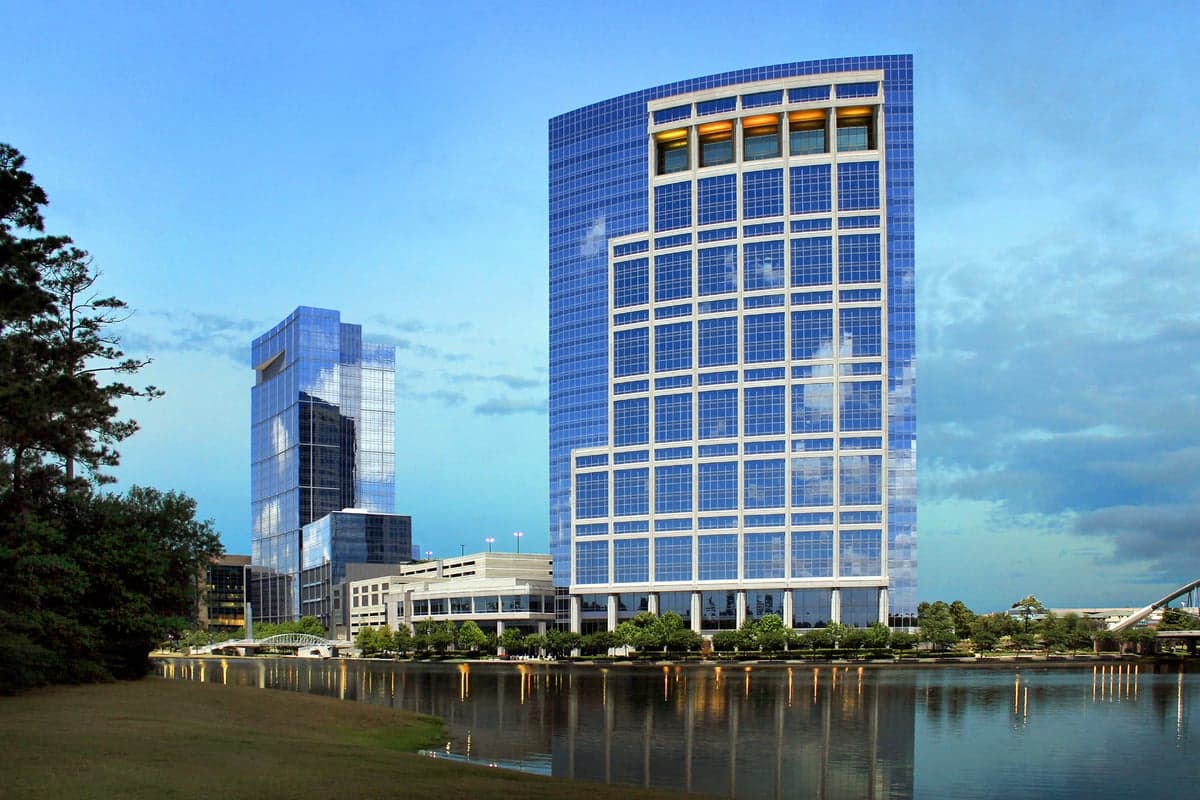
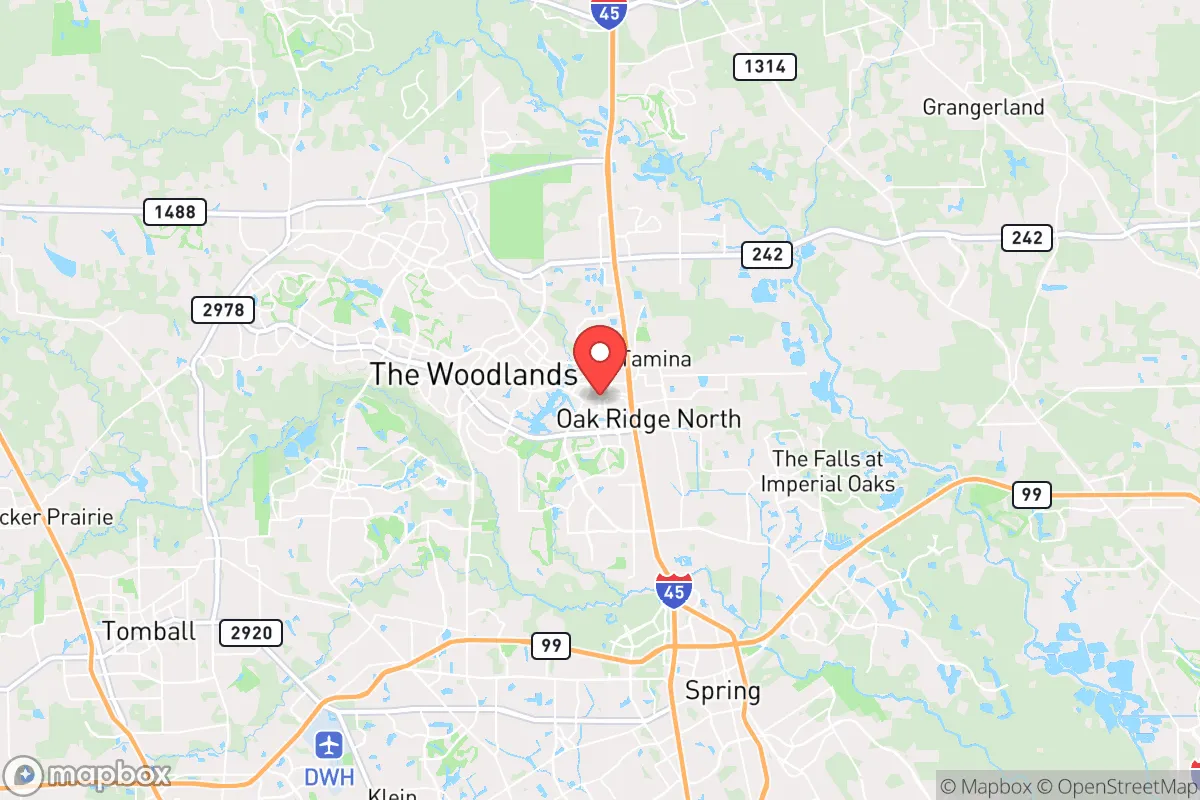
Photo: Wikipedia
Demographics of The Woodlands, TX
Affluence Level in The Woodlands, TX
An upper-middle-class area. Household wealth, education levels, and homeownership run ahead of national benchmarks.
People of The Woodlands, TX
The Woodlands, Texas, is home to 116,916 residents who form one of the most educated and affluent suburban populations in the Houston metropolitan area, with 65.1% holding a college degree. The community is predominantly White (64.7%), with a significant Hispanic minority (19.5%) and growing East/Southeast Asian (4.3%) and Indian (3.0%) populations. Foreign-born residents make up 11.2% of the population, reflecting a steady but measured international inflow. The city’s identity is defined by its master-planned origins, high median household income, and a family-oriented culture that attracts professionals from the energy, healthcare, and technology sectors.
How the city was settled and grew
The Woodlands is a post-1960s planned community with no colonial or 19th-century settlement history. The land was originally part of the Grogan-Cochran Lumber Company’s pine forests, and the area remained sparsely populated until the 1970s. The city’s founding population arrived in a single deliberate wave starting in 1974, when developer George P. Mitchell broke ground on a 27,000-acre master-planned community designed to attract corporate relocations and middle-to-upper-income families. The first residents moved into Grogan’s Mill, the original village, which was built around a shopping center and a man-made lake. These early settlers were predominantly White, college-educated professionals from the Houston energy sector, drawn by the promise of wooded lots, good schools, and proximity to the ExxonMobil campus (then Exxon) and other oil-and-gas employers. By the 1980s, Panther Creek and Cochran’s Crossing opened, absorbing a second wave of domestic migrants from the Rust Belt and California, many of whom were engineers and managers transferred to Houston’s growing petrochemical industry. The population remained overwhelmingly White through the 1990s, with Hispanic and Black residents largely absent from the early development phases.
Modern era (post-1965)
The post-1965 Hart-Cellar Act had a delayed effect on The Woodlands, as the community’s restrictive zoning and high home prices initially limited immigrant settlement. The first significant non-White influx began in the late 1990s and accelerated after 2000, driven by the expansion of the Texas Medical Center and the relocation of corporate headquarters to the Woodlands Waterway district. Sterling Ridge and College Park became the primary destinations for East/Southeast Asian families, particularly Chinese and Vietnamese professionals in healthcare and engineering, who now constitute 4.3% of the population. Indian subcontinent families (3.0%) concentrated in Indian Springs and Carlton Woods, drawn by top-rated schools in the Conroe Independent School District and the presence of Indian-owned businesses along Lake Woodlands Drive. The Hispanic population (19.5%) grew more diffusely, with many settling in the older, more affordable housing stock of Grogan’s Mill and the southern edge near Sawdust Road, often working in construction, landscaping, and service roles tied to the community’s affluent households. The Black population remains small at 3.8%, with no single neighborhood concentration, reflecting the city’s historically limited appeal to Black professionals compared to nearby suburbs like Sugar Land or Missouri City. Foreign-born residents (11.2%) are overwhelmingly Asian and Indian, with smaller numbers from Latin America and Europe, and the community’s racial landscape is best described as a White-majority core with distinct ethnic enclaves in specific villages.
The future
The Woodlands is approaching build-out, with limited undeveloped land, which will slow population growth and likely intensify demographic sorting by neighborhood. The White share (64.7%) is gradually declining as older residents age in place and younger, more diverse families move into resale homes in villages like Panther Creek and Cochran’s Crossing. The Hispanic population is expected to rise modestly, driven by natural increase and service-sector employment, but is unlikely to exceed 25% due to high housing costs. East/Southeast Asian and Indian communities are plateauing as immigration from those regions shifts to newer, more affordable suburbs like Conroe and Tomball. The city is not tribalizing into hostile enclaves, but distinct ethnic concentrations are solidifying: Indian families in Carlton Woods, East/Southeast Asian families in Sterling Ridge, and Hispanic families in Grogan’s Mill. Over the next 10-20 years, The Woodlands will remain a predominantly White, highly educated, and affluent suburb, but with a growing multiethnic middle class that is assimilating into the community’s existing cultural norms rather than creating parallel societies.
For a conservative-leaning individual or family considering relocation, The Woodlands offers a stable, low-crime environment with strong schools and a population that values order, property rights, and community engagement. The demographic trajectory is toward gradual diversification without radical change, meaning the city’s character as a family-oriented, professionally driven suburb will persist. New arrivals will find a place where established neighborhoods have distinct identities but share a common commitment to the master-planned vision of quality of life.

* Values derived from national, state, county, city and local statistics and may differ in a specific area. Last updated: 2026-04-16T01:01:31.000Z
Narrative content on this page is AI-generated and may contain mistakes. Verify any details that matter before acting on them.
ReloMaps may earn a commission from affiliate links at no extra cost to you.

