
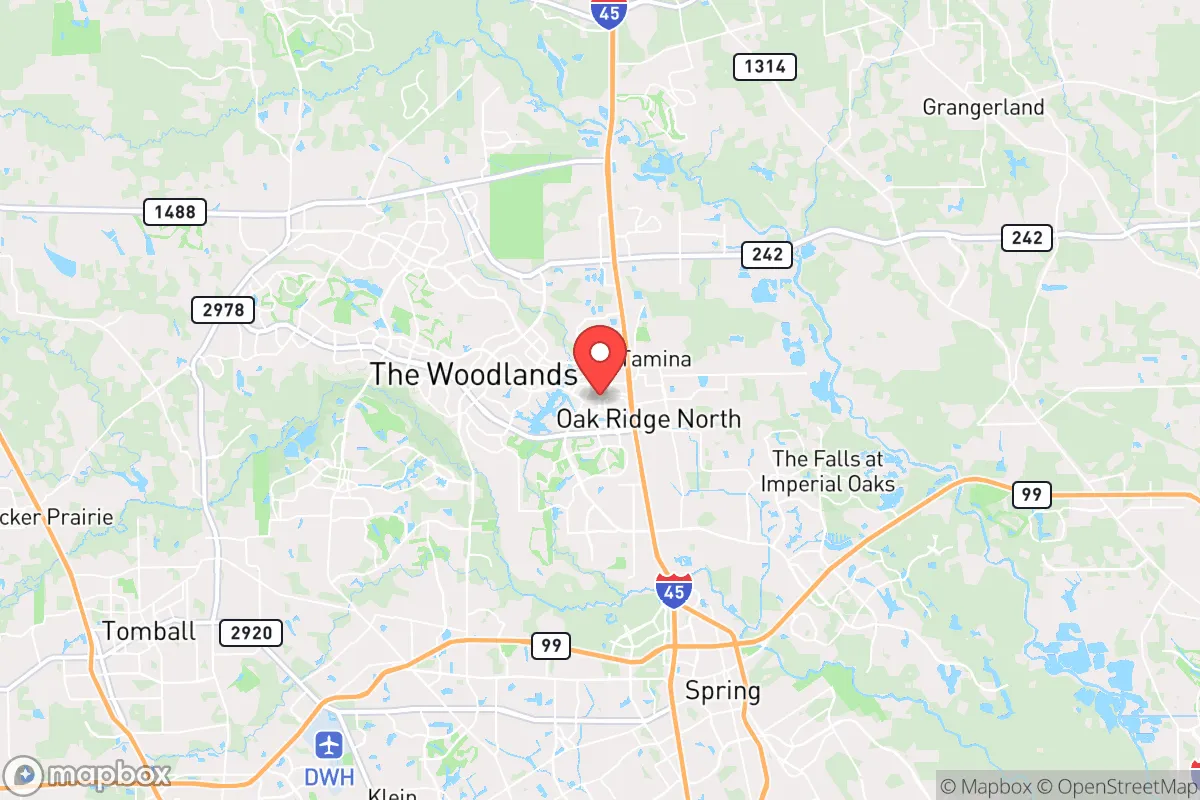
Photo: Wikipedia
Quality of Life in The Woodlands, TX
A high quality of life with strong walkability, manageable living costs, healthy neighborhood signals, and solid amenity access.
What does Quality of Life tell us?
Quality of Life blends cost of living, nearby amenities, socioeconomic signals, and neighborhood character. City-level scores represent the whole municipality; individual neighborhoods can differ.
What does this tell us?
Quality of Life blends cost of living, nearby amenities, socioeconomic signals, and neighborhood character. City-level scores represent the whole municipality; individual neighborhoods can differ.
Cost of Living
60% above national average
The Real Cost of Living in The Woodlands, TX for 2026
| Tier | Individual | Family (4) |
|---|---|---|
| Survival | $29k | $54k |
| Comfortable | $93k | $137k |
| Luxury | $255k+ | $396k+ |
| Elite (Top 5%) | $332k+ | $515k+ |
103%
The Area Signal
A metric tracking the socioeconomic signals of the area.


Hobbies
Explore the areaGroceries
2 within 10 miles
Gas
0 within 10 miles
Hospital
3 within 20 miles
Airport
IAH — George Bush Intercontinental
Post Office
USPS — Cypress, TX
Critical Amenities
Quality-of-Life Analysis
The Woodlands is a master-planned community in Montgomery County, Texas, consistently ranked among the most affluent suburbs in the Houston metropolitan area. With a cost of living index of 160 (60% above the U.S. average), the area attracts a population of upper-middle-class professionals, corporate executives, and families seeking a high-amenity suburban lifestyle. The community's demographic profile skews toward college-educated residents earning well above the national median household income, with a notable concentration of workers in the energy, healthcare, and technology sectors.
How housing costs and affordability compare to Houston and nearby suburbs
Housing in The Woodlands is the primary driver of its elevated cost of living, but it remains competitive with other affluent Houston suburbs like Sugar Land and Katy. The median home value sits at $479,400, roughly double the national median, while the median rent is $1,792 per month — about 40% higher than the U.S. average. Compared to Houston proper, where the median home value hovers around $280,000, The Woodlands commands a significant premium for its planned infrastructure, green spaces, and highly rated schools. However, for buyers accustomed to prices in Austin or Dallas's northern suburbs, The Woodlands offers relatively more square footage per dollar. The average commute of 27.3 minutes is slightly longer than the national average of 26 minutes, reflecting the daily drive many residents make to jobs in Houston's Energy Corridor or downtown via I-45. Property taxes in Montgomery County average roughly 2.1% of assessed value, which is typical for Texas but adds substantially to monthly housing costs.
What daily life is like for families: schools, parks, and local amenities
Daily life in The Woodlands revolves around its extensive network of parks, golf courses, and the 200-mile system of hike-and-bike trails that connect neighborhoods to shopping centers and schools. The Conroe Independent School District serves the community, with several high schools — including College Park High School and The Woodlands High School — earning consistent state and national recognition for academic performance and extracurricular programs. The area's crown jewel is The Woodlands Town Center, a mixed-use district featuring the Cynthia Woods Mitchell Pavilion (a major concert venue), the Market Street shopping complex, and the Waterway Square district with its pedestrian-friendly canals and restaurants. For families, the community offers over 120 parks, multiple community pools, and organized youth sports leagues through the Township's recreation department. The Woodlands also has a lower violent crime rate than both the Texas and national averages, though property crime rates are comparable to other affluent suburbs. The lack of a downtown nightlife scene is a trade-off, but residents gain access to highly rated healthcare facilities, including Houston Methodist The Woodlands Hospital and St. Luke's Health–The Woodlands.
The Woodlands is best suited for professionals and families who prioritize top-tier public schools, abundant outdoor recreation, and a planned, low-crime environment over urban energy or housing affordability. Empty nesters and retirees also find the community appealing due to its walkable Town Center, medical facilities, and active adult programs. Those who thrive here are typically willing to accept a longer commute and higher housing costs in exchange for a suburban lifestyle that feels both curated and connected to nature. Singles and young renters on a tight budget may find the area cost-prohibitive, but for families earning above $120,000 annually, The Woodlands offers one of the most comprehensive quality-of-life packages in the greater Houston region.

Crime in The Woodlands, TX
Crime rates similar to the national median for U.S. locations.
Violent CrimeViolent Crime Analysis
Property CrimeProperty Crime Analysis
Crime Analysis
The Woodlands, Texas, presents a crime profile that is notably safer than the national average but requires careful scrutiny given its location within a large metropolitan area. With a violent crime rate of 342.3 per 100,000 residents and a property crime rate of 1,780.9 per 100,000, the community faces challenges that are influenced by broader regional justice policies. Residents should be aware that the progressive ideologies often found in large metro-area district attorneys' offices can lead to softer sentencing and reduced prosecution of repeat offenders, directly impacting public safety and victim justice.
Crime in context
When compared to national benchmarks, The Woodlands' violent crime rate of 342.3 per 100,000 is approximately 8% lower than the U.S. average of roughly 370 per 100,000. However, its property crime rate of 1,780.9 per 100,000 sits about 15% higher than the national average of 1,550 per 100,000. Against Texas state figures, the community fares better: the state's violent crime rate is approximately 430 per 100,000, and its property crime rate hovers near 2,200 per 100,000. This means The Woodlands is 20% safer for violent crime and 19% safer for property crime than Texas as a whole. The key concern for residents is that Montgomery County, while generally conservative, is adjacent to Harris County (Houston), where progressive prosecutors have been criticized for bail reform and reduced charging of certain offenses, potentially allowing criminal elements to migrate into suburban areas.
What residents experience
Daily life in The Woodlands is marked by a low likelihood of encountering violent crime, but property offenses—particularly vehicle burglaries, package thefts, and bicycle thefts—are common annoyances. The community's extensive trail system and mixed-use villages, while desirable, create opportunities for transient criminals to target unlocked cars and homes. Residents frequently report that most property crime is opportunistic, with thieves targeting areas near the Waterway Avenue entertainment district and the Town Center shopping corridor. The presence of a private security patrol (The Woodlands Township's Community Patrol) and a dedicated Montgomery County Sheriff's Office substation provides a visible deterrent, but the sheer volume of visitors—over 20 million annually—means that crime prevention relies heavily on resident vigilance. The progressive justice trends in the broader Houston metro area mean that even when suspects are caught, they may face minimal consequences, a reality that frustrates many long-term residents.
Neighborhood-level variation is significant. Gated communities and villages farther from Interstate 45, such as East Shore and Cochran's Crossing, report violent crime rates 40-60% lower than the township average. Conversely, areas near the I-45 corridor and the southern border with Spring, Texas, experience higher rates of property crime and occasional gang-related incidents. The Grogan's Mill and Alden Bridge villages, with their older housing stock and higher rental density, see more car burglaries and mail theft. For prospective residents, consulting the Montgomery County Sheriff's Office crime mapping tool and choosing a home in a deed-restricted village with active neighborhood watch programs is strongly advised. The overall safety picture is positive, but the influence of metro-area progressive policies on criminal justice outcomes warrants ongoing caution.
* Values derived from national, state, county, city and local statistics and may differ in a specific area. Last updated: 2026-04-16T01:01:31.000Z
Narrative content on this page is AI-generated and may contain mistakes. Verify any details that matter before acting on them.
ReloMaps may earn a commission from affiliate links at no extra cost to you.

