
Find The Best Places To Live
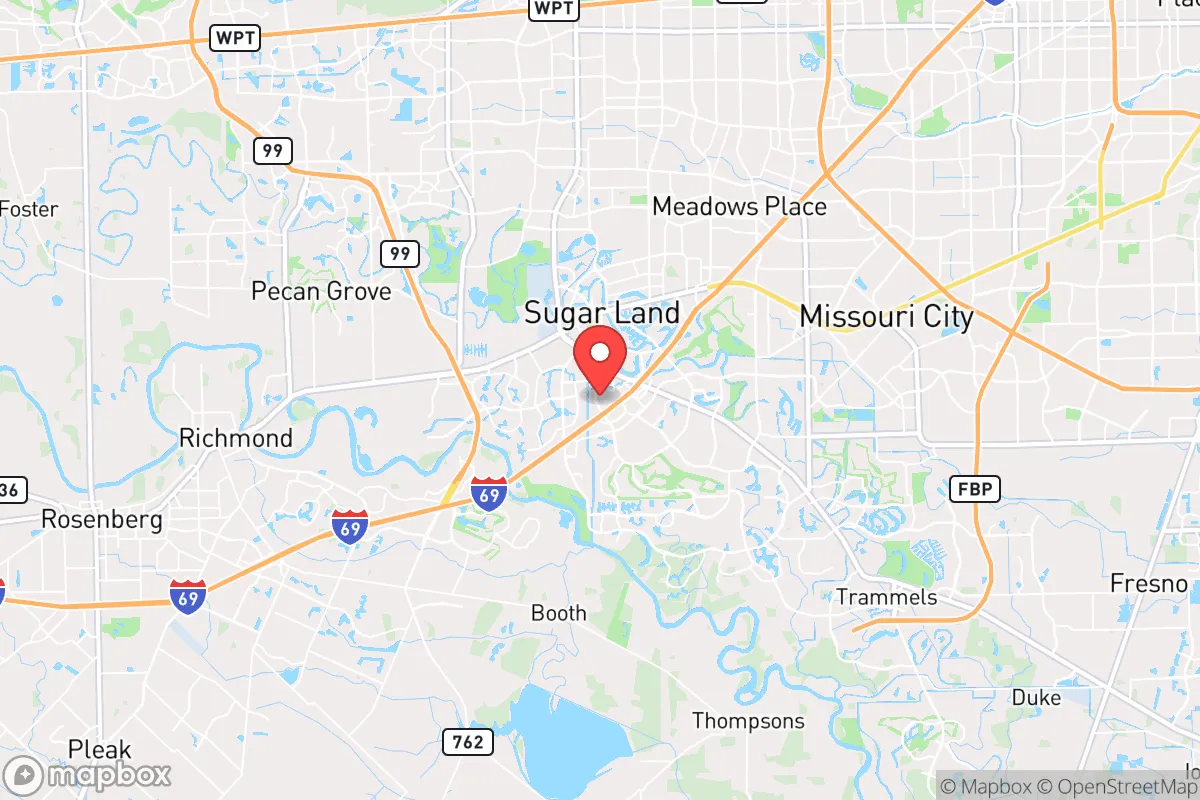
in Sugar Land
PRO TIP! You can paste a Zillow or Redfin link to get info on that property.
What It's Like Living in Sugar Land, TX
Living in Sugar Land feels a bit like being inside a well-oiled machine that also knows how to throw a decent block party. It’s a master-planned, affluent suburb southwest of Houston that has grown from a former sugar plantation into a city of nearly 110,000 people, where the median household income tops $137,000 and the streets are lined with mature oaks and meticulously maintained lawns. The vibe is less "hustle and bustle" and more "organized comfort" — a place where the biggest weekly drama might be which high school football team wins the Friday night game, and where the local HOA is taken very, very seriously.
Daily Rhythm: The Commute, the Schools, and the Weekend Reset
For most residents, the day starts early. The average commute clocks in at just under 29 minutes, which is manageable by Houston standards, but that drive — often on the Grand Parkway (SH 99) or Highway 59 — can feel longer during rush hour. People here are typically professionals in energy, healthcare, or tech, many commuting into the Energy Corridor or the Texas Medical Center. The trade-off for that commute is a home base that feels insulated and safe. The violent crime rate is remarkably low at 73.9 per 100,000 residents — roughly a quarter of the national average — so parents let kids ride bikes to the neighborhood pool without a second thought.
Weekends revolve around the kids’ activities (soccer tournaments at the Imperial Park fields, swim meets at the Aquatic Center) and the local retail hubs. First Colony Mall is the social epicenter for teens and families alike, while the Town Square area near the old Imperial Sugar refinery hosts farmers markets and outdoor concerts. Dining leans toward polished chains (The Cheesecake Factory is perpetually busy) but there are local gems like Mico’s Hot Chicken for a spicy fix and Blood Bros. BBQ for Texas-style brisket with a creative twist. The median age of 42.5 reflects a community that’s settled — people are past the party phase and deep into the school-and-soccer-practice phase.
Sports, Festivals, and the Unifying Power of High School Football
If you want to understand Sugar Land’s social fabric, look no further than a Friday night at Mercer Stadium. High school football is a near-religious experience here, with the Clements Rangers, Dulles Vikings, and Kempner Cougars drawing crowds that rival small college games. The Fort Bend ISD stadiums are packed with parents, alumni, and local businesses sponsoring banners. It’s not just a game; it’s the weekly community gathering where you see your neighbors and catch up on local gossip. Beyond football, the city hosts the Sugar Land Space Cowboys, the Houston Astros’ Triple-A affiliate, at Constellation Field — a family-friendly ballpark with a splash pad and a lawn for picnics. Summer nights here mean minor league baseball, fireworks on Fridays, and kids running the bases after the game.
The big annual event is the Sugar Land Wine & Food Affair, a weekend in April that brings in celebrity chefs and wine tastings, drawing crowds from across the metro. For a quieter scene, the Houston Museum of Natural Science at Sugar Land offers a smaller, less crowded version of the main museum, perfect for a rainy Saturday. The city’s 30-plus parks, including the sprawling Oyster Creek Park with its 2.5-mile hike-and-bike trail, are used year-round — though summer heat (90°F+ from June through September) means most outdoor activities happen early morning or after sunset.
The Pros and Cons of Living in a Master-Planned Paradise
The upsides are substantial. Safety and schools are the twin pillars — the public schools (part of Fort Bend ISD) are consistently rated among the best in Texas, with several earning Blue Ribbon status. The cost of living index sits at 158 (58% above the national average), but that’s largely driven by housing: the median home value is $406,600, which buys a 3-4 bedroom home in a gated or HOA-controlled neighborhood with pools, playgrounds, and manicured common areas. For families, the trade-off is clear: you pay more for a predictable, low-crime environment with strong schools. 62.4% of adults hold a bachelor’s degree or higher, so the social circles tend to be educated and professionally oriented.
The downsides are real, though. Traffic on Highway 59 and the Grand Parkway is a daily frustration, especially as Sugar Land continues to grow (the population has doubled since 2000). The city’s planned nature can feel sterile to some — there’s no gritty downtown or bohemian arts district; the nightlife is limited to a few wine bars and the occasional live music at the Town Square. Longtime residents sometimes grumble about the strict HOA rules (think: approved paint colors, no visible trash cans, and fines for unkempt lawns). And while the diversity is real — Sugar Land is one of the most ethnically diverse suburbs in the country, with large Asian American and Indian American communities — some feel the social scene can be cliquish, organized around school zones and neighborhood associations rather than a shared city identity.
Ultimately, Sugar Land works best for people who value predictability, safety, and a strong school system over urban edge or spontaneity. It’s a place where you know your neighbors, your kids can walk to the park, and the biggest controversy might be whether the HOA should allow backyard trampolines. If that sounds like your kind of order, you’ll fit right in.

Similar small cities to Sugar Land

* Values derived from national, state, county, city and local statistics and may differ in a specific area. Last updated: 2026-04-22T02:01:47.000Z
Narrative content on this page is AI-generated and may contain mistakes. Verify any details that matter before acting on them.
ReloMaps may earn a commission from affiliate links at no extra cost to you.

