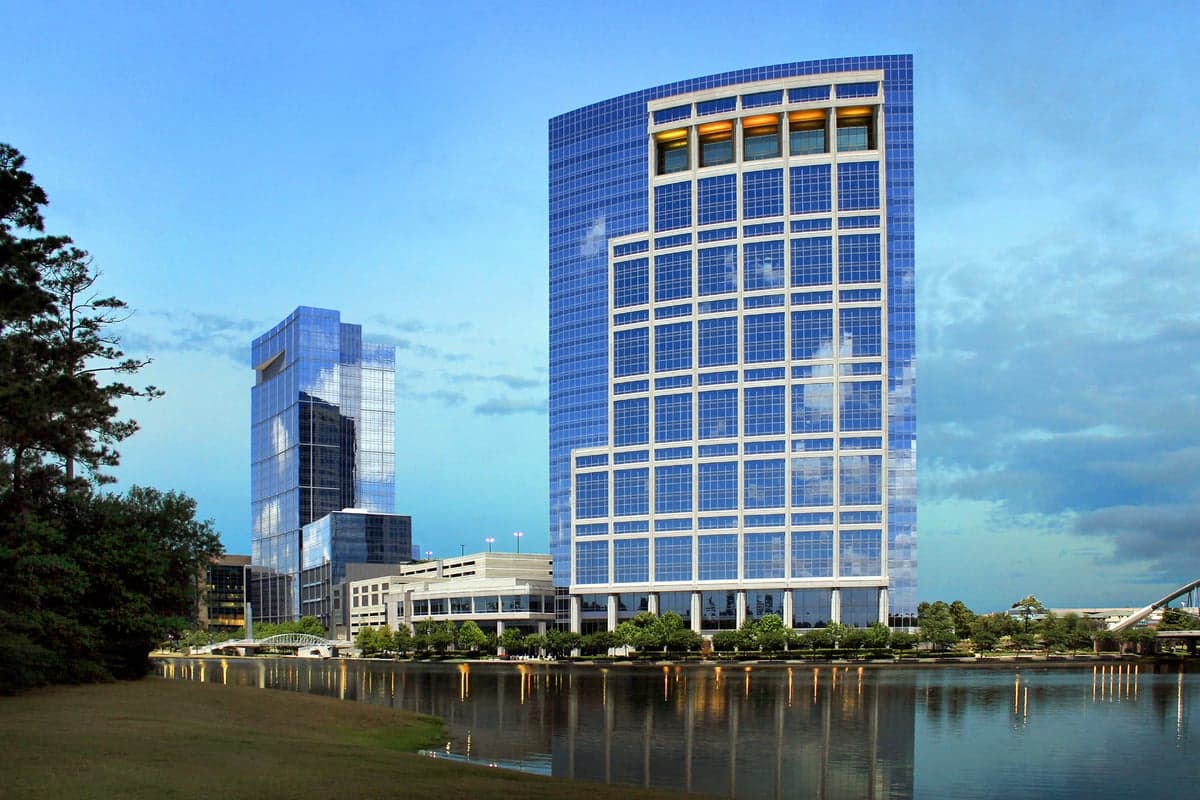
Photo: Wikipedia
Political ClimatePolitical Climate in The Woodlands, TX
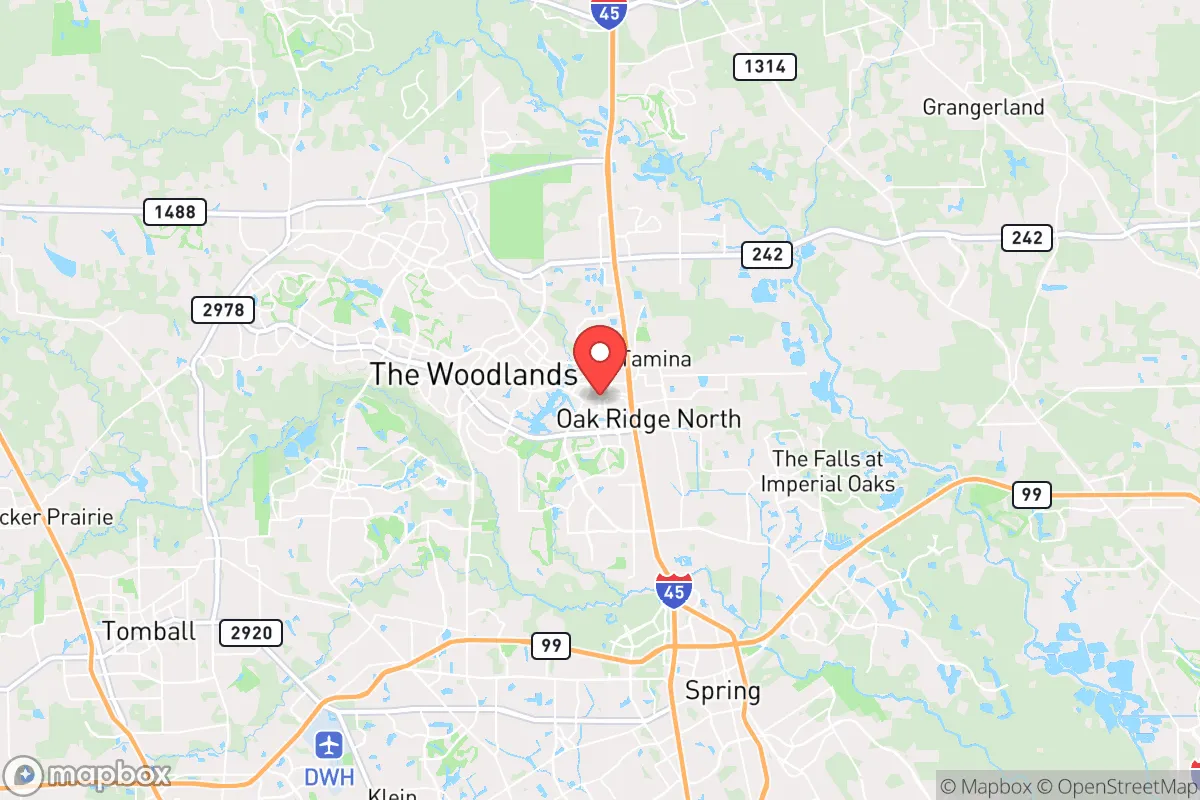
District shown is the primary district for this city’s centroid. Cities may span multiple districts.
Local Political AnalysisPolitical Analysis of The Woodlands, TX
The Woodlands has long been a conservative stronghold, and that hasn't changed much at the ballot box. With a Cook Partisan Voting Index of R+12, this master-planned community leans about 12 points more Republican than the national average, meaning you can expect most local elections to swing red by a comfortable margin. But if you've lived here as long as I have, you'll notice the political vibe isn't quite as rock-solid as it was in the 1990s or early 2000s. Back then, it was almost a given that your neighbors shared your views on limited government and personal responsibility. Today, you'll see more Harris County-style transplants moving in from the south, bringing a bit of that Houston progressive energy with them. It's still a reliably conservative area, but the trajectory is worth watching—especially if you value keeping government out of your business.
How it compares
Drive ten miles south into the city of Houston proper, and you're in a completely different political universe. Houston's Harris County has been trending blue for years, with a Democratic lean that feels miles away from The Woodlands' R+12 rating. Head west to Conroe or north to Montgomery County, and you'll find an even deeper shade of red—places where the local GOP holds sway without much challenge. The Woodlands sits in a kind of buffer zone: it's conservative enough to feel safe from the worst government overreach you see in urban centers, but it's not so isolated that you can ignore the creeping influence of progressive policies. The contrast is starkest during election season, when you'll see yard signs for local candidates that would never fly in the Heights or Montrose. For a longtime resident, that's reassuring, but it also means staying vigilant about who's running for school board and city council—those are the seats where ideological shifts start.
What this means for residents
For folks who moved here to escape the heavy-handed regulations and tax burdens of places like Austin or Dallas, the political climate in The Woodlands is a mixed bag. On the plus side, property taxes are still manageable compared to Harris County, and there's a general respect for Second Amendment rights and local business autonomy. You won't see the kind of zoning battles or mask mandates that turned other suburbs into battlegrounds. But the concern is real: as the area grows, so does the pressure to adopt more progressive policies on everything from housing density to school curriculum. If you're the type who believes government should stay out of your wallet and your home, you'll want to keep an eye on the township board elections. The Woodlands isn't a city, so it operates under a unique governance model that can be vulnerable to well-organized activist groups pushing for change. So far, the conservative majority has held the line, but it's a constant tug-of-war.
Culturally, The Woodlands still feels like a place where you can raise a family without worrying about the latest social experiments. The local schools emphasize traditional values, and there's a strong sense of community rooted in churches, youth sports, and neighborhood associations. That said, you'll notice more "In This House We Believe" signs popping up in certain enclaves, and the local library board has seen some heated debates over book content. It's not the same place it was twenty years ago, but it's still a far cry from the chaos you see in blue-run cities. If you're considering a move here, just know that the political climate is stable but not static—and if you value personal freedom and limited government, you'll want to stay engaged. The Woodlands is a great place to live, but it only stays that way if the people who call it home keep fighting for the principles that made it great.

State Political ClimatePolitical Climate in Texas
State Political AnalysisPolitical Environment in the State
Texas has been a reliably Republican state for decades, with the GOP holding every statewide office and both chambers of the legislature since the 1990s. The state’s overall partisan lean is still red, but the margin has been shrinking — Donald Trump won Texas by 5.6 points in 2024, down from 9 points in 2016. The dominant coalition remains a mix of rural conservatives, suburban moderates, and a growing Hispanic electorate that is splitting more evenly than national trends suggest. Over the last 10-20 years, the trajectory has been a slow but steady shift toward competitiveness, driven by explosive population growth in the blue-leaning metros of Austin, Dallas, Houston, and San Antonio, while the vast rural and exurban areas — think Lubbock, Midland, and Tyler — have only gotten redder.
Urban vs. rural divide
The political map of Texas is a study in stark contrasts. The state’s four largest metros — Houston, Dallas-Fort Worth, San Antonio, and Austin — are the engine rooms of Democratic growth. Harris County (Houston) and Dallas County have both flipped from purple to solid blue in presidential elections since 2016, while Travis County (Austin) is now one of the most liberal counties in the South. Meanwhile, the rural and exurban counties that ring these metros — like Collin County north of Dallas, Comal County near San Antonio, and Williamson County north of Austin — are still reliably red, though Collin and Williamson are trending purple as suburbanites move in. The Rio Grande Valley, once a Democratic stronghold, has seen a dramatic shift: counties like Starr and Zapata that voted for Hillary Clinton by 40+ points in 2016 went for Trump in 2024 by single digits, reflecting a realignment of Hispanic voters toward the GOP on cultural and economic issues. The Panhandle and West Texas — Lubbock, Midland, Odessa — remain deeply conservative, often voting 75-80% Republican.
Policy environment
Texas’s policy environment is defined by a low-tax, low-regulation posture that appeals to conservatives. There is no state income tax, and property taxes are high but capped at 10% annual growth for homesteads under Proposition 4 (2023). The regulatory climate is business-friendly, with no state-level minimum wage above the federal $7.25 and right-to-work laws that weaken union power. On education, the state has expanded school choice through the Texas Education Savings Account program (2023), allowing parents to use state funds for private or homeschool expenses. Healthcare policy remains limited: Texas did not expand Medicaid under the ACA, and the state has some of the strictest abortion laws in the nation after the 2021 Heartbeat Act (SB 8) and the 2023 trigger ban (HB 1280). Election laws tightened after 2021’s SB 1, which banned 24-hour and drive-through voting, added ID requirements for mail ballots, and empowered partisan poll watchers. For a conservative, this is a state that generally respects local control and limits federal overreach, though the heavy hand of property taxes and the growing cost of homeowners insurance are real frustrations.
Trajectory & freedom
On balance, Texas has been expanding personal freedom in several key areas, but there are warning signs. The 2021 permitless carry law (HB 1927) allows most adults to carry a handgun without a license, a clear expansion of Second Amendment rights. The 2023 parental rights law (HB 900) restricts sexually explicit content in school libraries and gives parents more say in curriculum, a win for family autonomy. The state also passed a law in 2023 banning COVID-19 vaccine mandates by private employers (SB 7), a direct rebuke of federal overreach. However, freedom is not absolute: the state’s strict abortion bans have created a patchwork of enforcement that some see as government intrusion into private medical decisions, and the 2023 law criminalizing “gender-affirming care” for minors (SB 14) has drawn legal challenges. On property rights, Texas has strong eminent domain protections, but the 2023 law limiting homeowners’ ability to sue HOAs (HB 614) was a step backward for some. The trend is toward more individual liberty on guns, education, and medical choice, but the state is also willing to use its power aggressively on social issues — a double-edged sword depending on your priorities.
Civil unrest & political movements
Texas has seen its share of political flashpoints. The 2020 Black Lives Matter protests in Austin were among the largest in the country, leading to a city council defunding of the police by $150 million — a move that was partially reversed after a backlash and a 2021 state law (HB 1900) banning defunding. Immigration politics are a constant source of tension: Governor Greg Abbott’s Operation Lone Star (2021-present) has bused over 100,000 migrants to sanctuary cities like New York and Chicago, while the state’s 2023 law (SB 4) allowing state police to arrest suspected illegal border crossers is currently tied up in court. The “Texas secession” movement, led by the Texas Nationalist Movement, remains a fringe but vocal presence, though it has no serious political traction. Election integrity controversies flared after 2020, with the state’s 2021 voting law (SB 1) sparking protests from Democrats and voting rights groups. A new resident in Dallas or Houston will see occasional protests downtown, but in Lubbock or Tyler, political life is quieter and more homogeneous. The most visible flashpoint is the border: in El Paso and the Rio Grande Valley, the immigration debate is a daily reality, with National Guard presence and razor wire along the river.
Projection
Over the next 5-10 years, Texas will likely remain Republican at the state level but with narrower margins. The demographic trends are clear: the state is growing by about 1,000 people per day, and a significant share of those new arrivals are from blue states like California and New York. These transplants tend to be younger, more diverse, and more moderate-to-liberal, especially in the suburbs of Austin, Dallas, and Houston. The Hispanic vote will continue to split, with working-class Hispanics in the Valley and West Texas moving toward the GOP on economic and cultural issues, while college-educated Hispanics in the metros lean Democratic. The state legislature will likely remain in GOP hands due to gerrymandering, but the statewide races — governor, Senate, and presidential — could be within 3-5 points by 2030. For a conservative moving in now, expect a decade of political tension: the rural and exurban base will hold firm, but the suburbs will become battlegrounds. The policy environment will probably stay conservative on taxes, guns, and education, but the culture wars over abortion, immigration, and LGBTQ rights will intensify.
For a new resident, the bottom line is that Texas offers a low-tax, high-freedom environment that is still broadly conservative, but it is not immune to the national trends of polarization and demographic change. If you are moving to Lubbock or Midland, you will find a deeply red community where your values are the norm. If you are moving to Austin or Dallas, you will encounter a more mixed political landscape, with blue pockets that are growing. The state’s trajectory is toward a more competitive two-party system, but for now, the levers of power remain firmly in conservative hands. Just be prepared for property taxes to keep rising and the culture wars to keep raging — that’s Texas in 2026.
* Values derived from national, state, county, city and local statistics and may differ in a specific area. Last updated: 2026-04-16T01:01:31.000Z
Narrative content on this page is AI-generated and may contain mistakes. Verify any details that matter before acting on them.
ReloMaps may earn a commission from affiliate links at no extra cost to you.

