Personal Sovereignty in Three Forks, MT
Viable for self-reliance. Generally workable, though some barriers may limit total independence.
What does Personal Sovereignty tell us?
Personal Sovereignty measures your capacity for self-reliance and independence with minimal government friction. Higher scores mean fewer barriers between you and the way you want to live... but it assumes you have the space you need and good neighbors.
What does this tell us?
Personal Sovereignty measures your capacity for self-reliance and independence with minimal government friction. Higher scores mean fewer barriers between you and the way you want to live... but it assumes you have the space you need and good neighbors.
State Policy
Energy independence: Net exporter (120% of energy produced in-state)
Personal Liberty
Homesteading

Personal Liberty Analysis
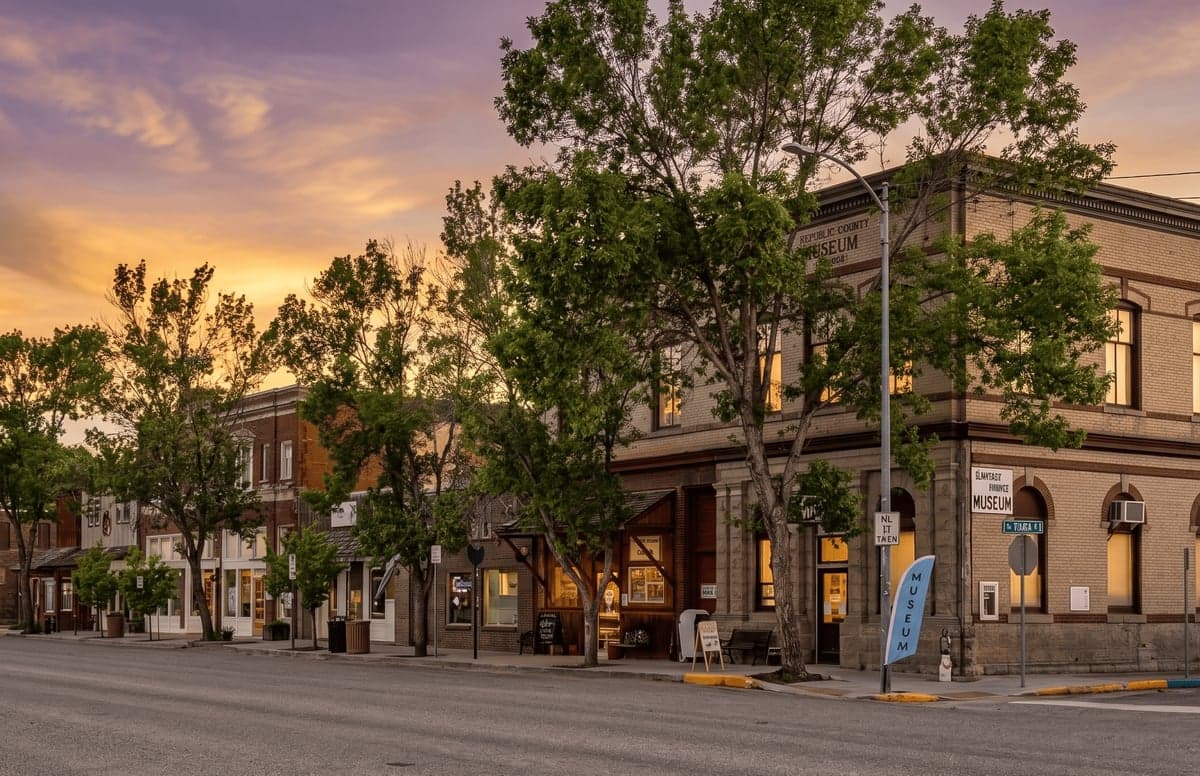
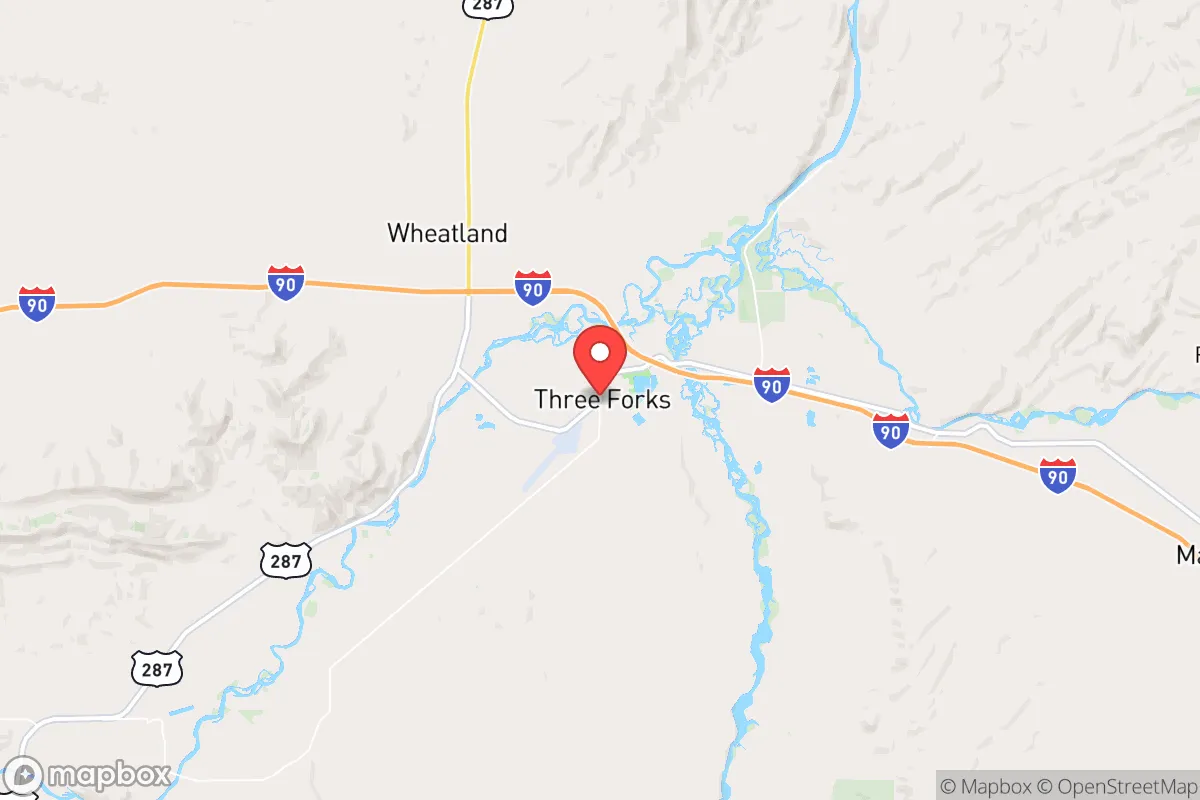
Three Forks, Montana offers a rare combination of geographic isolation and practical autonomy that appeals directly to those prioritizing personal sovereignty. Nestled at the headwaters of the Missouri River in Gallatin County, this small town of roughly 2,000 residents sits far enough from the regulatory gravity of Bozeman (25 miles east) to preserve a hands-off lifestyle, yet close enough to access essential services. For single individuals and parents evaluating relocation through a survivalist or prepper lens, Three Forks presents a low-tax, low-regulation environment where self-reliance isn't just tolerated—it's expected. The state's constitutional protections for gun rights, property use, and medical choice create a legal framework that resists the federal overreach many conservative families are actively fleeing.
Tax burden and regulatory posture for self-reliant households
Montana's tax structure is a clear advantage for those seeking to minimize government extraction from their income and assets. The state imposes no sales tax, meaning every dollar earned stays in your pocket for supplies, ammunition, or homestead improvements. Property taxes in Gallatin County average around 0.83% of assessed value, which is moderate by national standards but significantly lower than high-tax states like California (0.77% effective rate on inflated values) or New York (1.72%). For a $300,000 home in Three Forks, that translates to roughly $2,500 annually—a fraction of what you'd pay in blue-state suburbs. Income tax is a flat 6.75% on all taxable income over $20,500, which is competitive but not the lowest; however, the absence of sales tax offsets this for most prepper households that prioritize bulk purchasing. Regulatory posture in Three Forks is notably light. The town has no zoning overlay for agricultural or residential uses beyond basic building codes, and Gallatin County's planning department is understaffed and slow-moving, which effectively means most property improvements fly under the radar. Permits for sheds, fences, or even small outbuildings are rarely enforced unless a neighbor complains. This hands-off approach is a deliberate feature of Montana's political culture, where local control is prized over state or federal mandates.
Self-defense and gun law specifics in Three Forks
Montana is a constitutional carry state, meaning no permit is required to carry a concealed firearm for any law-abiding adult 18 or older. This applies fully in Three Forks, with no additional city-level restrictions beyond state law. The state preempts local firearm ordinances, so you won't find the magazine bans, "sensitive place" expansions, or waiting periods that plague jurisdictions like Washington or Colorado. Stand-your-ground laws are codified in Montana Code Annotated 45-3-110, with no duty to retreat in any place you are lawfully present. For parents, this means defending your home or vehicle against an intruder carries no legal ambiguity—deadly force is presumed justified if you reasonably believe it's necessary to prevent forcible entry or violent felony. The state also prohibits any registry of firearms or ammunition, and there is no red-flag law on the books as of 2026, though legislative efforts to introduce one surface periodically. For preppers building a defensive capability, Three Forks' rural setting means you can legally discharge firearms on your own property if you have adequate acreage and are not within 150 yards of an occupied dwelling without permission. Local law enforcement (Gallatin County Sheriff's Office) is generally pro-Second Amendment and understaffed, which reinforces the reality that self-defense is your own responsibility—a fact that aligns with the survivalist mindset.
Self-reliance and homesteading viability in Three Forks
The practical feasibility of off-grid living in Three Forks is high, driven by available land, permissive zoning, and a climate that rewards preparation. Residential lots within town limits are typically 0.25 to 0.5 acres, which is enough for a substantial garden, chicken coop, and small workshop, but not for large livestock. The real opportunity lies in the surrounding county land, where 5- to 40-acre parcels are common and affordable—prices range from $3,000 to $8,000 per acre as of 2026, far below Bozeman's $50,000+ per acre. Zoning in unincorporated Gallatin County is minimal: no minimum lot size for agricultural use, no restrictions on rainwater collection, and no prohibition on composting toilets or greywater systems if you're not connected to municipal sewer. Solar feasibility is excellent, with the area averaging 300+ sunny days per year and no state-level net metering caps that would penalize home generation. Off-grid power is straightforward; many residents run hybrid solar-propane systems. Water access is the primary constraint—well drilling costs $15–$30 per foot, and depths of 100–300 feet are typical. The Madison and Jefferson aquifers are reliable but require upfront investment. For parents, the ability to raise your own food, store fuel, and maintain independent water and power systems is not a fringe activity here—it's a normal part of rural life. The local hardware store and farm supply co-op in Three Forks stock everything from seed stock to water filtration media, and the community culture respects self-sufficiency over dependence on government programs.
Personal liberties: parental rights, medical autonomy, and property
Montana's legal environment strongly protects individual and parental sovereignty. Parental rights are explicitly recognized in state law, with no "medical neglect" statutes that allow the state to override vaccine or treatment decisions for children without a court order. The state has no mandatory vaccination requirements for school attendance beyond the standard exemptions (medical, religious, and philosophical), and as of 2026, there is no COVID-19 vaccine mandate for children or adults in any setting. Medical autonomy extends to adults as well: Montana has no state-level prescription drug monitoring program that shares data with federal agencies, and there is no requirement to report alternative or complementary treatments. For those concerned about government overreach into health decisions, this is a significant buffer. Property rights are protected by Montana's "takings" law, which requires compensation for any regulatory action that diminishes property value by more than 30%. This effectively prevents the kind of zoning overhauls seen in states like Oregon or California that restrict building or land use. Free speech is robustly protected under the Montana Constitution, which includes an explicit right to "speak, write, and publish freely on all subjects" without prior restraint. Local government in Three Forks is small and accessible—town council meetings are held monthly, and residents routinely speak directly to officials without bureaucratic layers. For parents, this means you can advocate for your children's education or medical choices without facing institutional pushback.
Compared to other relocation destinations popular with the sovereignty-minded, Three Forks strikes a strong balance. It lacks the extreme isolation of places like northern Idaho or the Montana Hi-Line, but it also avoids the regulatory creep that has begun to affect Bozeman and Missoula. The tax burden is lower than Texas (which has high property taxes) and far lower than any coastal state. Gun laws are among the most permissive in the nation, and the homesteading infrastructure is mature and accessible. The primary trade-off is proximity to services—the nearest hospital is 25 minutes away in Bozeman, and the closest major airport is an hour. But for those who view self-reliance as a virtue and government overreach as a threat, Three Forks offers a legal and cultural environment where you can live largely on your own terms, raise your family without state interference, and prepare for whatever comes next. It is not a utopia—no place is—but it is a functional, low-friction base for the life of personal sovereignty that many conservative families and individuals are actively seeking.

* Values derived from national, state, county, city and local statistics and may differ in a specific area. Last updated: 2026-04-19T06:51:04.000Z
Narrative content on this page is AI-generated and may contain mistakes. Verify any details that matter before acting on them.
ReloMaps may earn a commission from affiliate links at no extra cost to you.

