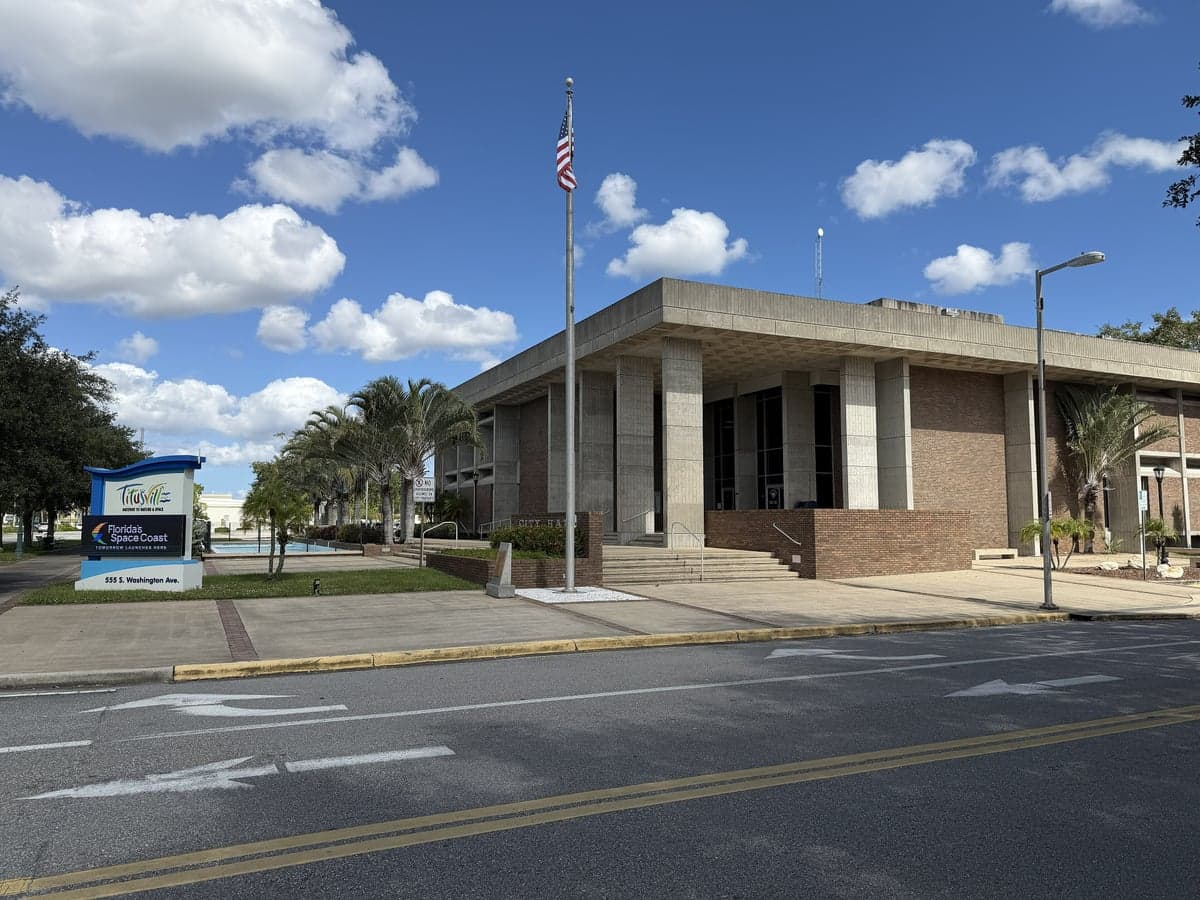
Photo: Wikipedia
Strategic Assessment of Titusville, FL
Meaningful friction. Expect exposure to either population pressure, blast zones, or natural disaster risk. Consider buying a retreat property.
What does the Strategic Assessment tell us?
Our Strategic Assessment grades tactical survivability of an area. Major population centers, military targets, fallout zones, natural disasters, and border exposure all drive risk — lower exposure means a more defensible position in a crisis.
This is heavily inspired by Joel Skousen's Strategic Relocation book. Highly recommended you checkout the book ($)What does this tell us?
Our Strategic Assessment grades tactical survivability of an area. Major population centers, military targets, fallout zones, natural disasters, and border exposure all drive risk — lower exposure means a more defensible position in a crisis.
This is heavily inspired by Joel Skousen's Strategic Relocation book. Highly recommended you checkout the book ($)Strategic Pillars

Key Distances
Regional Safe Places
Below is our recommended "safe zones" in Florida and the surrounding area based on our strategic heuristics. For most people, it's unrealistic to live in a “safe zone” full-time due to work, family or other personal reasons. They tend to be more rural. However, many of these areas are perfect for second homes and retreat properties that double as a vacation home or even a short-term rental.

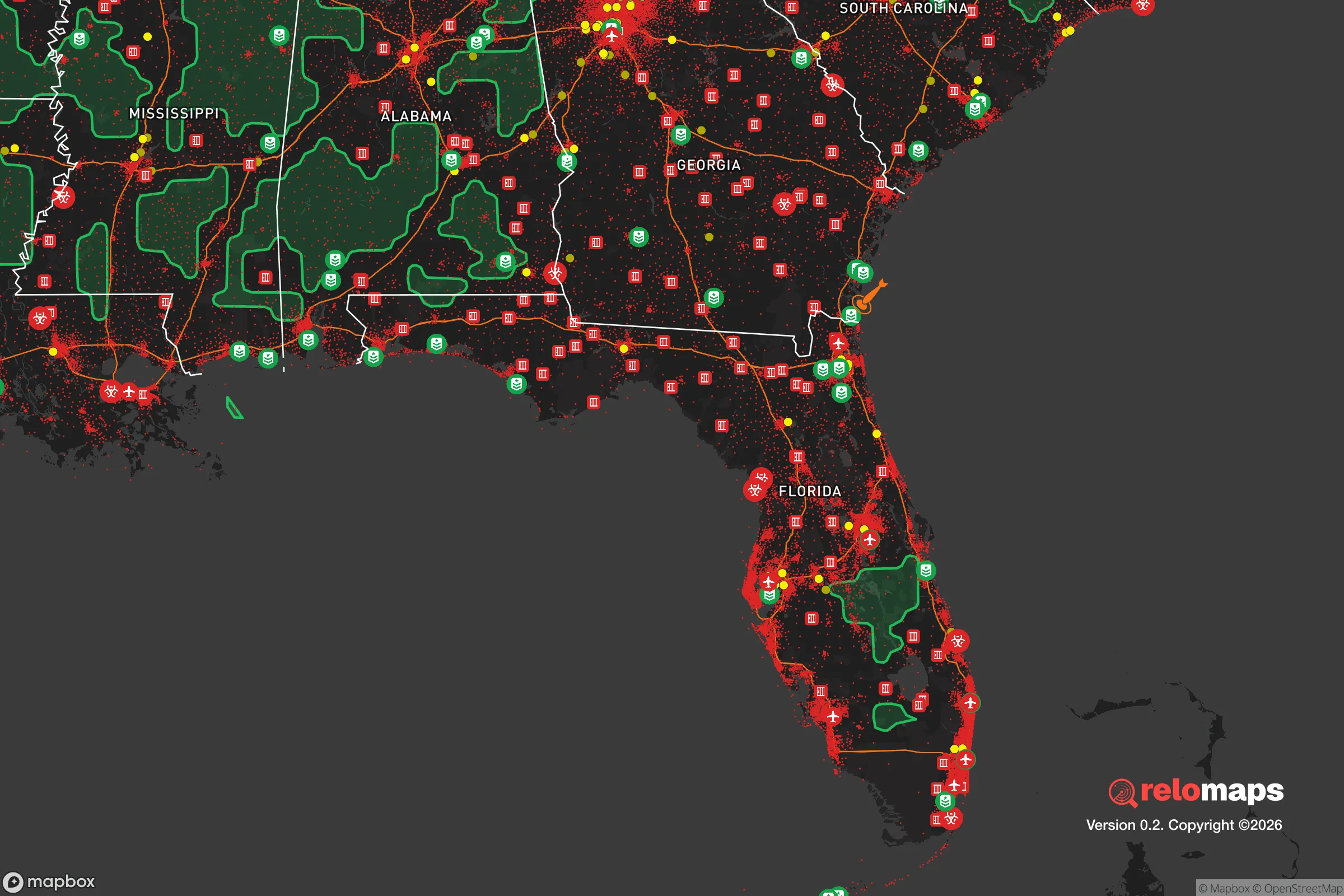


Important Note: For informational purposes only. This does not mean nothing bad ever happens in the green zones. Please use common sense. This is based on public data and modeled with AI. We tried to take a conservative approach but mistakes happen. We update this regularly as new information becomes available.
Solar Generator Recommendations
Backup power matters more here than in safer locations. We've picked three solar generators across budgets and capacity tiers — start with the budget unit if you only need a few essentials, or step up if you want to run a fridge and HVAC for days at a time.

Jackery Portable Power Station Explorer 300
Budget OptionPower on the Go: Weighing only 11 lbs, it's convenient to set up and store with book-sized foldable solar panels

BLUETTI Portable Power Station AC180
Designed for both indoor and outdoor scenarios, AC180 is highly capable as it has a robost capacity and continuous output power.

EF ECOFLOW DELTA Pro Ultra Power Station
Upgraded PickEcoFlow DELTA Pro Ultra is a whole-home energy system designed to grow with your family. Integrated with the Smart Home Panel 2, it scales to meet your evolving energy needs — keeping your home powered, intelligent, and secure through every stage of life.
We earn a commission, at no additional cost to you.
Strategic Assessment Analysis
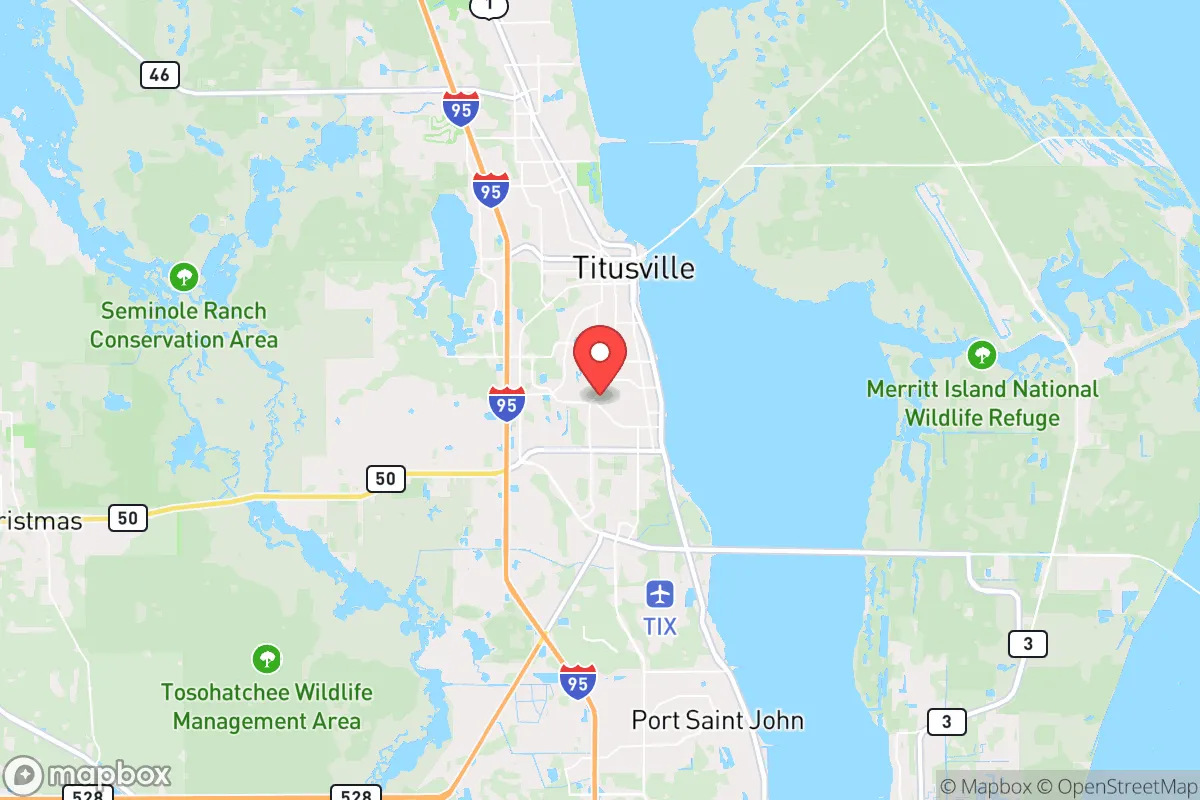
Titusville, Florida, occupies a unique strategic position on the Space Coast that offers a blend of natural isolation and practical self-sufficiency, making it a serious contender for relocation-minded individuals and families who prioritize resilience. Located on the mainland side of the Indian River Lagoon, directly across from the Kennedy Space Center and Cape Canaveral, the city benefits from a buffer of protected waterways and wildlife refuges that separate it from the denser coastal development. This geography provides a meaningful layer of physical separation from the most crowded zones of Orlando (about 45 minutes west) and the beachside tourist corridor, while still offering access to essential infrastructure and supply chains. For a reader weighing disaster readiness and long-term stability, Titusville presents a balanced profile: not so remote that daily life becomes impractical, but far enough from major population centers to reduce exposure to cascading urban risks.
Geographic position and natural advantages for long-term stability
Titusville sits on a narrow peninsula between the Indian River Lagoon to the east and the St. Johns River floodplain to the west, a layout that creates natural chokepoints for access. The city’s elevation averages around 10–15 feet above sea level, which is relatively high for coastal Florida and reduces the risk of storm surge from the Atlantic, though inland flooding from heavy rain remains a concern. The surrounding landscape includes the Merritt Island National Wildlife Refuge and the Canaveral National Seashore, vast tracts of protected land that limit development and provide a buffer against urban sprawl. These areas also serve as potential sources of game, fish, and forage for those with the skills to use them. The climate is subtropical, with a wet season from May to October and a dry season that reduces wildfire risk compared to inland pine forests. The area’s position along the Intracoastal Waterway offers both a transportation corridor and a source of seafood, though it also means that a major storm could disrupt barge traffic and supply chains. For a relocator, the key advantage is that Titusville is not a primary target for storm surge or direct hurricane landfall compared to barrier islands like Cocoa Beach or Melbourne Beach, but it is still within the cone of uncertainty for major storms.
Risks, exposures, and proximity to fallout-relevant landmarks
The most significant risk for Titusville is its proximity to the Kennedy Space Center (KSC) and Cape Canaveral Space Force Station, which are both high-value national security and aerospace assets. While these facilities are not nuclear power plants, they handle rocket launches, payloads, and hazardous materials that could become secondary targets in a conflict or suffer accidents. The KSC Industrial Area and the Vehicle Assembly Building are roughly 10–15 miles east across the lagoon, meaning that a direct strike on those facilities would likely produce fallout or debris that could affect Titusville depending on wind direction. Additionally, the city lies about 45 miles east of Orlando, a major metropolitan area of over 2 million people that would be a primary target in a large-scale conflict. The I-95 corridor, which runs through Titusville, would likely become a major evacuation route, potentially clogging roads and straining local resources. On the natural disaster side, the area is exposed to hurricanes, with the 2024 season seeing Hurricane Milton pass just south, causing widespread power outages and flooding in low-lying neighborhoods. The city’s location on a peninsula means that evacuation routes are limited to a few bridges and highways, which could become bottlenecks. For a relocator, the calculus is that Titusville is not a safe zone in a major war scenario, but it is far enough from Orlando and the coast to avoid the worst of a blast or fallout zone, provided one has a plan to move inland or to a more remote location.
Practical resilience for a relocator: food, water, energy, and defensibility
For a family or individual looking to build a self-sufficient lifestyle, Titusville offers a mix of suburban convenience and rural potential. The city itself has a population of about 50,000, with a low density that allows for larger lots and more privacy than typical Florida suburbs. Many homes in the area have wells and septic systems, which is a major advantage for water security, though well water quality can vary due to the high water table and potential saltwater intrusion. The St. Johns River and the Indian River Lagoon provide surface water sources, but both require treatment for drinking. The area’s growing season is long—nearly year-round—allowing for vegetable gardens, citrus, and tropical fruits like mangoes and avocados. The local soil is sandy, so raised beds or container gardening are more practical than traditional row crops. For energy, solar panels are viable given the high number of sunny days, and many homes already have them installed. The grid is prone to outages during storms, so a backup generator or battery system is a wise investment. Defensibility is moderate: the city is not gated or isolated, but the natural barriers of the lagoon and wildlife refuges create a degree of separation from the more chaotic urban areas. The local economy is anchored by aerospace and tourism, which means that a major disruption to either sector could cause economic hardship. For a relocator, the practical takeaway is that Titusville is a good base for building resilience, but it requires active preparation—storing food, securing water, and having a plan for evacuation or sheltering in place—rather than being a turnkey survival location.
The overall strategic picture for Titusville is that it occupies a middle ground in the resilience spectrum: not a remote bunker, but not a high-risk urban core either. Its geographic position offers natural buffers and access to resources, while its proximity to major infrastructure and military assets introduces real but manageable risks. For a conservative-leaning audience that values self-reliance and preparedness, Titusville is a viable option if approached with clear-eyed planning. The city’s low cost of living relative to other coastal Florida towns, combined with its access to the Space Coast’s job market and the natural advantages of the Indian River Lagoon, make it a practical choice for those who want to be near civilization without being swallowed by it. The key is to treat Titusville as a base camp, not a fortress—a place where you can build a resilient lifestyle while maintaining the ability to adapt to changing circumstances. For the serious relocator, it deserves a spot on the short list, provided you understand the trade-offs and prepare accordingly.

* Values derived from national, state, county, city and local statistics and may differ in a specific area. Last updated: 2026-08-22T17:15:03.000Z
Narrative content on this page is AI-generated and may contain mistakes. Verify any details that matter before acting on them.
ReloMaps may earn a commission from affiliate links at no extra cost to you.

