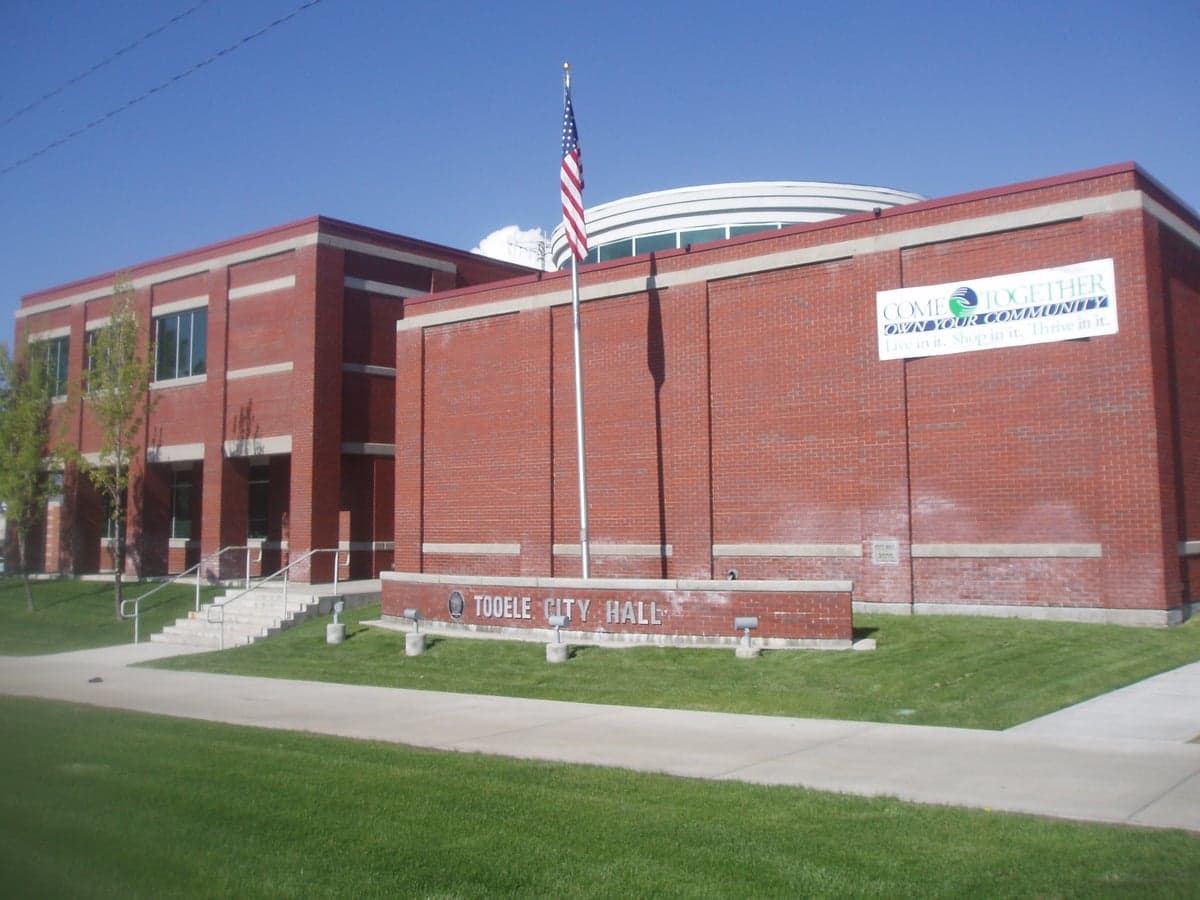
Photo: Wikipedia
Political ClimatePolitical Climate in Tooele, UT
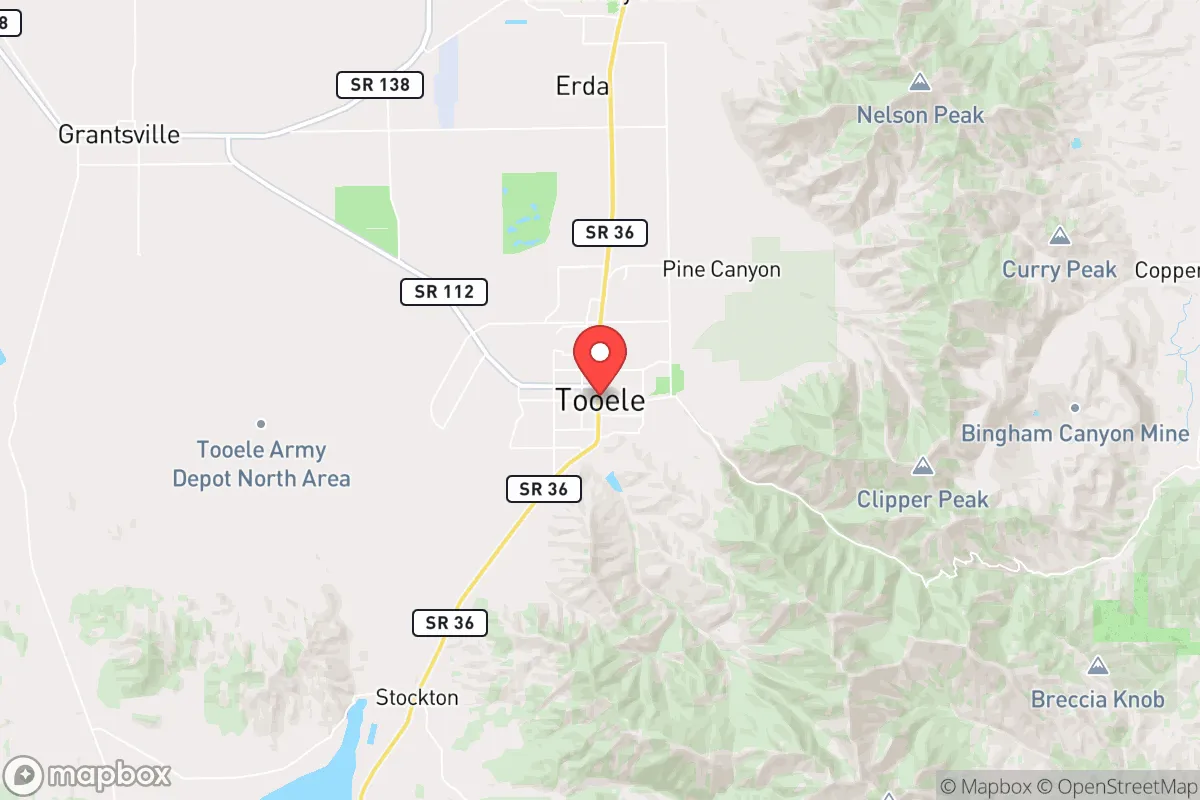
District shown is the primary district for this city’s centroid. Cities may span multiple districts.
Local Political AnalysisPolitical Analysis of Tooele, UT
Tooele has long been a rock-solid conservative stronghold, and by and large, it still is, but you can feel the winds shifting in ways that ought to give any freedom-loving resident pause. The Cook PVI sits at R+10, which sounds safe, but that number masks a slow creep toward the kind of big-government thinking we used to leave behind when we moved out here. Ten, fifteen years ago, you could count on your neighbors to tell a federal agent to get a warrant; now, you hear more folks talking about "sensible regulations" and "community standards" that sound an awful lot like the same overreach we fled the city to escape.
How it compares
Drive thirty minutes north to Salt Lake City, and you might as well be in another country—they've got bike lanes, density mandates, and city council members who openly talk about "equity" like it's a virtue. Head south to Grantsville, and you'll find folks who still wave the Gadsden flag and mean it. Tooele sits right in the middle, and that's the problem. We're getting the worst of both worlds: the county commissioners still talk a good game about limited government, but the city council has quietly passed a few zoning ordinances that make it harder to run a home business or park your work truck in your own driveway. It's death by a thousand cuts, and it's happening while nobody's watching.
What this means for residents
For the average family in Tooele, this slow drift means you can't take your rights for granted anymore. The school board, for instance, used to leave parents alone to raise their kids as they saw fit; now there's talk of "social-emotional learning" programs that sound an awful lot like government-mandated values training. Property taxes have crept up to fund new "quality of life" initiatives that nobody asked for—bike paths, public art, and a new downtown plaza that mostly sits empty. If you're the kind of person who believes the best government is the one that stays out of your way, you need to start paying attention to local elections like your freedom depends on it, because it does.
The real kicker is that Tooele still has the bones of a great conservative community—the gun culture is strong, the churches are full, and most folks still believe in pulling yourself up by your bootstraps. But the newcomers from the Wasatch Front are bringing their big-government habits with them, and they're voting in local races where turnout is low and incumbents rarely lose. If you want to keep Tooele from turning into another Salt Lake City suburb with HOA-style rules for the whole town, you'd better start showing up to those city council meetings and asking the hard questions about every new ordinance. The freedom we have here didn't come from politicians—it came from people who refused to let them take it. That fight isn't over, and it's getting harder every year.

State Political ClimatePolitical Climate in Utah
State Political AnalysisPolitical Environment in the State
Utah has long been one of the most reliably conservative states in the nation, with a Republican trifecta controlling the governorship and both legislative chambers for decades. The state’s partisan lean is deeply rooted in its predominant Latter-day Saint (Mormon) culture, which emphasizes family, community, and self-reliance, but the last 10-20 years have seen a subtle but real shift. While the GOP still holds a supermajority in the legislature, the Wasatch Front—especially Salt Lake County—has become a battleground, with suburban areas like Sandy and Draper trending more purple, while rural counties like Duchesne and San Juan remain deep red. The overall trajectory is one of slow, cautious moderation in the urban core, but the state’s policy environment remains a fortress of conservative governance.
Urban vs. rural divide
The political map of Utah is a tale of two landscapes. The Wasatch Front, home to roughly 80% of the state’s population, is where the action is. Salt Lake City itself is a blue island in a red sea, with progressive politics on issues like environmentalism and social services, but even its suburbs are shifting. Provo and Orem in Utah County are still reliably conservative, driven by Brigham Young University and a strong LDS influence, while Park City in Summit County is a wealthy, libertarian-leaning enclave that votes blue. Meanwhile, rural Utah—places like Moab, Cedar City, and Vernal—votes overwhelmingly Republican, often by margins of 70-80%. The divide isn’t just about population density; it’s about economic base. Rural counties depend on mining, agriculture, and outdoor recreation, and they view Salt Lake City’s urban agenda with deep suspicion. The 2020 election saw Summit County flip to Biden by 20 points, while Duchesne County gave Trump 85% of the vote—a stark illustration of the urban-rural chasm.
Policy environment
Utah’s policy environment is a model of conservative governance, but it’s not without nuance. The state has a flat income tax rate of 4.65% (recently lowered from 4.95%), no state-level property tax on vehicles, and a sales tax that’s moderate by national standards. The regulatory posture is business-friendly, with a right-to-work law and minimal red tape for small businesses. On education, Utah has a robust school choice system, including a new universal school voucher program (the Utah Fits All Scholarship) passed in 2023, which allows parents to use state funds for private school or homeschooling. Healthcare policy is mixed: the state expanded Medicaid under the Affordable Care Act via a 2018 ballot initiative (Proposition 3), but the legislature later added work requirements and a per-capita cap, reflecting a desire to limit government expansion. Election laws are solidly conservative: voter ID is required, no-excuse mail-in voting is standard (though with signature verification), and the state has a strong anti-fraud framework. The legislature has also passed laws to restrict ballot initiatives after the Medicaid expansion, showing a wariness of direct democracy.
Trajectory & freedom
On the freedom front, Utah is a mixed bag trending in the right direction. The state is a Second Amendment stronghold: constitutional carry was enacted in 2021, allowing permitless concealed carry for adults 21 and older, and there are no magazine capacity limits or assault weapon bans. Parental rights are a major focus: the 2023 “Utah Parental Rights in Education” law (HB 261) requires schools to notify parents of any curriculum changes related to sexuality or gender identity, and it bans instruction on these topics in K-3 classrooms. This is a direct response to overreach by school districts in Salt Lake City and Park City. Medical autonomy has seen both wins and losses: the state passed a law in 2023 banning gender-affirming surgeries for minors, a strong protection for children, but it also has a medical cannabis program (though it’s tightly controlled and not a free market). Property rights are generally respected, with no state income tax on capital gains and a low property tax burden. The biggest red flag for freedom is the state’s heavy-handed approach to alcohol regulation—state-run liquor stores, strict limits on beer sales, and a general nanny-state attitude that feels out of step with the rest of the country. Still, recent reforms have loosened some restrictions, like allowing grocery stores to sell stronger beer.
Civil unrest & political movements
Utah is not a hotbed of civil unrest, but there are visible flashpoints. The most notable recent protests were the 2020 Black Lives Matter demonstrations in Salt Lake City, which drew thousands and led to some property damage, but were largely peaceful compared to other cities. The state’s strong LDS culture tends to discourage radical activism on either side, but there are organized movements. On the right, the “Utah Patriot” movement and county-level “Constitutional Sheriffs” have gained traction in rural areas like Box Elder County and Carbon County, pushing back against federal land management and BLM overreach. Immigration politics are relatively calm: Utah has a “compact” with the federal government that allows local law enforcement to cooperate with ICE, and there are no sanctuary cities. The state did pass a 2023 law (HB 347) requiring employers to use E-Verify, which is a practical step to enforce immigration law. Election integrity controversies are minimal—Utah’s mail-in voting system is widely trusted, and there were no major disputes in 2020 or 2022. The most visible flashpoint for a new resident might be the tension between the urban core’s growing progressive activism and the rural counties’ fierce independence, but it rarely boils over into violence.
Projection
Over the next 5-10 years, Utah will likely continue its slow drift toward moderation in the urban corridor, but the state’s overall conservative character is secure. In-migration from California and other blue states is a double-edged sword: many newcomers are drawn by the low taxes and family-friendly culture, but they also bring more moderate or even liberal voting habits. The Wasatch Front will see more competitive races, especially in Salt Lake County, where Democrats could flip a few legislative seats. However, the rural counties are growing slower and will remain deep red, and the legislature’s supermajority is unlikely to be threatened. The biggest wildcard is the LDS Church’s influence: as younger members become more politically diverse, the church’s official neutrality on most issues may weaken the cultural lock on conservative voting. Expect more fights over land use (federal vs. state control), education funding, and parental rights, but the overall trajectory is one of stable, cautious conservatism. A new resident moving in now should expect to find a state that is still very red, but with a growing purple streak in the suburbs—and a policy environment that will remain friendly to families, gun owners, and taxpayers.
For a conservative-leaning individual or parent considering relocation, Utah offers a strong foundation: low taxes, school choice, gun rights, and a culture that values community and self-reliance. The urban-rural divide means you can choose your preferred political environment—from the bustling, slightly more moderate suburbs of Draper or Lehi to the quiet, deeply conservative towns of St. George or Heber City. The state’s trajectory is positive for those who value personal freedom and limited government, but keep an eye on the Wasatch Front’s demographic shifts—they’ll determine how long Utah remains a conservative stronghold. Bottom line: if you want a place where your values are the norm and the government mostly stays out of your way, Utah is a solid bet.
* Values derived from national, state, county, city and local statistics and may differ in a specific area. Last updated: 2026-04-19T10:12:49.000Z
Narrative content on this page is AI-generated and may contain mistakes. Verify any details that matter before acting on them.
ReloMaps may earn a commission from affiliate links at no extra cost to you.

