Photo: Wikipedia
Demographics of Trenton, NJ
Affluence Level in Trenton, NJ
A below-average socioeconomic profile. Incomes, home values, and educational attainment trail the U.S., with higher poverty and unemployment.
People of Trenton, NJ
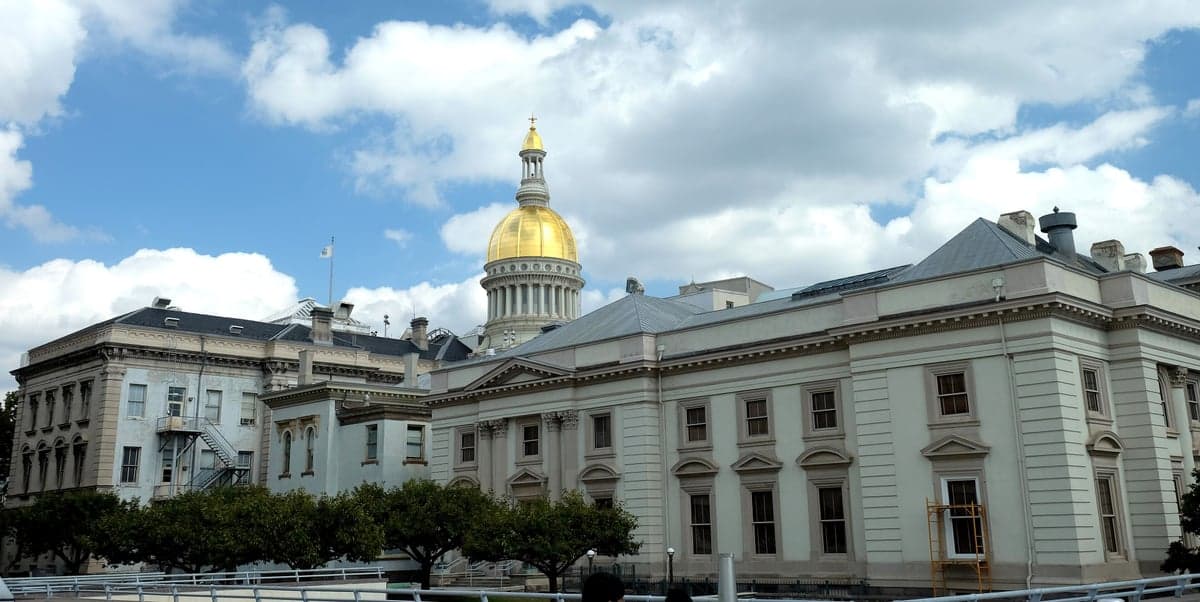
Trenton, New Jersey, is a dense, majority-minority city of 89,966 residents characterized by a nearly even split between Hispanic (44.3%) and Black (41.1%) populations, with a small White share of 11.5%. One in five residents (20.3%) is foreign-born, giving the city a distinctly immigrant-inflected character, yet it remains one of the least college-educated state capitals in the nation, with only 16.7% holding a bachelor's degree or higher. The city's identity is shaped by its industrial past, its role as a state government hub, and a population that is younger and more working-class than surrounding suburbs.
How the city was settled and grew
Trenton's original European settlement began in 1679 with Quaker and Dutch traders along the Delaware River, but the city's explosive growth came during the Industrial Revolution. The Delaware and Raritan Canal (1834) and the arrival of the Camden and Amboy Railroad made Trenton a manufacturing powerhouse, earning it the nickname "Trenton Makes, the World Takes." The first major wave of immigrants were Irish and German laborers who built the canal and rail lines, settling in the Chambersburg neighborhood, which remains a historic working-class district. By the late 19th century, Italian and Eastern European Jewish immigrants arrived to work in the city's potteries, steel mills, and rubber factories, clustering in South Trenton and Mill Hill, the latter a neighborhood of rowhouses near the state capitol. African Americans from the South began migrating north during World War I and again during World War II, drawn by defense-industry jobs at the Trenton Iron Works and the Roebling cable plant; they settled primarily in the West Ward and North Trenton areas, establishing a vibrant Black commercial corridor along North Broad Street.
Modern era (post-1965)
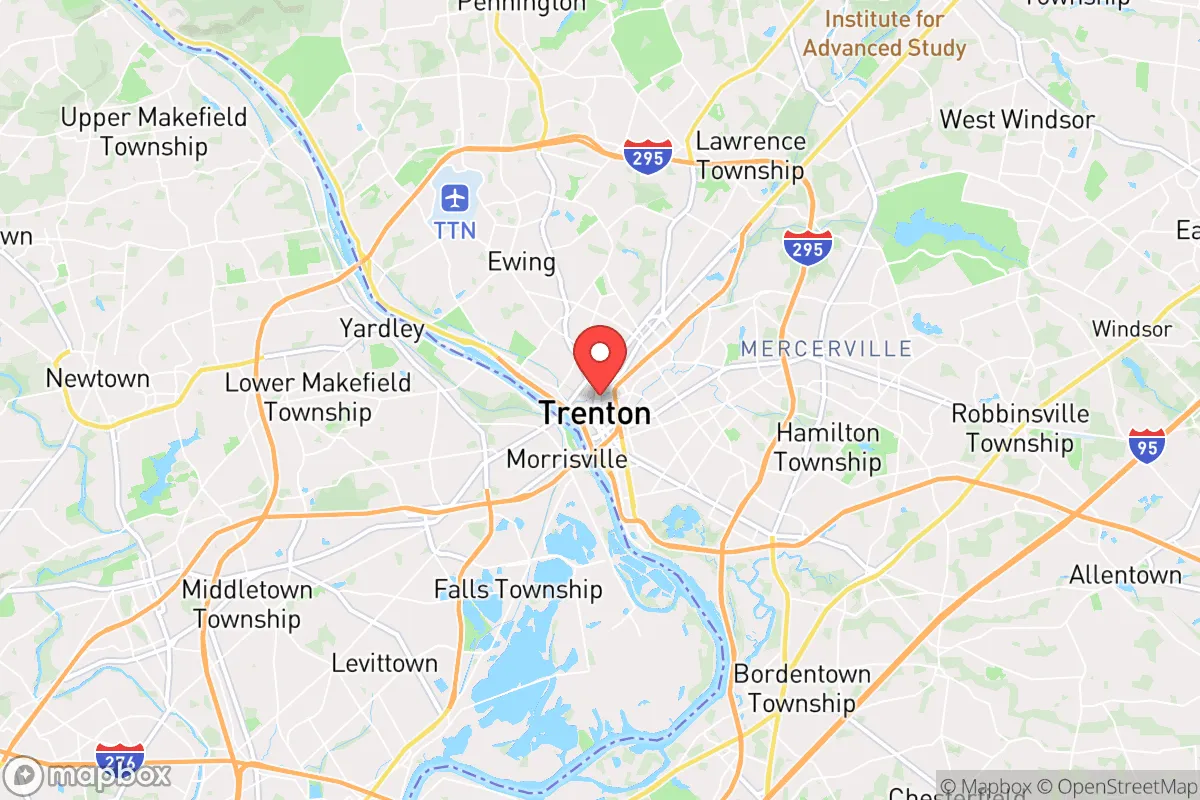
The 1965 Hart-Cellar Immigration Act and the simultaneous collapse of Trenton's manufacturing base reshaped the city's population dramatically. As factories closed in the 1970s and 1980s, White residents—both the old-stock Irish and Italian families and the Jewish community—left for suburban Mercer County towns like Hamilton and Ewing, reducing the White share from over 60% in 1960 to 11.5% today. Their departure was offset by two new immigrant streams. Puerto Rican and Dominican migrants arrived from the 1970s onward, settling heavily in Chambersburg and the East Ward, transforming those areas into the city's Hispanic core; today, the Hispanic population is 44.3%, the largest single group. A smaller but notable wave of African immigrants, primarily from Liberia and Ghana, arrived in the 1990s and 2000s, concentrating in the West Ward near the city's southern edge. The Asian population remains tiny at 0.3% (East/Southeast Asian) and 0.2% Indian, with no significant enclave—most Asian residents are scattered or live in adjacent suburbs. The Black population, which peaked at roughly 52% in the 2000 census, has declined slightly to 41.1% as some middle-class Black families have also suburbanized, while the Hispanic share continues to grow.
The future
Trenton's population is trending toward a homogenizing Hispanic majority, with the Black share slowly declining and the White share stabilizing at a low baseline. The foreign-born share (20.3%) is driven almost entirely by continued immigration from Latin America, particularly from Mexico and Central America, which is likely to keep the Hispanic proportion rising toward 50% or more within a decade. The city is not tribalizing into distinct enclaves so much as experiencing a gradual ethnic succession: Hispanic residents are expanding from Chambersburg and the East Ward into historically Black neighborhoods in the West Ward, while the small Asian and Indian communities show no signs of forming concentrated clusters. The college-educated share (16.7%) is unlikely to rise sharply unless state government employment expands or new development attracts professionals, but Trenton's low housing costs relative to the New York City metro area could draw a modest inflow of younger workers. The next 10–20 years will likely see a city that is poorer, more Hispanic, and more segregated by income than by race, with the state capitol complex remaining an island of White-collar employment surrounded by a working-class, largely non-White residential population.
For someone moving to Trenton today, the city offers a dense, walkable urban environment with a strong sense of community in neighborhoods like Chambersburg and Mill Hill, but it also carries the challenges of a shrinking tax base, underfunded schools, and a population that is overwhelmingly rent-burdened. The demographic trajectory points toward a more uniformly Hispanic city, with the Black and White populations continuing to age in place or depart. New residents should expect a place that is politically progressive, culturally vibrant in its immigrant traditions, and economically strained—a capital city that has not yet found a post-industrial footing but remains a genuine, unpolished American urban center.

* Values derived from national, state, county, city and local statistics and may differ in a specific area. Last updated: 2026-05-01T07:17:01.000Z
Narrative content on this page is AI-generated and may contain mistakes. Verify any details that matter before acting on them.
ReloMaps may earn a commission from affiliate links at no extra cost to you.

