Photo: Wikipedia
Quality of Life in Trenton, NJ
Above-average quality of iife. The area offers a reasonable cost of living, decent mobility, and a mix of neighborhood amenities.
What does Quality of Life tell us?
Quality of Life blends cost of living, nearby amenities, socioeconomic signals, and neighborhood character. City-level scores represent the whole municipality; individual neighborhoods can differ.
What does this tell us?
Quality of Life blends cost of living, nearby amenities, socioeconomic signals, and neighborhood character. City-level scores represent the whole municipality; individual neighborhoods can differ.
Cost of Living
19% below national average
The Real Cost of Living in Trenton, NJ for 2026
| Tier | Individual | Family (4) |
|---|---|---|
| Survival | $20k | $37k |
| Comfortable | $32k | $48k |
| Luxury | $85k+ | $132k+ |
| Elite (Top 5%) | $139k+ | $216k+ |
99%
The Area Signal
A metric tracking the socioeconomic signals of the area.
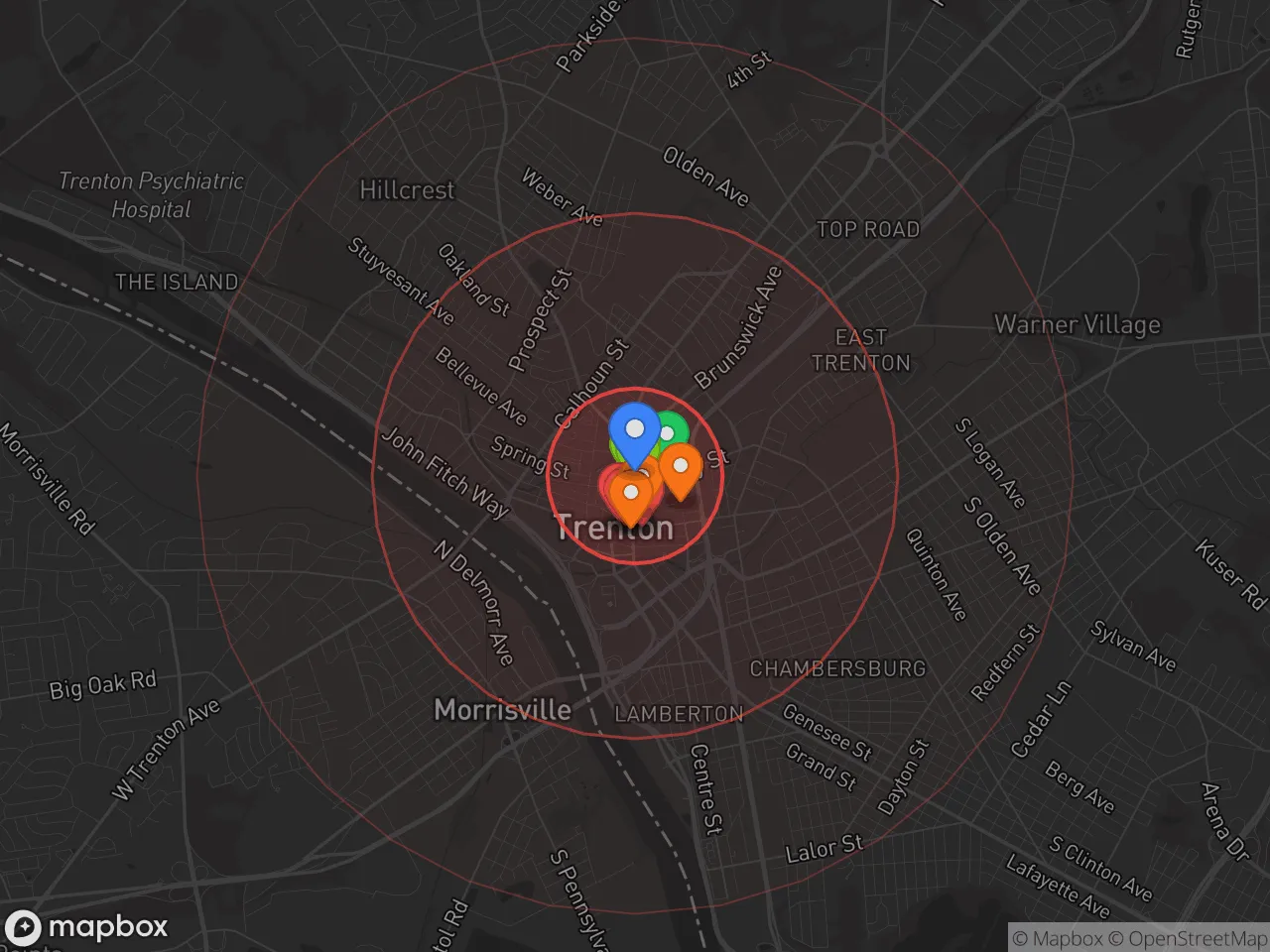
Hobbies
Explore the areaGroceries
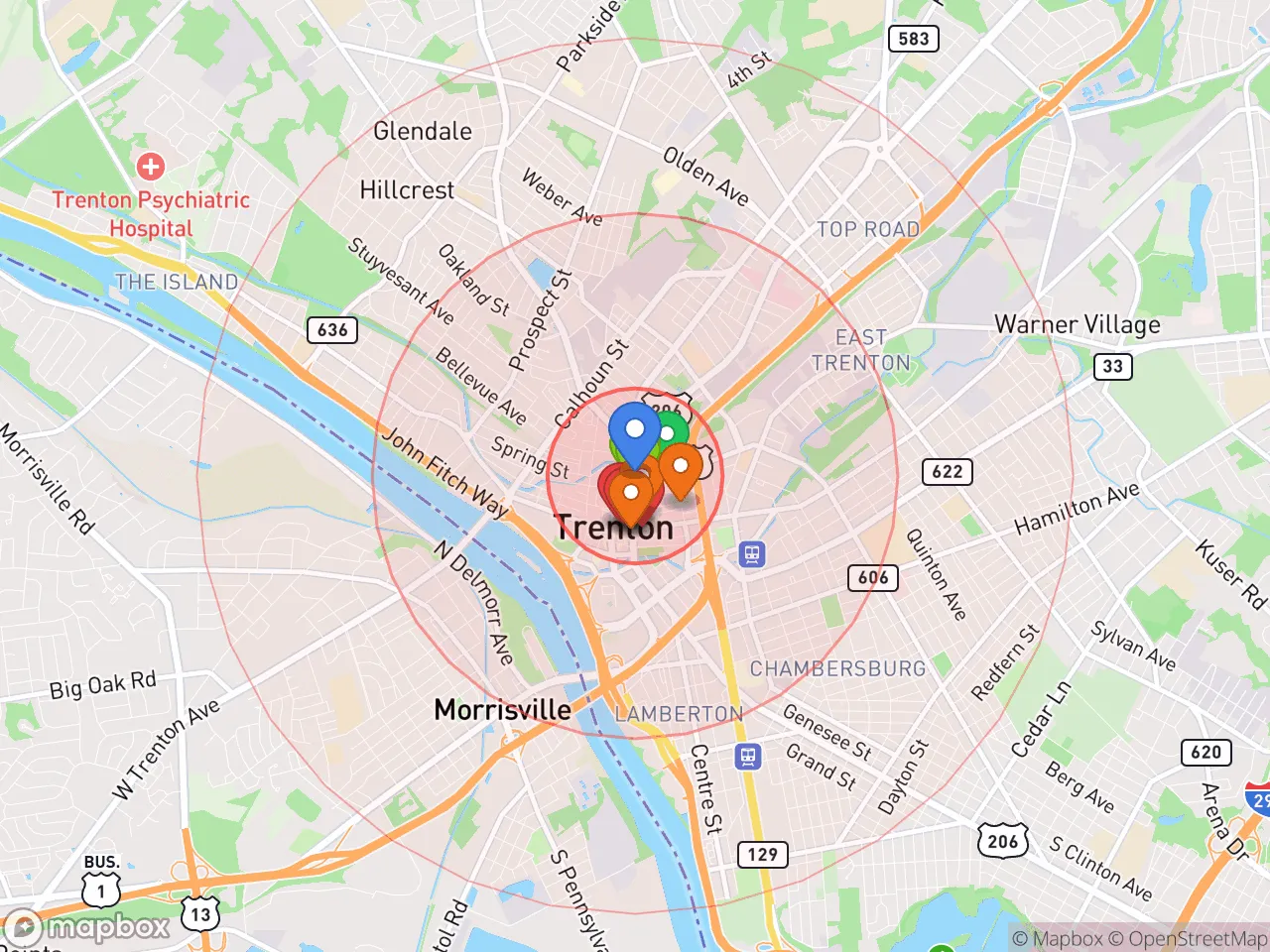
6 within 10 miles
Gas
20 within 10 miles
Hospital
20 within 20 miles
Airport
PHL — Philadelphia International
Post Office
USPS — Trenton, NJ
Critical Amenities
Quality-of-Life Analysis
Trenton, New Jersey, presents a unique quality-of-life profile shaped by its status as the state capital and its position within the broader Philadelphia-New York corridor. The city’s population is predominantly working- and middle-class, with a significant portion of residents employed in government, education, and healthcare sectors. While Trenton is not an affluent suburb, it offers a distinctly lower cost of living than most of its neighboring communities, attracting a diverse mix of long-term residents, state workers, and those seeking urban affordability within commuting distance of major job centers.
Cost of living, housing, and how Trenton compares to nearby suburbs
Trenton’s cost of living is a standout feature, with a composite index of 81—well below the U.S. average of 100. This is driven primarily by exceptionally low housing costs. The median home value sits at $122,500, a fraction of the median in nearby Princeton ($800,000+) or suburban Mercer County towns like Hamilton ($350,000). Median rent is $1,224, which is roughly 30-40% less than comparable rentals in Ewing or Lawrenceville. However, this affordability comes with trade-offs: the city’s property tax rate is high (around 3.5% of assessed value), and the housing stock includes many older, smaller units. For renters and first-time buyers willing to accept an urban environment with fewer luxury amenities, Trenton offers a rare entry point into the expensive New Jersey housing market. The average commute of 26.7 minutes is manageable, with NJ Transit trains providing direct service to both Philadelphia (45 minutes) and New York City (75 minutes), making the city viable for commuters who prioritize lower housing costs over a shorter door-to-door trip.
Local amenities, schools, and what daily life is really like
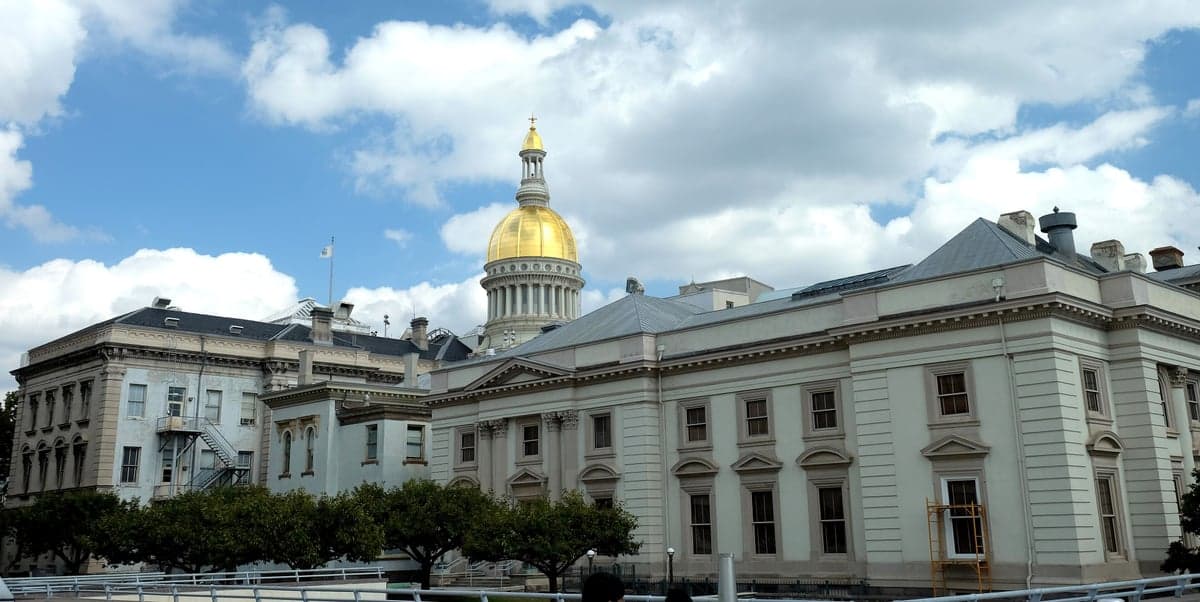
Daily life in Trenton revolves around a compact, walkable downtown anchored by the New Jersey State House, the Trenton Thunder minor-league baseball stadium, and the historic Trenton Farmers Market. The city’s public school system, Trenton Public Schools, has faced chronic challenges with funding and performance, leading many families with school-age children to explore charter options (e.g., Foundation Academy) or move to nearby districts like Robbinsville or West Windsor. For recreation, Cadwalader Park offers 100 acres of green space, and the Delaware River waterfront provides walking paths and fishing spots. Dining leans toward affordable, family-run Latin American and soul food restaurants, with fewer upscale options than in Princeton. The city’s rhythm is distinctly blue-collar and government-driven—state employees fill the streets on weekdays, while evenings and weekends are quieter. Safety remains a concern: Trenton’s violent crime rate is roughly 3x the national average, though property crime has declined since 2020. Most residents advise being street-smart, especially after dark, and many choose to live in the more stable West Ward or near the state office complex.
Who thrives in Trenton? The city is best suited for budget-conscious state workers, early-career professionals, and retirees on fixed incomes who value proximity to Philadelphia and New York without the suburban price tag. It is less ideal for families seeking top-tier public schools or those who prioritize low-crime, car-dependent suburban living. For someone willing to navigate the city’s challenges—aging infrastructure, uneven public services, and safety trade-offs—Trenton offers a genuinely affordable, centrally located base in one of the nation’s most expensive regions.

Crime in Trenton, NJ
Lower crime rates than 82% of comparable U.S. locations.
Violent CrimeViolent Crime Analysis
Property CrimeProperty Crime Analysis
Crime Analysis
Trenton, New Jersey, faces a serious public safety challenge, with crime rates that significantly exceed both state and national averages. The city's violent crime rate stands at 111.8 incidents per 100,000 residents, while property crime is reported at 458.2 per 100,000. These figures place Trenton among the most dangerous cities in the state, a reality shaped by a combination of socioeconomic factors and the local justice system's approach to prosecution and sentencing.
Crime in context
To understand Trenton's safety landscape, it is essential to compare its crime rates to broader benchmarks. The city's violent crime rate of 111.8 per 100,000 is more than double the national average of roughly 40 per 100,000 and significantly higher than the New Jersey state average of approximately 20 per 100,000. Property crime in Trenton, at 458.2 per 100,000, also outpaces the national average of about 195 per 100,000 and the state average of roughly 120 per 100,000. These disparities are not merely statistical; they reflect a persistent pattern of higher victimization risk for residents. The elevated rates are compounded by the fact that Trenton is a small capital city embedded within a large metro area, where regional crime dynamics and the policies of Mercer County's progressive district attorney's office directly influence local safety. Prosecutorial policies that prioritize diversion and reduced sentencing for repeat offenders have been linked to higher recidivism, contributing to a revolving-door effect that undermines public confidence in the justice system.
What residents experience
For those living in Trenton, the daily reality involves a heightened awareness of personal and property security. Violent crime, while not uniformly distributed, includes incidents of aggravated assault, robbery, and homicide that occur with troubling frequency. Property crime, particularly theft and burglary, is a constant concern, with many residents investing in security systems and avoiding certain areas after dark. The impact of progressive justice policies is felt acutely: lenient bail practices and plea deals for violent offenders mean that individuals arrested for serious crimes are often back on the streets within days. This cycle erodes trust in law enforcement and the courts, as victims and witnesses see perpetrators face minimal consequences. The city's police department, while actively patrolling, is often stretched thin, and community-police relations remain strained, further complicating crime prevention efforts.
Neighborhood-level variation in Trenton is stark. Areas like the West Ward and parts of the South Ward experience the highest concentrations of violent crime, while the North Ward and some historic districts near the State House see lower rates. Cadwalader Park and the surrounding area are generally considered safer, but even these pockets are not immune to spillover crime from adjacent high-risk zones. Prospective residents should research specific blocks and consult local crime maps, as safety can change dramatically within a few streets. Ultimately, Trenton's crime problem is deeply intertwined with its economic struggles and the prevailing philosophy of its justice system, making it a location where caution and vigilance are non-negotiable for daily life.
* Values derived from national, state, county, city and local statistics and may differ in a specific area. Last updated: 2026-05-01T07:17:01.000Z
Narrative content on this page is AI-generated and may contain mistakes. Verify any details that matter before acting on them.
ReloMaps may earn a commission from affiliate links at no extra cost to you.

