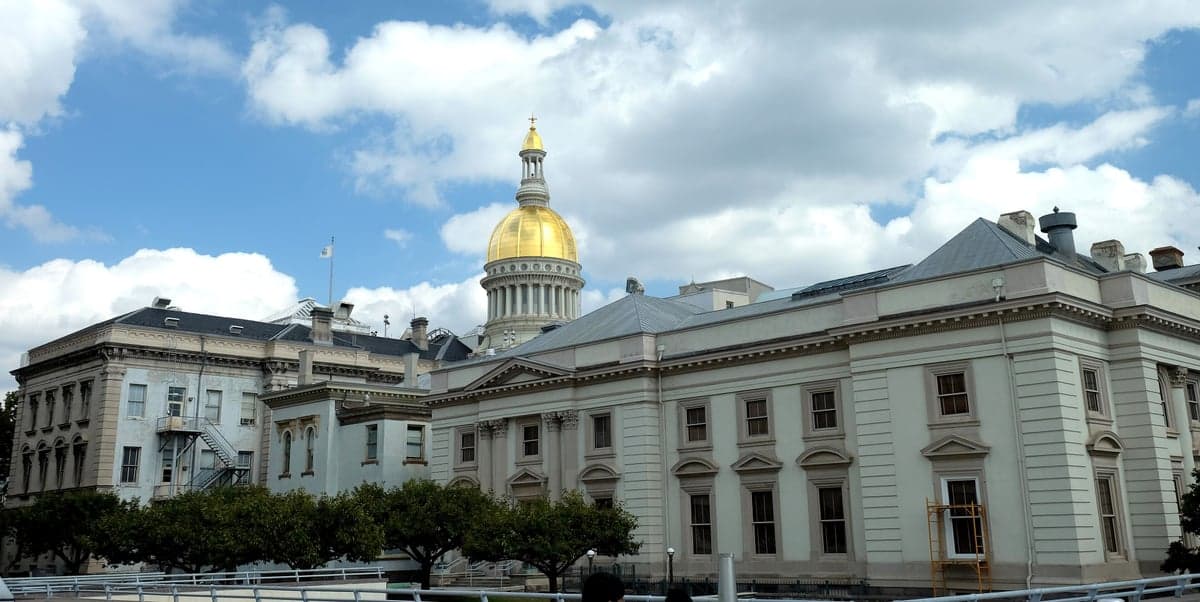
Photo: Wikipedia
Political ClimatePolitical Climate in Trenton, NJ
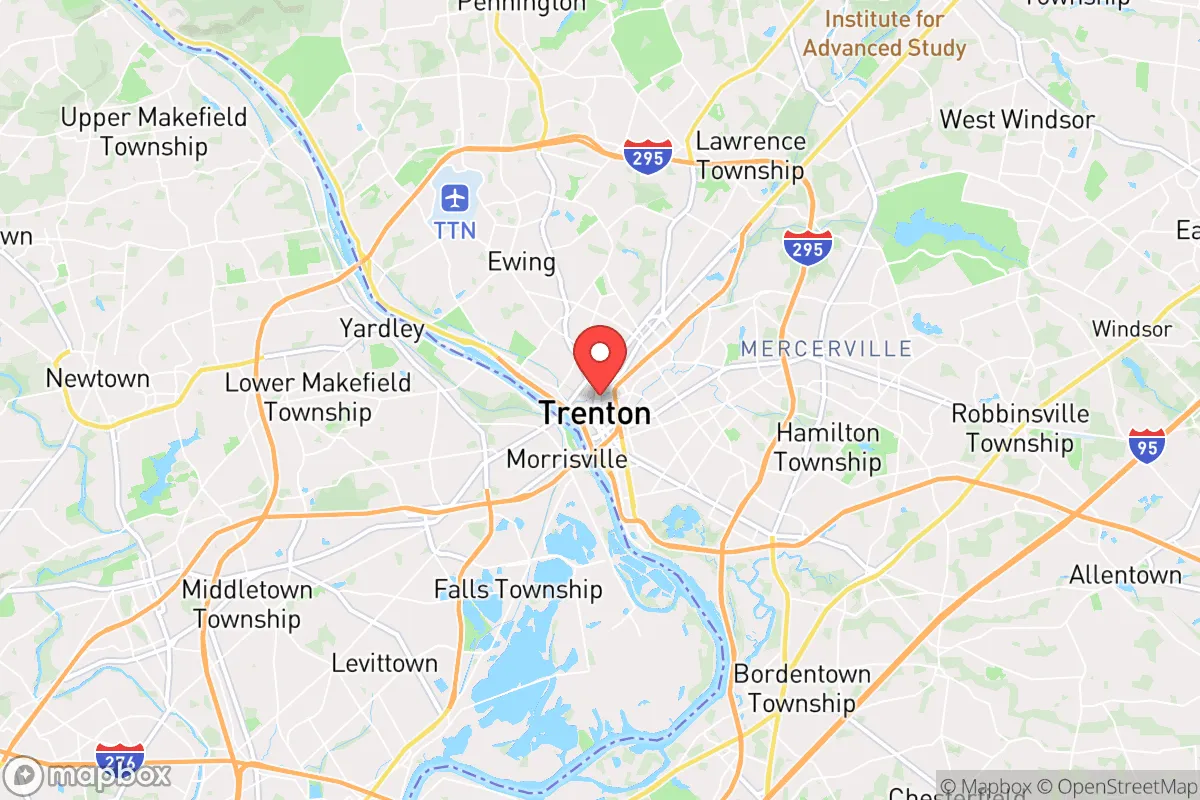
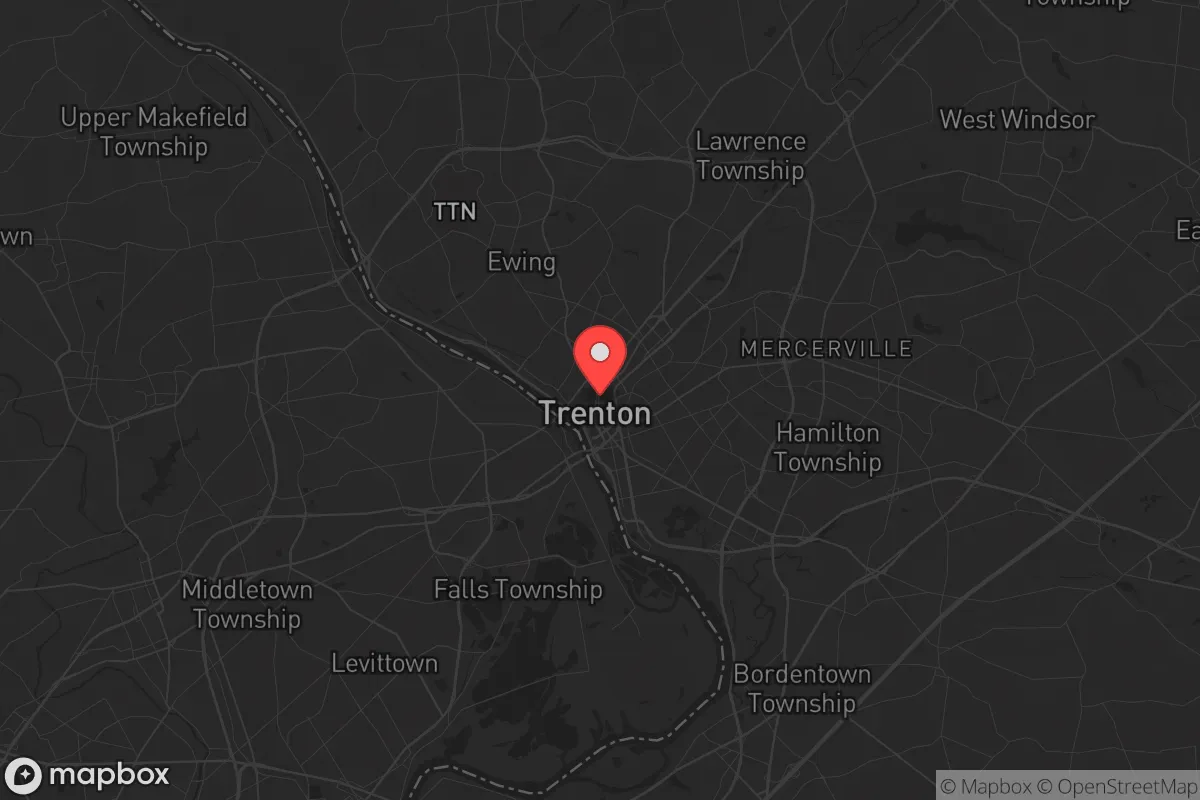
District shown is the primary district for this city’s centroid. Cities may span multiple districts.
Local Political AnalysisPolitical Analysis of Trenton, NJ
Trenton, New Jersey, leans heavily Democratic, with a Cook PVI of D+13, meaning the city votes about 13 points more Democratic than the national average. This wasn't always the case—back in the 1980s and 1990s, you'd see a more balanced mix of working-class Democrats and moderate Republicans, especially among the Italian and Polish communities that anchored the city's neighborhoods. Over the last two decades, though, the shift has been dramatic. The city's politics have moved steadily left, driven by a combination of population turnover, aggressive union influence, and a state government that’s increasingly comfortable with top-down mandates. If you're a conservative or even a moderate who values limited government, you've probably felt like your voice gets drowned out in local elections, where turnout is low and the party machine runs the show.
How it compares
To understand Trenton's political isolation, look at the towns just a few miles away. Hamilton Township, directly south, is a classic swing suburb—it voted for Obama twice but flipped to Trump in 2020 and 2024, reflecting a more independent, tax-conscious electorate. Ewing Township and Lawrenceville are more liberal but still have active Republican minorities, especially around school board and zoning issues. Drive 15 minutes north to Hopewell Township or Pennington, and you'll find a mix of fiscal conservatives and libertarian-leaning farmers who despise Trenton's property tax burden and state overreach. The contrast is stark: Trenton's city council routinely passes resolutions on national issues like immigration and climate policy, while its neighbors are fighting to keep local control over school funding and land use. Princeton, just 12 miles away, is even more progressive than Trenton, but it's a wealthy college town—Trenton's leftward tilt comes from a different demographic, one that's more dependent on government services and less tolerant of dissenting views.
What this means for residents
For the average person living in Trenton, the political climate translates into a few concrete realities. First, taxes are high and services are mediocre—the city's property tax rate is among the highest in Mercer County, yet you'll still see potholes unfilled for months and police response times that would make a suburbanite wince. Second, school choice is practically nonexistent; the local teachers' union has successfully blocked charter school expansion and voucher programs, leaving families with few options if the district schools aren't working. Third, business regulations are stifling. Opening a small shop or restaurant means navigating a maze of permits, fees, and inspections that favor established players and discourage new blood. The city's leadership talks a big game about equity and inclusion, but the practical effect is a climate where personal initiative is punished and bureaucratic hurdles are the norm. If you value the freedom to run your life without a government checklist, Trenton will feel like a slow squeeze.
Culturally, Trenton has a few distinctions that might surprise you. The city has a strong gun control ordinance that goes beyond state law—things like requiring microstamping on new handguns and limiting magazine capacity—which gun owners see as a clear infringement on Second Amendment rights. There's also a local "ban the box" law that restricts employers from asking about criminal history on initial job applications, which sounds noble but often backfires by making it harder for small businesses to vet candidates. On the policy front, Trenton was an early adopter of sanctuary city policies, limiting cooperation with federal immigration enforcement. For a conservative, this feels like the city picking fights it doesn't need to have, especially when basic services are already stretched thin. Looking ahead, I don't see the trend reversing—the state legislature in Trenton keeps passing laws that preempt local control, and the city's own politics are locked in a one-party system that rewards loyalty over competence. If you're thinking of moving here, just know that your vote on local issues will likely be a protest vote, and your real influence will come from how you navigate the system, not change it.

State Political ClimatePolitical Climate in New Jersey
State Political AnalysisPolitical Environment in the State
New Jersey has long been a blue state, but its political climate is far more nuanced than a simple Democratic label suggests. For decades, the state was a classic swing state with a strong Republican tradition in the suburbs and shore towns, but since the early 2000s, it has shifted decisively leftward, driven by the massive population growth and cultural influence of its northeastern corridor. Today, Democrats hold a supermajority in the legislature and control the governorship, but the state’s politics are a battleground between a powerful, progressive machine in the urban core and a resilient, if shrinking, conservative base in the rural and exurban counties. The 10-20 year arc is clear: New Jersey is becoming more Democratic, more regulated, and more expensive, with a growing sense among conservatives that their voice is increasingly marginalized.
Urban vs. rural divide
The political map of New Jersey is a story of two starkly different worlds. The northeastern counties—Essex (Newark), Hudson (Jersey City), and Bergen—are the engine of the state’s Democratic dominance, with massive, dense populations that vote 70-80% Democratic in most elections. These areas are home to the state’s largest cities, a heavy union presence, and a growing immigrant population that leans left. In contrast, the rural and exurban counties of the northwest and south—Sussex, Warren, Hunterdon, Salem, and Cape May—are reliably Republican, often voting 60-65% for GOP candidates. The real battleground is the suburban ring of the Philadelphia and New York metros, places like Middlesex, Monmouth, and Ocean counties. Ocean County, in particular, is a Republican stronghold, with Tom’s River and Brick consistently delivering GOP margins of 15-20 points. However, even these suburbs are shifting: Monmouth County, once a Republican bastion, has become a swing county, and Hunterdon County is now a toss-up, reflecting the in-migration of professionals from the cities who bring their politics with them. The rural-urban divide is not just about votes; it’s about culture, with rural residents feeling increasingly alienated from the state’s policy direction.
Policy environment
New Jersey’s policy environment is a textbook case of progressive governance that conservatives find deeply concerning. The state has the highest property taxes in the nation, averaging over $9,500 annually, and a progressive income tax that tops out at 10.75% for earners over $1 million. The regulatory posture is aggressive: the state has some of the strictest environmental regulations in the country, a robust public-sector union presence, and a minimum wage that will reach $15 per hour by 2024. Education policy is dominated by the teachers’ unions, with per-pupil spending among the highest in the nation, yet outcomes in urban districts like Newark and Camden remain poor. Healthcare is heavily regulated, with a state-run health insurance exchange and strict mandates. Election laws are liberal: no-excuse mail-in voting was made permanent in 2021, and same-day voter registration is available. For conservatives, the policy environment feels like a one-way ratchet toward higher taxes, more regulation, and less personal autonomy, with little room for dissent.
Trajectory & freedom
New Jersey is becoming less free by almost any measure, and recent legislation has accelerated this trend. On gun rights, the state has some of the strictest laws in the nation, including a 2022 “sensitive places” law that bans firearms in parks, libraries, and even private businesses unless the owner explicitly allows them. This law was passed in direct response to the Bruen decision and is being challenged in court. On parental rights, the state has moved aggressively to undermine them: a 2023 law prohibits school districts from notifying parents if a child changes their gender identity or pronouns, effectively creating a “don’t tell parents” policy. On speech, the state has considered legislation to criminalize “misinformation” online, though it hasn’t passed yet. Medical autonomy took a hit with the state’s strict COVID-19 mandates, which included vaccine requirements for healthcare workers and schoolchildren that remain in place. Property rights are under constant pressure from the state’s powerful Council on Affordable Housing (COAH), which forces towns to build high-density housing, often overriding local zoning. The trajectory is clear: more government control, less individual liberty.
Civil unrest & political movements
New Jersey has seen its share of political flashpoints, though they are often overshadowed by New York and Philadelphia. The Black Lives Matter protests in 2020 were large and sometimes violent in Newark and Trenton, leading to calls to defund the police, though those efforts largely fizzled. The state is a sanctuary state, with a 2018 executive order limiting cooperation with ICE, and immigration politics are a constant source of tension, particularly in suburban towns like Woodbridge and Edison, where immigrant populations have grown rapidly. On the right, there is a growing “Jersey First” movement of disaffected Republicans who feel the state party is too moderate, and there have been small but vocal protests against vaccine mandates and school policies. Election integrity is a hot-button issue: the 2020 election saw widespread use of mail-in ballots, and while no major fraud was proven, many conservatives remain skeptical of the state’s election system. A visible flashpoint for new residents is the “Blue Wave” of progressive school board candidates in towns like Montclair and Maplewood, who have pushed for critical race theory and gender ideology curricula, sparking heated parent protests.
Projection
Looking ahead 5-10 years, the trajectory is not encouraging for conservatives. Demographic trends show the state’s population is aging, with young people leaving for lower-cost, freer states like Florida and Texas. The in-migration is largely from New York City and international immigrants, both of which lean heavily Democratic. The state’s high cost of living and tax burden will continue to drive out the middle class, while the urban core becomes even more progressive. The Republican Party is likely to become even more marginalized, confined to a few rural and exurban counties. A new resident moving in now should expect to find a state where property taxes will continue to rise, where their children’s schools will push progressive ideology, and where their gun rights will be severely restricted. The only potential bright spot is a growing backlash against the state’s overreach, particularly on education and taxes, but it’s unlikely to reverse the trend without a major political realignment.
For a conservative considering a move to New Jersey, the bottom line is this: you are moving into a state where your political views will be in the minority, where your tax dollars will fund policies you oppose, and where your personal freedoms are increasingly constrained. If you choose to come, you’ll find like-minded communities in places like Sussex County or the shore towns of Ocean County, but you’ll be fighting an uphill battle against a state government that is determined to reshape society in its image. It’s not impossible to live here as a conservative, but it requires a thick skin and a willingness to engage in constant political warfare at the local level.
* Values derived from national, state, county, city and local statistics and may differ in a specific area. Last updated: 2026-05-01T07:17:01.000Z
Narrative content on this page is AI-generated and may contain mistakes. Verify any details that matter before acting on them.
ReloMaps may earn a commission from affiliate links at no extra cost to you.

