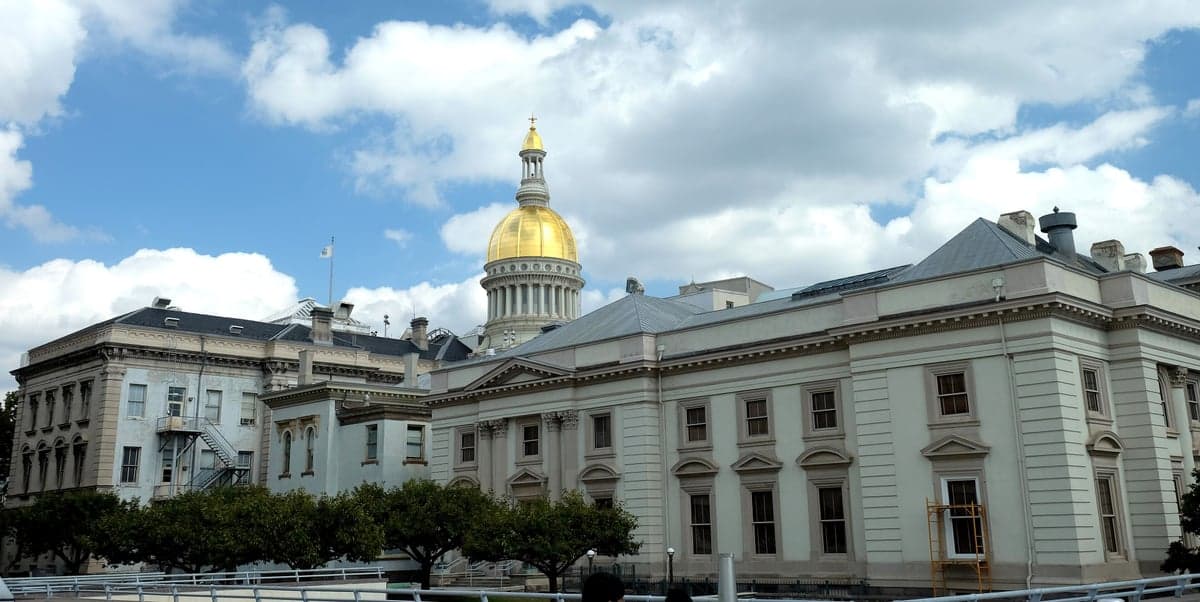
Photo: Wikipedia
Strategic Assessment of Trenton, NJ
Multiple tactical vulnerabilities. Population density, target proximity, or disaster risk are likely compounding. A retreat property and exit planning is required.
What does the Strategic Assessment tell us?
Our Strategic Assessment grades tactical survivability of an area. Major population centers, military targets, fallout zones, natural disasters, and border exposure all drive risk — lower exposure means a more defensible position in a crisis.
This is heavily inspired by Joel Skousen's Strategic Relocation book. Highly recommended you checkout the book ($)What does this tell us?
Our Strategic Assessment grades tactical survivability of an area. Major population centers, military targets, fallout zones, natural disasters, and border exposure all drive risk — lower exposure means a more defensible position in a crisis.
This is heavily inspired by Joel Skousen's Strategic Relocation book. Highly recommended you checkout the book ($)Strategic Pillars

Key Distances
Regional Safe Places
Below is our recommended "safe zones" in New Jersey and the surrounding area based on our strategic heuristics. For most people, it's unrealistic to live in a “safe zone” full-time due to work, family or other personal reasons. They tend to be more rural. However, many of these areas are perfect for second homes and retreat properties that double as a vacation home or even a short-term rental.
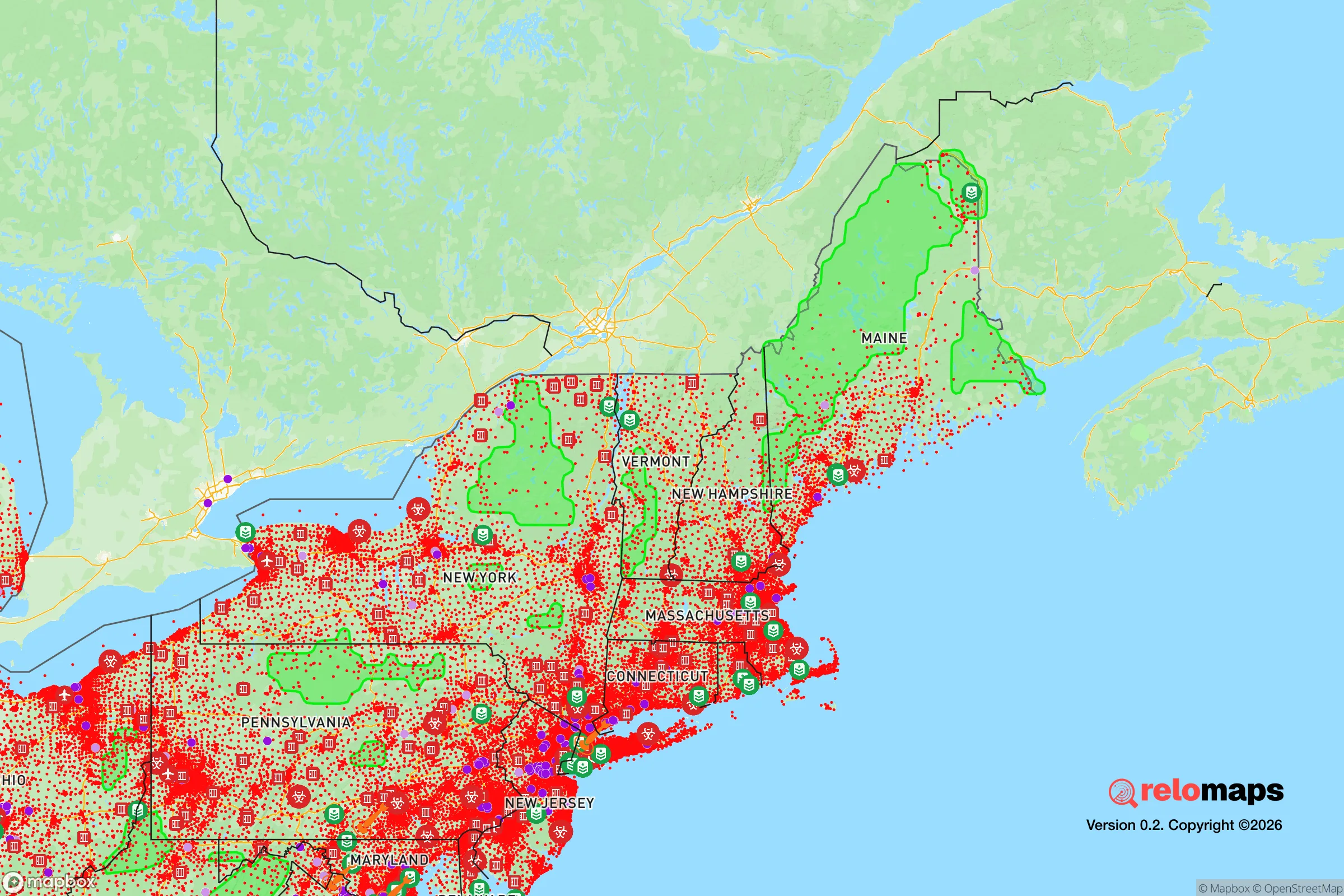
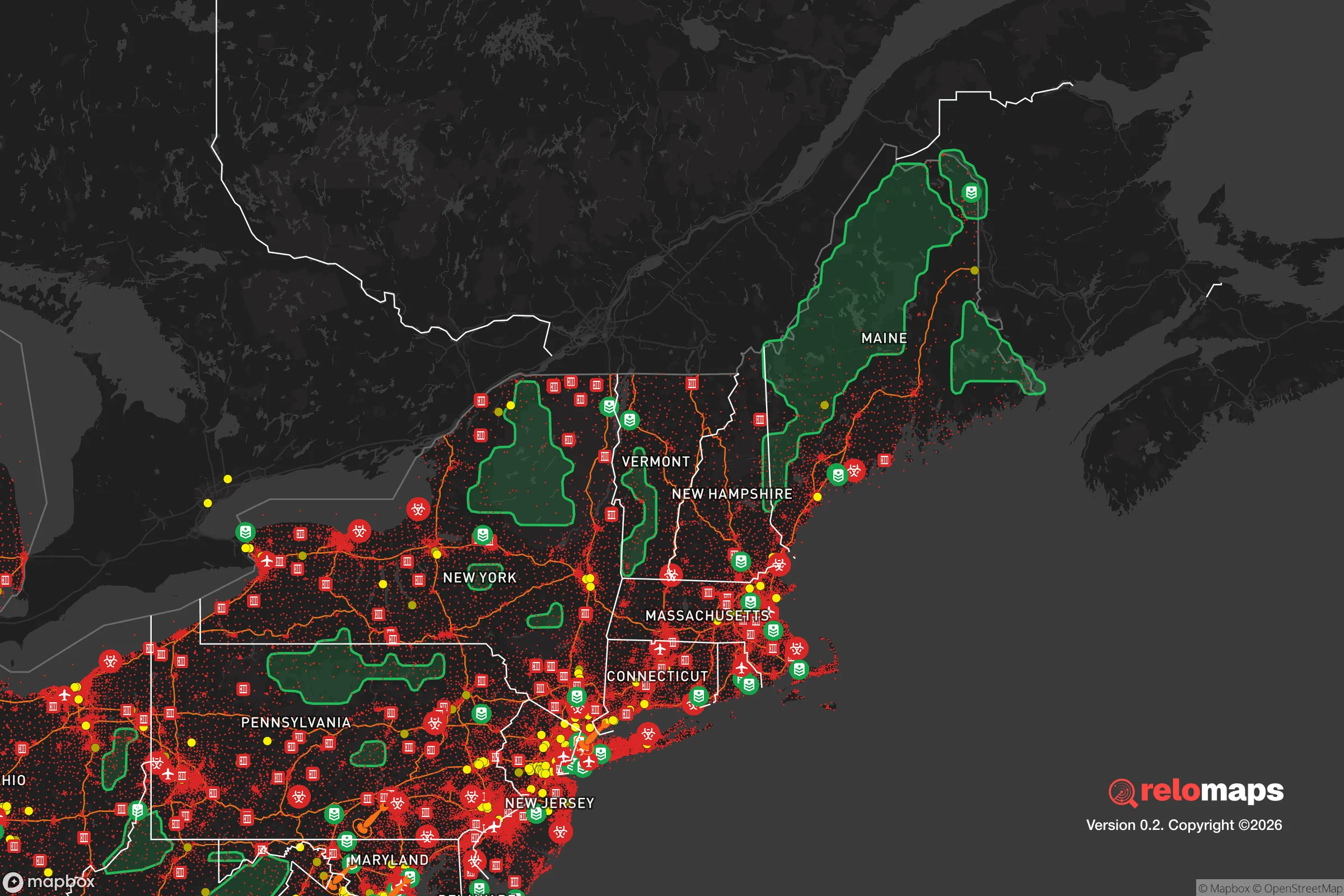


Important Note: For informational purposes only. This does not mean nothing bad ever happens in the green zones. Please use common sense. This is based on public data and modeled with AI. We tried to take a conservative approach but mistakes happen. We update this regularly as new information becomes available.
Solar Generator Recommendations
Backup power matters more here than in safer locations. We've picked three solar generators across budgets and capacity tiers — start with the budget unit if you only need a few essentials, or step up if you want to run a fridge and HVAC for days at a time.

Jackery Portable Power Station Explorer 300
Budget OptionPower on the Go: Weighing only 11 lbs, it's convenient to set up and store with book-sized foldable solar panels

BLUETTI Portable Power Station AC180
Designed for both indoor and outdoor scenarios, AC180 is highly capable as it has a robost capacity and continuous output power.

EF ECOFLOW DELTA Pro Ultra Power Station
Upgraded PickEcoFlow DELTA Pro Ultra is a whole-home energy system designed to grow with your family. Integrated with the Smart Home Panel 2, it scales to meet your evolving energy needs — keeping your home powered, intelligent, and secure through every stage of life.
We earn a commission, at no additional cost to you.
Strategic Assessment Analysis
Trenton, New Jersey, occupies a strategic position that is both a curse and a blessing for the survival-minded relocator. On one hand, its location along the Delaware River and within the dense Northeast Corridor offers access to critical infrastructure and supply lines. On the other, its proximity to major population centers like Philadelphia and New York City—both prime targets for civil unrest, mass casualty events, or even a high-yield detonation—makes it a high-risk zone for anyone serious about long-term preparedness. For the conservative prepper, Trenton is less a destination and more a waypoint: a place to understand, exploit for its resources, and potentially use as a temporary staging ground before moving to more defensible terrain.
Geographic position and natural advantages for a prepper
Trenton sits at the head of navigation on the Delaware River, roughly midway between the Appalachian foothills and the Atlantic coast. This gives it a dual advantage: access to a major freshwater artery and proximity to the Pine Barrens to the southeast, a vast, sparsely populated region of forest and wetlands that could serve as a bug-out zone. The city itself is built on a series of low hills, offering some natural drainage and defensible high ground in a region otherwise dominated by floodplains. The Delaware River is a reliable water source, though it requires significant treatment—boiling, filtration, or chemical purification—before consumption. The surrounding Mercer County has a mix of farmland and suburban sprawl, meaning a relocator could theoretically source food from local farms or community gardens, though these are not hardened against disruption. The real natural advantage here is the river: it provides a transportation corridor for moving supplies or people north to the Catskills or south to the Delaware Bay, bypassing clogged highways during a crisis.
Risks, exposures, and proximity to fallout-relevant landmarks
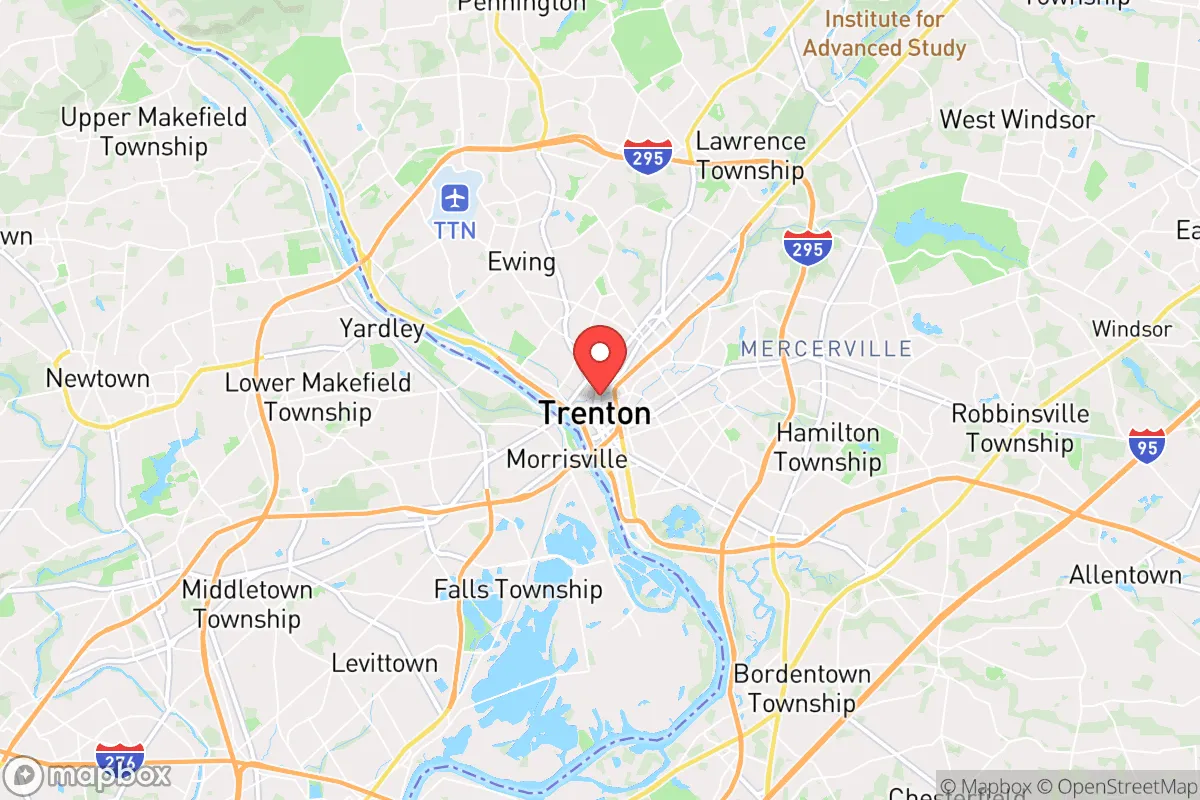
The biggest liability for Trenton is its location within the Northeast Corridor, a densely populated and highly interconnected region that would be a primary target in any large-scale conflict or terrorist event. Trenton is less than 30 miles from Philadelphia and about 50 miles from New York City, both of which are high-value targets for a nuclear detonation, EMP attack, or coordinated civil unrest. The fallout from a surface burst on either city would likely contaminate large swaths of central New Jersey, depending on wind patterns. Additionally, Trenton is within 20 miles of Joint Base McGuire-Dix-Lakehurst, a major military installation that could become a secondary target or a focal point for martial law and troop movements. The city itself has a history of industrial pollution, including legacy contamination from former manufacturing sites, which could complicate post-disaster water and soil safety. For the prepper, the risk of being caught in a mass evacuation or being cut off by infrastructure collapse is high. The city's road network—primarily Interstates 95, 195, and 295—would gridlock within hours of a major event, making egress difficult. The Trenton-Mercer Airport is small but could be commandeered for government or military use, limiting civilian access.
Practical resilience for a relocator: food, water, energy, and defensibility
For a relocator considering Trenton as a base, the practical resilience picture is mixed. Water is the strongest asset: the Delaware River is a year-round, high-volume source, but it requires robust filtration and treatment. The city's municipal water system draws from the river, but it would be vulnerable to contamination from upstream industrial sites or a deliberate attack. A prepper should plan for a deep well or a portable reverse-osmosis system. Food security is weak: Trenton is a food desert in many neighborhoods, with limited grocery stores and heavy reliance on supply chains. Local farms in Mercer and Hunterdon counties exist, but they are not within walking distance for most residents. Stockpiling non-perishables is essential. Energy is a vulnerability: the grid is old and prone to outages, especially during winter storms or summer heatwaves. Solar panels with battery storage are viable, but the region's frequent cloud cover reduces efficiency. A backup generator with a fuel cache is more reliable. Defensibility is poor: Trenton is a dense, urban environment with row houses, narrow streets, and limited fields of fire. It would be difficult to secure a single property against a determined group. The city's crime rate—consistently among the highest in New Jersey—means that even in peacetime, personal security is a concern. For a prepper, the best approach is to use Trenton as a resource hub: stockpile supplies, establish a cache, and have a bug-out plan to a more defensible rural property in western New Jersey or Pennsylvania. The city's rail and river access make it a good place to acquire and transport bulk goods, but not to hunker down long-term.
The overall strategic picture for Trenton is one of calculated risk. It offers proximity to critical resources—water, transportation corridors, and some agricultural land—but at the cost of being in a high-density, high-target zone. For the conservative prepper, Trenton is not a place to build a permanent retreat, but it could serve as a forward operating base for monitoring events in the Northeast Corridor, a staging point for moving supplies inland, or a temporary shelter if you have a secure, defensible property nearby. The key is to treat it as a transient asset, not a home. If you are serious about surviving a major societal disruption, your focus should be on establishing a primary location in the Appalachian foothills or the Pine Barrens, with Trenton serving as a secondary node for resupply and intelligence. In a worst-case scenario, the city's vulnerabilities—dense population, poor defensibility, and proximity to targets—outweigh its advantages. Plan accordingly, and never rely on the government's ability to maintain order in a crisis.

* Values derived from national, state, county, city and local statistics and may differ in a specific area. Last updated: 2026-05-01T07:17:01.000Z
Narrative content on this page is AI-generated and may contain mistakes. Verify any details that matter before acting on them.
ReloMaps may earn a commission from affiliate links at no extra cost to you.

