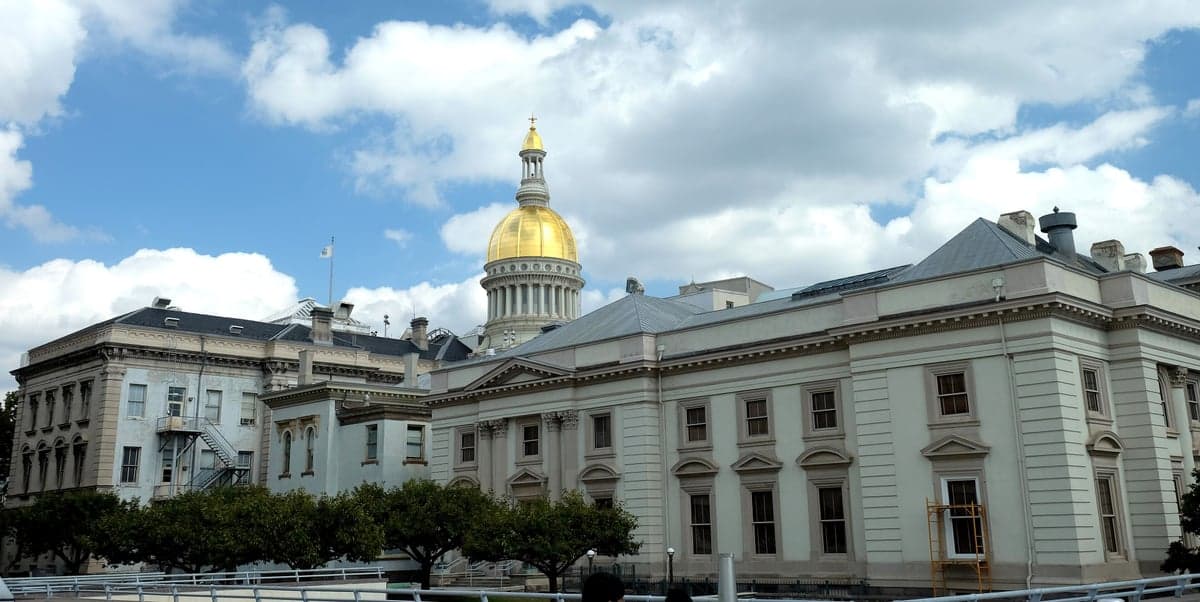
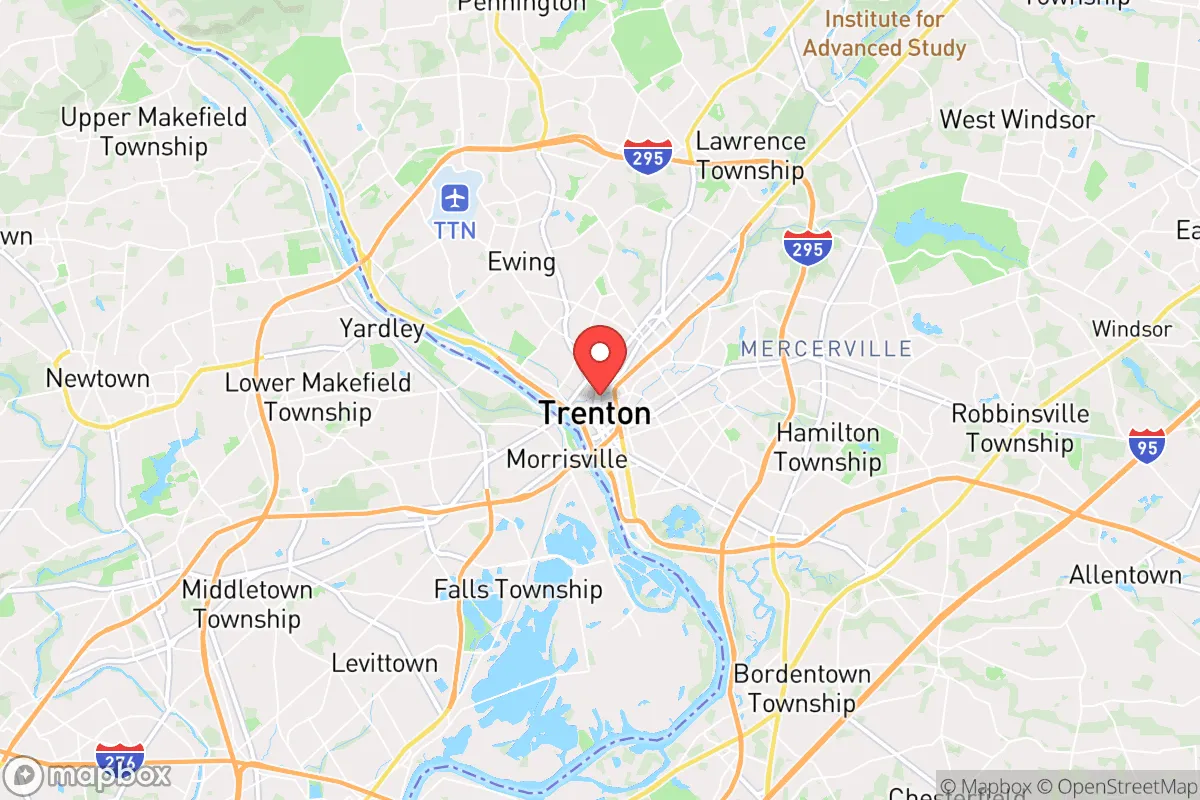
Photo: Wikipedia
Personal Sovereignty in Trenton, NJ
Viable for self-reliance. Generally workable, though some barriers may limit total independence.
What does Personal Sovereignty tell us?
Personal Sovereignty measures your capacity for self-reliance and independence with minimal government friction. Higher scores mean fewer barriers between you and the way you want to live... but it assumes you have the space you need and good neighbors.
What does this tell us?
Personal Sovereignty measures your capacity for self-reliance and independence with minimal government friction. Higher scores mean fewer barriers between you and the way you want to live... but it assumes you have the space you need and good neighbors.
State Policy
Energy independence: Importer (8% of energy produced in-state)
Personal Liberty
Homesteading

Personal Liberty Analysis
Trenton, New Jersey, presents a challenging environment for personal sovereignty, particularly for those with a survivalist or prepper mindset who prioritize autonomy and self-reliance. The city operates under a dense web of state-level mandates that significantly limit individual decision-making in areas from taxation to self-defense, making it a location where government overreach is a constant factor in daily life. For conservative-leaning individuals and families evaluating relocation, Trenton’s sovereignty profile is best understood as one of constrained freedom, where the state’s regulatory posture often supersedes local and personal control.
Tax burden and regulatory posture: How New Jersey’s policies constrain financial autonomy
New Jersey’s tax burden is the highest in the nation, and Trenton residents bear the full weight of this reality. The state’s progressive income tax tops out at 10.75% for high earners, while the average property tax rate in Mercer County hovers around 2.5% of assessed home value—among the steepest in the country. For a prepper focused on financial self-reliance, this means a significant portion of income is diverted to state coffers before personal savings, land purchases, or emergency supplies can be funded. The state’s regulatory posture extends beyond taxes: New Jersey’s strict environmental and building codes, combined with a powerful state police and bureaucracy, create a climate where even minor home improvements or land use changes require permits and inspections. This regulatory density reduces the margin for error and self-directed action, as the state maintains a heavy hand in everything from vehicle emissions to septic system approvals. For those seeking to minimize government entanglement, Trenton’s tax and regulatory environment is a major deterrent.
Self-defense and gun law specifics: Navigating New Jersey’s restrictive firearms landscape
New Jersey’s gun laws are among the most restrictive in the United States, and Trenton residents face a particularly hostile legal environment for self-defense. The state requires a permit to purchase a handgun, a separate permit to carry (which, post-Bruen, is now shall-issue but still involves extensive background checks, training, and a four-month processing time), and a Firearms Purchaser Identification Card for long guns. Magazine capacity is capped at 10 rounds, and “assault weapons” are banned by name and feature—including common semi-automatic rifles like the AR-15. For a prepper, this means building a robust personal armory is legally difficult and expensive. The state also has a duty to retreat in public spaces, meaning deadly force is only justified if retreat is impossible, which undermines the principle of standing one’s ground. Additionally, New Jersey does not recognize out-of-state carry permits, so visitors or new residents must immediately comply with state law. For those who view firearms as a cornerstone of personal sovereignty, Trenton’s legal framework is a significant obstacle, forcing reliance on less effective means of self-defense or requiring a move to a more permissive jurisdiction.
Self-reliance and homesteading viability: Lot sizes, zoning, and off-grid feasibility in an urban setting
Trenton’s urban density and zoning codes make traditional homesteading or off-grid living nearly impossible. The city is built on small lots—typically 1/8 to 1/4 acre—with strict zoning that prohibits livestock, large gardens, or accessory structures like workshops or storage sheds without permits. The state’s building codes require grid-tied electrical systems for new construction, and off-grid solar or wind setups are effectively illegal without complex interconnection agreements. Rainwater harvesting is limited to 100 gallons per property without a permit, and composting toilets are not allowed in residential zones. For a prepper seeking self-reliance, Trenton offers little room for food production, water independence, or energy autonomy. The city’s aging infrastructure also means that grid failures—common during storms—can leave residents without power or water for days, with no legal way to install backup systems without bureaucratic hurdles. While some suburban areas of Mercer County (like Hopewell or Lawrence) offer larger lots and more lenient zoning, Trenton proper is a poor fit for anyone prioritizing homesteading or off-grid capability.
Personal liberties: Parental rights, medical autonomy, speech, and property in a state-heavy environment
New Jersey’s progressive governance extends into personal liberties, often overriding parental and individual choices. The state mandates comprehensive sex education in public schools, including LGBTQ+ content, with no opt-out for parents—a direct challenge to parental rights. Medical autonomy is similarly constrained: New Jersey has strict vaccine mandates for school attendance, and during the COVID-19 pandemic, it maintained one of the longest-running mask and vaccine mandates in the country. For those who prioritize medical freedom, the state’s public health powers are broad and aggressively enforced. Free speech is protected under the First Amendment, but New Jersey’s bias intimidation laws and hate crime statutes can be applied broadly, potentially chilling controversial political or religious expression. Property rights are also limited: the state’s eminent domain powers are robust, and Trenton has a history of using them for redevelopment projects, sometimes displacing long-term residents. For a conservative-leaning individual, these policies create an environment where personal autonomy is secondary to state-defined social and health goals, making Trenton a low-sovereignty location compared to states like Texas, Florida, or New Hampshire.
In summary, Trenton, New Jersey, ranks poorly for personal sovereignty when measured against the priorities of a survivalist or prepper mindset. The combination of the nation’s highest tax burden, some of the strictest gun laws, prohibitive zoning for self-reliance, and state overreach into parental and medical decisions creates a landscape where individual autonomy is heavily circumscribed. For those considering relocation, the city offers little strategic advantage for building a self-sufficient life, and the regulatory environment actively works against it. Compared to more liberty-oriented states in the South or Midwest, Trenton represents a location where government control is the default, and personal sovereignty is a constant negotiation—not a given. If self-reliance and freedom from state interference are your priorities, this area is best avoided in favor of jurisdictions with lighter regulatory touch and stronger protections for individual rights.

* Values derived from national, state, county, city and local statistics and may differ in a specific area. Last updated: 2026-05-01T07:17:01.000Z
Narrative content on this page is AI-generated and may contain mistakes. Verify any details that matter before acting on them.
ReloMaps may earn a commission from affiliate links at no extra cost to you.

