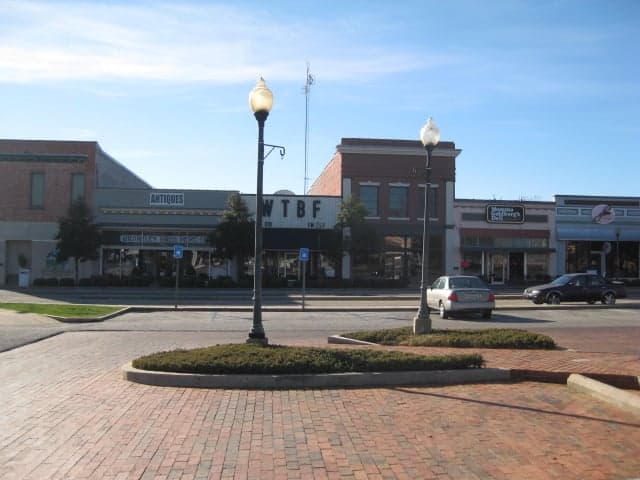
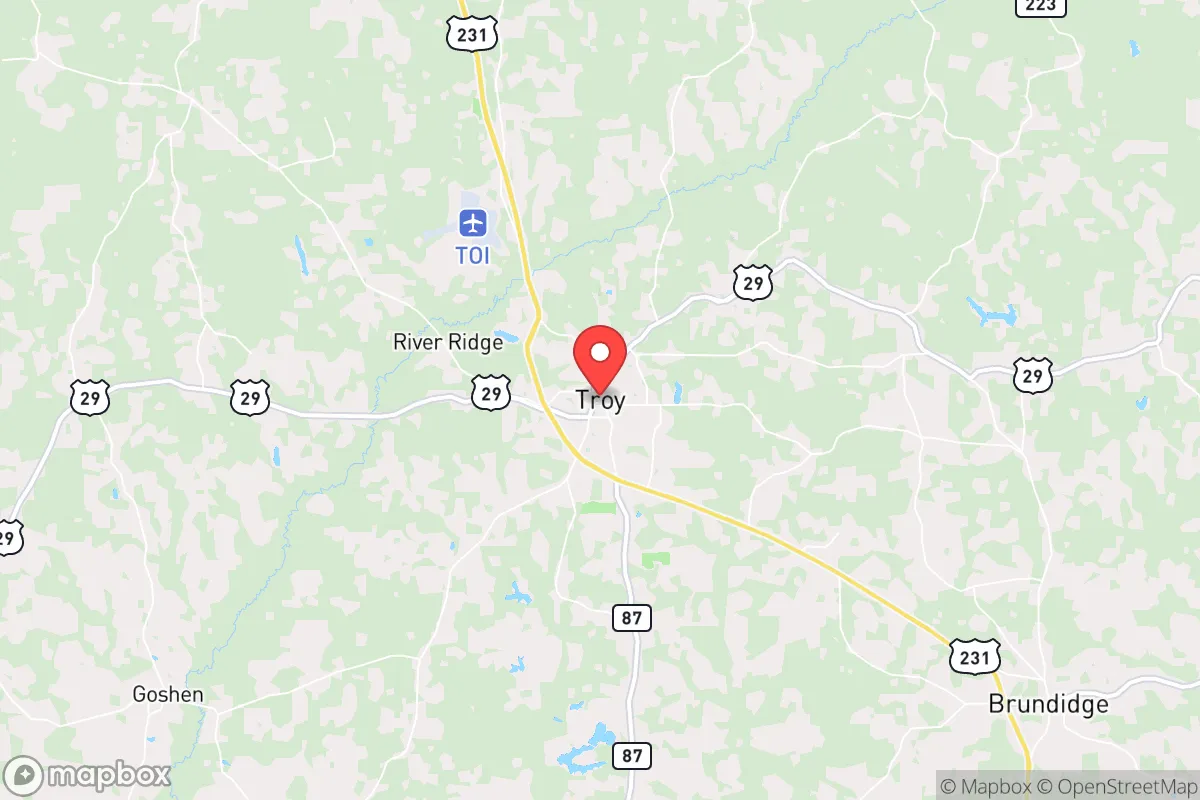
Photo: Wikipedia
Quality of Life in Troy, AL
A high quality of life with strong walkability, manageable living costs, healthy neighborhood signals, and solid amenity access.
What does Quality of Life tell us?
Quality of Life blends cost of living, nearby amenities, socioeconomic signals, and neighborhood character. City-level scores represent the whole municipality; individual neighborhoods can differ.
What does this tell us?
Quality of Life blends cost of living, nearby amenities, socioeconomic signals, and neighborhood character. City-level scores represent the whole municipality; individual neighborhoods can differ.
Cost of Living
21% below national average
The Real Cost of Living in Troy, AL for 2026
| Tier | Individual | Family (4) |
|---|---|---|
| Survival | $15k | $28k |
| Comfortable | $42k | $61k |
| Luxury | $86k+ | $133k+ |
| Elite (Top 5%) | $127k+ | $197k+ |
78%
The Area Signal
A metric tracking the socioeconomic signals of the area.


Hobbies
Explore the areaGroceries
5 within 10 miles
Gas
0 within 10 miles
Hospital
3 within 20 miles
Airport
ATL — Hartsfield–Jackson Atlanta International
Post Office
USPS — Troy, AL
Critical Amenities
Quality-of-Life Analysis
Troy, Alabama, presents a notably affordable quality of life, with a cost of living index of 79—21% below the national average—attracting a mix of university faculty, healthcare professionals, and manufacturing workers. The city’s economic anchor is Troy University, which infuses a steady population of students and academics, while industries like Lockheed Martin and the Troy Regional Medical Center provide stable employment for a largely middle-class workforce. This combination creates a community that is both educationally oriented and industrially grounded, with a slower pace than Alabama’s major metros like Birmingham or Montgomery.
Cost of living, housing, and affordability compared to nearby cities
Housing in Troy is a standout advantage: the median home value sits at $214,100, significantly lower than the national median of roughly $350,000, while the median rent of $943 is well below the U.S. average of $1,200. Compared to nearby Montgomery (about 50 miles north), where median home values hover near $200,000, Troy is slightly pricier but offers a smaller, tighter-knit environment. The average commute of 17.7 minutes is far shorter than the national average of 26 minutes, reducing transportation costs and freeing up time for family or recreation. Utility and grocery costs also track below national norms, making Troy particularly attractive for retirees on fixed incomes or young families seeking to stretch their budget. However, wages in Pike County tend to lag behind state averages, so the affordability gains are partially offset by lower local incomes.
Local amenities, schools, and daily life rhythm
Daily life in Troy revolves around the university campus and a compact downtown core. The Troy City Schools system includes Charles Henderson High School, which offers dual-enrollment programs with Troy University, while private options like Pike Liberal Arts School serve families seeking smaller class sizes. For recreation, residents use the Troy Recreation Center and the nearby 1,200-acre Frank Jackson State Park for fishing, hiking, and camping. The city’s dining scene is modest but functional, with local staples like The Studio and Kintaro Japanese Steakhouse, while retail is concentrated along U.S. Highway 231. The rhythm is unhurried: weekends often feature Troy University football games at Veterans Memorial Stadium or community events like the Pike County Cattlemen’s Rodeo. Healthcare is anchored by Troy Regional Medical Center, a 135-bed facility that handles most routine needs, though specialized care often requires a drive to Montgomery or Dothan.
This environment suits those who prioritize low costs, short commutes, and a community centered around education and outdoor recreation. Retirees, remote workers, and families with young children will find the affordability and safety appealing, while young professionals seeking vibrant nightlife or diverse cultural scenes may find Troy too quiet. The presence of Troy University ensures a steady influx of new ideas and events, but the city’s small-town character remains dominant—ideal for anyone who values predictability and neighborly connections over urban hustle.

Crime in Troy, AL
Higher crime rates than 59% of comparable U.S. locations.
Violent CrimeViolent Crime Analysis
Property CrimeProperty Crime Analysis
Crime Analysis
Troy, Alabama, reports a violent crime rate of 518.3 incidents per 100,000 residents and a property crime rate of 2,439.2 per 100,000, placing it above both state and national averages for overall crime risk. These figures indicate that while Troy is not among the most dangerous cities in the Southeast, residents and prospective movers should be aware of elevated risks compared to smaller, more rural communities in Pike County. The city’s safety profile is shaped by its status as a regional hub for education, healthcare, and retail, which draws a transient population and concentrates activity in specific areas.
Crime in context
Troy’s violent crime rate of 518.3 per 100,000 is roughly 40% higher than the national average of approximately 370 per 100,000 and significantly exceeds Alabama’s state average of about 440 per 100,000. Property crime in Troy, at 2,439.2 per 100,000, is also elevated—roughly 20% above the national average of 1,954 per 100,000—and aligns closely with the higher property crime rates seen across Alabama’s smaller metro areas. These statistics place Troy in a middle tier among Alabama cities of similar size, such as Dothan and Opelika, though it remains safer than larger urban centers like Birmingham or Montgomery. The presence of Troy University contributes to periodic spikes in larceny and burglary, particularly around campus housing and off-campus student neighborhoods.
What residents experience
Residents commonly report that property crime—especially vehicle break-ins, theft from porches, and burglary of unoccupied homes—is the most frequent safety concern. Violent crime, while less common, is concentrated in specific pockets, particularly along the U.S. 231 corridor and in older apartment complexes near the downtown area. The Troy Police Department maintains a visible presence and has implemented community policing initiatives, but response times can vary in outlying parts of the city. Progressive judicial policies in Pike County have been cited by local law enforcement as a factor in repeat property offenses, as offenders with multiple charges often receive reduced sentences or diversion programs, leading to a cycle of re-arrest. This approach, while intended to reduce incarceration, has frustrated some residents who feel it undermines public safety and victim restitution.
Neighborhood-level variation is notable. Areas west of the university, including the historic district and newer subdivisions near the Troy Country Club, report significantly lower crime rates—often 50-60% below the city average. In contrast, the eastern side of Troy, particularly along Elm Street and the industrial zones near U.S. 231, sees higher concentrations of both property and violent incidents. Prospective residents are advised to consult the Troy Police Department’s online crime mapping tool and to drive through target neighborhoods at different times of day to assess activity levels. Overall, Troy offers a manageable safety profile for those who choose their location carefully and practice standard precautions like locking vehicles and securing homes.
* Values derived from national, state, county, city and local statistics and may differ in a specific area. Last updated: 2026-04-19T19:09:06.000Z
Narrative content on this page is AI-generated and may contain mistakes. Verify any details that matter before acting on them.
ReloMaps may earn a commission from affiliate links at no extra cost to you.

