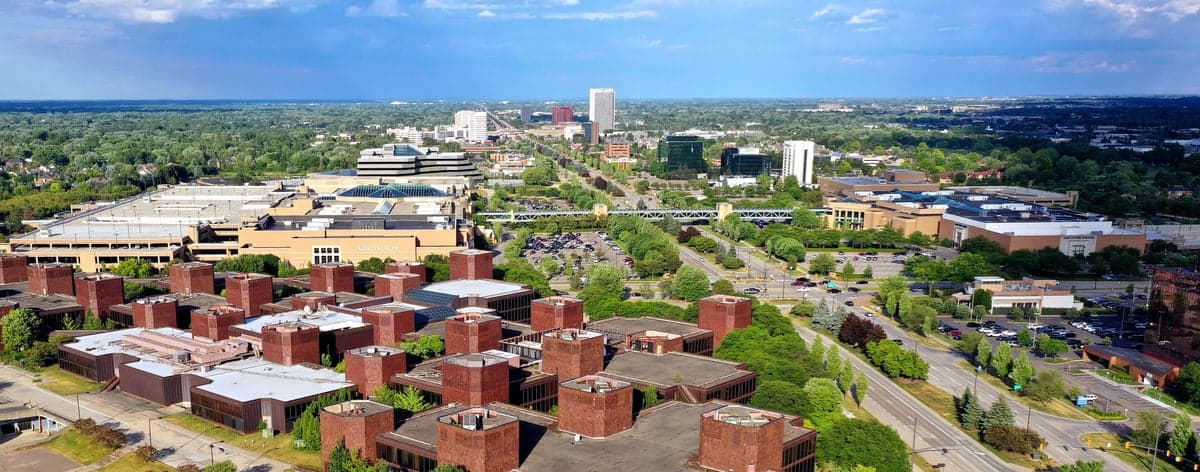
Photo: Wikipedia
Strategic Assessment of Troy, MI
Multiple tactical vulnerabilities. Population density, target proximity, or disaster risk are likely compounding. A retreat property and exit planning is required.
What does the Strategic Assessment tell us?
Our Strategic Assessment grades tactical survivability of an area. Major population centers, military targets, fallout zones, natural disasters, and border exposure all drive risk — lower exposure means a more defensible position in a crisis.
This is heavily inspired by Joel Skousen's Strategic Relocation book. Highly recommended you checkout the book ($)What does this tell us?
Our Strategic Assessment grades tactical survivability of an area. Major population centers, military targets, fallout zones, natural disasters, and border exposure all drive risk — lower exposure means a more defensible position in a crisis.
This is heavily inspired by Joel Skousen's Strategic Relocation book. Highly recommended you checkout the book ($)Strategic Pillars

Key Distances
Regional Safe Places
Below is our recommended "safe zones" in Michigan and the surrounding area based on our strategic heuristics. For most people, it's unrealistic to live in a “safe zone” full-time due to work, family or other personal reasons. They tend to be more rural. However, many of these areas are perfect for second homes and retreat properties that double as a vacation home or even a short-term rental.


Important Note: For informational purposes only. This does not mean nothing bad ever happens in the green zones. Please use common sense. This is based on public data and modeled with AI. We tried to take a conservative approach but mistakes happen. We update this regularly as new information becomes available.
Solar Generator Recommendations
Backup power matters more here than in safer locations. We've picked three solar generators across budgets and capacity tiers — start with the budget unit if you only need a few essentials, or step up if you want to run a fridge and HVAC for days at a time.

Jackery Portable Power Station Explorer 300
Budget OptionPower on the Go: Weighing only 11 lbs, it's convenient to set up and store with book-sized foldable solar panels

BLUETTI Portable Power Station AC180
Designed for both indoor and outdoor scenarios, AC180 is highly capable as it has a robost capacity and continuous output power.

EF ECOFLOW DELTA Pro Ultra Power Station
Upgraded PickEcoFlow DELTA Pro Ultra is a whole-home energy system designed to grow with your family. Integrated with the Smart Home Panel 2, it scales to meet your evolving energy needs — keeping your home powered, intelligent, and secure through every stage of life.
We earn a commission, at no additional cost to you.
Strategic Assessment Analysis
Troy, Michigan, sits in a precarious strategic position that demands serious consideration from anyone prioritizing long-term resilience. Located roughly 20 miles north of Detroit, this affluent Oakland County suburb offers genuine advantages in infrastructure and resources, but its proximity to a major urban center and several high-value target zones introduces significant risk factors that cannot be overlooked. For the prepper or survivalist-minded individual, Troy represents a location with strong day-to-day stability but potentially severe vulnerabilities during a widespread crisis.
Geographic position and natural advantages for long-term survival
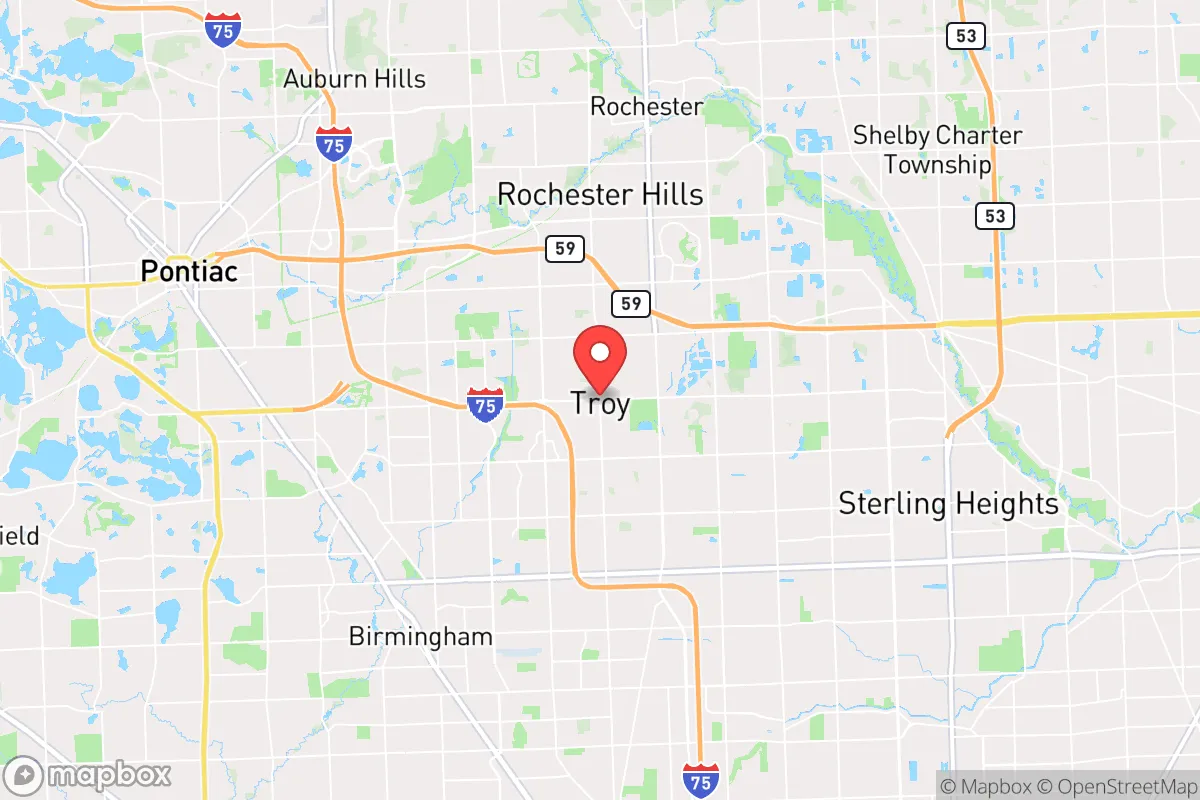
Troy's location within southeastern Michigan places it in a region with relatively moderate climate extremes, avoiding the harshest winter conditions of the Upper Peninsula while still experiencing four distinct seasons. The area sits on flat to gently rolling terrain, which is advantageous for agriculture and water management. The Clinton River watershed runs through the northern portion of the city, providing a surface water source that could be tapped for emergency use, though it requires filtration and treatment. The city's elevation, averaging around 670 feet above sea level, offers no significant defensive high ground but also avoids floodplain risks that plague lower-lying communities along the Detroit River. Troy's position along the I-75 corridor gives it excellent north-south evacuation routes toward less populated areas of northern Michigan, while M-59 provides east-west connectivity. However, this same highway access makes Troy a natural chokepoint for any mass exodus from Detroit, which could become a liability during a rapid evacuation scenario. The city's grid-like street layout, while efficient for daily commuting, offers limited natural defensibility compared to more rural or topographically varied locations.
Risks, exposures, and proximity to fallout-relevant landmarks
The most significant strategic liability for Troy is its proximity to Detroit, a city with a population of roughly 630,000 and a history of civil unrest, economic instability, and strained public services. During a mass casualty event, economic collapse, or widespread civil disorder, Detroit's population density and limited resources could drive large numbers of people outward along major arteries like I-75 and I-696, directly through Troy. The city is also within 30 miles of the Detroit Metropolitan Wayne County Airport, a major international hub that could become a target for terrorism or a focal point for disease transmission during a pandemic. Additionally, Troy lies within 50 miles of the Fermi 2 nuclear power plant in Newport, Michigan, and within 100 miles of the Palisades Nuclear Plant (now decommissioned but still containing spent fuel). While the risk of a nuclear incident is low, the fallout zone from a major event at either facility could extend into Oakland County depending on wind patterns. The city itself hosts several corporate headquarters and data centers, including those for large financial institutions and automotive suppliers, which could make it a target for cyberattacks or physical sabotage during a broader conflict. Troy's reliance on the regional power grid, which has experienced outages during severe weather events, is another vulnerability that preppers should factor into their planning.
Practical resilience for a relocator: food, water, energy, and defensibility
For a relocator looking to establish a resilient household in Troy, the practical considerations are mixed. The city's water supply comes from the Detroit Water and Sewerage Department, which draws from the Detroit River. While generally reliable, this centralized system is vulnerable to contamination, sabotage, or pressure loss during a grid-down scenario. A well-maintained rainwater catchment system and a Berkey or similar gravity filter would be essential for any serious prepper. Food storage is feasible in Troy's suburban homes, many of which have basements suitable for long-term pantry storage. However, the city's zoning and homeowners' association restrictions in many neighborhoods limit visible preparedness measures like large gardens, livestock, or extensive outdoor storage. Energy resilience is achievable through solar panel installations, which are becoming more common in Troy, but the city's tree canopy can reduce solar efficiency. Natural gas is widely available for heating and cooking, but a grid failure would render gas-dependent systems useless without a generator. Defensibility is the weakest point: Troy's suburban layout with open yards, multiple entry points, and proximity to major roads makes it difficult to secure a single property against a determined group. The Oakland County Sheriff's Office provides law enforcement, but during a widespread crisis, response times would likely stretch to hours or days. For a single individual or family, the best approach is to treat Troy as a location for situational awareness and resource accumulation rather than a long-term bug-out destination. Building relationships with like-minded neighbors and establishing a network of trusted contacts within the community is arguably more valuable than any physical fortification.
The overall strategic picture for Troy, Michigan, is one of calculated trade-offs. The city offers strong economic stability, excellent medical facilities like Beaumont Hospital in nearby Royal Oak, and a well-educated population that could foster cooperative resilience networks. However, its location within the Detroit metropolitan area introduces risks that cannot be mitigated through individual preparedness alone. For the conservative-minded prepper who values community, infrastructure, and access to resources, Troy can serve as a viable base of operations — provided that a secondary, more defensible location is identified for worst-case scenarios. The key takeaway is that Troy is not a survivalist's paradise, but it is a place where a disciplined, well-supplied individual or family can weather many types of disruptions while maintaining a normal lifestyle. The smartest strategy is to treat Troy as a forward operating base rather than a final redoubt, with a clear plan for relocation to northern Michigan or the Upper Peninsula if the situation deteriorates beyond the point of local recovery.

* Values derived from national, state, county, city and local statistics and may differ in a specific area. Last updated: 2026-04-19T09:24:15.000Z
Narrative content on this page is AI-generated and may contain mistakes. Verify any details that matter before acting on them.
ReloMaps may earn a commission from affiliate links at no extra cost to you.

