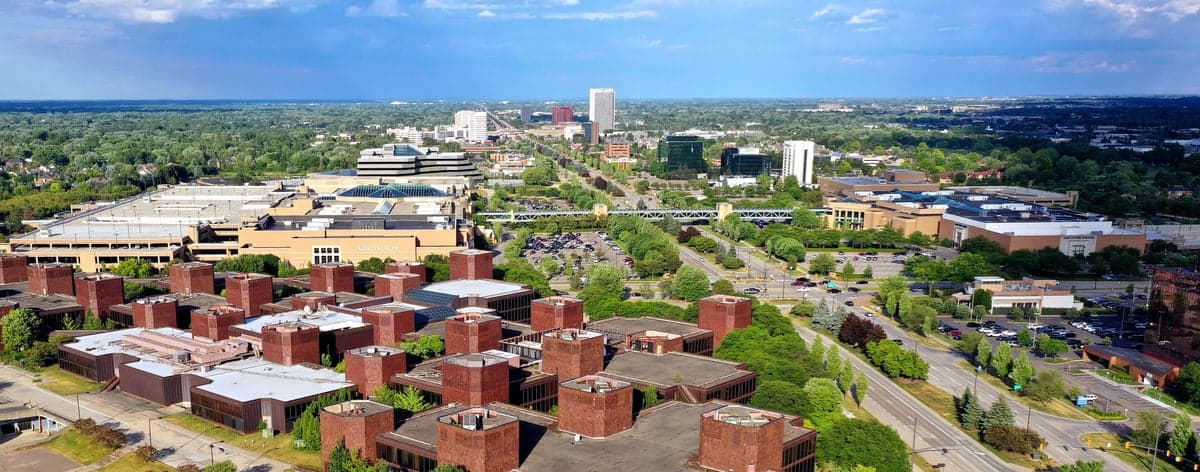
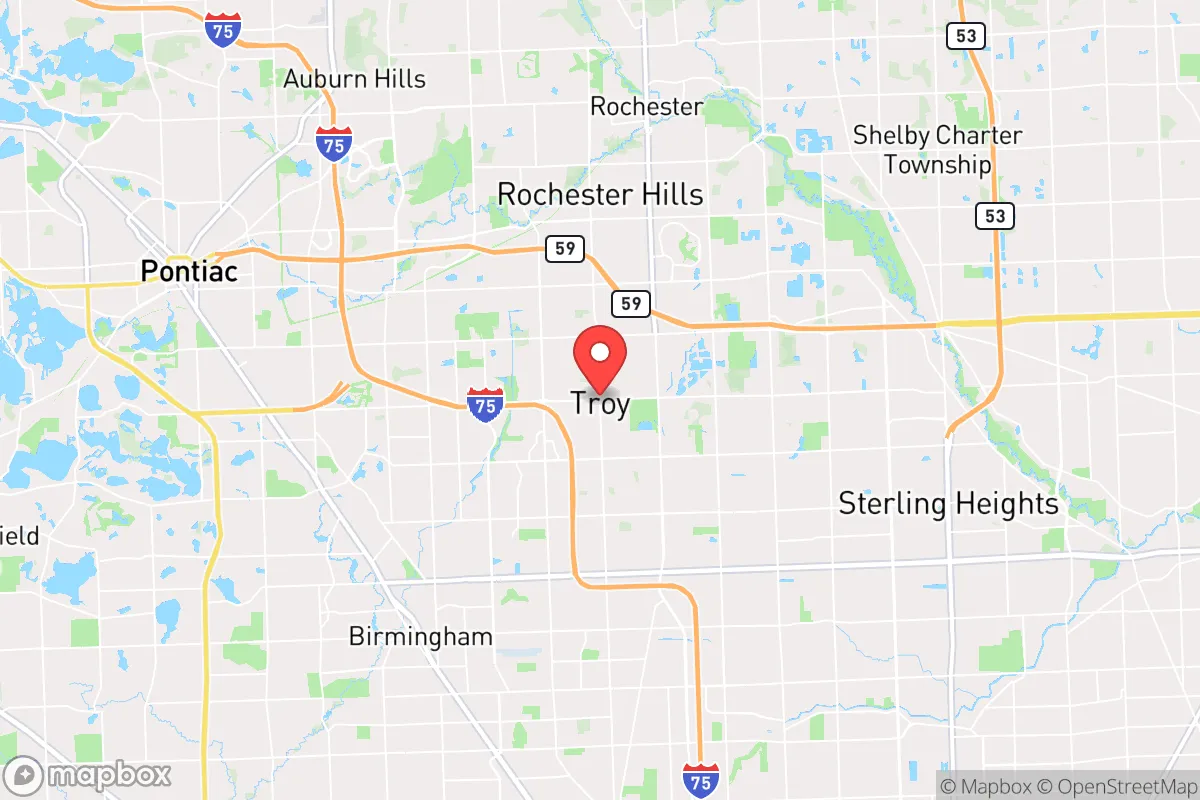
Photo: Wikipedia
Quality of Life in Troy, MI
A high quality of life with strong walkability, manageable living costs, healthy neighborhood signals, and solid amenity access.
What does Quality of Life tell us?
Quality of Life blends cost of living, nearby amenities, socioeconomic signals, and neighborhood character. City-level scores represent the whole municipality; individual neighborhoods can differ.
What does this tell us?
Quality of Life blends cost of living, nearby amenities, socioeconomic signals, and neighborhood character. City-level scores represent the whole municipality; individual neighborhoods can differ.
Cost of Living
37% above national average
The Real Cost of Living in Troy, MI for 2026
| Tier | Individual | Family (4) |
|---|---|---|
| Survival | $25k | $47k |
| Comfortable | $77k | $113k |
| Luxury | $181k+ | $281k+ |
| Elite (Top 5%) | $213k+ | $330k+ |
105%
The Area Signal
A metric tracking the socioeconomic signals of the area.


Hobbies
Explore the areaGroceries
4 within 10 miles
Gas
0 within 10 miles
Hospital
3 within 20 miles
Airport
DTW — Detroit Metropolitan Wayne County
Post Office
USPS — Troy, MI
Critical Amenities
Quality-of-Life Analysis
Troy, Michigan, stands as one of Oakland County’s most affluent and economically vibrant suburbs, drawing a population of roughly 87,000 that skews heavily toward upper-middle-class professionals, executives, and dual-income families. The city’s reputation is built on a dense concentration of corporate headquarters—including the North American bases of companies like Delphi Technologies and Kelly Services—and a highly rated public school system that consistently ranks among the state’s best. This combination of high-paying white-collar employment and strong educational outcomes creates a community where the median household income exceeds $100,000, significantly above both the Michigan and national averages.
Cost of living, housing affordability, and how Troy compares to nearby suburbs
Troy’s cost of living index sits at 137—37 percent above the U.S. average—placing it among the pricier communities in Metro Detroit, though still below the most expensive lakeside enclaves like Bloomfield Hills or Birmingham. The median home value of $396,800 reflects a market driven by demand for well-maintained mid-century ranches, newer townhomes, and executive-style colonials in subdivisions like Somerset Park and the area around Wattles Road. Renters face a median monthly rent of $1,557, which is roughly $200–$300 higher than in neighboring Sterling Heights or Madison Heights but notably lower than the $2,000+ averages seen in Royal Oak or Birmingham. Property taxes in Troy are typical for Oakland County—around 1.8–2.0% of assessed value—and while housing costs are steep, the trade-off is access to a job market where the average commute clocks in at just 24.6 minutes, well below the national average of 27 minutes. For buyers, the premium over nearby cities like Clawson or Warren is largely justified by Troy’s higher-rated schools and lower crime rates.
What daily life is like for families: schools, shopping, and recreation
Daily life in Troy revolves around a well-planned suburban infrastructure that prioritizes convenience and family-oriented amenities. The Troy School District serves roughly 12,000 students and consistently earns A ratings from Niche, with standout high schools like Troy High and Athens High offering robust Advanced Placement programs and competitive athletics. The city’s retail landscape is anchored by the Somerset Collection, one of the largest upscale malls in the Midwest, and the Troy Marketplace, which together provide hundreds of dining and shopping options within a 10-minute drive of most neighborhoods. Outdoor recreation is concentrated at the 100-acre Lloyd A. Stage Nature Center, the Troy Sports Center for ice skating and hockey, and a network of over 50 parks connected by paved pathways. The city’s layout—a grid of wide boulevards and cul-de-sac subdivisions—makes car travel the default, but the presence of the SMART bus system and proximity to I-75 and M-59 offer practical alternatives for commuters heading to Detroit or Ann Arbor. Cultural amenities are limited compared to downtown Detroit, but the Troy Historic Village and the annual Troy Family Art Fair provide community touchpoints.
Troy is best suited for professionals and families who prioritize top-tier public schools, short commutes to corporate jobs, and a safe, low-crime environment over urban nightlife or walkable street life. Empty-nesters and retirees also find the city appealing due to its well-maintained senior centers, the Beaumont Hospital Troy medical campus, and the availability of maintenance-free condominium communities. Singles and young renters may find the social scene subdued compared to Ferndale or Royal Oak, but the trade-off is a stable, family-focused suburb where property values have historically appreciated steadily. Anyone seeking a balance of high-end amenities, strong employment anchors, and a quiet residential atmosphere will find Troy a compelling choice within Metro Detroit’s competitive housing market.

Crime in Troy, MI
Lower crime rates than 82% of comparable U.S. locations.
Violent CrimeViolent Crime Analysis
Property CrimeProperty Crime Analysis
Crime Analysis
Troy, Michigan, presents a safety profile that is statistically better than many national averages, yet it operates within a broader regional context that raises legitimate concerns for prospective residents. The city's violent crime rate stands at 94.7 incidents per 100,000 residents, and its property crime rate is 922.7 per 100,000. While these figures are lower than the U.S. averages, the surrounding metropolitan area—including Oakland County and the wider Detroit region—has seen increasing scrutiny over progressive prosecutorial policies that critics argue prioritize offender rehabilitation over public safety and victim justice.
Crime in context
When compared to national benchmarks, Troy's violent crime rate is significantly lower than the U.S. average of roughly 380 per 100,000, and its property crime rate is below the national figure of approximately 1,950 per 100,000. However, these numbers must be weighed against the reality of operating in a large, liberal-leaning metro area. Oakland County's prosecutor, like many in progressive jurisdictions, has implemented policies such as reduced cash bail, declining to prosecute certain low-level offenses, and emphasizing diversion programs. While intended to reduce incarceration, these approaches have been linked to increased recidivism and a perception that the justice system is lenient on offenders. For a city like Troy—a hub for corporate headquarters and affluent neighborhoods—this creates a tension between its own low crime statistics and the potential for spillover crime from nearby communities with more permissive criminal justice environments.
What residents experience
Daily life in Troy is generally safe, with most crime being property-related—theft from vehicles, package theft, and occasional burglaries. The city's well-funded police department, with a ratio of roughly 1.5 officers per 1,000 residents, maintains a visible presence and rapid response times. However, residents should be aware that the broader legal climate in Michigan's southeastern counties has emboldened some offenders. For example, the Oakland County prosecutor's office has faced criticism for plea deals that reduce felony charges to misdemeanors, potentially allowing repeat offenders to remain on the streets. This directly impacts Troy residents when criminals from neighboring cities like Pontiac or Detroit—where progressive policies are more entrenched—travel into Troy to commit crimes, knowing the consequences may be minimal.
Neighborhood-level variation is notable. Areas near the Somerset Collection mall and along the Big Beaver Road corridor experience higher rates of shoplifting and vehicle break-ins, while residential subdivisions in the northern and eastern parts of the city report very low crime. Gated communities and those with active neighborhood watch programs see the best outcomes. Prospective residents should prioritize homes in these quieter enclaves and remain vigilant about property security, as the progressive justice system's focus on offender rehabilitation over victim protection means that even low-crime suburbs like Troy are not immune to the consequences of regional leniency.
* Values derived from national, state, county, city and local statistics and may differ in a specific area. Last updated: 2026-04-19T09:24:15.000Z
Narrative content on this page is AI-generated and may contain mistakes. Verify any details that matter before acting on them.
ReloMaps may earn a commission from affiliate links at no extra cost to you.

