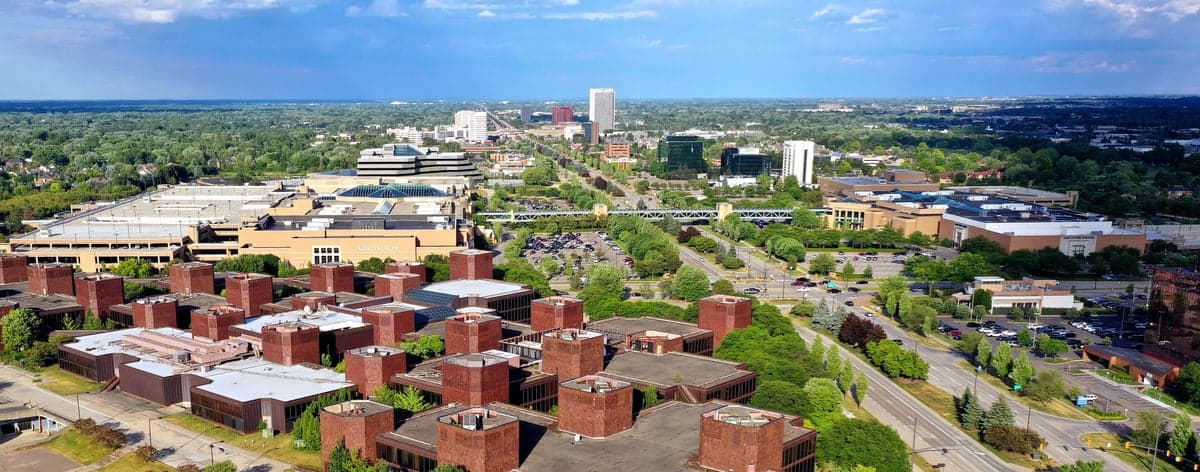
Photo: Wikipedia
Political ClimatePolitical Climate in Troy, MI
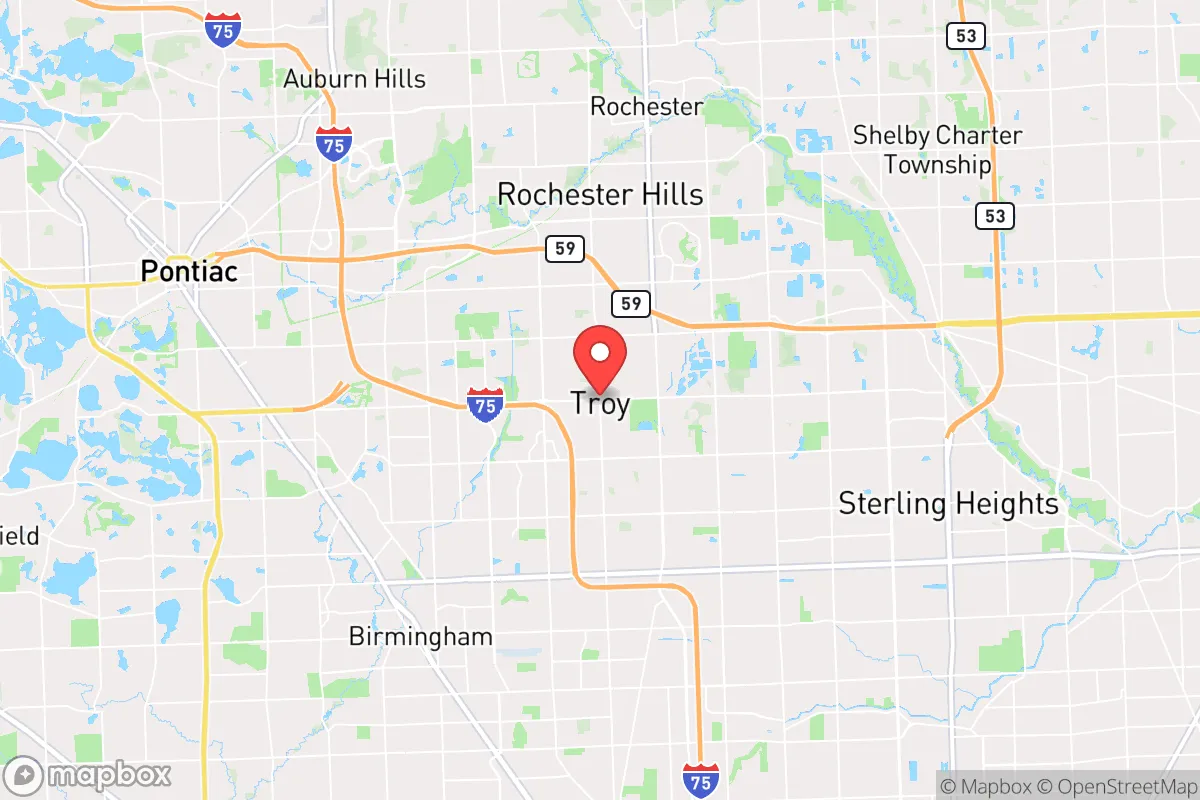
District shown is the primary district for this city’s centroid. Cities may span multiple districts.
Local Political AnalysisPolitical Analysis of Troy, MI
Troy, Michigan, has shifted notably to the left in recent years, now carrying a Cook Partisan Voting Index of D+9. That means the city leans about nine points more Democratic than the national average, a far cry from the reliably conservative suburb it was a couple decades ago. If you’ve lived here as long as I have, you’ve watched the precinct maps turn from a solid red to a patchy purple, then to a consistent blue in presidential and local races. The 2020 election was a real wake-up call—Biden won Oakland County by a wide margin, and Troy’s own numbers reflected that trend, with Democratic candidates now routinely carrying the city by double digits.
How it compares
To understand Troy’s political climate, you have to look at the surrounding towns. Head north a few miles to Rochester Hills or Shelby Township, and you’ll find communities that still vote reliably Republican—often by 10 to 15 points in state-level races. Drive west to Birmingham or Bloomfield Hills, and you’ll see even deeper blue enclaves, but those have always been more liberal. The real contrast is with places like Macomb County’s Sterling Heights or Warren, where working-class voters have held the line against progressive overreach. Troy sits right in the middle of this political patchwork, but its trajectory is unmistakably toward the left, driven largely by an influx of younger professionals and transplants from more liberal areas.
What this means for residents
For those of us who value limited government and personal freedoms, the shift is concerning. The city council and school board have become more willing to entertain progressive policies—think diversity, equity, and inclusion initiatives in the schools, zoning changes that prioritize density over single-family neighborhoods, and a general openness to state-level mandates on energy and environmental regulations. Property taxes have crept up, and there’s a growing appetite for new bond proposals and millages that fund programs many residents never asked for. The practical effect is that you feel the government’s hand a little more each year, whether it’s in how your kids are taught or what you can do with your own property. The old “live and let live” attitude that made Troy a great place to raise a family is slowly being replaced by a more activist approach from city hall.
Looking ahead, I don’t see this trend reversing anytime soon. The demographics are shifting—more renters, more young families from out of state, and a growing Asian-American population that tends to vote Democratic in local races. The long-time conservative base is aging out, and the new arrivals don’t share the same skepticism of government power. If you’re thinking of moving here, just know that the political climate is not what it was 20 years ago. The schools are still excellent, the parks are well-maintained, and the job market is strong, but the cultural and policy direction is unmistakably progressive. For those who value personal liberty and fiscal restraint, it’s worth keeping a close eye on the next few election cycles—because the Troy you remember might not be the Troy your kids grow up in.

State Political ClimatePolitical Climate in Michigan
State Political AnalysisPolitical Environment in the State
Michigan has shifted from a classic battleground state to a solidly blue-leaning state over the past decade, but the picture is far more complex than the statewide totals suggest. The state’s political identity is a tug-of-war between the heavily Democratic, union-heavy southeast (Detroit, Ann Arbor, Flint) and the increasingly Republican, rural, and exurban north and west (Grand Rapids, Traverse City, the Thumb). In 2024, Donald Trump carried the state by roughly 1.5 points after Joe Biden won it by 2.8 in 2020, showing the state is still competitive but trending rightward in key working-class areas. The real story is the collapse of the old “blue wall” in places like Macomb County and the Upper Peninsula, which have swung hard toward the GOP, while the suburbs of Detroit and Grand Rapids have become more Democratic.
Urban vs. rural divide
The political map of Michigan is a textbook example of the urban-rural chasm. The Detroit metro area, including Wayne, Oakland, and Macomb counties, is the Democratic engine, but even here the dynamics are shifting. Wayne County (Detroit) is deep blue, but its population has shrunk for decades, reducing its electoral weight. Oakland County, once a Republican stronghold, has become reliably Democratic as affluent suburbanites have moved left on social issues. Macomb County, the classic “Reagan Democrat” territory, flipped hard for Trump in 2016 and stayed that way in 2020 and 2024, driven by working-class voters angry about trade policy and cultural changes. Meanwhile, the western side of the state is a different story. Grand Rapids (Kent County) has become a Democratic-leaning city, but the surrounding rural areas—like Ottawa, Allegan, and Muskegon counties—are deeply red. The Upper Peninsula, once a Democratic stronghold due to mining unions, has swung dramatically to the GOP; in 2024, Trump won every county in the UP except for Marquette (home to Northern Michigan University). The key takeaway: if you’re looking for a conservative enclave, you’ll find it in the rural Thumb, the western lakeshore, or the northern Lower Peninsula, but you’ll be surrounded by blue islands in the cities.
Policy environment
Michigan’s policy environment has taken a sharp left turn since Democrats took full control of state government in 2023. The state income tax is a flat 4.25%, but the corporate tax rate is 6%, and property taxes are relatively high, with an average effective rate of 1.3% of home value. The biggest policy shift has been the repeal of Michigan’s “right-to-work” law in 2023, which had been in place since 2012. This means unions can now require dues as a condition of employment in the private sector, a move that directly impacts personal freedom and economic choice. On education, the state has expanded the “Michigan Reconnect” program for free community college, but school choice remains strong, with charter schools and inter-district open enrollment available. Healthcare policy is dominated by the expansion of Medicaid under the Affordable Care Act, which was adopted in 2013. Election laws have been loosened significantly: Proposal 2 in 2022 enshrined nine days of early voting, automatic voter registration, and no-excuse absentee voting, making it easier to vote but raising concerns about election integrity among conservatives. The state also passed a sweeping gun control package in 2023, including universal background checks, safe storage requirements, and red flag laws, which has been a major flashpoint for gun rights advocates.
Trajectory & freedom
Michigan is becoming less free by any objective measure, especially for conservatives. The 2023 repeal of right-to-work was a direct assault on economic freedom, forcing workers in unionized industries to pay dues or lose their jobs. The new gun laws, including the red flag provisions, allow for temporary seizure of firearms without a criminal conviction, which many see as a violation of due process and Second Amendment rights. On parental rights, the state has moved in the opposite direction of places like Florida: Michigan’s “LGBTQ+ inclusive” curriculum standards, adopted in 2023, require schools to teach about sexual orientation and gender identity in age-appropriate ways, which has sparked backlash from parents who feel their authority is being undermined. Medical freedom took a hit with the state’s strict COVID-19 mandates in 2020-2021, including the infamous “Gretchen Whitmer” lockdowns that were among the longest in the nation. Property rights are under pressure from the state’s aggressive renewable energy siting laws, which allow the state to override local zoning for wind and solar projects. The only bright spot for freedom advocates is the state’s relatively low income tax rate, but that could change if Democrats push for a progressive income tax, which they’ve discussed.
Civil unrest & political movements
Michigan has been a flashpoint for political activism on both sides. The 2020 “Operation Gridlock” protest at the state capitol in Lansing, where armed demonstrators protested COVID-19 lockdowns, became a national symbol of the anti-mandate movement. The “Wolverine Watchmen” militia group was involved in a plot to kidnap Governor Whitmer in 2020, which has left a lasting scar on the state’s political culture. On the left, the “Michigan Democratic Party” has been energized by the “Squad” style politics of Rep. Rashida Tlaib (D-Detroit), who represents the most progressive district in the state. Immigration politics are relatively quiet compared to border states, but Michigan has sanctuary city policies in Detroit, Ann Arbor, and Kalamazoo, which limit cooperation with federal immigration enforcement. Election integrity remains a hot-button issue: the 2020 election in Michigan was subject to numerous legal challenges, and the 2024 election saw continued allegations of irregularities in Detroit’s absentee ballot counting process. The “Michigan Election Integrity Fund” has been active in pushing for stricter voter ID laws and ballot security measures, but so far, the Democratic-controlled legislature has resisted. A new resident would notice the political polarization in the form of yard signs, bumper stickers, and heated local Facebook groups, especially in swing counties like Kent and Macomb.
Projection
Over the next 5-10 years, Michigan is likely to become more Democratic and less free for conservatives. The demographic trends are clear: the state’s population is aging and shrinking in rural areas, while the urban and suburban cores are growing and diversifying. The in-migration from blue states like California and Illinois is modest but concentrated in places like Ann Arbor and Grand Rapids, which will further shift those areas left. The Republican Party in Michigan is currently fractured between the “Trump wing” and the more traditional “establishment” wing, which has hurt its ability to win statewide races. However, the GOP could rebound if it can hold onto the working-class voters in Macomb and the UP while making inroads with suburban women, who have been fleeing the party over abortion and cultural issues. The biggest wildcard is the state’s economy: if the transition to electric vehicles (a key part of the state’s auto industry) leads to job losses in traditional manufacturing, that could fuel more populist anger and benefit the GOP. For now, a conservative moving to Michigan should expect higher taxes, more regulation, and a cultural environment that is increasingly hostile to traditional values, especially in the cities. The rural and exurban areas will remain conservative bastions, but they will have less political power as the state’s population continues to concentrate in the southeast.
Bottom line for a new resident: If you’re a conservative looking to move to Michigan, you’ll find like-minded communities in places like Grand Rapids’ outer suburbs, the Thumb region, or the northern Lower Peninsula, but you’ll be living in a state where the political winds are blowing against you. The state government is controlled by Democrats who are actively expanding the welfare state, restricting gun rights, and undermining parental authority in schools. Your vote will matter in local races, but statewide elections will be an uphill battle. If you value low taxes, personal freedom, and a culture that respects traditional values, you might want to look at neighboring Indiana or Ohio instead. But if you’re tied to Michigan for family or work, the best strategy is to find a red county, get involved in local politics, and brace for a fight.
* Values derived from national, state, county, city and local statistics and may differ in a specific area. Last updated: 2026-04-19T09:24:15.000Z
Narrative content on this page is AI-generated and may contain mistakes. Verify any details that matter before acting on them.
ReloMaps may earn a commission from affiliate links at no extra cost to you.

