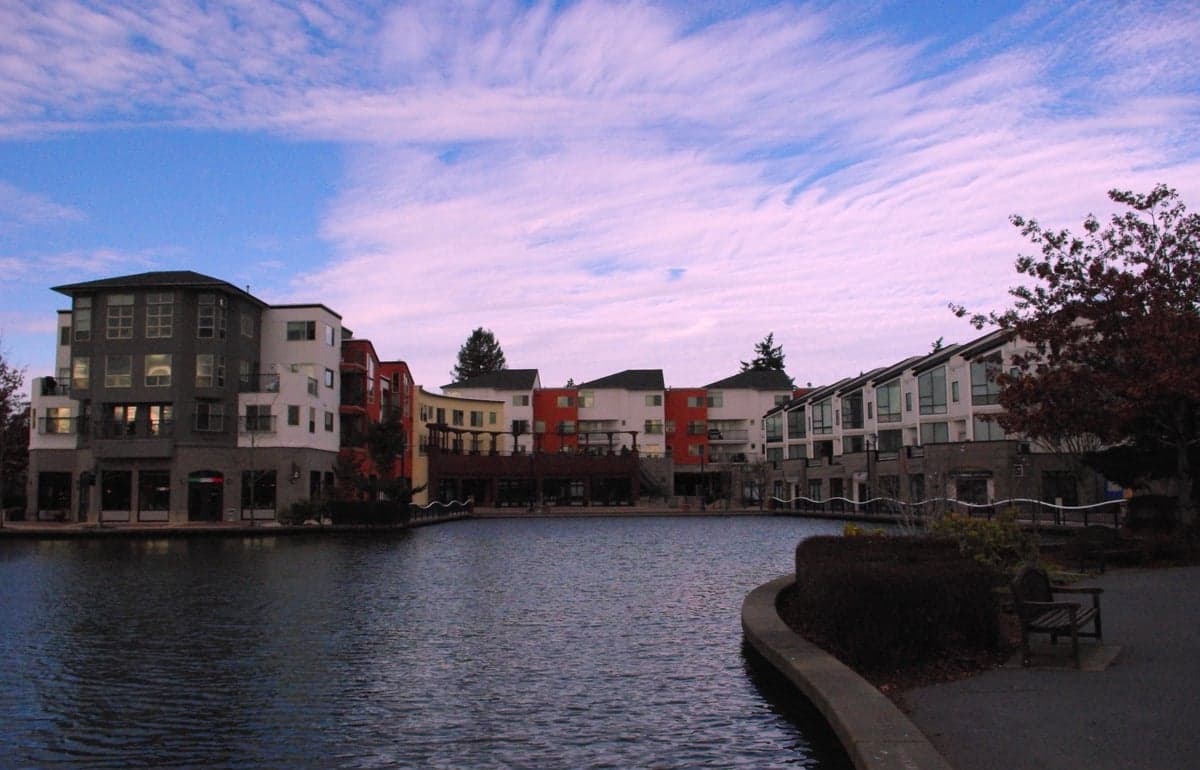
Photo: Wikipedia
Personal Sovereignty in Tualatin, OR
Viable for self-reliance. Generally workable, though some barriers may limit total independence.
What does Personal Sovereignty tell us?
Personal Sovereignty measures your capacity for self-reliance and independence with minimal government friction. Higher scores mean fewer barriers between you and the way you want to live... but it assumes you have the space you need and good neighbors.
What does this tell us?
Personal Sovereignty measures your capacity for self-reliance and independence with minimal government friction. Higher scores mean fewer barriers between you and the way you want to live... but it assumes you have the space you need and good neighbors.
State Policy
Energy independence: Importer (35% of energy produced in-state)
Personal Liberty
Homesteading

Personal Liberty Analysis
Tualatin, Oregon, presents a complex picture for those prioritizing personal sovereignty. While the city itself offers a relatively quiet, suburban environment with decent access to nature, it operates squarely within the legal and regulatory framework of Washington County and the state of Oregon—a state with a growing reputation for progressive governance that can feel restrictive to those with a survivalist or prepper mindset. The autonomy you can carve out here is real, but it requires a clear-eyed understanding of the trade-offs, particularly regarding taxes, self-defense, and the ability to live off the grid. For a single individual or family seeking maximum independence, Tualatin is a compromise location, not a stronghold of liberty.
Tax burden and regulatory posture in Washington County
Oregon’s lack of a state sales tax is a genuine advantage for daily purchases, but the trade-off is a reliance on high property and income taxes. In Tualatin, the combined property tax rate typically falls between 1.2% and 1.5% of assessed value, which is moderate by national standards but can be a significant fixed cost. The state’s income tax is among the highest in the nation, with a top marginal rate of 9.9% on income over $125,000 for single filers. This directly impacts your ability to save and invest in self-reliance projects. On the regulatory front, Oregon’s land use laws, particularly the statewide urban growth boundary (UGB), are a major constraint. This policy severely limits rural development and drives up land prices, making it difficult to acquire acreage for homesteading within commuting distance of Tualatin. The city itself enforces standard suburban zoning, which means restrictions on outbuildings, livestock, and even the number of vehicles you can park on your property. For anyone wanting to minimize government entanglement in their finances and property, this is a notable headwind.
Self-defense and gun law specifics in Oregon
This is a critical area where Oregon’s trajectory is concerning for liberty-minded individuals. While Oregon is historically a “shall-issue” state for concealed carry permits, recent legislation has tightened restrictions. Measure 114, passed by voters in 2022 but currently tied up in legal challenges, would require a permit to purchase any firearm, a mandatory background check for all transfers (including private sales), and a ban on magazines holding more than ten rounds. As of early 2026, the law is not fully enforced due to court injunctions, but the legal uncertainty is a major red flag. Even without Measure 114, obtaining a concealed handgun license (CHL) in Washington County requires a multi-hour class, fingerprinting, and a fee. Open carry is legal without a permit, but the practical reality in a suburban area like Tualatin is that it will draw police attention and public scrutiny. For preppers, the inability to stock standard-capacity magazines or easily transfer firearms to family members is a direct infringement on the right to self-defense. The political climate in the Portland metro area, including Tualatin, leans heavily toward further restrictions, making this a volatile environment for gun owners.
Self-reliance and homesteading viability: lot sizes, zoning, and off-grid feasibility
True self-reliance in Tualatin is a challenge due to the suburban density and restrictive zoning. The typical residential lot in the city is between 5,000 and 10,000 square feet, which is enough for a substantial garden and a few fruit trees, but not for keeping livestock like chickens or goats without a special permit. City code prohibits the keeping of roosters, and any livestock requires a minimum lot size of one acre, which is rare within city limits. Off-grid living is essentially impossible. The city requires connection to municipal water and sewer systems, and solar panels are permitted but must meet strict aesthetic and structural codes. Rainwater collection for potable use is regulated by the Oregon Health Authority, and while small-scale collection for irrigation is allowed, it cannot be your primary water source. For a prepper, this means you are dependent on public utilities and supply chains. The best strategy here is to view a Tualatin home as a base camp—a place to raise a garden, store supplies, and maintain a low profile—while securing a separate piece of rural land in a less regulated county (like Clackamas or Yamhill) for more serious homesteading or bug-out purposes.
Personal liberties: parental rights, medical autonomy, speech, and property
Oregon’s legal framework is a mixed bag for personal liberties. On parental rights, the state has strong laws supporting vaccine exemptions for school attendance (medical and non-medical), but the political pressure from school districts and health authorities is significant. Oregon also has a “sanctuary” law that limits local law enforcement cooperation with federal immigration authorities, which can be seen as either a protection of privacy or a source of jurisdictional confusion. Medical autonomy is heavily restricted; Oregon has legalized physician-assisted suicide but also mandates childhood vaccination for school entry (with exemptions). The state’s COVID-era mandates were among the most aggressive in the nation, and the memory of those restrictions lingers. Free speech is protected under the Oregon Constitution, which is broader than the First Amendment in some areas, but local ordinances in Tualatin can regulate signs, noise, and public gatherings. Property rights are constrained by the UGB and strict environmental regulations, particularly regarding wetlands and tree removal. You cannot simply clear your land or build a structure without multiple permits and potential appeals. For someone who values the right to control their own body, their children’s education, and their property without government interference, Oregon’s posture is increasingly adversarial.
In the final analysis, Tualatin offers a relatively safe, well-maintained suburban environment with decent schools and infrastructure, but it is not a haven for those seeking maximum personal sovereignty. The tax burden is high, gun rights are under active assault, and the regulatory environment makes self-reliance difficult. Compared to states like Idaho, Montana, or even eastern Oregon, the Portland metro area is a low-liberty zone. For a single individual or family with a prepper mindset, Tualatin might work as a temporary staging area or a place to maintain a professional career while building resources for a future move to a more freedom-friendly location. If you are committed to staying, your best bet is to keep a low profile, invest in legal compliance, and build strong local networks of like-minded people. The sovereignty you can achieve here is defensive and limited—not the expansive independence many seek.

* Values derived from national, state, county, city and local statistics and may differ in a specific area. Last updated: 2026-04-19T11:31:06.000Z
Narrative content on this page is AI-generated and may contain mistakes. Verify any details that matter before acting on them.
ReloMaps may earn a commission from affiliate links at no extra cost to you.

