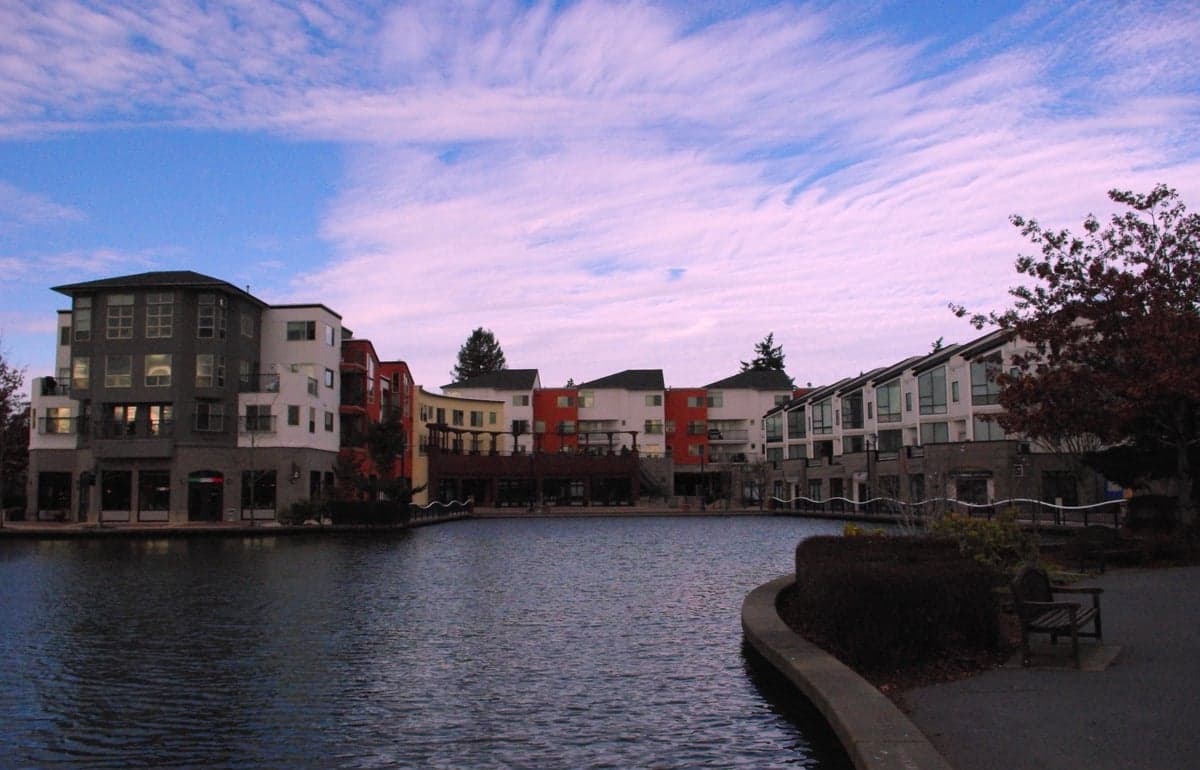
Photo: Wikipedia
Political ClimatePolitical Climate in Tualatin, OR
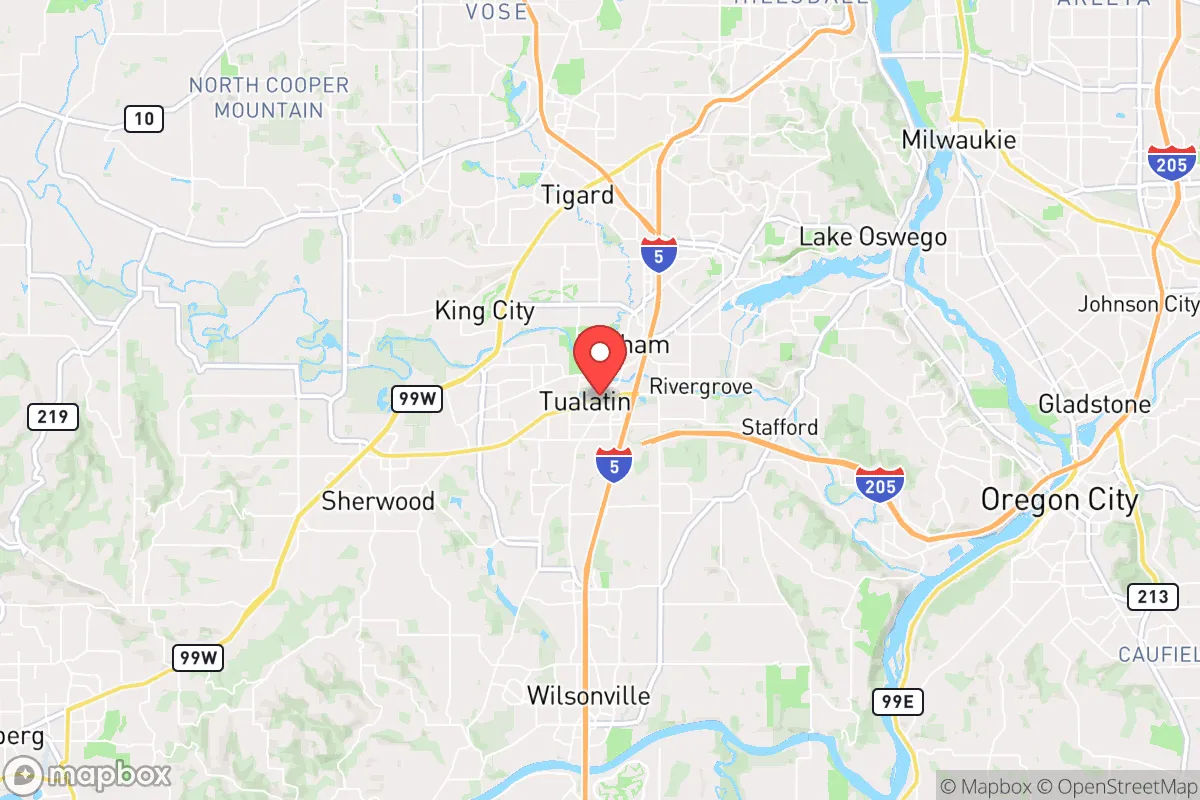
District shown is the primary district for this city’s centroid. Cities may span multiple districts.
Local Political AnalysisPolitical Analysis of Tualatin, OR
Tualatin sits in a political landscape that has shifted noticeably leftward over the past decade, and if you’ve lived here as long as I have, you’ve felt it. The Cook PVI of D+6 tells the story: this area leans Democratic by a solid margin, and that lean has gotten heavier with each election cycle. While Tualatin was once a reliably moderate, business-friendly community where folks kept their politics to themselves, the last five years have brought a wave of progressive activism that’s reshaping local governance, school board decisions, and even zoning laws. It’s not the sleepy, live-and-let-live suburb it used to be.
How it compares
Drive ten miles south to Wilsonville or fifteen miles southwest to Sherwood, and you’ll feel a different political breeze. Those communities still vote more conservatively, with Sherwood’s precincts often breaking 55-60% Republican in statewide races. Tualatin, by contrast, now votes more like its northern neighbor Tigard or even parts of inner Portland. The difference is stark: in 2020, Tualatin’s precincts gave Joe Biden around 58% of the vote, while Sherwood’s gave Donald Trump about 54%. That 12-point gap is real and growing. What’s more, Tualatin’s city council has become increasingly comfortable with progressive policy experiments—think density mandates, climate action plans with binding targets, and equity-focused hiring quotas—that would never fly in the more conservative towns to the south. If you value local control and minimal government overreach, the contrast is hard to ignore.
What this means for residents
For the average family here, the political shift translates into tangible changes in daily life. Property taxes have climbed faster than inflation, driven partly by new bond measures for transit-oriented development and affordable housing mandates that the city council pushed through with little public debate. School board meetings have become battlegrounds over curriculum content and library books, with progressive majorities often dismissing parental concerns as “misinformation.” If you’re a small business owner, you’ve likely dealt with new paid leave mandates, minimum wage hikes tied to Portland’s schedule, and commercial rent stabilization proposals that keep popping up. The trend is clear: more rules, more costs, and less room for individual choice. Longtime residents I talk to feel like the city’s character is being engineered away, one ordinance at a time.
On the cultural side, Tualatin still has its quiet neighborhoods and decent schools, but the political energy is unmistakably progressive. The annual Tualatin Crawfish Festival now includes a “community equity” booth, and the library hosts drag story hours that draw both supporters and protesters. The city’s official social media channels lean heavily into climate activism and social justice messaging, which rubs some folks the wrong way. Looking ahead, I’d expect the political drift to continue as Portland’s urban growth boundary pushes more left-leaning transplants into Tualatin’s new apartment complexes. If you’re considering a move here, just know the political temperature is rising—and not everyone is comfortable with the heat.

State Political ClimatePolitical Climate in Oregon
State Political AnalysisPolitical Environment in the State
Oregon has long been painted as a deep-blue state, but the reality is far more fractured. The state’s political lean is overwhelmingly driven by the Portland metro area—Multnomah, Washington, and Clackamas counties—which together cast roughly 45% of the state’s vote and reliably deliver 60-75% margins for Democrats. However, the rest of the state, particularly east of the Cascades and much of the southern interior, votes as red as any place in Idaho or Utah. Over the past 20 years, the state has shifted leftward on social and environmental policy, but a growing backlash against progressive overreach—especially on land use, education, and public safety—has created a volatile, two-Oregon dynamic that any conservative considering a move here needs to understand.
Urban vs. rural divide
The political map of Oregon is essentially a tale of two states. The Willamette Valley corridor—from Portland down through Salem, Corvallis, Eugene, and Medford—is the engine of Democratic power. Portland itself is a national symbol of progressive governance, with a city council that has embraced defunding police, rent control, and sanctuary policies. Eugene and Corvallis are similarly left-leaning, driven by university populations and activist communities. But drive 30 minutes east of Portland into Gresham or Hood River, and you start seeing a more mixed picture. Go further east to Bend in Deschutes County, and you find a rapidly growing purple area that has flipped from reliably red to competitive—Bend’s tech and outdoor recreation influx has brought in younger, more liberal voters, though the county still leans Republican in statewide races. The real red strongholds are east of the Cascades: Pendleton, Klamath Falls, Lakeview, and Ontario vote 70-80% Republican. Jackson County (Medford) and Josephine County (Grants Pass) are reliably red, though Medford’s growth has introduced a small but vocal progressive minority. The rural-urban divide is so stark that in 2020, Malheur County voted for Trump by 76%, while Multnomah County voted for Biden by 76%—a 52-point gap that is among the widest in the nation.
Policy environment
Oregon’s state-level policy is a mixed bag that leans heavily progressive, but with some notable exceptions. The state has no sales tax, which is a major plus for conservatives, but it has one of the highest personal income tax rates in the country—top marginal rate of 9.9%—and high property taxes in many counties. The regulatory environment is burdensome: Oregon’s land-use planning system, established in the 1970s, strictly controls urban growth boundaries, making housing expensive and development slow. Education policy is a flashpoint: the state has a universal “sanctuary” law (ORS 181A.820) that prohibits state and local law enforcement from cooperating with federal immigration authorities, and in 2023, the legislature passed a law requiring all public schools to allow students to use names and pronouns without parental consent—a major concern for conservative parents. Healthcare is dominated by the Oregon Health Plan, a Medicaid expansion that covers about 1 in 4 residents, but the state also has some of the most restrictive abortion laws in the nation, with no gestational limits. Election laws are relatively accessible: Oregon was the first state to conduct all elections by mail, and automatic voter registration is in place. However, the state’s ranked-choice voting system is being piloted in some local elections, which conservatives view as a tool to dilute their votes.
Trajectory & freedom
Oregon is becoming less free for conservatives, especially in the areas of parental rights, gun rights, and property rights. In 2023, the legislature passed HB 2005, which bans the sale of many semi-automatic firearms and requires a permit to purchase any gun—a law that is currently being challenged in court. The same year, SB 577 was enacted, which prohibits schools from notifying parents if a child changes their gender identity or pronouns—a direct assault on parental rights. On property rights, Oregon’s Measure 37 (2004) and Measure 49 (2007) created a complicated system for landowners to seek compensation for downzoning, but the state’s land-use commission remains powerful and often restricts development. On the positive side for conservatives, Oregon has no state-level rent control (though Portland and some cities have their own), and the state’s right-to-farm law protects agricultural operations from nuisance lawsuits. The Oregon Firearms Federation remains active, and there is a growing movement in rural counties to secede from the state and join Idaho—a proposal that has gained traction in 13 eastern Oregon counties, though it faces long odds legally.
Civil unrest & political movements
Oregon has a long history of political activism, and recent years have been particularly volatile. The 2020 Portland protests were among the most sustained and violent in the nation, with the city becoming a national symbol of left-wing unrest. The Pacific Northwest Youth Liberation Front and Antifa have a visible presence in Portland, and the city’s “sanctuary” status has made it a flashpoint for immigration politics. On the right, the Oregon Citizens Alliance and People’s Rights (founded by Ammon Bundy) have organized around property rights and anti-government sentiment. The Malheur National Wildlife Refuge occupation in 2016, led by the Bundy family, remains a defining moment for the state’s rural conservative movement. Election integrity is a live issue: in 2020, Oregon’s mail-in voting system was criticized by some conservatives for lack of voter ID requirements, though no widespread fraud was proven. The Oregon Republican Party has become increasingly militant, with some county parties passing resolutions calling for the nullification of federal laws. A new resident would notice the stark contrast between Portland’s activist culture and the quiet, self-reliant ethos of eastern Oregon towns like John Day or Burns.
Projection
Over the next 5-10 years, Oregon is likely to become more polarized, not less. The Portland metro area continues to grow, driven by tech and remote workers from California, which will further entrench Democratic control of the state legislature and governor’s office. However, the Greater Idaho movement is gaining real momentum—in 2024, several eastern Oregon counties voted to support secession talks, and the Idaho legislature has passed resolutions expressing openness to the idea. Even if secession doesn’t happen, the political divide will likely lead to more preemption battles between the state and rural counties, especially on gun laws and land use. The state’s housing crisis will continue to drive migration out of the Willamette Valley and into more affordable, conservative-leaning areas like Klamath Falls or La Grande. A conservative moving to Oregon today should expect to live in a state where their vote is largely irrelevant in statewide elections, but where local control in rural counties still offers a degree of freedom—at least for now.
Bottom line for a new resident: If you’re a conservative considering Oregon, pick your location carefully. The state’s urban centers are hostile to traditional values and parental rights, but the rural areas—especially east of the Cascades—offer a lifestyle that is still largely free from progressive overreach. You’ll pay high income taxes and deal with a regulatory state that can be frustrating, but you’ll also find strong communities, low crime in many rural areas, and a growing movement to push back against Portland’s dominance. Just don’t expect the state to swing red anytime soon—your best bet is to find a county that values your vote and your voice.
* Values derived from national, state, county, city and local statistics and may differ in a specific area. Last updated: 2026-04-19T11:31:06.000Z
Narrative content on this page is AI-generated and may contain mistakes. Verify any details that matter before acting on them.
ReloMaps may earn a commission from affiliate links at no extra cost to you.

