Photo: Wikipedia
Demographics of Tualatin, OR
Affluence Level in Tualatin, OR
A middle-class area roughly in line with national averages across income, home values, education, and employment.
People of Tualatin, OR
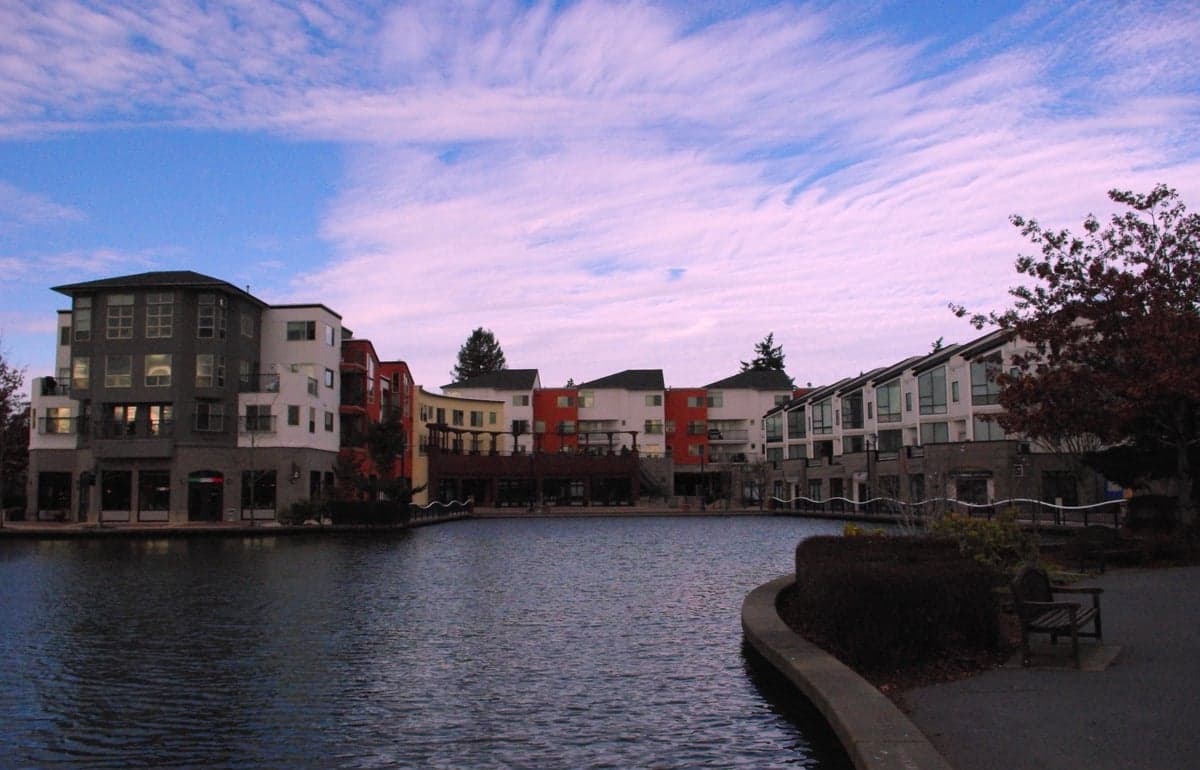
The people of Tualatin, Oregon today form a predominantly white, family-oriented suburb of 27,710, with a notable and growing Hispanic minority that now accounts for over one-fifth of the population. The city is characterized by a high educational attainment level—45.5% of adults hold a college degree—and a relatively low foreign-born share of 6.1%, reflecting a population that is largely native-born and English-proficient. Distinctive identity markers include a strong sense of local community centered around the historic downtown and Tualatin Commons, and a demographic profile that is whiter and more educated than the Portland metro average, but less diverse than neighboring Beaverton or Hillsboro.
How the city was settled and grew
Tualatin’s human history begins with the Atfalati (Tualatin) band of the Kalapuya people, who inhabited the Tualatin Valley for thousands of years before European contact. The first permanent white settlers arrived in the 1840s via the Oregon Trail, drawn by the Donation Land Claim Act of 1850, which granted 320 acres to married couples. These early settlers—primarily of English, Scottish, and German stock—established farms along the Tualatin River and built the city’s first core around what is now Historic Downtown Tualatin, near the intersection of Boones Ferry Road and Tualatin-Sherwood Road. The arrival of the Oregon Electric Railway in 1908 spurred a second wave of settlement, bringing workers and small business owners to neighborhoods like Martinazzi and Ibach, named after early land-owning families. Through the mid-20th century, Tualatin remained a small agricultural town, with a population of just 750 in 1950, dominated by families working in berry farming, dairy, and timber.
Modern era (post-1965)
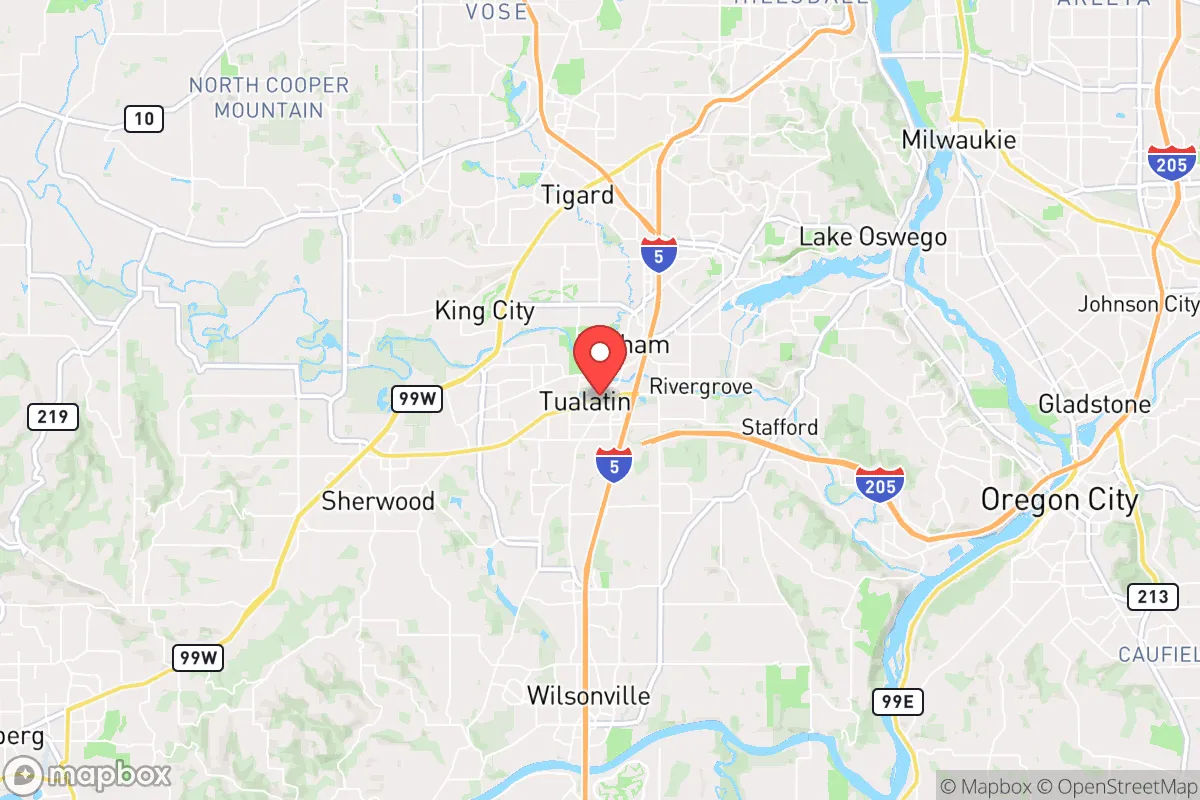
The passage of the Hart-Cellar Act in 1965 coincided with Tualatin’s transformation from a farm town into a suburban bedroom community. The completion of Interstate 5 in the 1970s made Tualatin accessible to Portland commuters, triggering a wave of domestic in-migration from other parts of Oregon and California. New subdivisions like Hedges Creek and Meridian Park were built in the 1980s and 1990s, attracting white-collar families drawn to the city’s low crime rates and strong schools. The Hispanic population began growing significantly in the 1990s, driven by construction and service-sector jobs in the expanding Portland metro area. Today, Hispanic residents (21.9% of the population) are concentrated in the Lake Forest and Baseline neighborhoods, where more affordable housing stock and proximity to industrial employment centers exist. East/Southeast Asian residents (2.6%) and Indian-subcontinent residents (0.4%) are a smaller presence, with families typically settling in newer subdivisions like Bridges at Tualatin, drawn by tech-sector employment in nearby Hillsboro and Beaverton. The Black population remains very small at 1.1%, reflecting the broader demographic pattern of Washington County’s western suburbs.
The future
The population of Tualatin is projected to continue growing slowly, with the city nearing build-out capacity. The Hispanic share is likely to rise further, as younger Hispanic families have higher birth rates and the area remains affordable relative to Portland proper. However, the city is not tribalizing into distinct ethnic enclaves; rather, Hispanic and white families increasingly live in the same subdivisions, particularly in the Lake Forest and Meridian Park areas, suggesting a pattern of assimilation rather than segregation. The East/Southeast Asian and Indian populations are expected to plateau or grow modestly, as most tech-job growth is occurring in Hillsboro and Beaverton, not Tualatin itself. The white population, while still the majority at 64.6%, will continue to decline as a share, mirroring regional trends. Over the next 10-20 years, Tualatin will likely become a more diverse, middle-class suburb with a stable, family-oriented character—less affluent than Lake Oswego to the north, but more established than newer exurbs to the south.
For someone moving in now, Tualatin offers a safe, well-educated community with a strong sense of place, but one that is demographically less diverse and less dynamic than the Portland core. The city is becoming more Hispanic and slightly more Asian, but at a measured pace that preserves its predominantly white, suburban identity. It is a place for families seeking stability, good schools, and a low-crime environment, rather than for those seeking rapid demographic change or urban energy.

* Values derived from national, state, county, city and local statistics and may differ in a specific area. Last updated: 2026-04-19T11:31:06.000Z
Narrative content on this page is AI-generated and may contain mistakes. Verify any details that matter before acting on them.
ReloMaps may earn a commission from affiliate links at no extra cost to you.

