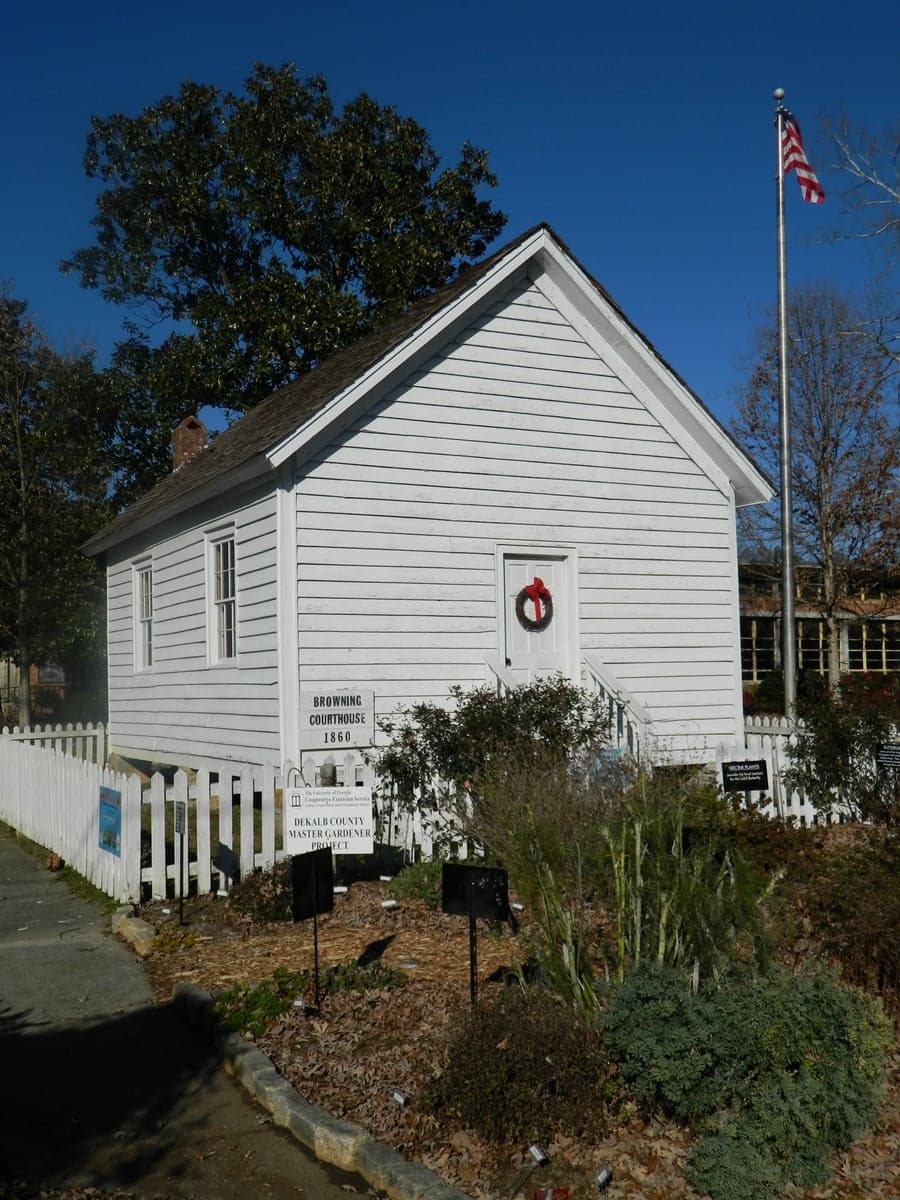
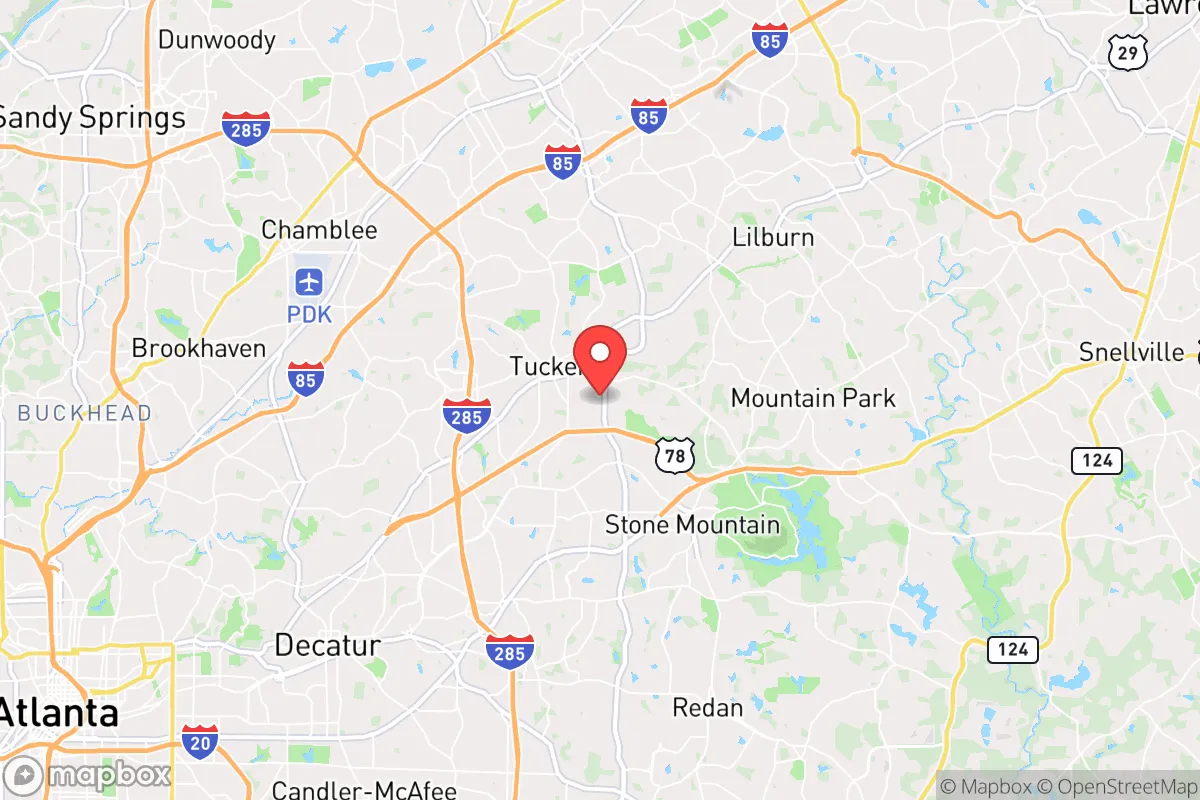
Photo: Wikipedia
Demographics of Tucker, GA
Affluence Level in Tucker, GA
A middle-class area roughly in line with national averages across income, home values, education, and employment.
People of Tucker, GA
The people of Tucker, Georgia today form a densely diverse suburban community of 37,022 residents, characterized by a near-even split between Black (40.8%) and White (37.2%) populations, with a growing Hispanic (11.6%) and East/Southeast Asian (4.1%) presence. The city’s identity is shaped by its role as a stable, family-oriented suburb of Atlanta, where 44.0% of adults hold a college degree and 10.0% of residents are foreign-born. Distinctive markers include a strong sense of local pride centered on the historic downtown square, active civic associations in neighborhoods like Smoke Rise and Idlewood, and a reputation for good schools and quiet streets that attract both long-term homeowners and new arrivals.
How the city was settled and grew
Tucker was not a colonial-era settlement but a railroad town that emerged in the late 19th century. The Georgia Railroad built a depot here in 1892, and the original population was drawn by the cotton trade and later by timber and small-scale agriculture. The first wave of settlers were mostly White farmers and merchants of English, Scots-Irish, and German descent, who built homes along Main Street and the surrounding crossroads. The historic Downtown Tucker district, centered on the original depot site, still contains the commercial buildings and churches these families erected. A second wave arrived in the 1920s and 1930s as Atlanta’s streetcar lines extended outward, bringing middle-class White families to new subdivisions like Briarcliff and Henderson Mill. These neighborhoods were built on former farmland and attracted workers from Atlanta’s growing industrial and clerical sectors. By 1950, Tucker was a small, predominantly White community of roughly 2,000 residents, with a tight-knit social life revolving around the Tucker Methodist Church and the local school.
Modern era (post-1965)
The post-1965 era transformed Tucker’s population dramatically. The 1965 Hart-Celler Act opened immigration from Asia and Latin America, but the most immediate change was domestic: the 1970s and 1980s saw a major wave of Black families moving from Atlanta’s inner city into Tucker’s affordable housing stock, drawn by better schools and larger lots. This migration concentrated in neighborhoods like Idlewood and Pleasantdale, where ranch-style homes built in the 1950s and 1960s became entry points for upwardly mobile Black professionals. By 1990, Tucker’s Black population had risen to roughly 25%, and by 2020 it had reached 40.8%. Simultaneously, the 1990s and 2000s brought a smaller but notable influx of East/Southeast Asian families—primarily Chinese, Korean, and Vietnamese—who settled in the Smoke Rise area, attracted by its large lots and proximity to the Asian commercial corridor along Buford Highway. The Indian subcontinent community (2.4% of the population) arrived later, in the 2000s and 2010s, often drawn by tech and healthcare jobs in the Atlanta metro, and has concentrated in newer subdivisions near Rockbridge Road. Hispanic growth (11.6%) has been steady since the 1990s, with families settling in the Briarcliff and Henderson Mill areas, often working in construction, landscaping, and service industries.
The future
Tucker’s population is trending toward greater diversity, but not toward homogenization. The city is becoming a patchwork of distinct ethnic enclaves rather than a fully integrated melting pot. The Black and White populations are both declining slightly as a share of the total, while Hispanic and East/Southeast Asian shares are rising. The Indian subcontinent community, though small, is growing steadily and is likely to double its share within 10-15 years as Atlanta’s tech sector expands. The foreign-born share (10.0%) is below the national average but rising, driven by family reunification and job growth. The city is not tribalizing into hostile camps, but neighborhoods are increasingly identifiable by their dominant group: Smoke Rise remains heavily White and East/Southeast Asian, Idlewood is predominantly Black, and Briarcliff is becoming a Hispanic-majority area. The next 10-20 years will likely see continued diversification, with the White share falling below 30% and the Hispanic share approaching 15-18%, while the Black share stabilizes around 38-40%.
For someone moving in now, Tucker is becoming a stable, middle-class suburb where diversity is the norm but neighborhoods retain distinct cultural identities. The city offers good schools, a historic downtown, and easy access to Atlanta, making it a practical choice for families and professionals who value community character over homogeneity. The population is growing slowly but steadily, and the trend is toward a more multiethnic, multiracial suburb that remains anchored by its Black and White foundations.

* Values derived from national, state, county, city and local statistics and may differ in a specific area. Last updated: 2026-04-30T14:34:02.000Z
Narrative content on this page is AI-generated and may contain mistakes. Verify any details that matter before acting on them.
ReloMaps may earn a commission from affiliate links at no extra cost to you.

