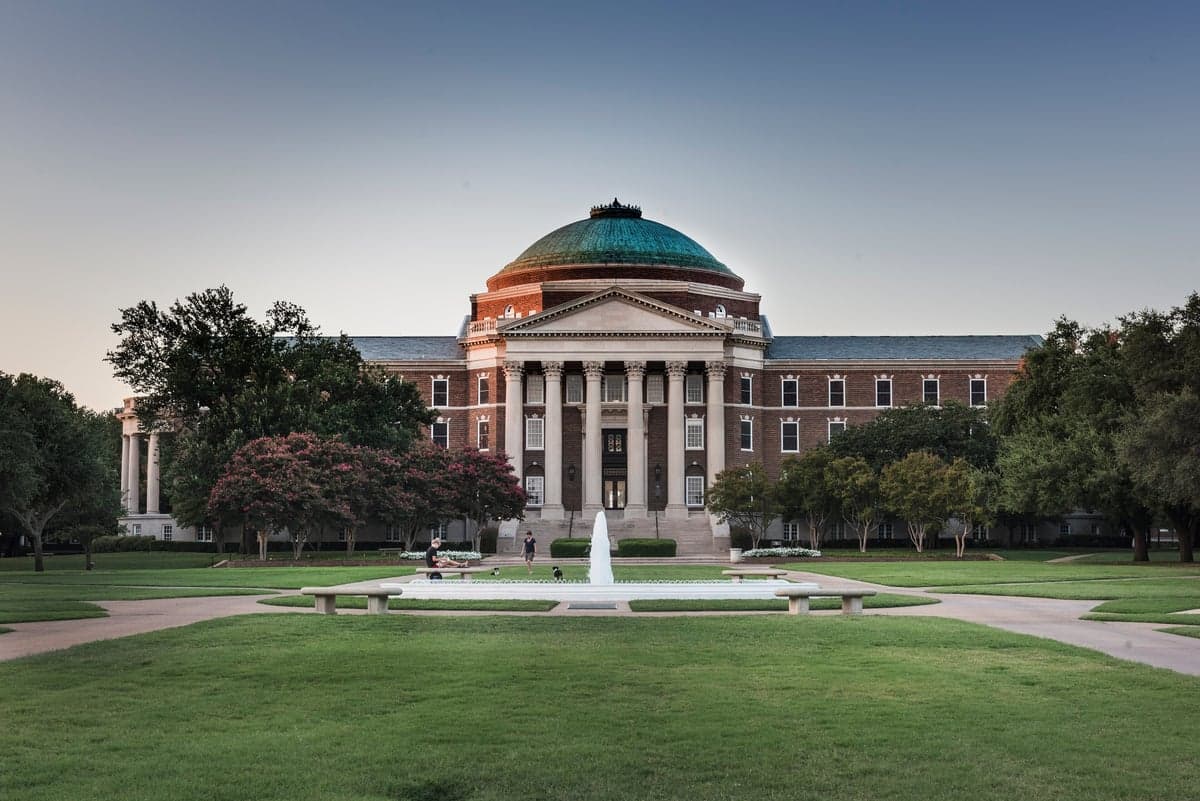
Photo: Wikipedia
Demographics of University Park, TX
Affluence Level in University Park, TX
A wealthy area with high-earning, well-educated households. Incomes, home values, and educational attainment meaningfully outpace national averages.
Census doesn't track above $250K
People of University Park, TX
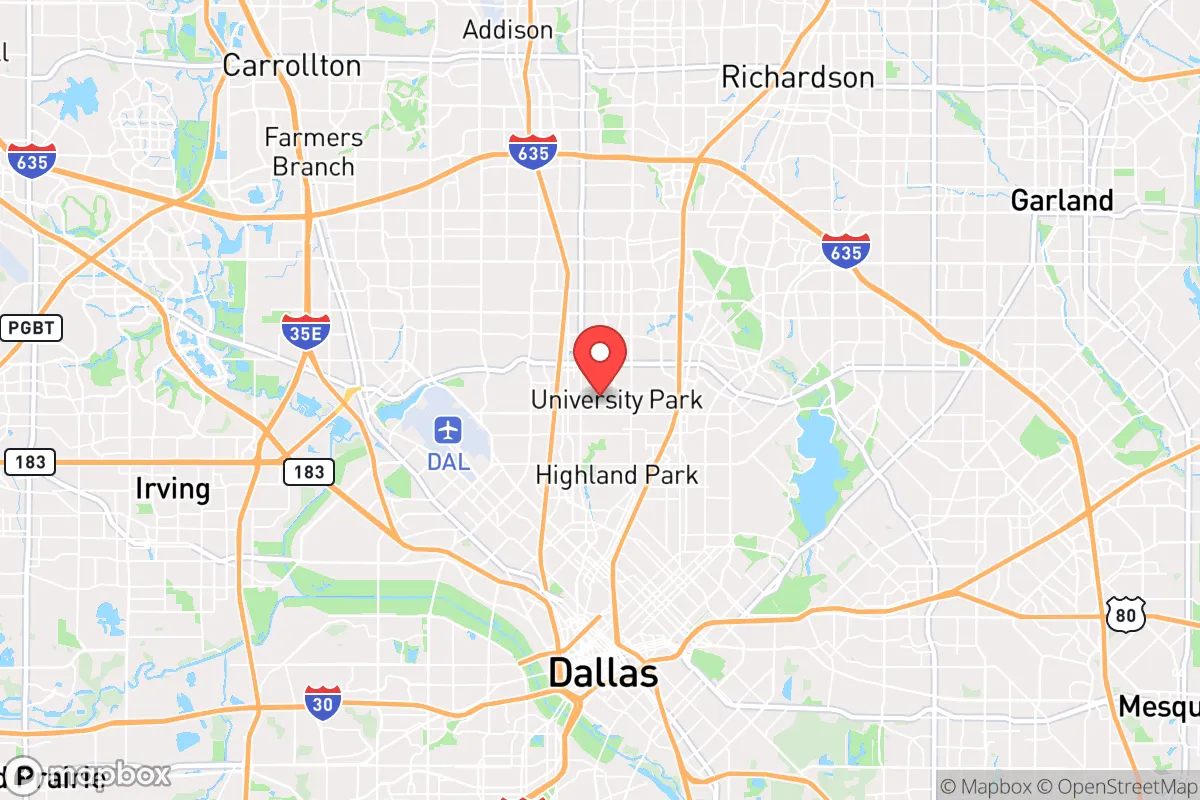
University Park, Texas, is an affluent, family-oriented enclave of 25,104 residents, characterized by its exceptionally high college attainment rate of 90.4% and a population that is 81.2% white. The city is a dense, walkable suburb within the Park Cities district, known for its top-ranked public schools, stately homes, and a strong sense of community identity that is distinctly separate from neighboring Dallas. Its residents are overwhelmingly professionals, executives, and academics drawn by the area’s reputation for safety, elite education, and a traditional, family-centric lifestyle.
How the city was settled and grew
Unlike many Texas towns, University Park has no pioneer or agricultural founding. The land was originally part of a large tract owned by the heirs of John S. Armstrong, a Dallas businessman. The city’s genesis was entirely a 20th-century, planned suburban development, spurred by the 1915 establishment of Southern Methodist University (SMU). The university acted as the anchor, drawing faculty, administrators, and families who wanted to live within walking distance of the campus. The first residential wave, in the 1920s and 1930s, built the historic University Gardens neighborhood, a collection of Tudor and Colonial Revival homes that still house many SMU-affiliated families. The city incorporated in 1924 specifically to avoid annexation by Dallas, a move that cemented its independent identity. Growth accelerated after World War II, as returning GIs and a booming Dallas economy created demand for new housing. The Caruth Hills and Caruth Estates neighborhoods, developed in the 1950s and 1960s, attracted a wave of white, middle-to-upper-class professionals—doctors, lawyers, and oil executives—who built larger, ranch-style homes. This era solidified University Park’s reputation as a haven for the city’s business and professional elite, a character it retains today.
Modern era (post-1965)
The post-1965 period saw University Park become even more exclusive and homogeneous, a trend driven by rising home prices and a deliberate focus on maintaining high property values and school quality. The city did not experience the broad suburban diversification seen in other Dallas-area suburbs. Instead, the white, college-educated population consolidated its dominance. The Preston Hollow border area (the western edge of University Park) saw some of the most expensive new construction, attracting wealthy families from across the metroplex who were drawn to the Highland Park Independent School District (HPISD). The city’s foreign-born population remained exceptionally low—just 3.0% today—reflecting a lack of immigrant gateway dynamics. The small Hispanic (7.9%) and East/Southeast Asian (4.2%) populations are largely concentrated in the Northway Park and McFarlin Heights neighborhoods, often as families of professionals working at SMU or in Dallas’s medical and tech sectors. The Black population (1.1%) and Indian-subcontinent population (0.8%) are minimal, with no distinct ethnic enclaves. University Park has essentially become a self-selecting community for high-income, predominantly white families who prioritize the HPISD school system and a low-crime, pedestrian-friendly environment.
The future
The demographic trajectory of University Park points toward continued homogenization and wealth stratification. The city’s housing stock is aging and increasingly being replaced by much larger, more expensive homes—a process known as "teardown" or "scrape-off" development. This is pricing out even upper-middle-class families and reinforcing the city as a destination for the top 5-10% of earners. The University Park Estates neighborhood is a prime example, where original 1950s homes are routinely replaced with 6,000+ square foot residences. The East/Southeast Asian population is the fastest-growing minority group, but it is starting from a very small base (4.2%) and is likely to plateau as housing costs continue to rise. The Hispanic population is stable but not growing significantly, as the city lacks the rental housing and service-sector employment base that attracts larger immigrant communities. The future is not one of tribalization into distinct enclaves, but of a single, wealthy, predominantly white demographic group that is increasingly homogenous in income and education. The city’s population is projected to remain stable or grow very slowly, as it is essentially built out.
For a conservative-leaning individual or family moving in now, University Park represents a choice to join a highly curated, high-cost, low-diversity community where the primary draw is institutional excellence—particularly in education—rather than demographic variety. It is a place that has successfully resisted the demographic and economic changes reshaping much of urban Texas, and it will likely remain a bastion of traditional, affluent suburban life for the foreseeable future.

* Values derived from national, state, county, city and local statistics and may differ in a specific area. Last updated: 2026-04-14T04:35:28.000Z
Narrative content on this page is AI-generated and may contain mistakes. Verify any details that matter before acting on them.
ReloMaps may earn a commission from affiliate links at no extra cost to you.

