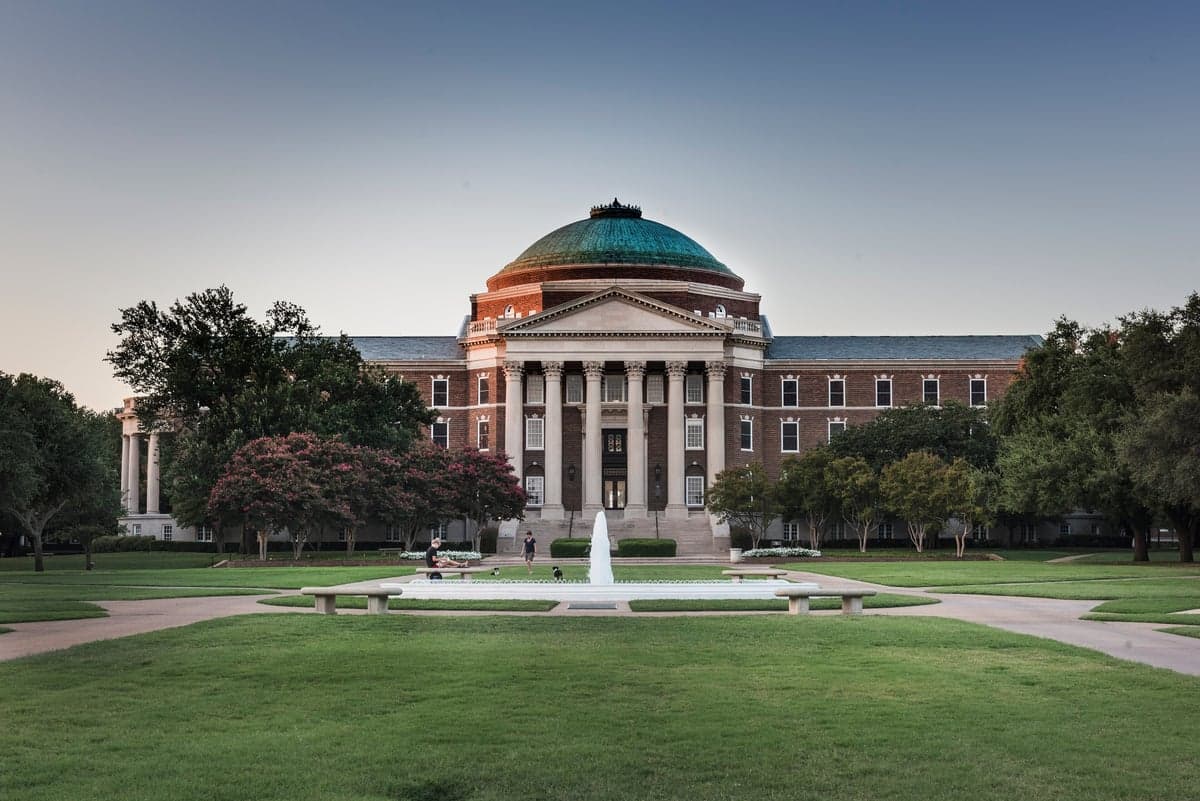
Photo: Wikipedia
Political ClimatePolitical Climate in University Park, TX
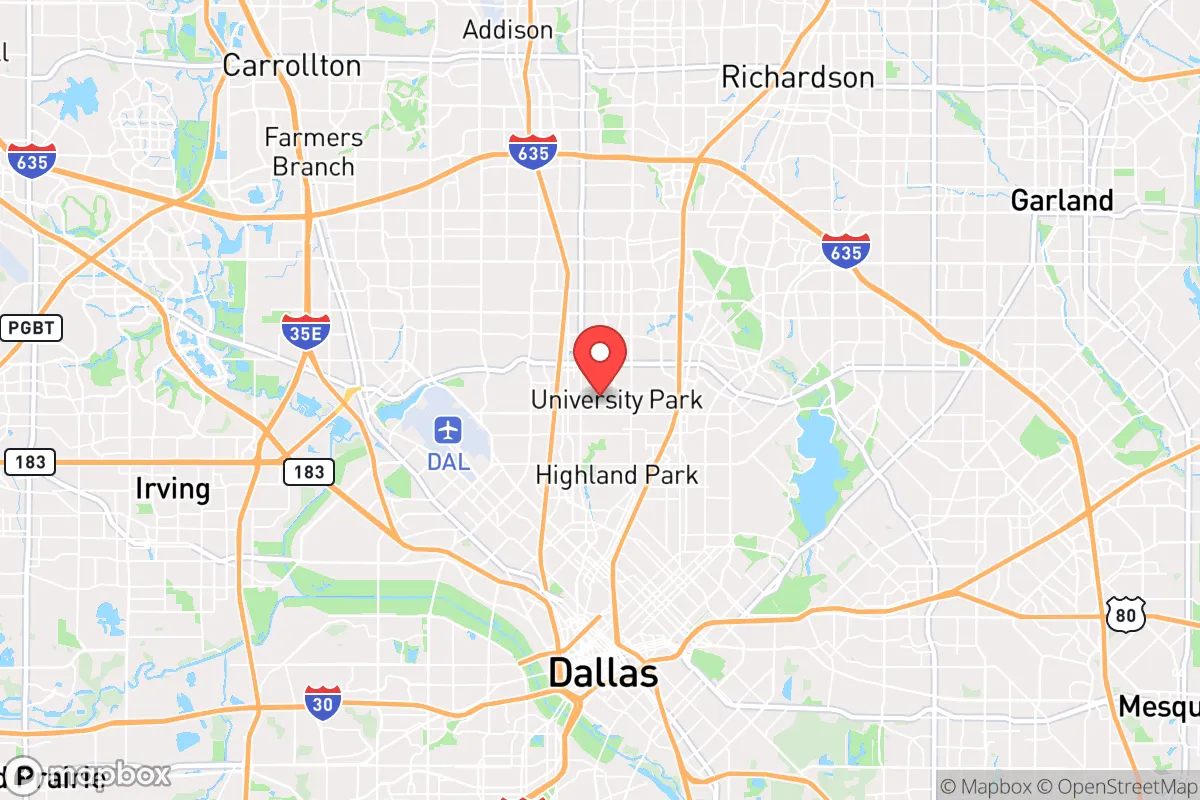
District shown is the primary district for this city’s centroid. Cities may span multiple districts.
Local Political AnalysisPolitical Analysis of University Park, TX
University Park has long been one of the most reliably conservative enclaves in the Dallas-Fort Worth metroplex, and while the numbers still lean that way — the Cook PVI sits at a solid R+7 — you can feel the political winds shifting under your feet if you’ve been here a while. This isn’t your granddad’s Park Cities anymore. The voting patterns still break red, but the cultural temperature is warming, and not in a way that sits well with folks who moved here specifically to get away from the progressive experiments playing out in Dallas proper or even in nearby Highland Park, which has held the line a bit tighter. The trajectory feels like a slow creep toward the kind of government overreach that used to stop at the city limits.
How it compares
Drive five minutes east into Dallas, and you’re in a city that’s been fully captured by progressive leadership — higher property taxes, more regulations on businesses, and a general attitude that the city knows better than you do. University Park, by contrast, still runs its own show with a city council that mostly understands the value of limited government and personal responsibility. But the comparison that stings is with Highland Park, our sister city to the south. Highland Park has been more aggressive about keeping its zoning strict, its taxes low, and its politics grounded in traditional conservative values. University Park, meanwhile, has seen a few council races tilt toward candidates who talk a good game about “community engagement” and “equity” — code words for expanding government’s role in your life. The surrounding suburbs like Preston Hollow and Lakewood are trending bluer by the cycle, and that pressure is real.
What this means for residents
For the average homeowner or small business owner in University Park, the practical effect is that you need to stay vigilant. The city’s budget has grown faster than inflation over the last five years, and there’s been chatter about adding more staff for code enforcement and “neighborhood services” — which sounds nice until a city inspector is telling you how high your grass can be or what color you can paint your front door. The school board for the Highland Park Independent School District, which serves both towns, has held the line on curriculum and parental rights, but there’s always a faction pushing for more “diversity initiatives” that inevitably lead to less local control. If you value the freedom to run your household and your business without a bureaucrat’s permission slip, you’ll want to pay attention to every city council and school board election. The margin for error is shrinking.
Culturally, University Park still feels like a place where neighbors know each other and the local police are respected, not resented. But the policy distinctions are becoming sharper. The city has resisted some of the more aggressive housing mandates coming out of Austin, like statewide density requirements, but there’s a quiet push from some residents to “modernize” zoning to allow more apartments and mixed-use developments — which historically brings higher crime, more traffic, and a dilution of the community’s character. The long-term concern is that if University Park keeps drifting toward the median of Dallas County politics, it will lose the very qualities that made it a refuge: low taxes, responsive local government, and a culture that prizes individual liberty over collective planning. For now, it’s still a conservative stronghold, but the cracks are visible, and the next few election cycles will tell you whether it stays that way or becomes just another suburb that forgot what made it special.

State Political ClimatePolitical Climate in Texas
State Political AnalysisPolitical Environment in the State
Texas has been a reliably Republican state for the past three decades, but the nature of that conservatism is shifting under the weight of explosive population growth and demographic change. The dominant coalition remains center-right, anchored by suburban families, rural voters, and the oil-and-gas economy, but the margin of victory has narrowed: Donald Trump won the state by 5.6 points in 2024, down from 9 points in 2016 and 15.5 points in 2012. The long-term trajectory is a slow, uneven drift toward competitiveness, driven by massive in-migration from blue states and the rapid growth of the Hispanic electorate, though the state’s political infrastructure and legislative agenda remain firmly in conservative hands.
Urban vs. rural divide
The political map of Texas is a study in stark contrasts. The five largest metros — Houston, Dallas-Fort Worth, San Antonio, Austin, and El Paso — are the engine of Democratic votes, with Harris County (Houston) and Dallas County routinely delivering margins of 15-20 points for Democrats. Austin’s Travis County is the bluest urban core in the state, voting +50 points Democratic in 2024, while El Paso County is a Democratic stronghold driven by its heavily Hispanic, union-friendly electorate. Meanwhile, the rural and exurban counties that ring these cities are deeply red: Collin County (north of Dallas) voted +15 for Trump, and Montgomery County (north of Houston) went +35. The real battleground is the fast-growing suburban ring — places like Fort Bend County (southwest of Houston), which flipped from red to purple to blue over the past decade, and Williamson County (north of Austin), which is trending purple as tech workers move in. The divide isn’t just urban vs. rural; it’s also a cultural and economic split between the oil-and-gas, ranching, and manufacturing regions of West Texas and the Panhandle (Lubbock, Midland) and the knowledge-economy corridors of I-35 and the Gulf Coast.
Policy environment
Texas’s policy environment is defined by a low-tax, low-regulation posture that has attracted millions of new residents and businesses. There is no state income tax, and property taxes are high but capped by a 2023 law (Proposition 4) that raised the homestead exemption to $100,000 and compressed school tax rates. The regulatory climate is business-friendly, with no state-level minimum wage above the federal $7.25 and a right-to-work law that weakens union power. Education policy is a flashpoint: the 2023 school voucher bill (SB 1) failed in the House, but Governor Greg Abbott has made universal school choice his top priority for 2025, and a new bill is expected to pass. Healthcare is a mixed bag — Texas has the highest uninsured rate in the nation (about 17%), and the state has refused to expand Medicaid under the ACA. Election laws tightened after 2020 with SB 1 (2021), which banned drive-through voting, added ID requirements for mail ballots, and restricted early voting hours. Abortion is effectively banned after six weeks under the 2021 Heartbeat Act (SB 8) and the 2023 trigger law (HB 1280), with no exceptions for rape or incest. The overall posture is one of maximal personal freedom in economic and self-defense matters, but with a strong government hand in social and medical choices.
Trajectory & freedom
On the freedom front, Texas is a study in contradictions. The state has expanded personal liberty in several key areas: constitutional carry (permitless handgun carry) became law in 2021 (HB 1927), and the 2023 law banning COVID-19 vaccine mandates by private employers (SB 7) was a direct rebuke of federal overreach. Parental rights were strengthened in 2023 with the passage of the “Parental Bill of Rights” (HB 900), which requires school libraries to get parental consent for certain books and restricts instruction on sexual orientation and gender identity. Property rights were bolstered by the 2021 law limiting eminent domain for private development (SB 421). However, these expansions come alongside significant contractions: the near-total abortion ban is the most restrictive in the nation, and the state has aggressively prosecuted women and doctors under the law. The 2023 law banning gender-affirming care for minors (SB 14) was another major government intervention into private medical decisions. On net, Texas is becoming more free in economic and Second Amendment terms, but less free in medical and educational autonomy — a trade-off that defines the current conservative coalition.
Civil unrest & political movements
Texas has seen its share of political flashpoints. The 2020 Black Lives Matter protests in Austin, Houston, and Dallas were large and occasionally violent, leading to property damage and a lasting police-reform debate. The 2021 power grid collapse during Winter Storm Uri sparked a populist backlash against ERCOT and deregulated energy markets, but no major political realignment. Immigration politics are a constant pressure point: Governor Abbott’s Operation Lone Star, launched in 2021, deployed state troopers and National Guard to the border, bused migrants to sanctuary cities like New York and Chicago, and installed razor wire along the Rio Grande — a direct challenge to federal authority that has been tied up in court. The “secession” rhetoric, led by the Texas Nationalist Movement, is mostly performative, but the 2024 Republican Party platform included a call for a referendum on independence, reflecting a deep distrust of federal power among the base. Election integrity remains a live issue: the 2020 and 2022 cycles saw widespread claims of fraud (none proven in court), and the 2021 voting law was a direct response to those concerns. A new resident will notice the omnipresence of political signage, the intensity of local school board races, and the open carry of firearms in many parts of the state.
Projection
Over the next 5-10 years, Texas will continue to trend purple, but not flip blue. The in-migration from California, New York, and Illinois is overwhelmingly conservative-leaning — these are people fleeing high taxes and progressive governance, not seeking it. The Hispanic electorate, which made up about 30% of voters in 2024, is not monolithic; younger Hispanic men in particular are shifting right, especially on economic and cultural issues. The key battleground will be the suburbs of Dallas, Houston, and San Antonio, where fast-growing Asian and Hispanic populations are being courted by both parties. The 2026 gubernatorial race will be a bellwether: if Abbott wins by less than 5 points, the state will be considered a true swing state by 2030. The legislative agenda will likely include a school voucher program, further property tax cuts, and a possible constitutional amendment to require a supermajority for tax increases. The biggest wildcard is the border: if the federal government fails to secure it, Texas will continue to assert its own authority, potentially leading to a constitutional crisis. For a new resident, the next decade means more of the same — low taxes, high growth, and a political culture that is fiercely independent but increasingly contested.
Bottom line for a new resident: Texas is still a conservative state, but it’s no longer a safe bet for the long term. If you’re moving here for the low taxes and business climate, you’ll find them intact for now, but the political ground is shifting under your feet. The suburbs where you’ll likely settle — places like Frisco, Katy, or Round Rock — are the front lines of the cultural war, and your local school board and city council elections will matter more than the presidential race. The freedom you’re seeking is real, but it’s not guaranteed; you’ll need to stay engaged to keep it.
* Values derived from national, state, county, city and local statistics and may differ in a specific area. Last updated: 2026-04-14T04:35:28.000Z
Narrative content on this page is AI-generated and may contain mistakes. Verify any details that matter before acting on them.
ReloMaps may earn a commission from affiliate links at no extra cost to you.

